ShinchaBoo

105 posts

ShinchaBoo banner
ShinchaBoo

ShinchaBoo

@ShichanBoo08

Beigetreten Mart 2025
96 Folgt14 Follower
ShinchaBoo retweetet
FireHacker
FireHacker@thefirehacker·
Dhurandhar: The Revenge is a proper sequel. I’m still processing the sheer experience. The background score, action choreography, and performances are all on point. Ranveer Singh is incredible, and the supporting cast is equally special. Both Shashwat Sachdev and Aditya Dhar have absolutely excelled. I enjoyed this film far more than the first one. Despite being 4+ hours long, it just flies by.
English
0
2
3
118
ShinchaBoo retweetet
FireHacker
FireHacker@thefirehacker·
Today I learned: Git submodules exist. I was trying to work with several minimalist-style repos for AI inference and asked Claude Code to create a monorepo for me (as I had used monorepos in many Node projects earlier). It recommended Git submodules. I had no idea this feature existed until now.
English
1
3
6
166
ShinchaBoo retweetet
FireHacker
FireHacker@thefirehacker·
💹 Stock market rally 🛢️ Oil prices down 💰 Currency market stable Today we are canceling the apocalypse!
FireHacker tweet media
English
1
3
3
21
ShinchaBoo retweetet
FireHacker
FireHacker@thefirehacker·
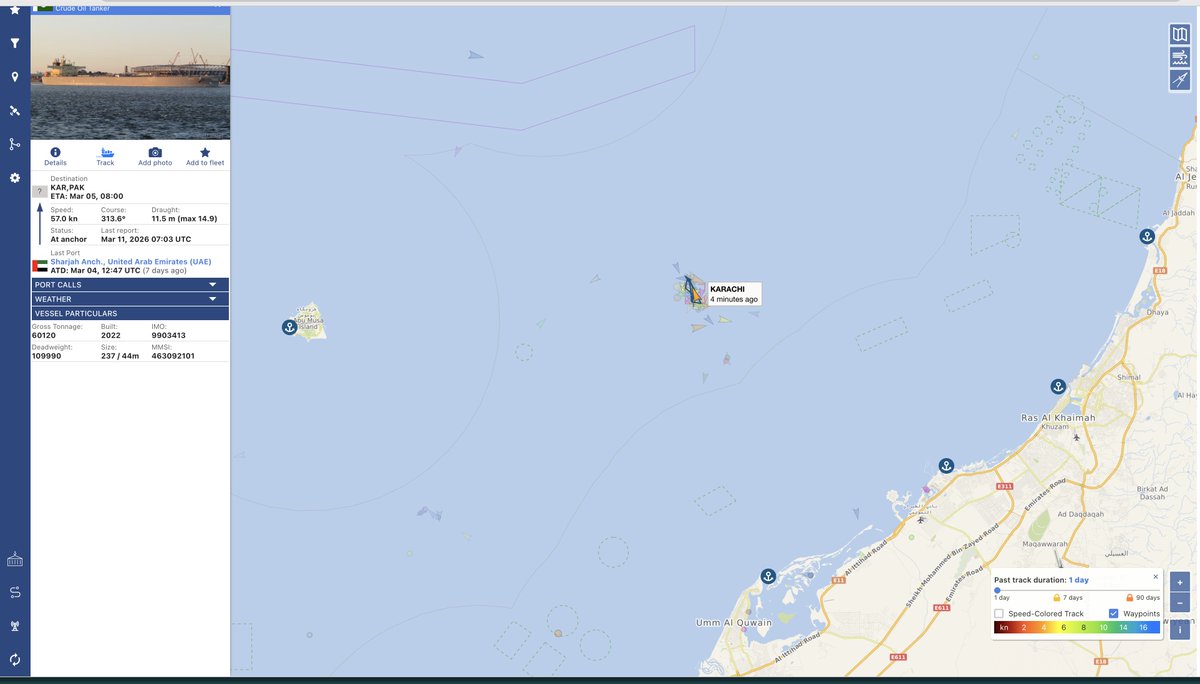
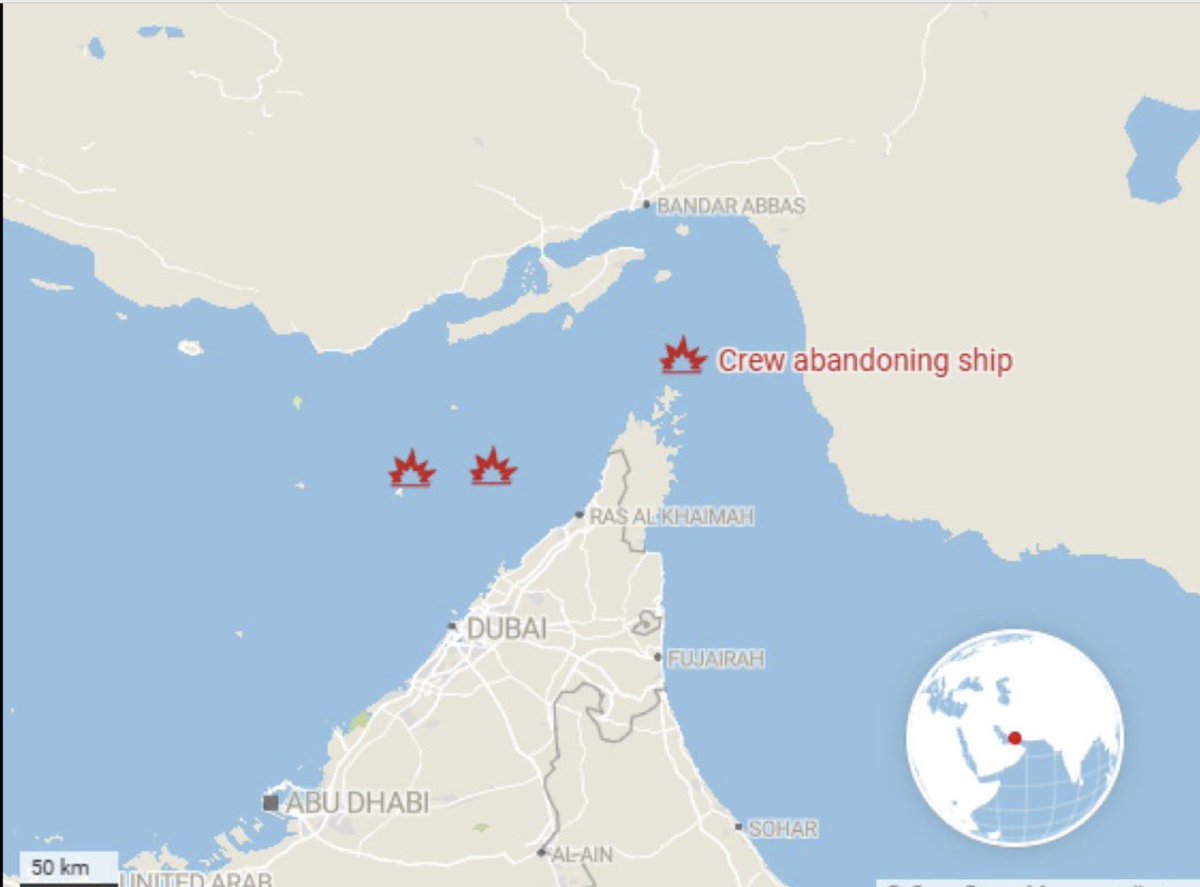
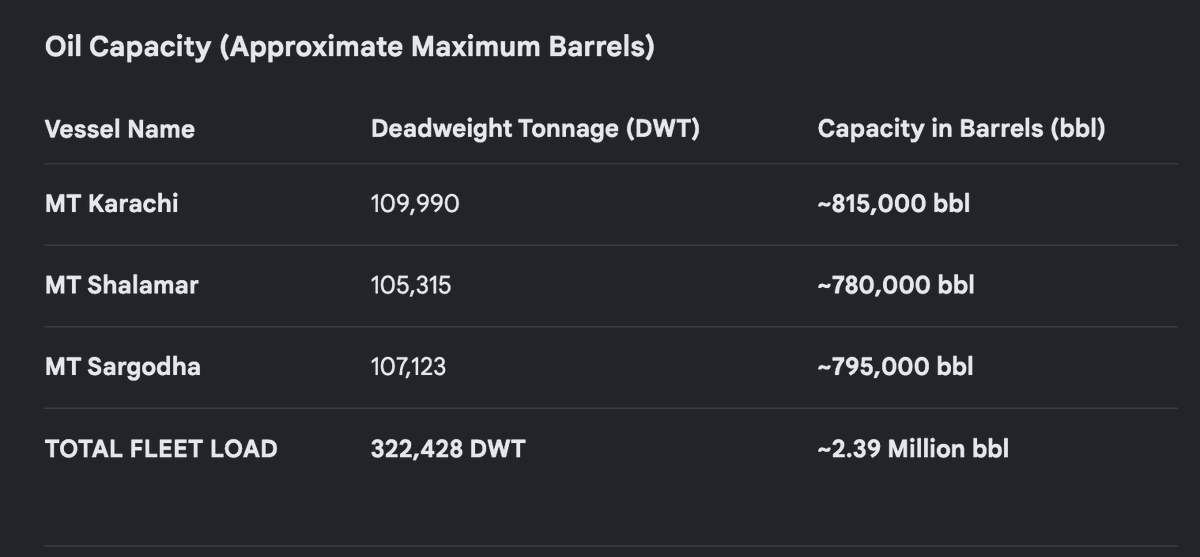
This operation appears to be limited to entrance of Strait of Hormuz between Fujairah-Karachi. MT Karachi is still in its outer anchorage of UAE with other ships in the region. This is one the main Crude Oil Tanker (Aframax / LR2 Class) used to ship oil from Gulf to Pakistan. It can carry upto 800,000 barrels of crude oil. Idea that shipping lanes can be kept open using such missions looks very difficult. Especially in deeper part of Strait of Hormuz. Location of today's strikes are all past the opening and this passage remains very risky( Image02). The two ships Shalimar & Sargoda were escorted from Fujairah in UAE ( From mouth of Strait of Hormuz) to Karachi, Pakistan.
FireHacker tweet mediaFireHacker tweet mediaFireHacker tweet media
Mario Nawfal@MarioNawfal

🇵🇰 Pakistan just sent navy ships to escort oil tankers in the Gulf as U.S.-Iran tensions keep heating up around the Strait of Hormuz. The military says the idea is simple, keep ships moving and energy supplies safe. Pakistan depends a lot on Gulf oil and gas, and fuel prices already jumped about 20% last week, which caused long lines at petrol stations. Source: Daily Mail

English
0
3
12
40K
ShinchaBoo retweetet
FireHacker
FireHacker@thefirehacker·
India’s oil security: 9.5 days based on its Strategic Petroleum Reserve (SPR) of 39 million barrels. However, the country actually maintains a total supply chain buffer sufficient for approximately 74 days. This total is calculated by combining two different types of storage: Strategic Petroleum Reserves (SPR): These are government-owned underground caverns that hold roughly 9.5 days' worth of crude oil for emergency use. Operational Stocks: This is the significantly larger volume of crude oil and finished products (like petrol and diesel) held by oil marketing companies in refineries, pipelines, and storage tanks. This accounts for roughly 64.5 days of coverage. In total, India sits on a combined buffer of over 250 million barrels, providing a 74-day cushion against global supply disruptions. For comparison, Pakistan’s current total reserves are estimated to last about 28 days. China's current total reserves estimated to last for 110 days & they have approx 1 billion barrels reserve. The reason is the "Burn Rate." China has a much bigger tank, but it also has a much bigger engine that burns fuel significantly faster than India's. Even though China has roughly 5 times more oil in storage (approx. 1.3 billion barrels vs. India's 250+ million), it consumes and imports oil at about 3 times the rate of India. Here is the math behind the days: 1. The "Burn Rate" (Daily Imports) To calculate how long reserves last, you divide the Total Reserve by the Daily Imports. 🇮🇳 India's Imports: We import roughly 4.6 million barrels per day. 🇨🇳 China's Imports: They import roughly 11–12 million barrels per day (the world's largest importer). 2. The Calculation India: Small Reserve (250M) ÷ Low Burn Rate (4.6M) = ~54–74 Days (depending on exact demand). China: Huge Reserve (1.3B) ÷ Huge Burn Rate (12M) = ~110–120 Days. In conclusion as our oil demand spikes we need to build large SPRs. Note: This post was refined using Gemini & GPT 5.3 Thinking.
FireHacker tweet media
English
0
2
4
123
ShinchaBoo retweetet
FireHacker
FireHacker@thefirehacker·
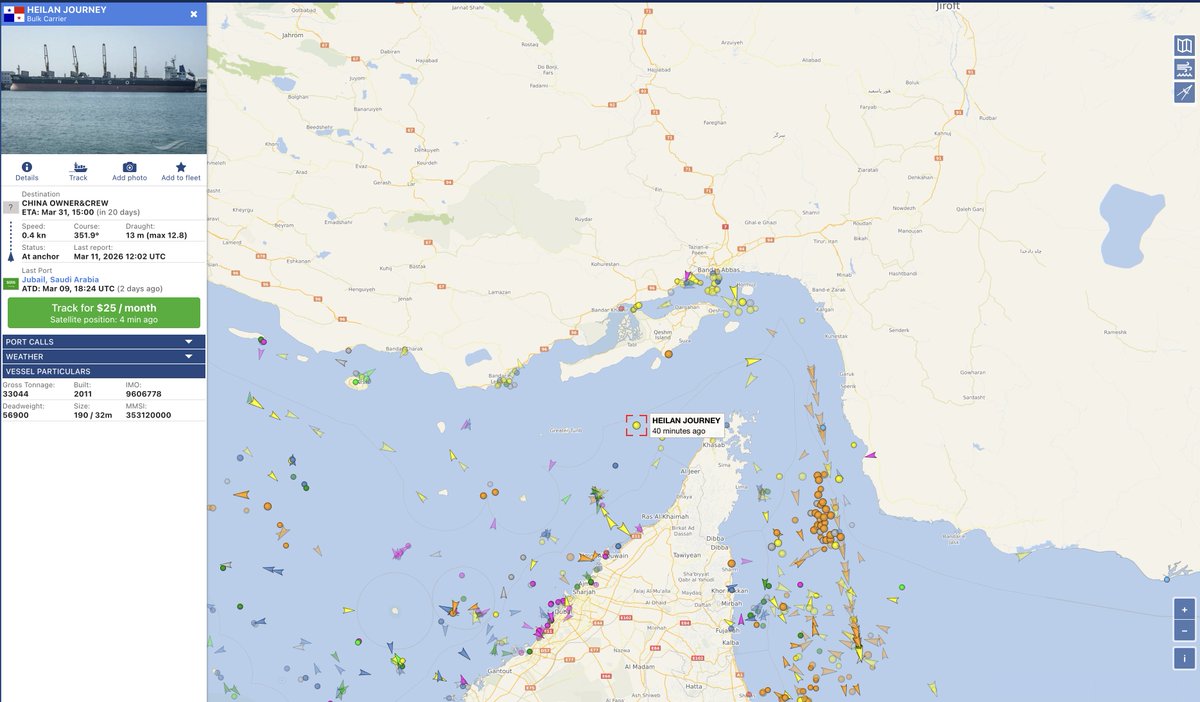
Apart from Petroleum & Helium supply for Granular Sulphur is also critical. HEILAN JOURNEY : A Chinese-owned & crewed bulk carrier is currently on choke point in the Strait of Hormuz after picking up cargo (sulphur) from the Jubail , Saudi Arabia. the Strait of Hormuz is recognized as a critical global chokepoint for sulphur, and its disruption is having a major impact on global supply chains.theStrait of Hormuz 👩‍🌾Percentage of Global Sulphur from the Strait The Middle East region (specifically Saudi Arabia, the UAE, Qatar, Kuwait, and Iran) is the global powerhouse for sulphur production, which is a byproduct of their massive oil and gas refining operations. Approximately 50% of the world's seaborne sulphur trade (roughly 20 million tonnes per year) originates in the Persian Gulf and must pass through the Strait of Hormuz. Global Production: The region accounts for about 24% of total global sulphur production (estimated at 83.87 million metric tons last year). Sulphur is often called the "Pulse of Industry" because it is the primary raw material for sulphuric acid, the most widely used chemical in the world. Its utility spans two massive global sectors: 1. Global Food Security (Agriculture) Fertilizer Production: Over 50% of global sulphur is used to manufacture phosphate fertilizers (DAP and MAP). Sulphuric acid is used to dissolve phosphate rock into a form plants can absorb. Soil Amendment: Granular sulphur is applied directly to alkaline and calcareous soils (common in dry regions) to lower pH levels, which allows crops like wheat, corn, and rice to better absorb nutrients like nitrogen and iron. 2. Critical Mineral Processing (The EV & Energy Transition) Nickel & Copper Leaching: Sulphur is essential for the "acid-leaching" process used to extract metals from ore. Example: Indonesia, which produces over 60% of the world's nickel, imports roughly 75% of its sulphur from the Middle East. Without this supply, the production of stainless steel and EV batteries would halt. Cobalt & Lithium: It is also used in the processing of cobalt (70% of which comes from the DRC) and lithium, making it a "single point of failure" for the global green energy transition. 3. Other Industrial Uses Rubber Vulcanization: Used to give rubber strength and flexibility for tires and industrial parts. Petroleum Refining: Ironically, while it is a byproduct of oil, sulphur is also used within refineries to remove impurities from gasoline.
FireHacker tweet media
English
0
3
5
129
ShinchaBoo retweetet
FireHacker
FireHacker@thefirehacker·
Grok's analysis of this video is very deep. Video as a modality is my favourite subject in AI. This clip is from Game of Thrones & in this part Arya Stark returns to Winterfell. I was curious about the track used in the background. Analysis to highlight. - Grok : Clip might contain overlaid music common in memes - This is the gate scene from GOT with Arya.
FireHacker tweet media
Fairest Of Them All@Very_Fair_Man

POV: You know everyone but nobody knows you, yet😐

English
1
3
3
182
ShinchaBoo retweetet
FireHacker
FireHacker@thefirehacker·
Given the scale of the attacks, the UAE is handling the situation remarkably well. The attacks are focused on tourist locations, communication networks, and major trade hubs, aiming to cause widespread disruption. The Emiratis have managed these challenges with resilience
sushant sareen@sushantsareen

The toxic nonsense of idiots who crap on friendly countries is so cringe. UAE has been a great partner and good friend and we should actually be sad at what is happening there. Totally agree 👇

English
0
3
3
211
ShinchaBoo retweetet
FireHacker
FireHacker@thefirehacker·
Sanju Samson - An absolute champion 🏆. Got us to the Semi Finals of this world cup. Look at the Strike Rate almost 200 🏏
English
1
3
5
316
ShinchaBoo retweetet
FireHacker
FireHacker@thefirehacker·
Bon Appétit, Your Majesty has successfully converted a show into Isekai cooking anime such as "Campfire Cooking in Another World with My Absurd Skill"
FireHacker tweet mediaFireHacker tweet media
English
0
4
7
68
ShinchaBoo retweetet
FireHacker
FireHacker@thefirehacker·
@ChinmayKak Started hacking, then got lazy and fell behind. I’ll start again tomorrow and would be happy to contribute by publishing MFU benchmarks or helping in any other area
English
0
1
6
40
ShinchaBoo retweetet
FireHacker
FireHacker@thefirehacker·
This is a really great project if you are interested in distributed training. It is best suited for learning & experimentation with bells & whistles to choose : 1. Different combination of parallelism. 2.Different Model version/size. ( This point I need to recheck, or it could be from my wish list) This will totally remind you of Picotron from @huggingface but with MoE support. Heiretsu by @ChinmayKak has triggered a few thoughts in my head. Projects like NanoGPT speed run chase loss i.e fastest training run. This setup is great & unless someone is holding a gun to your head you would continue to use this setup instead of using parallelism like tensor or pipeline parallelism. However we know most models would need combination of these distributed training strategies in the real world. This brilliant blog by @meekochii 👇talks about how deepseek (first release) used various techniques to efficiently train their model. One such instance is use of bidirectional pipeline to handle data flow & minimize idle time (bubbles). Building a minimalistic training setup from scratch is very useful. NanoGPT speedrun has already shown that skills learned from minimal implementation are transferable to work done in actual labs , Case in point use of Muon optimizer in GLM 5 ( Muon optimizer was actually introduced in speed run & SOTA open source model GLM 5 now uses muon split - a variant of muon they created to work better with MLA). Same concept can be applied for distributed training. Learn without break the bank 💰. Link to blog on deepseek @meekochii : research.meekolab.com/deepseeks-low-…
FireHacker tweet media
Chinmay Kak@ChinmayKak

Introducing heiretsu A minimal, from-scratch implementation of 4D parallelism (DP/TP/PP/EP) in pure PyTorch, with support for both dense and MoE training. Code and sample W&B runs below! Please do check it out, and RT/QT for the reach:)

English
1
4
14
711
ShinchaBoo retweetet
FireHacker
FireHacker@thefirehacker·
Balance of payment crisis clause used to invoke section 122 to slap 10% tariff can itself be challenged in court. Trade deficit is not equal to the balance of payment. Linking tariff to trade deficit was a legal hitch in liberation day tariffs too, Trump admin repeating the same mistake. My guess is this order will lead to an even deeper mess.
English
0
2
7
957
ShinchaBoo retweetet
FireHacker
FireHacker@thefirehacker·
🎯Called it , US Supreme Court has struck down reciprocal tariffs(IEEPA based tariffs). India’s trade deal timing with US was impeccable, imagine getting stranded in queue with 25% punitive tariffs for importing Russian oil while other countries don’t have this burden . We would be the country with the highest effective tariffs . Even fentanyl tariffs are out. Tariffs can be reintroduced by Trump admin via other sections however most of these sections are sector specific & ability to link trade deal with tariffs on nations is now broken. Getting rid of 25% punitive tariffs + India joining PAX Silica was the real win for US-India trade deal.
FireHacker@thefirehacker

1. Trade deal ends a long period of uncertainty & mends Indo-US relationship which was at a breaking point. 2. Our Pre Russia-Ukraine war oil imports from Russia were quite low. For India low cost consistent oil supply is what matters the most. 3. The decision to cut tariffs on US products in exchange for 18% tariffs on India goods is a pragmatic one & reflects today's geopolitical realities. 4. Fast tracks critical projects which need US assistance in tech, defence & space sectors. 5. Allows India room to continue defence procurement from Russia including joint development of missiles, avionics, air defence platforms, engine + aircraft manufacturing in India. 6. Pax Silica: Clears the way for India to join this club. Pax Silica & Removal of additional 25% tariff which was imposed on India for buying Russian oil is the most significant announcement of the day imo. Probability of SCOTUS striking down reciprocal tariffs is very high, however the tariffs on automobile, steel & aluminium and tariff for buying Russian oil are not in scope of current litigation. These would continue even if reciprocal tariffs are quashed by the US Supreme Court. In this context the timing of this announcement is very good for India.

English
0
3
3
140
ShinchaBoo retweetet
FireHacker
FireHacker@thefirehacker·
India was not at 18% it was at 25%. US didn't actually lower the tariff to 18% for India. So the drop is from 25 to 10%. Now the Trump admin will find new sections to increase this rate for countries around the world. This will require investigations into specific trade practices by other nations.
English
0
2
7
2.2K
ShinchaBoo retweetet
FireHacker
FireHacker@thefirehacker·
One of the biggest hidden pains of building products with AI coding agents is regression testing. A new feature written by an agent can quietly break existing functionality and wipe out days of effort. I’ve run into this multiple times. The problem isn’t feature velocity. It’s stability. My solution: use structured Skills for testing and documentation. First, a quick primer. Test cases are foundational to the Software Development Life Cycle (SDLC). Well-written test cases can often replace complex feature or requirement documents. Once code is written, you typically perform: 1. Unit testing — validates the functionality of a single module or feature 2. Integration testing — ensures different modules work correctly together. 3.Regression testing — confirms that new changes haven’t broken existing functionality. In many early-stage products, most of this testing is manual. Let’s assume a simple CI/CD pipeline and manual test execution for this discussion. Here’s how I use Skills: For large features, I create a detailed, phase-wise plan. After each phase, structured test cases are generated and stored alongside the plan. Test execution logs are maintained in the same file. But the real leverage comes later. In one example, I was building a dashboard for AI Personas so users could track what their agents were doing while they focused on other work. All test cases and execution logs were captured during development. On subsequent iterations, coding agents extract the full test history and automatically generate a regression checklist. Because execution logs already exist, the agent can focus on real historical breakpoints instead of hallucinating edge cases. You can go further: Add an impact analysis step inside the Skill to prioritize affected requirements. Log every PR and commit automatically. Maintain structured change history for easier rollback.
FireHacker tweet media
English
5
5
13
243