Struggling in college🇱🇧🇦🇴

3.8K posts

Struggling in college🇱🇧🇦🇴 banner
Struggling in college🇱🇧🇦🇴

Struggling in college🇱🇧🇦🇴

@Tastelessmodel

Evil shia girl, but with a pure heart

Beigetreten Ekim 2025
24 Folgt23 Follower
Struggling in college🇱🇧🇦🇴 retweetet
idgafWallahi💯🇱🇧✝️🇻🇦
They gave me a 10 hour ban for this 😭😭😭😭😭😭😭😭😭😭😭😭😭😭😭😭😭😭😭😭😭😭😭😭😭😭😭😭😭😭😭😭😭😭😭😭😭😭😭😭😭😭😭😭😭😭😭😭😭😭😭😭😭😭😭😭😭😭😭😭😭😭😭😭😭😭😭😭😭😭😭😭😭😭😭😭😭😭😭😭😭😭
idgafWallahi💯🇱🇧✝️🇻🇦 tweet media
English
0
20
263
1.7K
Thisshalllpasss
Thisshalllpasss@butfoundshe·
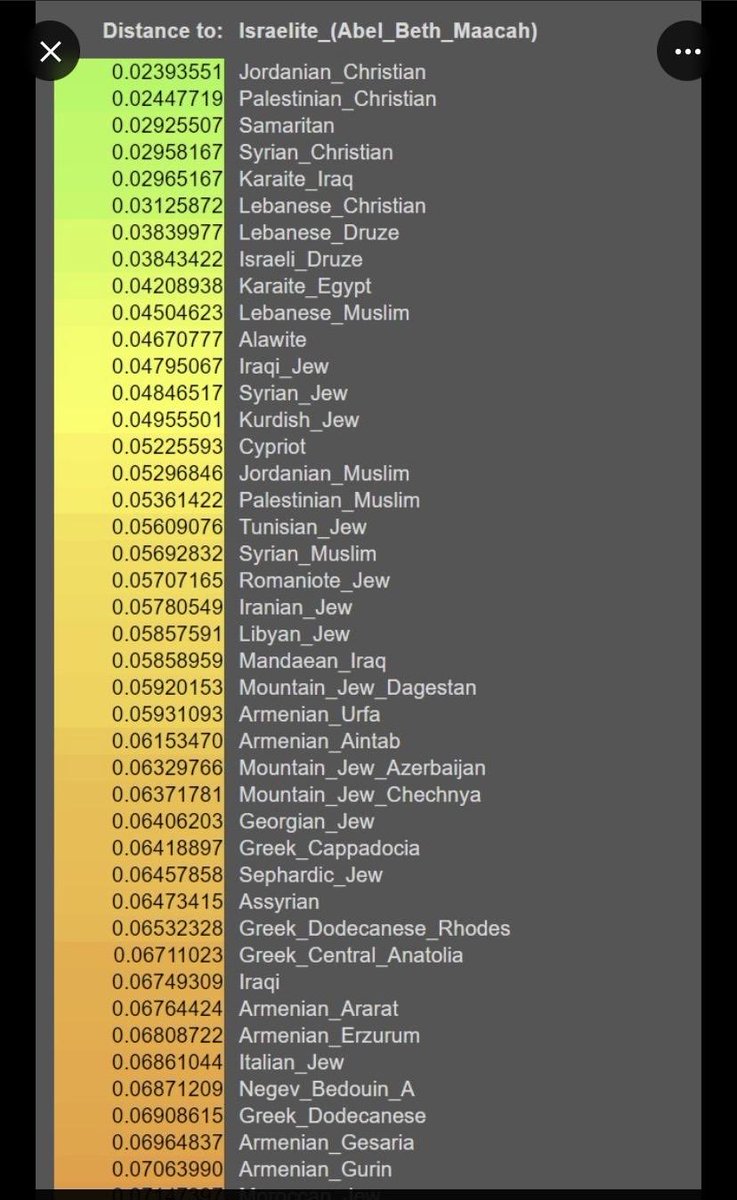
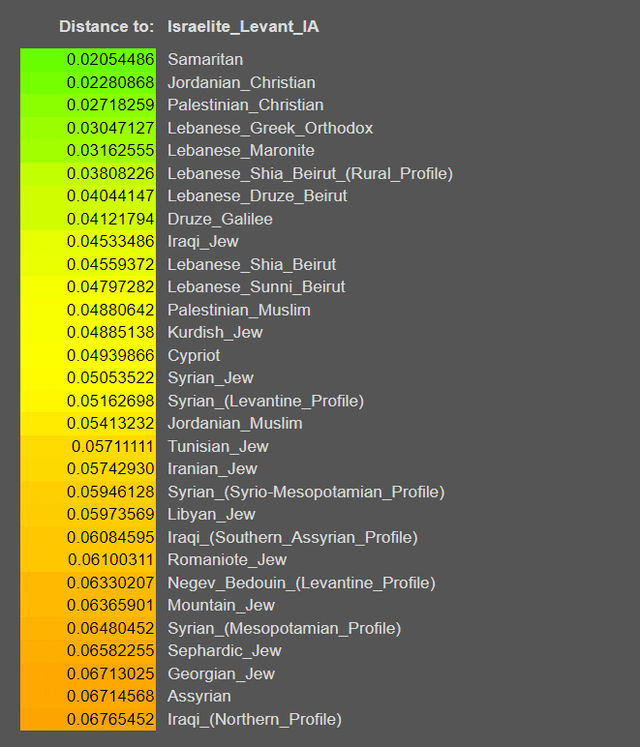
In this breakdown several Jewish groups are closest to the ancient samples karait iraq/Karait Egypt / iraqi jews/ syrian jews/ Kurdish jews are all closer than Palestinian muslims even Cypriots are closer to ancient Levantines than Palestine Muslims Which shows huge external admix to Palestinians
English
2
0
0
31
Struggling in college🇱🇧🇦🇴 retweetet
Falastin Flip
Falastin Flip@TOliveFern·
They want to be us soooo bad
Falastin Flip tweet media
English
142
464
5.6K
87.9K
Thisshalllpasss
Thisshalllpasss@butfoundshe·
@Tastelessmodel @EylonALevy Plus the sample you sent is iron age The one i sent is bronze age which is canaanite culture! That’s Iron Age data is already mixed. Bronze Age samples are the actual Canaanite baseline. You’re comparing two different time layers, so the conclusion isn’t that straightforward.”
English
1
0
0
31
Thisshalllpasss
Thisshalllpasss@butfoundshe·
@Tastelessmodel @EylonALevy Where is Palestinian muslim??? We have iraqi jew among the closest Palestinian Muslim is already medium distance! Here is another sample Iraqi jew/ karaite/syrian and Kurdish jews already closer than Palestinian Muslims
Thisshalllpasss tweet media
English
2
0
0
41
Struggling in college🇱🇧🇦🇴 retweetet
gato fumador
gato fumador@KweenInYellow·
If an army was going door to door warning people that giving sanctuary to their Jewish neighbors would result in their houses being bombed, there'd be no question what was going on here.
English
32
2.3K
8K
198.5K
Falastin Flip
Falastin Flip@TOliveFern·
Jesus was famously embraced by the Jewish authorities
Falastin Flip tweet media
English
28
141
1.5K
18.4K
Thisshalllpasss
Thisshalllpasss@butfoundshe·
@Tastelessmodel @EylonALevy Well jews cluster perfectly between south europe and modern middle east mind you modern middle east is very mixed with peninsular arabs, if you were to measure with ancient Canaanites jews would be even closer to them
English
1
0
0
53
Struggling in college🇱🇧🇦🇴 retweetet
Syrian Girl
Syrian Girl@Partisangirl·
BREAKING 🚨 Israel is committing another genocide, blowing up entire villages in Lebanon!
English
527
11.4K
31.8K
571.3K
Struggling in college🇱🇧🇦🇴 retweetet
sarah
sarah@sahouraxo·
Israel is besieging a Christian village in South Lebanon on Easter. A Vatican-led convoy carrying 40+ tonnes of aid was forced to cancel for “security reasons.” Now the village of Debel is completely cut off. No corridor. No aid. No food. No safety.
sarah tweet media
English
74
2.9K
4.1K
52.4K
Struggling in college🇱🇧🇦🇴 retweetet
sarah
sarah@sahouraxo·
BREAKING: Israel is wiping out entire civilian homes in the village of Taybeh in South Lebanon — a village that stood for over 7,000 years. Not a battlefield. Not a military base. Homes. An ancient village erased in real time.
English
598
11.7K
21.7K
371K
Struggling in college🇱🇧🇦🇴 retweetet
السلذان
السلذان@iiezxc·
20 Inscriptions Mentioning Arabs Before the Common Era (with many more existing): 1. Kurkh Monolith (Shalmaneser III) Arabs mentioned in 853 BCE 2. Other inscriptions of Shalmaneser III – Arabs mentioned in the 9th century BCE 3. Inscriptions of Adad-nirari III – Arabs mentioned in 810–783 BCE 4. Inscriptions of Tiglath-Pileser III – Arabs mentioned in 745–727 BCE 5. Inscriptions of Shalmaneser V – Arabs mentioned in 727–722 BCE 6. Inscriptions of Sargon II – Arabs mentioned in 722–705 BCE 7. Inscriptions of Sennacherib – Arabs mentioned in 705–681 BCE 8. Inscriptions of Esarhaddon – Arabs mentioned in 681–669 BCE 9. Inscriptions of Ashurbanipal – Arabs mentioned in 669–631 BCE 10. Babylonian inscriptions (Nebuchadnezzar II) – Arabs mentioned in 605–562 BCE 11. Texts of Nabonidus – Arabs mentioned in 556–539 BCE 12. Behistun Inscription (Darius I) – Arabs mentioned around 520 BCE 13. Persepolis inscriptions – Arabs mentioned in the 5th century BCE 14. Writings of Herodotus – Arabs mentioned in the 5th century BCE 15. Writings of Xenophon – Arabs mentioned in the 4th century BCE 16. Writings of Strabo – Arabs mentioned in the 1st century BCE 17. Writings of Diodorus Siculus – Arabs mentioned in the 1st century BCE 18. Nabataean inscriptions – Arabs mentioned in the 2nd–1st century BCE 19. Palmyrene inscriptions – Arabs mentioned in the 1st century BCE 20. Early Greek and Near Eastern sources – Arabs mentioned before the Common Era These are only a selection, and many more inscriptions and historical sources also mention Arabs throughout antiquity.
السلذان@iiezxc

The claim that Arabs did not exist before 2,000 years ago contradicts well-documented historical evidence and is not simply a matter of opinion. The earliest explicit mention of the term “Arabs” appears in Assyrian inscriptions during the reign of Shalmaneser III in the 9th century BCE (around 850 BCE). In these records, the Arab leader “Gindibu the Arab” is mentioned as part of a coalition that fought in the Battle of Qarqar. This is a direct historical reference proving that Arabs were known by name and identity over 2,800 years ago. This was not an isolated reference. Arabs continued to be mentioned in Assyrian, Babylonian, and Persian sources, indicating their continuous presence as a recognized people in the region, particularly in northern Arabia and the Levant. Roman history also clearly records the presence of Arabs. One notable example is Emperor Philip the Arab, who was from Syria and was given this title specifically because of his Arab origin. This serves as further evidence of the established presence and significance of Arabs in antiquity. In terms of lineage, Arabs are traced back to Ishmael, the son of Abraham, while the Israelites are traced back to Isaac, also a son of Abraham. This makes them relatives, descending from the same patriarch. Based on this, the existence of Arabs is not recent or incidental, but extends back thousands of years, supported by multiple historical sources and inscriptions. Denying this would require ignoring clear and well-established evidence.


English
3
15
117
13.1K
Struggling in college🇱🇧🇦🇴 retweetet
Ramy Abdu| رامي عبده
Israel has wiped the Lebanese village of Naqoura off the map.
English
94
1.8K
3.2K
1M