Terran Mott

45 posts

Terran Mott banner
Terran Mott

Terran Mott

@TerranMott

Research @psumvc and @colossusmag

Beigetreten Ocak 2022
155 Folgt178 Follower
Terran Mott
Terran Mott@TerranMott·
I think this is the most timeless idea I learned from Eben. *Computers, not consoles* is a cool design lens to make boundless tools for kids and everyone else, no matter how technology changes
Colossus@colossusmag

Eben Upton learned to code as a kid in the ’80s by playing with real computers. By the 2000s, many like him were stuck with video game consoles or other tools for bounded creativity. People like Calculator Boy are why Raspberry Pi was created -- to restore kids having the real thing.

English
0
5
27
5.5K
Terran Mott retweetet
Brie Wolfson
Brie Wolfson@zebriez·
When @TerranMott tells me to pay attention to something, I lean in way hard. She has the best nose for incredible things hiding in plain sight. I learn so much from being her colleague!
Colossus@colossusmag

The third best-selling computer platform in history, after Windows PCs and the Mac, began as a recruiting tool for Cambridge University's computer science department. It's the size of a credit card, has no case, and costs less than a pair of shoes. Eben Upton built Raspberry Pi in 2012 to get more applicants into Cambridge's computer science course, then the easiest to get into. He thought kids needed the real thing: a general purpose programmable computer (like his childhood BBC Micro) to fall in love with the unbounded creativity of coding. He was more right than he could have imagined. On launch day in 2012, he sold 100,000 computers. A million shipped before Raspberry Pi hired an employee. Computer science is now the hardest course to get into at Cambridge, and Raspberry Pi is a $1.5 billion public company that has sold over 73 million units. 80% of its revenue comes from industry. Every digital display at Heathrow runs on a Pi. Schindler uses them in its elevators. The International Space Station has carried one in orbit since 2015. You'll also find the tiny computers wherever the next thing is. Bitcoin mining farms ran on them. So did the first wave of hobbyist drones. Pis now run LLMs. In five years, Upton thinks Claude Sonnet-class intelligence will fit in your pocket. Most tech conversation is about the frontier: the newest chips, the biggest models, trillion-dollar training runs. Raspberry Pi is a case study in the opposite. It shows what cheap, general-purpose, and performant-enough can achieve. It's also a rare British hardware success story, designed in Cambridge, manufactured with Sony in Wales, and reshored from China a decade before the rest of the industry caught on. Read @TerranMott's interview with Upton below. It comes with extraordinary photos of Pis baking in the Welsh factory, and covers the journey of automation, teaching children to program in the era of agents, and putting foundation models in your pocket.

English
0
2
34
6.3K
Terran Mott
Terran Mott@TerranMott·
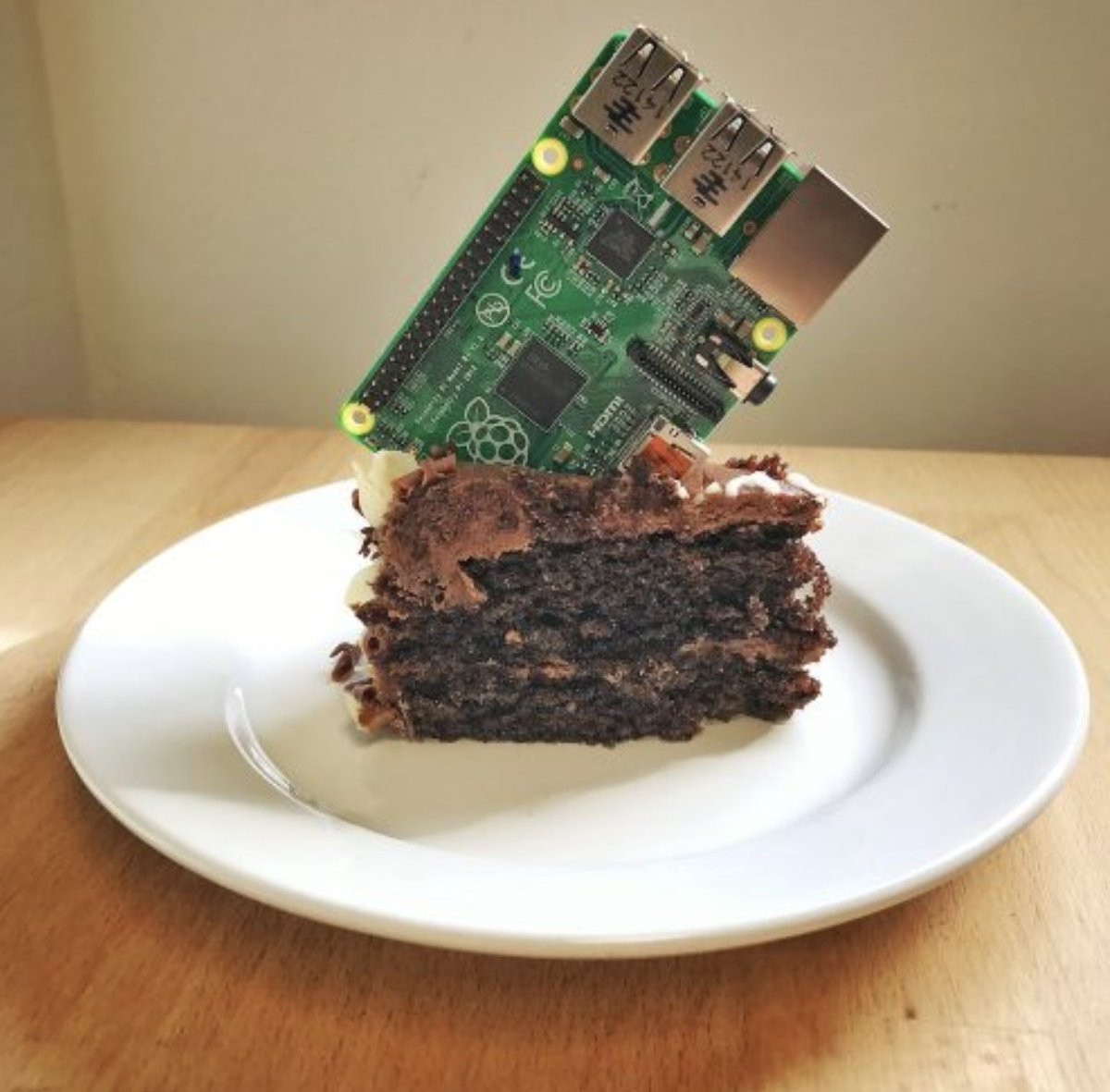
Impossible not to follow up with the pic from their 8th anniversary post
Terran Mott tweet media
English
0
1
9
722
Terran Mott
Terran Mott@TerranMott·
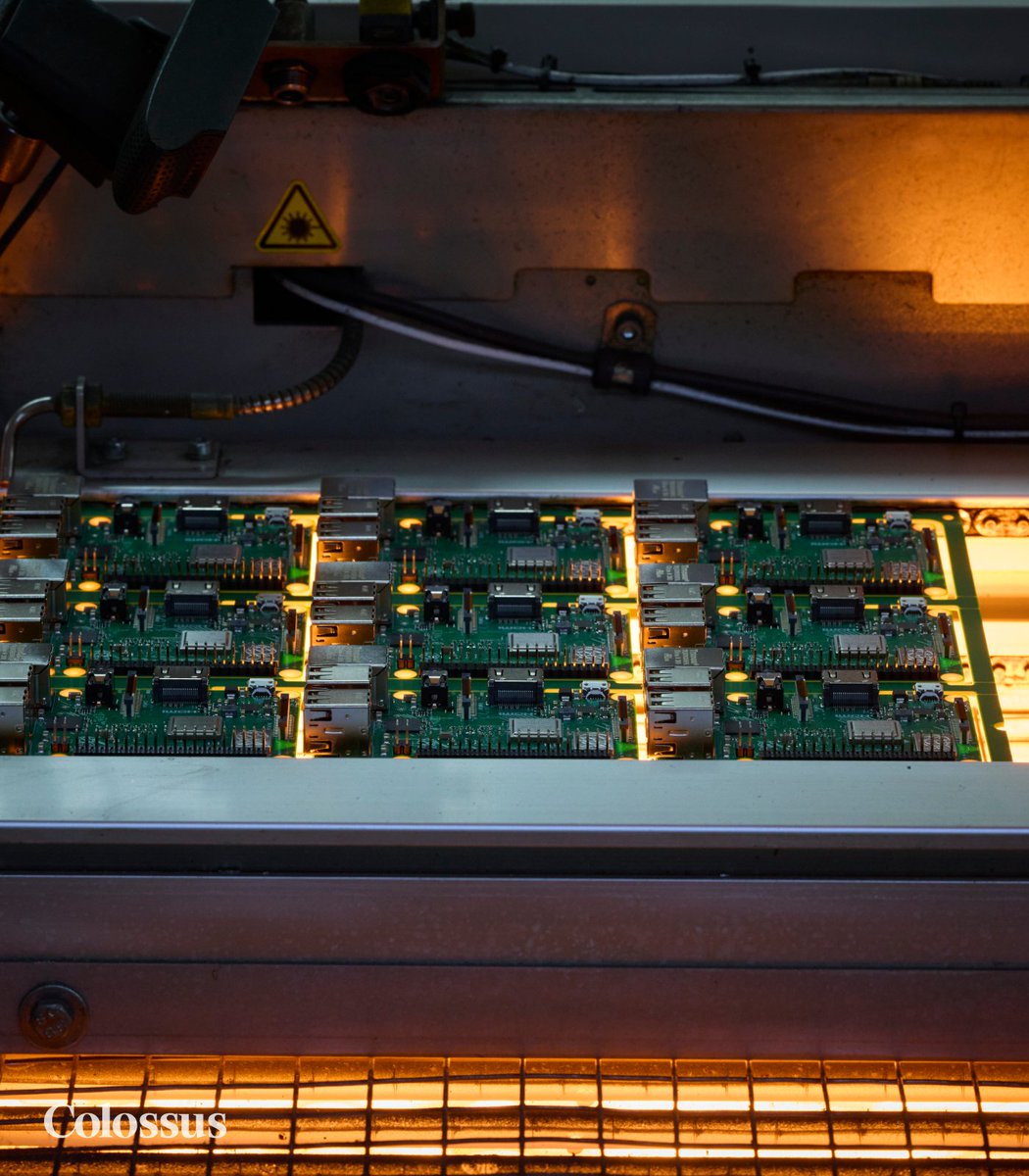
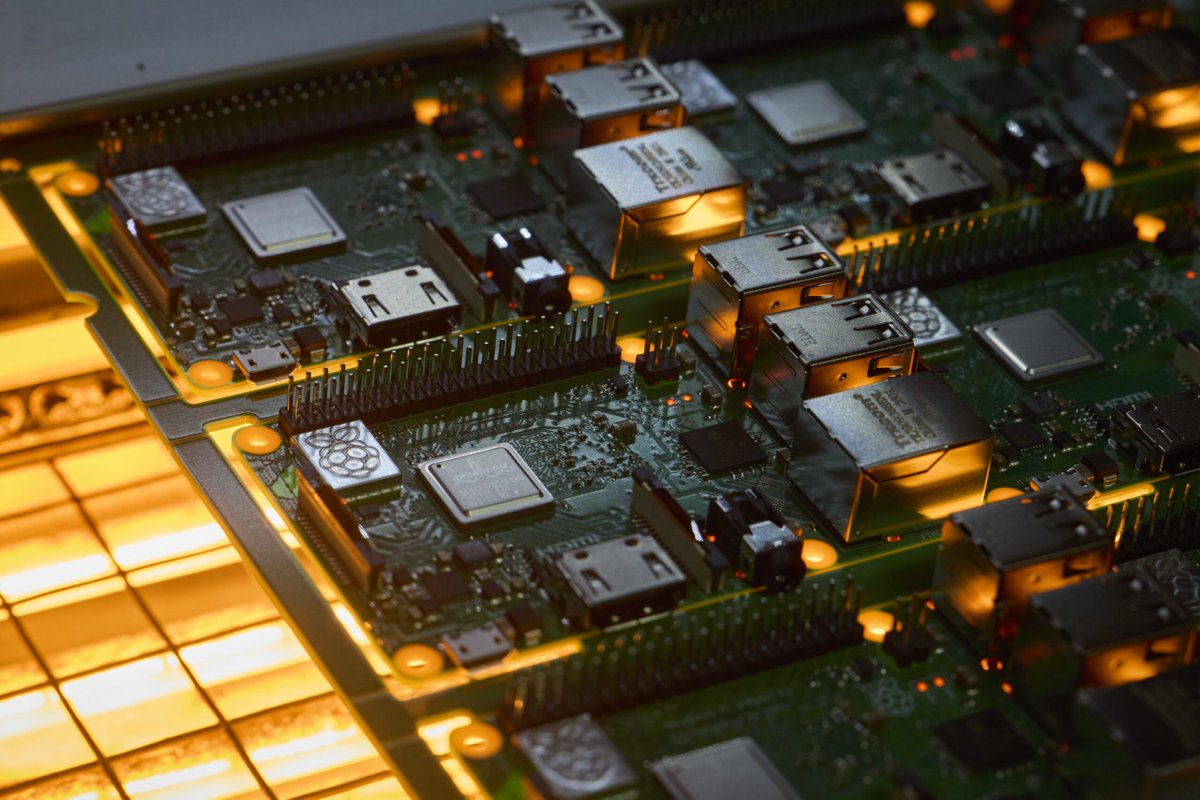
hard not to feel like Raspberry Pi looks like a bakery
Terran Mott tweet mediaTerran Mott tweet media
English
4
11
135
16.6K
Terran Mott
Terran Mott@TerranMott·
Raspberry Pi has been iterating on manufacturing automation for a decade, and it turns out the right answer so far as the company scaled was people -> people + dextrous robot arms -> redesigning components for a different, faster machine They don't believe an automation journey is ever over, might even be back to better robots in the future
Colossus@colossusmag

Raspberry Pi’s journey with robots

English
0
1
17
2.9K
Terran Mott retweetet
Dom Cooke
Dom Cooke@domcooke·
Fantastic interview between Eben Upton, founder of Raspberry Pi, and @TerranMott. Also included: brilliant photos from inside the factory.
Dom Cooke tweet media
Colossus@colossusmag

The third best-selling computer platform in history, after Windows PCs and the Mac, began as a recruiting tool for Cambridge University's computer science department. It's the size of a credit card, has no case, and costs less than a pair of shoes. Eben Upton built Raspberry Pi in 2012 to get more applicants into Cambridge's computer science course, then the easiest to get into. He thought kids needed the real thing: a general purpose programmable computer (like his childhood BBC Micro) to fall in love with the unbounded creativity of coding. He was more right than he could have imagined. On launch day in 2012, he sold 100,000 computers. A million shipped before Raspberry Pi hired an employee. Computer science is now the hardest course to get into at Cambridge, and Raspberry Pi is a $1.5 billion public company that has sold over 73 million units. 80% of its revenue comes from industry. Every digital display at Heathrow runs on a Pi. Schindler uses them in its elevators. The International Space Station has carried one in orbit since 2015. You'll also find the tiny computers wherever the next thing is. Bitcoin mining farms ran on them. So did the first wave of hobbyist drones. Pis now run LLMs. In five years, Upton thinks Claude Sonnet-class intelligence will fit in your pocket. Most tech conversation is about the frontier: the newest chips, the biggest models, trillion-dollar training runs. Raspberry Pi is a case study in the opposite. It shows what cheap, general-purpose, and performant-enough can achieve. It's also a rare British hardware success story, designed in Cambridge, manufactured with Sony in Wales, and reshored from China a decade before the rest of the industry caught on. Read @TerranMott's interview with Upton below. It comes with extraordinary photos of Pis baking in the Welsh factory, and covers the journey of automation, teaching children to program in the era of agents, and putting foundation models in your pocket.

English
0
4
12
2.9K
Terran Mott
Terran Mott@TerranMott·
Why Raspberry? Because it's the rudest fruit. When @Raspberry_Pi was founded, there was a rumor that people at MIT were making a successor to the Apple 2. They wanted to “blow a raspberry at the idea” PS they call Apple “the other fruit company”
Colossus@colossusmag

The third best-selling computer platform in history, after Windows PCs and the Mac, began as a recruiting tool for Cambridge University's computer science department. It's the size of a credit card, has no case, and costs less than a pair of shoes. Eben Upton built Raspberry Pi in 2012 to get more applicants into Cambridge's computer science course, then the easiest to get into. He thought kids needed the real thing: a general purpose programmable computer (like his childhood BBC Micro) to fall in love with the unbounded creativity of coding. He was more right than he could have imagined. On launch day in 2012, he sold 100,000 computers. A million shipped before Raspberry Pi hired an employee. Computer science is now the hardest course to get into at Cambridge, and Raspberry Pi is a $1.5 billion public company that has sold over 73 million units. 80% of its revenue comes from industry. Every digital display at Heathrow runs on a Pi. Schindler uses them in its elevators. The International Space Station has carried one in orbit since 2015. You'll also find the tiny computers wherever the next thing is. Bitcoin mining farms ran on them. So did the first wave of hobbyist drones. Pis now run LLMs. In five years, Upton thinks Claude Sonnet-class intelligence will fit in your pocket. Most tech conversation is about the frontier: the newest chips, the biggest models, trillion-dollar training runs. Raspberry Pi is a case study in the opposite. It shows what cheap, general-purpose, and performant-enough can achieve. It's also a rare British hardware success story, designed in Cambridge, manufactured with Sony in Wales, and reshored from China a decade before the rest of the industry caught on. Read @TerranMott's interview with Upton below. It comes with extraordinary photos of Pis baking in the Welsh factory, and covers the journey of automation, teaching children to program in the era of agents, and putting foundation models in your pocket.

English
0
2
7
712
Terran Mott retweetet
Patrick OShaughnessy
Patrick OShaughnessy@patrick_oshag·
Steve Jobs implored: “make something wonderful” I find the story of HOW Eben Upton built Rasberry Pi every bit as interesting as the tiny little computers he makes, “a general purpose programmable computer to fall in love with the unbounded creativity of coding.” “Most tech conversation is about the frontier: the newest chips, the biggest models, trillion-dollar training runs. Raspberry Pi is a case study in the opposite. It shows what cheap, general-purpose, and performant-enough can achieve.” Imagine when we can run Opus in our pocket, for no cost. I hope this story makes you wonder, what’s something wonderful I could build?
Colossus@colossusmag

The third best-selling computer platform in history, after Windows PCs and the Mac, began as a recruiting tool for Cambridge University's computer science department. It's the size of a credit card, has no case, and costs less than a pair of shoes. Eben Upton built Raspberry Pi in 2012 to get more applicants into Cambridge's computer science course, then the easiest to get into. He thought kids needed the real thing: a general purpose programmable computer (like his childhood BBC Micro) to fall in love with the unbounded creativity of coding. He was more right than he could have imagined. On launch day in 2012, he sold 100,000 computers. A million shipped before Raspberry Pi hired an employee. Computer science is now the hardest course to get into at Cambridge, and Raspberry Pi is a $1.5 billion public company that has sold over 73 million units. 80% of its revenue comes from industry. Every digital display at Heathrow runs on a Pi. Schindler uses them in its elevators. The International Space Station has carried one in orbit since 2015. You'll also find the tiny computers wherever the next thing is. Bitcoin mining farms ran on them. So did the first wave of hobbyist drones. Pis now run LLMs. In five years, Upton thinks Claude Sonnet-class intelligence will fit in your pocket. Most tech conversation is about the frontier: the newest chips, the biggest models, trillion-dollar training runs. Raspberry Pi is a case study in the opposite. It shows what cheap, general-purpose, and performant-enough can achieve. It's also a rare British hardware success story, designed in Cambridge, manufactured with Sony in Wales, and reshored from China a decade before the rest of the industry caught on. Read @TerranMott's interview with Upton below. It comes with extraordinary photos of Pis baking in the Welsh factory, and covers the journey of automation, teaching children to program in the era of agents, and putting foundation models in your pocket.

English
7
6
75
29.8K
Terran Mott
Terran Mott@TerranMott·
Conveyor turned all my half-hearted imagining of tools I wish I had at work into something tangible and also much more playful. Pushes me to just create the things I want, makes it so fun to try @_joe_berg_ is a singularly good systems thinker of software
Patrick OShaughnessy@patrick_oshag

Some early thoughts after building real apps by myself for the first time… We built an internal tool called Conveyor It’s an app builder, and internal App Store It is connected to all of our data, context, and external data APIs I’m completely and utterly useless as an engineer, but I’m good at knowing what I want a tool to do. I’d previously struggled to make useful programs with pure CLIs. Our wrapper made it easy for me. In the first 3 days of having this tool, I’ve built several fairly complicated applications, two of which I’ve used a ton for real work. I’ve only used a couple hundred million tokens so far. Some early feelings: 1) It’s obvious to my that my companies Positive Sum and Colossus will have fully bespoke operating systems, built in house. They will manage as much of our work as possible. This is already exploding for things like research and reporting. Every business will want this for themselves. Sure we won’t built our own slack, but we will built everything that pertains specifically to our shape as a firm, which is a lot. 2) x402 protocol (which enables AI agents and users to pay for API access and digital services instantly, without accounts or subscriptions) is immediately interesting to me. Many times I’ve wished I could just stream payments for individual data points. 3) right now each loop of prompt to output takes 5 to 15 minutes. As models and ASICs (@Etched !) make this faster, it’s going to be so much more fun. Even 5 minutes makes it hard to get in the flow. Can’t wait for seconds instead of minutes. 4) it’s so much easier to design things by starting with a shitty first draft of an app and seeing what’s wrong and iterating than nailing a full design ahead of time. When I had directed the design of software before this was always maddening and slow. 5) this has made me realize that my imagination had atrophied. Use it or lose it is real. Very quickly I’m finding it easier to have good ideas by building more stuff. I encourage everyone to do the same. So fun and rewarding. 6) We need more compute

English
0
0
3
236
Terran Mott
Terran Mott@TerranMott·
such a great read, everything @domcooke writes pulls you in like running downhill
Colossus@colossusmag

This is the story of Hyperliquid, the most profitable startup per employee on earth, told from a guarded office in Singapore. Last year, its team of 11 generated $900 million in profit. It's 3 years old, has never taken a dollar of venture capital, and is beginning to change how century-old markets work. Its founder, Jeffrey Yan (@chameleon_jeff), had never taken a physics class when he picked up a textbook at 16. Two years later, he won gold at the International Physics Olympiad. In 2019, he started trading with $10,000 from a living room in Puerto Rico—working off a television because he didn't own a monitor. Within 3 years, he was running one of the largest anonymous crypto trading firms. Then he shut it down. Yan was rich and free, but he had spent years inside crypto, watching it betray itself. Bitcoin's central premise was decentralization. Yet the biggest exchanges were centralized. Crypto kept reintroducing the dependence on trust it was built to eliminate. He set out to create what should have existed. Hyperliquid is a blockchain with a trading exchange on top, and anyone can build on it. Yan's vision is to house all of finance. In 3 years, it has done over $4 trillion in volume. And in the past few months, it has begun to outgrow crypto. Markets for oil, silver, and the S&P 500 now trade on Hyperliquid around the clock, weekends included, and are growing roughly 40% week on week. When the US and Israel bombed Iran on a Saturday in February, Hyperliquid was the venue traders turned to. Hyperliquid's success has cost Yan his freedom. He works out of a secret office in Singapore and cannot travel without two bodyguards. Even the team's housekeeper doesn't know what they do. In January, @domcooke spent a week at their office. Read his profile on Yan and @HyperliquidX below.

English
1
2
10
1.7K
Brie Wolfson
Brie Wolfson@zebriez·
what is the best technical primer on a topic you've ever read?
English
20
5
106
32.3K
Terran Mott retweetet
Patrick OShaughnessy
Patrick OShaughnessy@patrick_oshag·
I’d love to profile / interview Lisa Su There’s way too little out there about her given her incredible track record and importance Can anyone connect me to her or her team?
English
20
6
213
49.3K
Terran Mott
Terran Mott@TerranMott·
A great thread on how to parse robot demos and to imagine what robots will be able to do next, as they get better in open worlds
Brie Wolfson@zebriez

🤖the robot videos have taken over my timeline and I decided it was time to get smarter about what I’m looking at. I asked for a “how to watch a robot demo” bootcamp from my friends @lachygroom, co-founder of @physical_int & @TerranMott, researcher and robotics phd. My goal was to better understand progress towards our collective dream of robots living and working among us.

English
0
0
3
209
Terran Mott retweetet
Jeremy Stern
Jeremy Stern@JeremySternLA·
My new piece about the man behind Palantir's technology and business model and the defense reformation it begat. It's also of course another story about the longings and paradoxes of the American dream.
Colossus@colossusmag

Shyam Sankar is Palantir's chief technology officer and the man most responsible for making its business and technology work. He joined in 2006 as employee #13, when Palantir was one of Silicon Valley’s freakshows: a small and somewhat demented chickenhawk of a startup with a buggy demo and no customers. For 20 years, largely from the shadows, he has brute forced it into the spearhead of "defense tech" and a $320 billion company. He embedded with intelligence analysts in Virginia, special operators in Iraq and Afghanistan, and on the factory floors of some of the world’s biggest companies—building and rebuilding software in the field, sometimes with phones taped to his head so he could give and take feedback while keeping his hands free to code. He invented the “Forward Deployed Engineer,” which has since become the object of both skepticism and imitation. Alex Karp, Palantir's mercurial co-founder and CEO, says the company would not exist without him. The same can be said of the modern defense tech industry, many of whose founders cut their teeth working for Shyam. In this deeply reported profile, @JeremySternLA tells the story of the most pivotal but hidden figure behind America’s most controversial company. He also gives the clearest explanation you'll read of what Palantir actually does, whether its valuation is justified or absurd, and what any of this has to do with the company’s mission to save Western civilization. It begins in the Grand Ballroom of The Pierre hotel and winds through Nigeria and India, Florida and California, Iraq and Afghanistan. It ends with a rabbi, a monkey, and a lesson in what it means to buy time in the face of a coming fire. Only in Colossus:

English
6
8
56
7.7K
Terran Mott retweetet
Patrick OShaughnessy
Patrick OShaughnessy@patrick_oshag·
A dream interview for me: David Attenborough. If anyone knows him, let me know!
English
24
4
111
26.4K
Terran Mott
Terran Mott@TerranMott·
I want to bottle up 7:45am on a January morning in SF
Terran Mott tweet mediaTerran Mott tweet mediaTerran Mott tweet mediaTerran Mott tweet media
English
0
0
0
89
Terran Mott retweetet