Angehefteter Tweet

TradeChronicles
5.9K posts

@TradeChronicle
26 🇺🇸 | New options trader journaling wins, losses, growth, & lessons | Not financial advice, DYOR










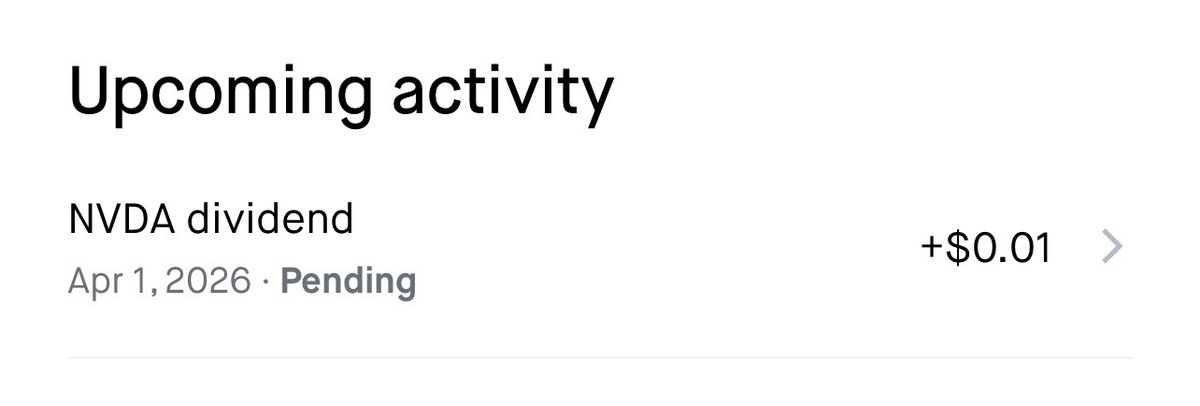
Dividends are great — for the right person, at the right time. If you're in your 20s or 30s, chasing yield is an option but probably not the most ideal strategy. The S&P 500 yields about 1.2% today. That means on a $100,000 portfolio, you're generating $1,200 a year before tax in dividends. To generate $1,000/month in dividend income, a number that's probably more meaningful, you need roughly $1M invested at that yield. Not all people in their 20s or 30s have $1M. Which means the math on dividend income as a strategy doesn't work yet. Of course, there are higher dividend-paying companies that yield 3-4% which changes the math but the idea still resonates. What tends to work better in your accumulation years is growth. The biggest advantage of being young is time. A portfolio growing at a conservative 6-7%/year compounds faster than yield — and does the heavy lifting for you. Dividend investing starts to make more sense when: — Your portfolio is large enough that the income is meaningful — You actually need the cash flow (retirement, semi-retirement) — You're in a lower bracket where qualified dividends are taxed at 0-15% On that last point — qualified dividends are taxed at long-term capital gains rates — 0%, 15%, or 20% depending on your income. That's a great tax advantage. There is a catch: dividends are a forced taxable event. The company pays — you owe tax, whether you needed the income or not. A growth-oriented portfolio isn't taxable until you decide to sell. That deferral compounds too. At the end of the day, everyone's situation and preferences are different. These are two legitimate investing frameworks to balance.






I just used grok, claude and chatgpt to craft the perfect bracket April 6th I will become a Billionaire