
Angehefteter Tweet
adin 🌻 🇺🇦
10.5K posts
adin 🌻 🇺🇦
@adin
Explorer, Technologist, */acc, Ronin, Sim Stds/Sys Engineer, C2 Vet, & Peer Couns. Space nut! #Spoonie #PWME ‘03, #MECFS #Dysautonomia #AdAstra #NSS #AUDHD
US Beigetreten Mart 2007
3.6K Folgt1.2K Follower
adin 🌻 🇺🇦 retweetet


adin 🌻 🇺🇦 retweetet

adin 🌻 🇺🇦 retweetet

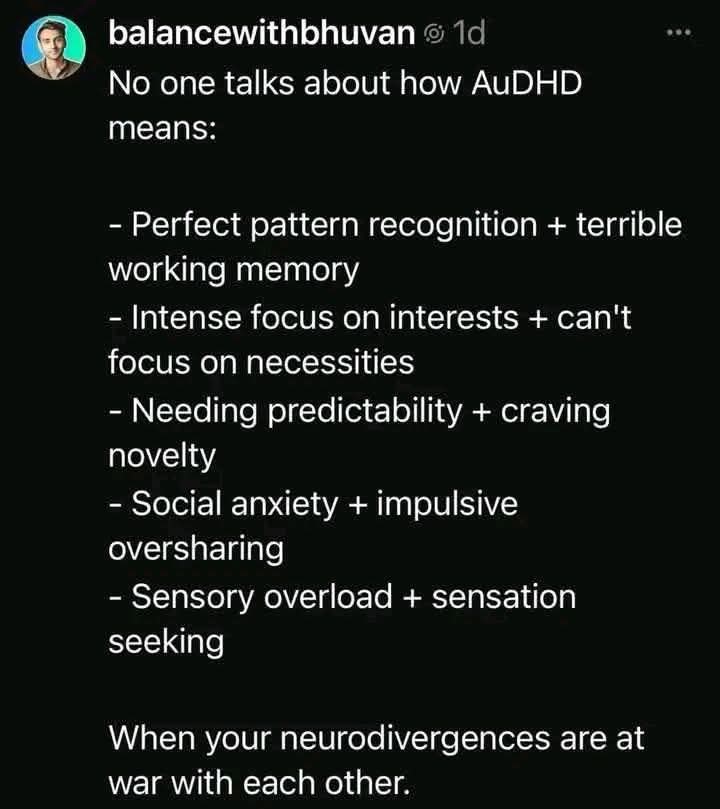
Let me explain exactly why Apple still uses drag-to-install in 2026, because the joke here accidentally proves Apple right.
A macOS .app is a single self-contained folder disguised as a file. Every dependency, every framework, every resource lives inside it. Drag it to Applications, it works. Drag it to Trash, it's gone. No registry entries. No leftover DLLs. No uninstaller that misses half the files.
Windows installers scatter fragments across Program Files, AppData, the registry, system32, and a dozen temp directories. Uninstalling a Windows app is an archaeological dig. Five years later you're still finding config files from software you forgot you owned.
Linux is worse. Dependency hell is so common they named it. Entire package managers exist to solve the problem of "I installed something and now nothing else works." Flatpak and Snap were invented specifically to copy what macOS bundles already did natively.
The macOS bundle architecture came from NeXTSTEP in 1989. Steve Jobs brought it to OS X in 2001. The core design hasn't changed because the core design was correct. An app is a folder. Installation is a copy. Removal is a delete. Three operations that map perfectly to how humans already think about files.
The drag-to-install window with the arrow isn't lazy UX. It's the entire thesis of the system made visible. You are literally just moving a folder. There is no "installation" step because there's nothing to install. The app is already complete.
Every other OS eventually tried to get here. Windows got MSIX. Linux got Flatpak. Mobile figured it out from day one because phones shipped after Apple proved the model. The pattern everyone else converged toward is the pattern this tweet is calling outdated.
The funniest part: the app being dragged in that screenshot is Claude. An AI that can write code, analyze documents, and reason about complex systems. And the most advanced step in getting it onto your machine is holding down a mouse button and moving your wrist two inches to the right.
That's not a design failure. That's a 37-year-old architecture so good that the most sophisticated software on earth still ships inside it.
Noah Cat@Cartidise
it’s 2026 and this is how you install apps on macOS
English
adin 🌻 🇺🇦 retweetet
“It takes a year to build an aircraft — and 200 YEARS to build a military tradition where you don’t leave anybody behind.”
English
adin 🌻 🇺🇦 retweetet

Yes you do. Literally the damn mission set for this airframe and the exact use case and operational plan they train for with the exact assets they train with.
Dr.Sam Youssef Ph.D.,M.Sc.,DPT.@drhossamsamy65
⛔️Let me repeat this again, You don't do a rescue operation of one pilot with two C-130s loaded with tens of military troops‼️
English
adin 🌻 🇺🇦 retweetet

Let me explain something to the MAGA crowd, because clearly someone needs to.
They seem to think NATO is cosmic room service. You pick up the phone, say “hello, we’re having a bit of a war here,” and thirty-one countries march to your rescue. A continental Uber for military adventures.
That is not how it works.
Article 5 is a mutual defense clause. The clue is in the word mutual. And it has been triggered exactly once in NATO’s entire history. After September 11. When America was attacked. Not Europe. America.
Every NATO member showed up. They went to Afghanistan. They fought. They bled. They died. In America’s war. On America’s behalf.
Now imagine they hadn’t.
Over 1,100 allied soldiers died in Afghanistan. British, Canadian, German, Danish, Polish. And yes, even Ukrainian soldiers, who had no NATO obligation whatsoever. Gone. Without them, those are American names on those graves. Sons from Ohio. Fathers from Georgia. Kids from Nebraska who never came home.
Then there is the money. NATO allies spent over 100 billion dollars on a war that started on American soil. Without that, Washington pays every cent. On top of the 2 to 3 trillion the war already cost.
And without allied bases across Europe and Central Asia, American supply lines collapse entirely. Without British forces in Helmand and Canadians in Kandahar, the Taliban reconstitutes in three years instead of ten. The gaps get filled one way. More American deployments. More American coffins arriving at Dover.
Afghanistan was bloody. But NATO took the hit. Without them, every single one of those casualties would have had an American name.
Trump called allies like these losers. Suckers.
If you are a certain kind of broken person, that probably makes sense to you. But for the rest of us, what those soldiers did has a different name. Honor. The bond between men who have been in the same dirt, under the same fire. Between Brits and Americans, Frenchmen and Norwegians, Canadians and Danes. Not a diplomatic relationship. A blood bond. Brotherhood forged in places most people will never see and cannot imagine.
In that culture, you do not mock a fallen ally. You do not sneer at the dead. It is the lowest thing a human being can do. Trump did it to a standing ovation.
If you are a MAGA supporter travelling to NATO countries, understand this. There are no friendly pats on the back waiting for you. No one will buy you a beer. The governments who share your worldview sit in Minsk, Moscow and Pyongyang. Brutal dictatorships where journalists disappear, elections are theatre and dissent is a medical condition treated in basements. Not London. Not Paris. Not Rome, Stockholm, Copenhagen, Berlin or Ottawa.
You have abandoned the open societies, the free press, the rule of law, the places where people actually want to live. You traded the best of civilization for a very small, very dark room. Frankly, it serves you right.
Gandalv / @Microinteracti1


English
adin 🌻 🇺🇦 retweetet

You cannot deter Russia with empty warehouses.
Europe simply does not have the cruise missiles, ballistic missiles, or interceptors required to survive a real war.
We are dangerously exposed while our defense industry lags behind.
We need massive production immediately

English
adin 🌻 🇺🇦 retweetet

With the rise of new tools in molecular biology, it’s becoming clear that viruses and other pathogens can remain in the body or otherwise affect its workings for a surprisingly long time time.com/article/2026/0…
English
adin 🌻 🇺🇦 retweetet

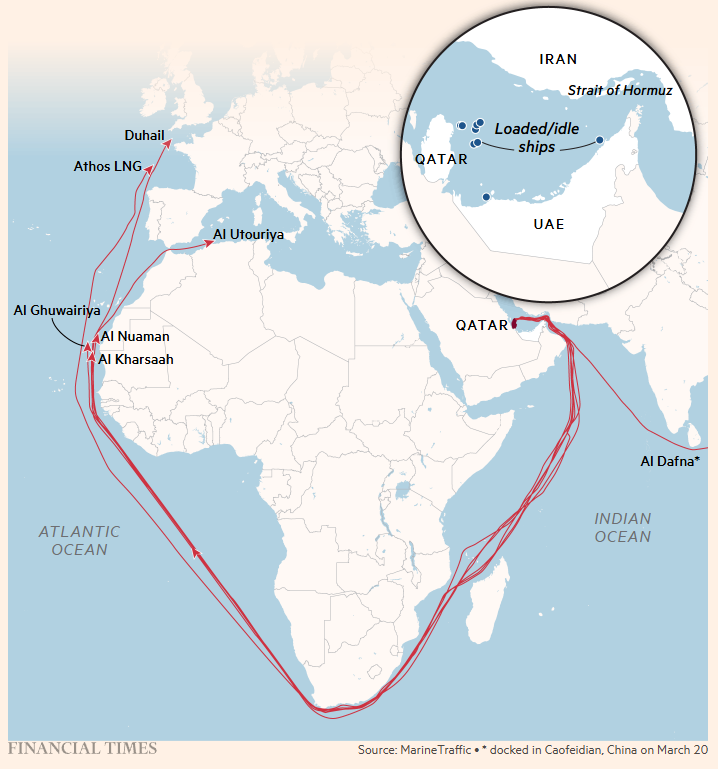
In 10 Tagen erreichen die letzten Gastanker aus dem Persischen Golf ihre Häfen. Schiffe, die vor Kriegsbeginn beladen wurden. Eine einzige Ladung davon geht nach Asien. Einen Kontinent, der 90 Prozent des katarischen Gases abnimmt. Sechs Ladungen gehen nach Europa. Wenn diese Schiffe entladen sind, ist Schluss. Kein nächster Konvoi. Kein Nachschub. Die Uhr tickt.
Katar produziert ein Fünftel des weltweit gehandelten Flüssiggases. Seit der Blockade der Straße von Hormuz steht der Export still. Seit den iranischen Raketenangriffen auf Ras Laffan, die größte Gasanlage der Welt, ist ein Teil der Infrastruktur physisch zerstört. Was jetzt noch auf dem Wasser schwimmt, sind Schiffe, die vor Kriegsbeginn beladen wurden. Letzte Reste eines Systems, das nicht mehr existiert.
Was danach kommt, zeigt Pakistan.
Im Januar hatte Pakistan einen Gas-Überschuss. Die Terminals waren unterausgelastet. Die Regierung bat Katar, 24 geplante Ladungen umzuleiten. Eni aus Italien sollte weitere 11 Ladungen verschieben. Pakistan brauchte das Gas nicht.
Acht Wochen später brach der Krieg aus. Pakistan versuchte sofort, die Eni-Ladungen zurückzubekommen. Eni lehnte ab. Pakistan kontaktierte Händler in Europa, den USA, Oman, Aserbaidschan und Afrika. Alle boten Preise an, die Pakistan nicht bezahlen konnte. Der Spotmarkt für asiatisches Flüssiggas hat sich seit Kriegsbeginn verdoppelt, auf rund 23 Dollar pro Million BTU.
Im März kamen 2 von 8 geplanten LNG-Ladungen an. Die anderen sechs wurden nie geliefert. Für April erwartet die Regierung, dass 3 von 6 Ladungen ausfallen. Beide LNG-Terminals des Landes laufen auf einem Sechstel ihrer normalen Kapazität. Die letzten Reste der beiden Schiffe, die vor dem Krieg ankamen, werden gestreckt bis Ende März.
Der Chef eines der beiden Terminals, Iqbal Ahmed, sagt: "Danach sind wir trocken. Wir wissen nicht, wann die nächste Ladung kommt."
Pakistan zahlt trotzdem weiter. 538.000 Dollar pro Tag an die privaten Terminalbetreiber. Rund 16 Millionen Dollar im Monat. Für Anlagen, die kein Gas verarbeiten. Die Verträge laufen auf Take-or-Pay-Basis. Kein Gas, aber volle Rechnung.
Gas aus Aserbaidschan wäre eine Alternative. Der Preis: dreimal so hoch wie der bisherige Import. Für ein Land mit einer Armutsrate von 29 Prozent und einem Pro-Kopf-Einkommen von 1.800 Dollar ist das keine Option. Pakistan wird stattdessen auf Schweröl umsteigen. Dreckiger. Teurer. Die einzige Wahl, die bleibt.
Der CEO des Terminals fasst es zusammen: "Ich sehe ein sehr schwieriges Jahr vor uns, gefolgt von zwei bis drei weiteren schwierigen Jahren."
Pakistan ist der extremste Fall. Aber nicht der einzige.
Bangladesch importiert 95 Prozent seines Energiebedarfs. Das Land hat Universitäten geschlossen, Treibstoff rationiert, Klimaanlagen in Regierungsgebäuden abgeschaltet. Vier von fünf staatlichen Düngemittelfabriken stehen still. Das Gas, das noch da ist, wird in Kraftwerke umgeleitet, um Blackouts zu verhindern. Ein Land mit 170 Millionen Menschen, im Dunkeln.
Und die reichen Länder? Kaufen sich Zeit. Aber nicht viel.
Taiwan bezieht ein Drittel seines Gases aus Katar. Die Regierung hat 22 Ersatzladungen gesichert, genug bis Ende April. Klingt beruhigend. Bis man eine Zahl kennt: Taiwan hat Gasreserven für elf Tage. Im Juli liegt der Stromverbrauch 40 Prozent über dem Februarniveau. Der Atlantic Council warnt vor "schweren Energieengpässen", wenn die Straße von Hormuz geschlossen bleibt. Und Taiwan produziert über 90 Prozent der weltweit fortschrittlichsten Halbleiter. Wenn dort der Strom knapp wird, betrifft das jedes Smartphone und jeden Server auf dem Planeten.
Japan hält sich bei Spot-Käufen zurück. Nur wenige Versorger erwägen überhaupt, auf dem freien Markt zu kaufen. Stattdessen plant Japan die Rückkehr zu Kohle und Atom. Im Januar hat das Land das größte Kernkraftwerk der Welt in Niigata teilweise wieder hochgefahren. Die Energiewende läuft rückwärts.
Aber selbst wenn die Straße von Hormuz morgen wieder öffnet, bleibt ein Schaden, der nicht reparierbar ist.
Diese Woche hat Katars Energieminister Saad al-Kaabi bestätigt: Zwei der 14 Produktionslinien von Ras Laffan sind zerstört. 12,8 Millionen Tonnen pro Jahr. 17 Prozent der gesamten katarischen Exportkapazität. Reparatur: drei bis fünf Jahre.
Die Anlagen haben 26 Milliarden Dollar gekostet. Der jährliche Umsatzverlust liegt bei 20 Milliarden Dollar.
Katar wird Force Majeure erklären auf Langzeitverträge mit Italien, Belgien, Südkorea und China. Für bis zu fünf Jahre. Das sind keine kurzfristigen Ausfälle. Das ist ein struktureller Verlust für den Rest dieses Jahrzehnts.
Al-Kaabi sagte gegenüber Reuters: Er hätte sich "nie in seinen kühnsten Träumen" vorstellen können, dass Katar so angegriffen würde. Von einem muslimischen Bruderland. Im Ramadan.
Die Schiffe, die jetzt noch unterwegs sind, werden in zehn Tagen ihre Häfen erreichen. Die Tanks werden entladen. Das Gas wird verbraucht.
Und dann beginnt die eigentliche Krise.
In diesen Recherchen steckt eine Menge Arbeit. Wenn dich solche Makro Insights interessieren und dir helfen, interagiere gerne mit dem Post. 🧡
Deutsch

عاجل:
واشنطن أبلغت إسرائيل نيتها السيطرة برياً على جزيرة خارك.
(القناة ١٥ الإسرائيلية)
العربية
adin 🌻 🇺🇦 retweetet

I asked a retired U.S. Marine familiar with amphibious operations about a MEU on Kharg Island. Granted, this person doesn't have "OSINT" in his Twitter bio, so what the hell would he know? But this is what he told me, contra Trump's claim this is a "simple military maneuver":
"Amphibious landings are by nature high risk and a lot can go wrong even in the best conditions. The Marine Corps has lost equipment during exercises, for example when an Abrams tank was sunk during an exercise on the coast of Spain in the 2010s.
"An amphibious landing on Kharg is within the capability of the United States to accomplish, but at what cost and to what end? Once the Marines fight their way ashore and take their objective, they will be on an island with limited cover, very close to hostile Iran. How long could the Marines hold this island, under bombardment, before they would need to be withdrawn?
"As for the danger, I think of amphibious assault as being akin to airborne assault. A lot of this depends on the tactical advantage of speed and surprise.
"What the Marines are working against here is that everyone knows they're coming. And there are only so many places that are suitable for a landing. Need a suitable approach, favorable tides, etc. the Iranians understand this and will plan for it.
"It is reasonable to expect that they will try to attack the transports en route, that they will attack while the ships unload, that they will attack the landing craft while they move from the ships to the beach, and that the troops will be attacked as they assault from the beach to their objectives.
"Once the Marines are at their objective, they'll be attacked there too because Iran, and any other interested party to the conflict, will know exactly where the Marines are.
"We're also 13 years removed from major combat operations in GWOT. There are still combat veterans at middle and upper echelons, but the majority of troops are not combat veterans. They're new guys."
English
adin 🌻 🇺🇦 retweetet

adin 🌻 🇺🇦 retweetet

What if a world model could render not an imagined place, but the actual city?
We introduce Seoul World Model, the first world simulation model grounded in a real-world metropolis.
TL;DR: We made a world model RAG over millions of street-views.
proj: seoul-world-model.github.io
English
adin 🌻 🇺🇦 retweetet
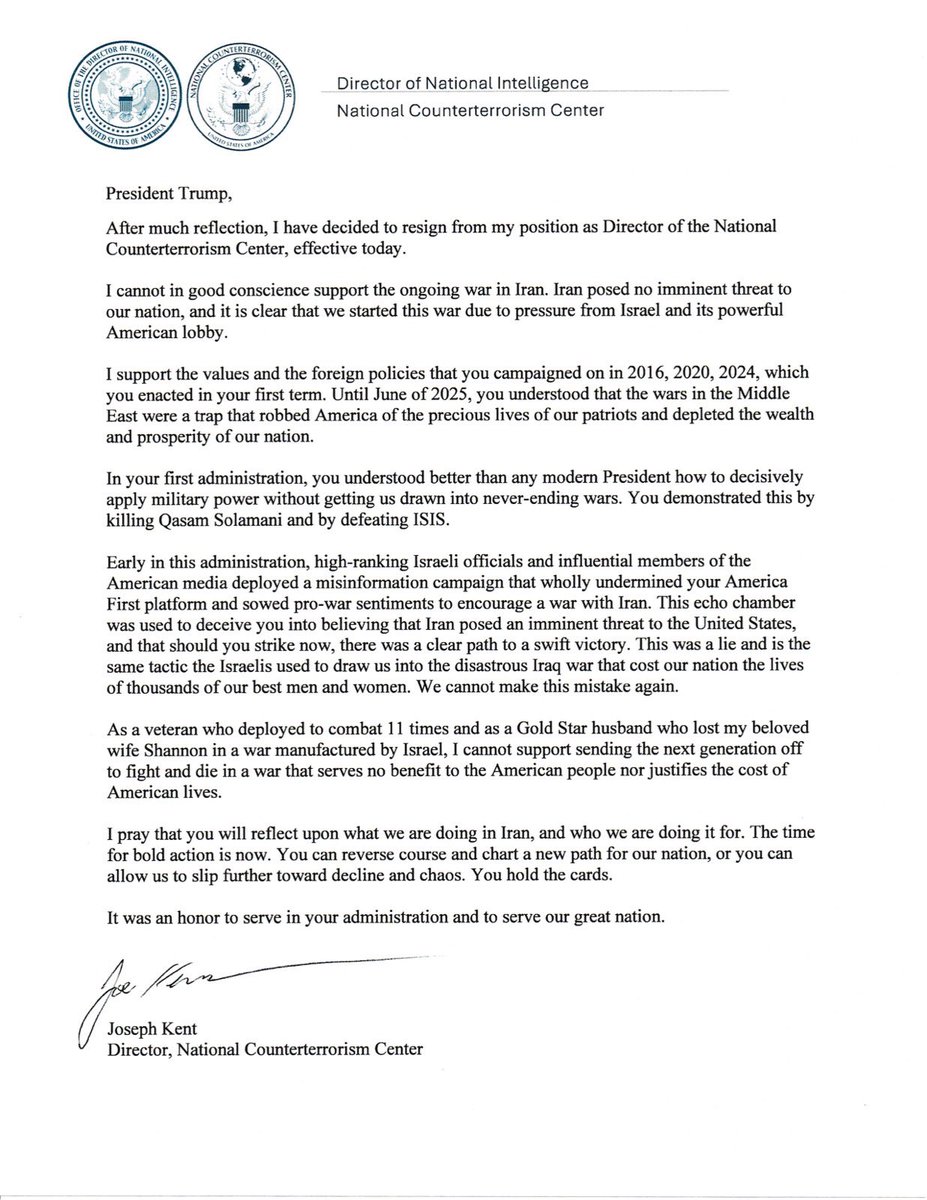
After much reflection, I have decided to resign from my position as Director of the National Counterterrorism Center, effective today.
I cannot in good conscience support the ongoing war in Iran. Iran posed no imminent threat to our nation, and it is clear that we started this war due to pressure from Israel and its powerful American lobby.
It has been an honor serving under @POTUS and @DNIGabbard and leading the professionals at NCTC.
May God bless America.
English
adin 🌻 🇺🇦 retweetet

This is the most underrated direction in AI right now. Instead of making LLMs better at arithmetic through more training data, just embed a deterministic computation engine in the weights.
The implications go way beyond Sudoku — imagine financial modeling, physics simulations, or cryptographic operations running inside inference. Hybrid architectures where neural nets handle reasoning and embedded interpreters handle precision.
English
adin 🌻 🇺🇦 retweetet

COGNITIVE ARTISTS treat cognition itself as a medium and the organization of meaning as the site of artistic practice. Instead of solely focusing on paint, sound, language, movement, or any other discrete form, they work with the underlying processes through which expression becomes experience: perception, attention, memory, interpretation, association, and sense-making. Their work may take material form as image, object, performance, book, software, diagram, social intervention, or machine-mediated system, but its deepest substance does not reside in the artifact alone. It lies in the transformations the work sets in motion within cognition itself: how it reorients awareness, reframes perception, reorganizes salience, alters interpretation, and expands the field of what can be imagined, thought, or made possible. The practice is therefore intrinsically recursive in that it engages not only what the mind thinks, but how it comes to think; not only what is perceived, but the conditions under which perception becomes meaningful to itself.
English
It’s crystal clear now that Trump has lost control of this war. He badly misjudged Iran’s ability to retaliate. The region is on fire.
1/ I’m going to explain to you in this🧵what I’ve learned - in part from closed door briefings - about the four biggest current crises.
English

@rand_longevity Trying to find lab space, just got study proposals finished. Any grad students that want some easy research?
English
@rand_longevity I’m working on exactly this after identifying a novel SNP that runs in my family and has caused at least 5 generations of cancer, immunodeficiency, and rheumatological conditions. Found a cancer drug that might be *the* bridge treatment until base editing matures.
English