
Angehefteter Tweet
Sir Arrow
14.4K posts

@oman_hakimi “Speaking about politics is totally permissible” is contrary to “criticising the people of authority is forbidden”.
English

Al-ʿAllāmah Muqbil ibn Hādī (may Allah have mercy on him) said:
“Speaking about politics is not forbidden; rather, it is part of the legislation of Allah. Indeed, Sahih al-Bukhari and Sahih Muslim both narrate in their Sahīhs from Abu Huraira (may Allah be pleased with him)...
English
Sir Arrow retweetet

Hadith Master Shaykh ’Abd Allah al-Sa’d was imprisoned more than 20 years ago after uttering these words, when the filthy American crusaders came to Iraq.
English

Sir Arrow retweetet
An interesting benefit I learned today from Ustadh Abdulrahman Hassan:
He mentioned from his readings that ʿAbd al‑Raḥmān ibn Zayd (d. 182 AH) is the most prolific among the Salaf in interpreting the Qur’an with the Qur’an, and the Ustadh counted…
English
Sir Arrow retweetet

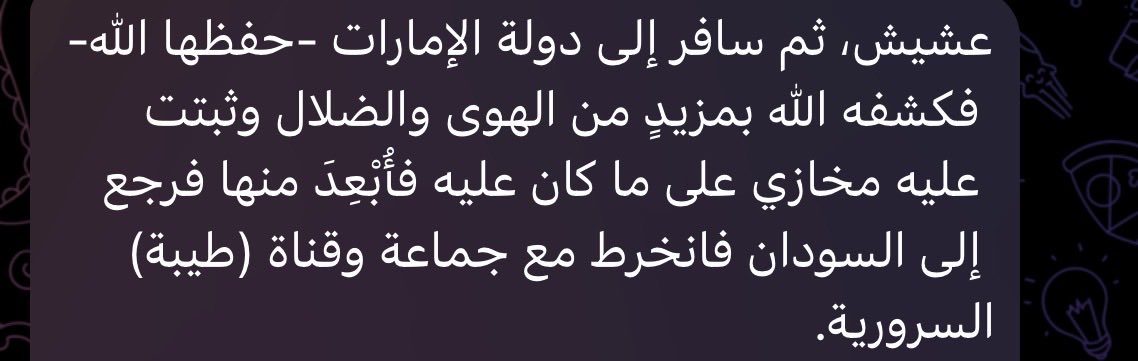
Spubs Shaykh Nizar bin Hashim al-Abbas has a whole audio about current affairs including “A warning against the Emirati state.”
Why isn’t Nizar an Ikhwani Qutbi Khariji Sururi Takfiri for this? He was making Du'a for the Emirates back in 2016, what changed?

English
Sir Arrow retweetet

In every gathering be it a GC or Real life gathering, We must mention Allah
Prophet pbuh ﷺ said:
When people sit together and do not remember Allah, then leave, it is as if they left the carcass of a donkey, and it will be a cause of regret for them (on the day of judgement)

English
Sir Arrow retweetet

From the unique positions of the Shafi'i madhab is the invalidity of the salaat of the one who does sujood and his forehead is blocked from touching the ground by his 'Amama or hat.
Added is if one's hands are covered by his sleeves and he prostrates without making skin contact.
English
Sir Arrow retweetet

قد أفاد شيخ الإسلام ابن تيمية أن ما ورد فيه قول النبي ﷺ: "ليس منا" يدل على أنه من كبائر الذنوب.
وقد ضلّت طائفتان في فهم قول: "ليس منا":
الطائفة الأولى: المرجئة، حيث جعلوه بمعنى: "ليس من أمثالنا".
العربية
Sir Arrow retweetet
al-Shaykh ʿAbd al-ʿAzīz al-Ṭurayfī (حفظه الله) entered by call as a guest on a Saudi tv channel where al-Shaykh Saʿd al-Shathrī was discussing topics like the role of the scholars today and the state of the ummah.
(1/4)
Català
Sir Arrow retweetet
Shaykh Saalih al-Luhaydaans Du'a & comments at the start of the Syrian revolution in 2011. Pay attention to what he says regarding the lives of those in Syria, particularly his comment “Even if whoever from them perishes.” & the (supposed) Maliki view he mentions.
English
Sir Arrow retweetet

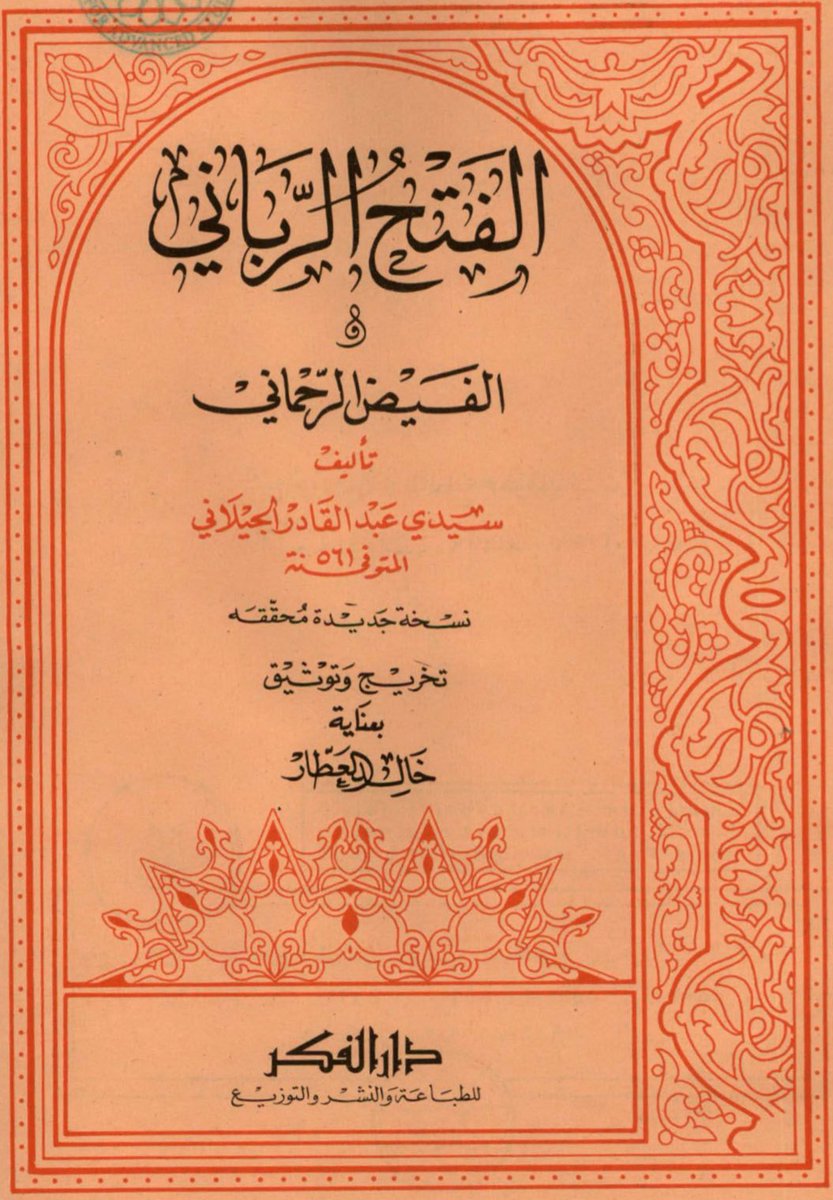
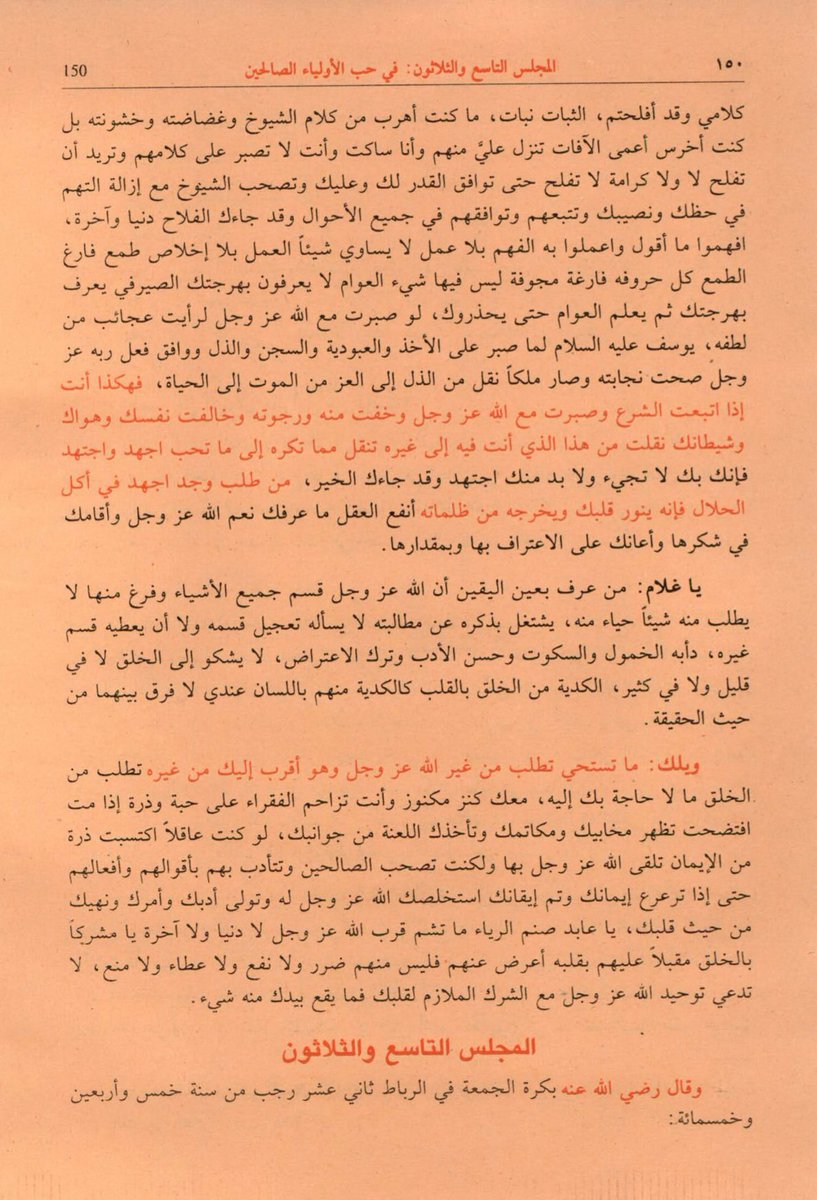
Imam ʿAbdulQādir al-Jīlāni al-Wahhābi (d. 561) said:
“Woe to you! Do you not feel ashamed to ask from others instead of Allah, the Mighty and Majestic, while He is closer to you than anyone else?…
…O you who associate the creation [with Allah], turning your heart toward them—turn away from them! They possess neither harm nor benefit, neither giving nor withholding. Do not claim the Tawḥīd of Allah while Shirk clings to your heart, for you will have nothing of it.”
English
Sir Arrow retweetet

Sadly Muslims have to take some responsibility for this aswell. When people have made it something so light on the tongue, of course others will catch on.
And even if not lying, still shows a lack of respect towards The One you are swearing by.
{ ولا تطع كل حلاف مهين } 68:10
🇱🇾 إرين@ogatairl
Non Muslims should stop saying Wallahi , it’s not a slang or some funny word for u to be spamming
English
Sir Arrow retweetet
Shaykh Saalih al-Luhaydaans Du'a in 2011 for Syria, Libya & other lands & his Du'a for Ali Abdullah Saleh (ruler of Yemen at the time) to either quickly resign or to be removed/toppled & replaced.
English
Sir Arrow retweetet
Prophet Muhammad ﷺ is your greatest Imam and Shaykh, so fill your heart with a love for him that surpasses all other creation. Whenever the Prophet ﷺ is mentioned, you find sweetness in remembering and honoring him within your heart, unlike the mention of any other creation.
English
Sir Arrow retweetet

Seriously, was this article written by a child?
You don’t provide any source proving the Wahhābīs ‘killed every man, woman, child and baby in a cradle’ in al-Ṭāʾif.
Your quote from Saʾūd b. ʿAbd al-ʿAzīz (with no reference) regarding al-Ṭāʾif and Madīnah is an obvious fake since Saʾūd wasn’t even the one who conquered al-Ṭāʾif, but rather ʿUthmān al-Muḍāyifī did.
Also the First Saudi State never occupied Kuwait, they launched two raids against Kuwait, one in 1795 and one in 1797.
The first raid in 1795 was because Kuwait was sheltering Banū Khālid and Zayd ibn ʿArīʿr, who were in a war and launching attacks against the First Saudi State.
The second raid against Kuwait in 1797 was because of the Ottoman-backed campaign of Thuwaynī b. ʿAbdillāh against the First Saudi State, who was encamped at al-Jahrāʾ (Kuwaiti territory).
The First Saudi State never occupied Kuwait, much less requesting the help of the British to do it (something which, again, you provide no source for).
Ismailoğlu Pasha@IsmailogluF
Only someone who is ignorant of history (or a deluded cultist) would glorify wanton killers, whose grotesque atrocities are difficult to put in words Ottoman archives describe Taifa-i Wahhabiyya as Taifa-i Kharijiyya, not of Millet-i Islam, who declare Ehl-i Sunna as disbelievers
Română
Sir Arrow retweetet

Sir Arrow retweetet

The Means That Aid in Remaining Steadfast Upon the Religion
Shaykh al-Imām Muḥammad ibn Ṣāliḥ al-ʿUthaymīn (d. 1421 AH) said:
“From the means that aid in the strengthening of īmān are abundant acts of obedience, the most important of them being the obligations, then the supererogatory acts. That is due to the statement of Allāh (تعالى) in the ḥadīth qudsī:
وَمَا تَقَرَّبَ إِلَيَّ عَبْدِي بِشَيْءٍ أَحَبَّ إِلَيَّ مِمَّا افْتَرَضْتُ عَلَيْهِ، وَمَا يَزَالُ عَبْدِي يَتَقَرَّبُ إِلَيَّ بِالنَّوَافِلِ حَتَّى أُحِبَّهُ
‘My servant does not draw near to Me with anything more beloved to Me than that which I have made obligatory upon him, and My servant continues to draw near to Me with the supererogatory acts until I love him.’
[Reported by al-Bukhārī]
And whenever a person increases in obedience to Allāh, he increases in īmān and taqwā. Allāh (تبارك وتعالى) said:
وَيَزِيدُ اللَّهُ الَّذِينَ اهْتَدَوْا هُدًى
“And Allāh increases those who were guided in guidance.”
[Sūrah Maryam 19:76]
And He (تعالى) said:
وَالَّذِينَ اهْتَدَوْا زَادَهُمْ هُدًى وَآتَاهُمْ تَقْوَاهُمْ
“But those who receive (and follow) guidance, He increases them in guidance and bestows on them their (works of) piety.”
[Sūrah Muḥammad 47:17]
So being keen on abundant recitation of the Qurʾān, remembrance [of Allāh], prayer, charities, and other acts of drawing near [to Allāh], all of this increases a person in īmān, strength, and love of good.
As for acts of disobedience, they are causes of evil and corruption, just as He (تعالى) said:
وَلَا تُفْسِدُوا فِي الْأَرْضِ بَعْدَ إِصْلَاحِهَا
“And do not cause corruption in the earth after its rectification.”
[Sūrah al-Aʿrāf 7:56]
The scholars said: Do not corrupt it by acts of disobedience. And whenever a person commits an act of disobedience, his īmān decreases, and he grows distant from his Lord (عز وجل).
Allāh (تبارك وتعالى) said:
فَبِمَا نَقْضِهِم مِّيثَاقَهُمْ لَعَنَّاهُمْ وَجَعَلْنَا قُلُوبَهُمْ قَاسِيَةً
“So because of their breaking their covenant, We cursed them and made their hearts hard.”
[Sūrah al-Māʾidah 5:13]
And from the means of increase in īmān is that a person studies the sīrah (life and biography) of the Prophet ﷺ and his noble Companions, for in it is cultivation of the heart, the intellect, and thought; and in it is increase in īmān, and love for the Messenger ﷺ and his Companions; and it nurtures a person with a complete nurturing upon the model of what the Prophet ﷺ and his Companions were upon.”
Source: Fatāwā Nūr ʿalā al-Darb (12/16-17)


Română
Sir Arrow retweetet

No matter how the proposal is, one should never show takabbur.
If you don't like a proposal, decline it respectfully. There's no need to mock it on social media.
What you mock today might become your reality tomorrow.
zāād al-Ma’aād@Alghurabaaaaaa
Name one haram thing that's totally normalized today
English
Sir Arrow retweetet

Sir Arrow retweetet
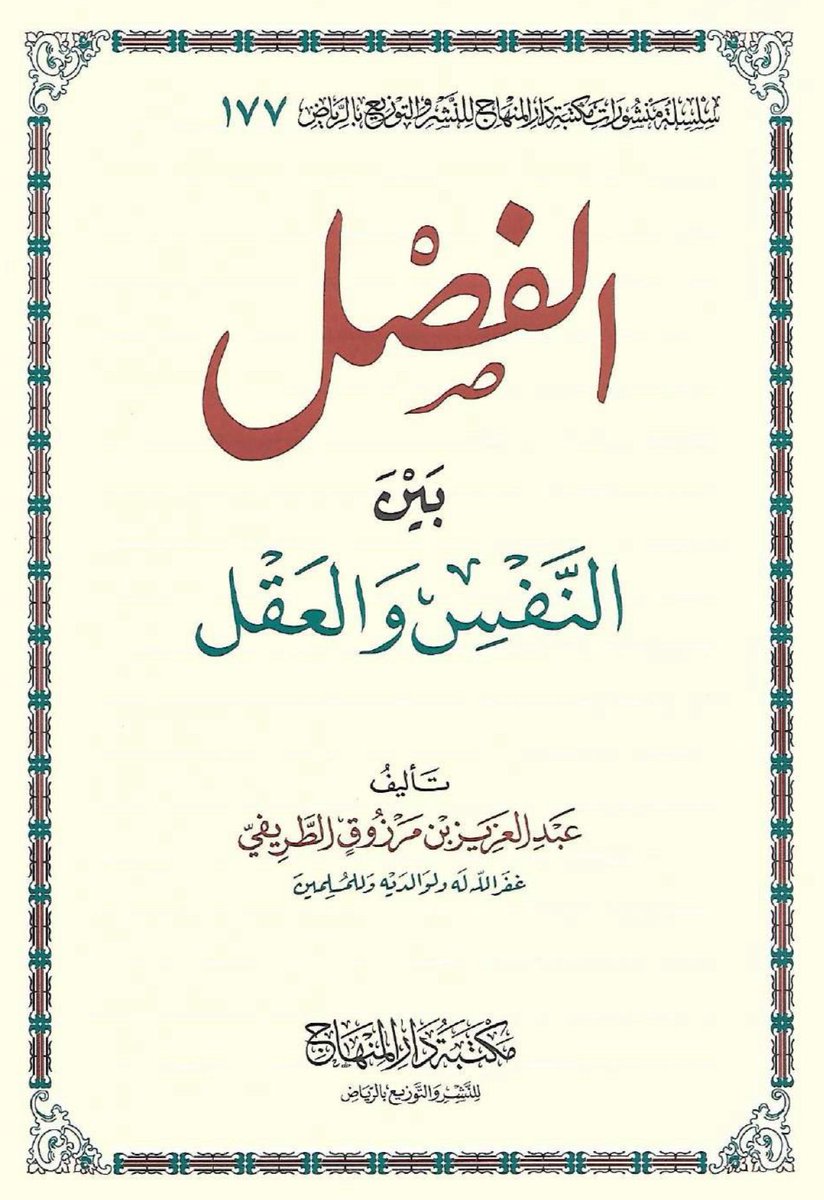
Shaykh AbdulAziz al-Tarifi on the foundation of the desire for knowledge:
“The foundation of knowledge is a person’s awareness of their own ignorance. The more aware they are of it, the more eager they become to overcome it. Likewise, the more clearly a weak person perceives their weakness, the more naturally they are driven to strengthen themselves.
𝗙𝗼𝗿 𝘁𝗵𝗶𝘀 𝗿𝗲𝗮𝘀𝗼𝗻, 𝗮 𝗽𝗲𝗿𝘀𝗼𝗻’𝘀 𝗲𝗮𝗴𝗲𝗿𝗻𝗲𝘀𝘀 𝘁𝗼 𝗮𝗰𝗾𝘂𝗶𝗿𝗲 𝗸𝗻𝗼𝘄𝗹𝗲𝗱𝗴𝗲 𝘀𝘁𝗲𝗺𝘀 𝗳𝗿𝗼𝗺 𝘁𝗵𝗲𝗶𝗿 𝗮𝘄𝗮𝗿𝗲𝗻𝗲𝘀𝘀 𝗼𝗳 𝘁𝗵𝗲 𝗱𝗶𝗳𝗳𝗲𝗿𝗲𝗻𝗰𝗲𝘀 𝗯𝗲𝘁𝘄𝗲𝗲𝗻 𝘁𝗵𝗲𝗺𝘀𝗲𝗹𝘃𝗲𝘀 𝗮𝗻𝗱 𝘁𝗵𝗼𝘀𝗲 𝗮𝗿𝗼𝘂𝗻𝗱 𝘁𝗵𝗲𝗺 — for others help them see themselves, and this makes them desire to rise and improve.
A child, therefore, learns quickly because they grow up surrounded by people who are all more knowledgeable and stronger than they are, and within them arises an inner drive to rise and to hasten in acquiring what they need. Thus, the clearer the need appears, the greater the progress becomes.
But if a person lives under the illusion of knowledge, they become the least eager to seek it — for one does not seek what they believe they already possess.”

English