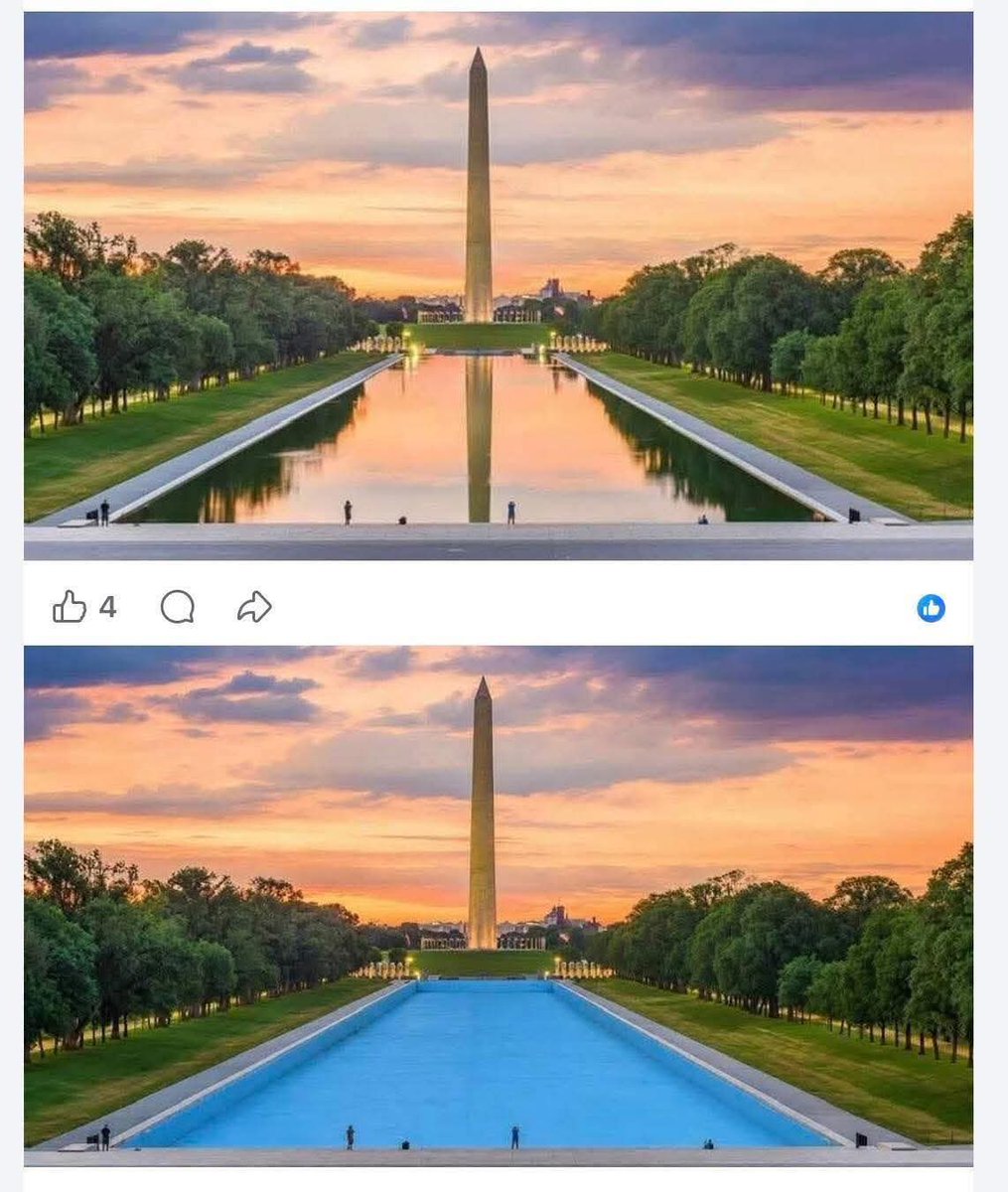
@Truegreta This is so obviously AI the people are standing in exactly the same place.
English
Andrew Schmitt
10.4K posts
@aschmitt
Engineer, Cyclist, Political Optimist



@Qualcomm @cristianoamon 6G will be sensing for autonomous agents and devices. Building your own digital twin. Enables you to detect everything that moves.


Deep|AI Infra 2026: Shifting from "Brain Power" Competition to "Whole-Body" Evolution This is one of our most important reports this year, and our entire team invested a significant amount of time and effort into it. We observed that the OCS ratio in Scale Up scenarios is still rising rapidly, and we also found that $MRVL is involved not only in TPU but also in LPU. In 2026, the focus of AI development has pivoted from chasing high benchmark scores to pursuing AI Agents capable of multi-step reasoning and autonomous action. This infrastructure arms race is undergoing a transformation akin to biological evolution. If an AI system is viewed as an evolving organism: the GPU/TPU represents the calculating brain; Memory and Storage serve as the memory carriers for experience and context; the CPU acts as the hands coordinating tasks; while Optics and Networking function as the limbs supporting systemic data flow and response sensitivity. Under the framework of the Agent Scaling Law, the core bottleneck is no longer just the FLOPS of a single chip (brain power), but rather the communication efficiency (limbs), the memory wall (memory), and the Total Cost of Ownership (TCO). The “Brain” Idle Crisis: Even with the most powerful compute cores, if the “limbs” (communication) are underdeveloped, chips will sit idle for over 1/3 of the time waiting for data. The “Memory” Retrieval Bottleneck: Long-sequence reasoning for Agents imposes rigorous demands on KV Cache management; the performance of memory and storage components has become the deciding factor for an Agent’s logical depth. Dimensional Evolution of “Limbs”: To overcome the communication bottlenecks inherent in MoE architectures, infrastructure is moving from 3D Torus toward high-dimensional topologies (up to 10D). Networking investment weight is now matching or even surpassing that of compute chips. This report outlines the bottlenecks facing AI Agents and recent TPU progress, specifically exploring how Google TPU optimizes “whole-body” coordination through vertical integration. We argue that: Networking is the new core battlefield: To solve MoE All-to-All bottlenecks, Google is significantly expanding scale-out bandwidth and shifting from 3D Torus to higher dimensions. Unlocking TCO and Allocation Efficiency: Through proprietary architecture and vertical integration, the TPU v7 rack cost is significantly lower than the NVIDIA GB200. This efficiency gain frees up CapEx for growth in optical communications and memory. $LITE $NOK $CRDO Detailed Report fundaai.substack.com/p/deepai-infra…

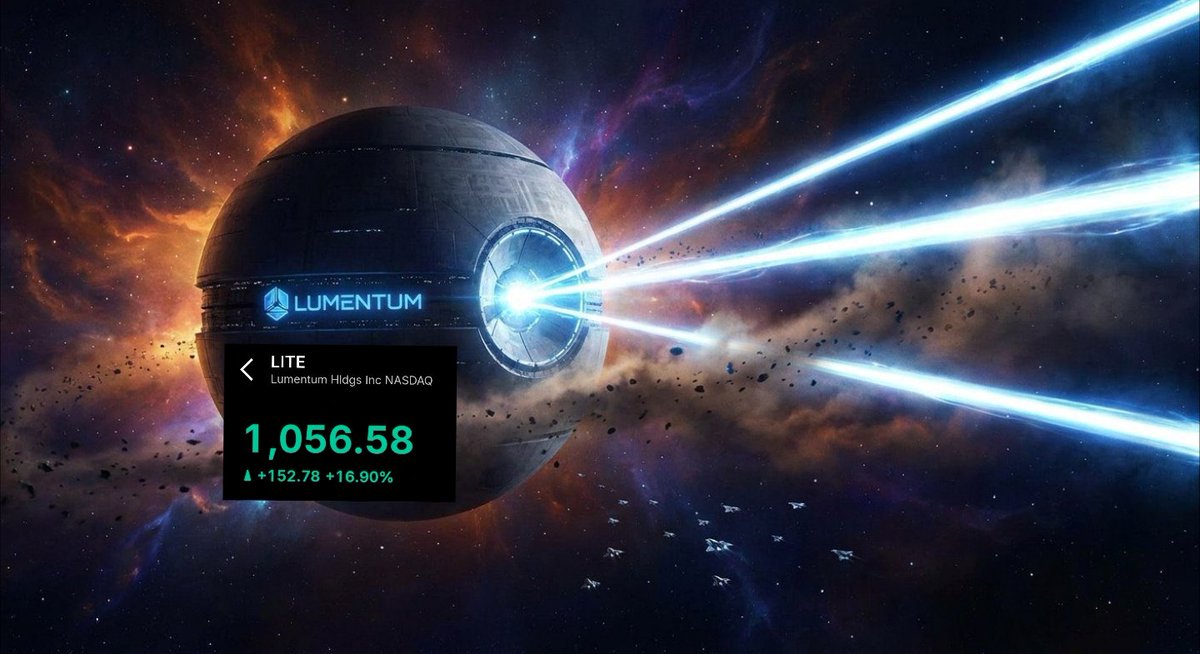
The sharp rally in $LITE and other optics names today was driven not only by QQQ 100 inclusion, but also, importantly, by Innolight mentioning 2.4T demand in their group call. We highlighted the 2.4T timeline in our most important TPU Report last month. We'll be publishing a quick take on this shortly.
Power semis is 100% the most asymmetric information play right now. It’s 100% coming. $NVDA requirements are immutable but nobody has a fucking clue. I cannot wait for @insane_analyst first principles deep dive demo results. I don’t think people realize this has to ship late 2026 for rubin ultra - I think.

I struggle to believe that the top tech podcast is actually Malcolm Gladwell shilling for IBM's AI that no one uses
Waymo: "Do you want to reduce the number of people hurt in traffic crashes?" New York: "Not if it takes away a taxi driver's job."
I'm glad TSMC COUPE is getting more attention of those in the weeds in optics. Our view: "TSMC is increasingly positioned to occupy the same role in silicon photonics that it came to occupy in advanced AI packaging." thediligencestack.com/p/tsmc-coupe-w…