Angehefteter Tweet

WHO Radio-Frequency Radiation Cancer Study is "Seriously Flawed." Scientists conclude the review does not assure wireless safety, and should not be used to set public policy. icbe-emf.org/scientists-cal…

English
Joel Moskowitz
24.3K posts

@berkeleyprc
My research center specializes in health promotion & disease prevention. We also cover wireless radiation health effects & policy. Check out my web site:








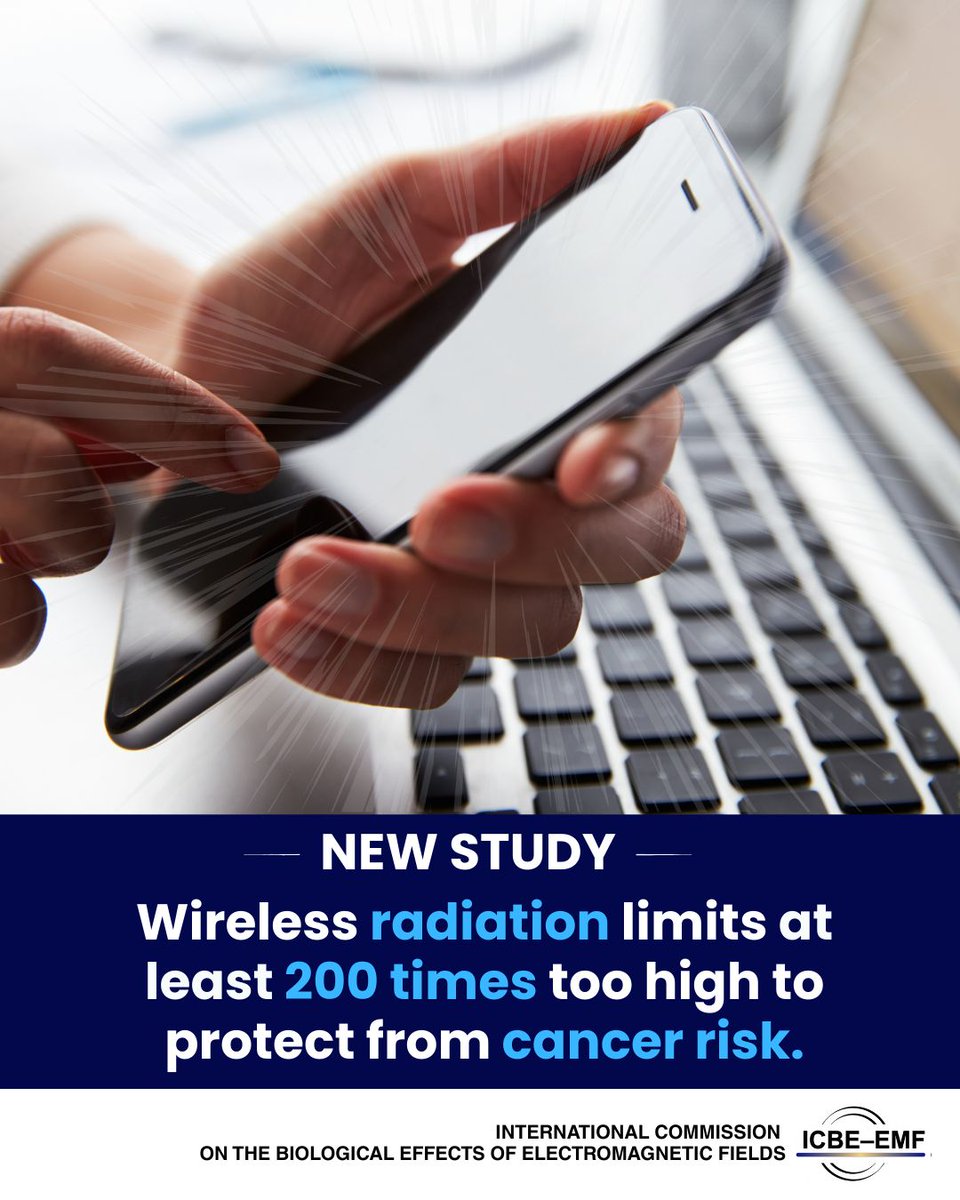

Everyone needs to share this press release, no matter where you live, if you care about nnEMF exposure x.com/rfsafe/status/…




"The surgeon general is not a wellness influencer": Former surgeon general @JeromeAdamsMD on why the Senate should not confirm surgeon general-nominee Casey Means, who is not a licensed physician. statnews.com/2026/02/27/cas…
FOR IMMEDIATE RELEASE Media Contact: Joel M. Moskowitz, Ph.D. jmm@berkeley.edu 1-510-646-0658 Current Cell Phone and Wireless Radiation Limits Fail to Protect Against Cancer and Reproductive Harm, New Study Finds Researchers conclude that current wireless radiation exposure limits are at least 200 times too high to safely protect people. Berkeley, CA — March 14, 2026 — A new peer-reviewed study published in the journal Environmental Health reveals that current safety limits for radiofrequency radiation (RFR)--emitted by cell phones, Wi-Fi routers, smart meters, and cell towers—are severely inadequate to protect public health. Taking results from a $30 million U.S. National Toxicology Program (NTP) cancer study, the researchers applied standard procedures developed by the U.S. Environmental Protection Agency and found that current RFR exposure limits are at least 200 times too high to protect us from cancer risk with 8 hours per day of exposure. Also, based on other research, RFR limits were 24 times too high to protect against reproductive impacts. For decades, the Federal Communications Commission (FCC) in the United States, the Institute of Electrical and Electronics Engineers (IEEE), and the International Commission on Non-Ionizing Radiation Protection (ICNIRP) have maintained RFR exposure limits based on behavioral studies with less than one hour of exposure, conducted on small groups of animals in the 1980s. Those limits were designed solely to prevent tissue heating during short-term exposure, ignoring non-thermal biological effects and long-term exposure. The new study, co-authored by Drs. Ronald L. Melnick and Joel M. Moskowitz, on behalf of the International Commission on the Biological Effects of Electromagnetic Fields (ICBE-EMF), conducted risk assessments on cancer and reproduction because recent systematic reviews commissioned by the World Health Organization concluded with “high certainty” that RFR exposure caused cancer and adverse reproductive impacts in animal models. Key Findings ● Cancer Risk: Current FCC and ICNIRP public exposure limits need to be reduced by at least 200 times to maintain an acceptable environmental cancer risk of 1 in 100,000. ● Reproductive Toxicity: Limits need to be reduced by 8 to 24 times to address risks related to male reproductive outcomes, such as decreased sperm count, vitality, and testosterone levels. ● Workers Are at Risk: Occupational exposure limits for RFR are currently set five times higher than those for the public, putting workers at an even greater unmitigated risk for these adverse health effects. "Current regulatory limits for RFR are based on outdated assumptions that have been thoroughly invalidated by the last thirty years of scientific research," says Dr. Melnick, a retired toxicologist from the National Institute of Environmental Health Sciences who led the design of NTP’s cell phone radiation study. Our analysis clearly demonstrates that the current limits for cell phones and wireless networks are structurally incapable of protecting human health. We urgently need governments to step up, abandon these obsolete guidelines, and conduct rigorous risk assessments using modern toxicological data. The science is there; now we need the policy to catch up so we can protect public and occupational health." "We are constantly surrounded by devices emitting wireless radiation; yet government regulations do not account for the chronic, low-level exposures they create," adds Dr. Moskowitz from the School of Public Health at the University of California, Berkeley. "The exposure levels calculated in this paper should not be interpreted as ‘safe limits;’ rather they represent risk-based estimates derived from the data reviewed in the WHO systematic reviews using standard EPA risk-assessment methods, indicating that current regulatory limits should, at a minimum, be reduced to levels in this range to better align with modern scientific evidence.” The authors strongly recommend an immediate, independent re-evaluation of wireless radiation exposure limits. They urge regulatory bodies to lower RFR exposure limits by applying the rigorous, health-protective methodologies commonly used for toxic and carcinogenic environmental agents as discussed in this paper. About the Study An unedited version of this paper, "Exposure Limits to Radiofrequency EMF Do Not Account for Cancer Risk or Reproductive Toxicity Assessed from Data in Experimental Animals," can be downloaded from the peer-reviewed journal Environmental Health:: link.springer.com/article/10.118…. About the International Commission on the Biological Effects of Electromagnetic Fields (ICBE-EMF) ICBE-EMF is an international consortium of scientists, doctors, and researchers with expertise and peer-reviewed publications on the biological and health effects of electromagnetic fields, including wireless RF radiation. Wireless devices such as cell phones, cordless phones, Wi-Fi, and cell towers emit radiofrequency radiation. The Commission is committed to upholding the highest standards of scientific research and makes science-based recommendations to ensure the protection of the public and the environment. ICBE-EMF.org