Alex

5.4K posts

Alex banner
Alex

Alex

@carrillodeleon

un mallorquín en Alicante.

MALLORCA - ALICANTE Beigetreten Ekim 2010
1.3K Folgt717 Follower
Alex
Alex@carrillodeleon·
La primera cabalgata de mi hija Lucía. Le está encantando ✨ #CabalgataRTVE
Español
0
0
0
328
Alex retweetet
Pedri González
Pedri González@Pedri·
Tres puntos que premian el buen trabajo, equipo 👏 Gracias por el apoyo, Elche 🫶
Pedri González tweet media
Español
364
2.1K
36.1K
605.6K
Alex retweetet
Lorenzo Gelardo
Lorenzo Gelardo@LorenzoGelardo_·
🍾 Este minuto del Elche Club de Fútbol es oro en paño.
Español
32
448
3.4K
399.1K
Alex retweetet
MARCA
MARCA@marca·
🔥 El Elche gana al Oviedo y sigue 'on fire' 🔝 Único equipo, junto a Real Madrid y Barça, que aún no conoce la derrota en #LaLiga 💥 ¡Los de Sarabia están en puestos europeos! #ElcheRealOviedo
MARCA tweet media
Español
4
57
466
50.3K
Alex retweetet
ROBERT DENIROSHI
ROBERT DENIROSHI@DeNiroElcheFans·
En mi humilde opinión y a pesar de los haters, estamos viviendo algo que tenemos que disfrutar. Venimos del pagaré trucho, del descenso administrativo por malas gestiones y el cabrón de Tebas. Lo normal para muchos de nosotros era contar una media de 5k/6k abonados y no bajar a 2b. Ahora mismo venimos de un ascenso a primera con cifras de abonados escandalosas. Remodelación del Estadio y alrededores REAL. Fichando jugadores jovenes pensando en el futuro y no solo en aguantar una temporada.(antes del 31 de agosto XD) Tenemos a Josan, Affengruber,Bigas, Febas ... Tenemos al Zamora de la temporada pasada. Y a Josan Yo no se vosotros pero nunca me he visto en una de estas y me lo pienso gozar una barbaridad. MUCHO ELCHE 🤍💚🤍
ROBERT DENIROSHI tweet media
Español
10
19
264
18.8K
Alex
Alex@carrillodeleon·
El VAR no revisa bulos, por eso dejé Twitter; lugar lleno de fanáticos con avatar y verdad opcional que tienen más dedos que neuronas. Eso sí, sin cojones de dar la cara. A pastar.
Español
0
0
0
90
Alex retweetet
@SáharaElche
@SáharaElche@saharaelche·
Esta mañana hemos pasado una jornada lúdica en las instalaciones de Club Deportivo Tiro de Pichón Elche. Hemos jugado al béisbol ⚾️, pádel 🎾, juegos tradicionales de agua 💧y nos hemos refrescado a su magnífica piscina 🏊🏾‍♂️ #VacacionesEnPaz
@SáharaElche tweet media@SáharaElche tweet media@SáharaElche tweet media@SáharaElche tweet media
Español
0
1
2
106
Alex retweetet
Historic Vids
Historic Vids@historyinmemes·
Mercedes Benz CEO retires after 49 years and BMW released this video the moment it was announced.
English
1.3K
22.2K
277.8K
36.4M
Alex retweetet
IB3 Notícies
IB3 Notícies@IB3noticies·
#SantAntoniIB3 Les Completes fan vibrar, un 16 de gener més, santantoniers i santantonieres a Manacor. Plena a vessar, gairebé 1.500 persones a la parròquia de la Mare de Déu dels Dolors canten a ple pulmó els goigs al patró dels animals ➡️ ib3.org/?p=458646
Català
82
759
2.3K
405.9K
Alex retweetet
okdiario.com
okdiario.com@okdiario·
Fallece Xavier Cabotà, impulsor de Maioris y gran directivo deportivo #Echobox=1702123227" target="_blank" rel="nofollow noopener">okdiario.com/baleares/falle…
Español
1
2
3
2.1K
Alex retweetet
COLEF Illes Balears
COLEF Illes Balears@COLEFBalears·
📣 Hem començat el dia amb una gran notícia ‼️ El Consell de Govern d’avui ha autoritzat la Universitat de les Illes Balears a impartir els estudis oficials del grau en Ciències de l’Activitat Física i l’Esport, a partir del curs 2024-2025. Cada dia més a prop‼️
COLEF Illes Balears tweet media
Català
0
7
28
2.3K
Alex retweetet
Gordo Byrn
Gordo Byrn@feelthebyrn1·
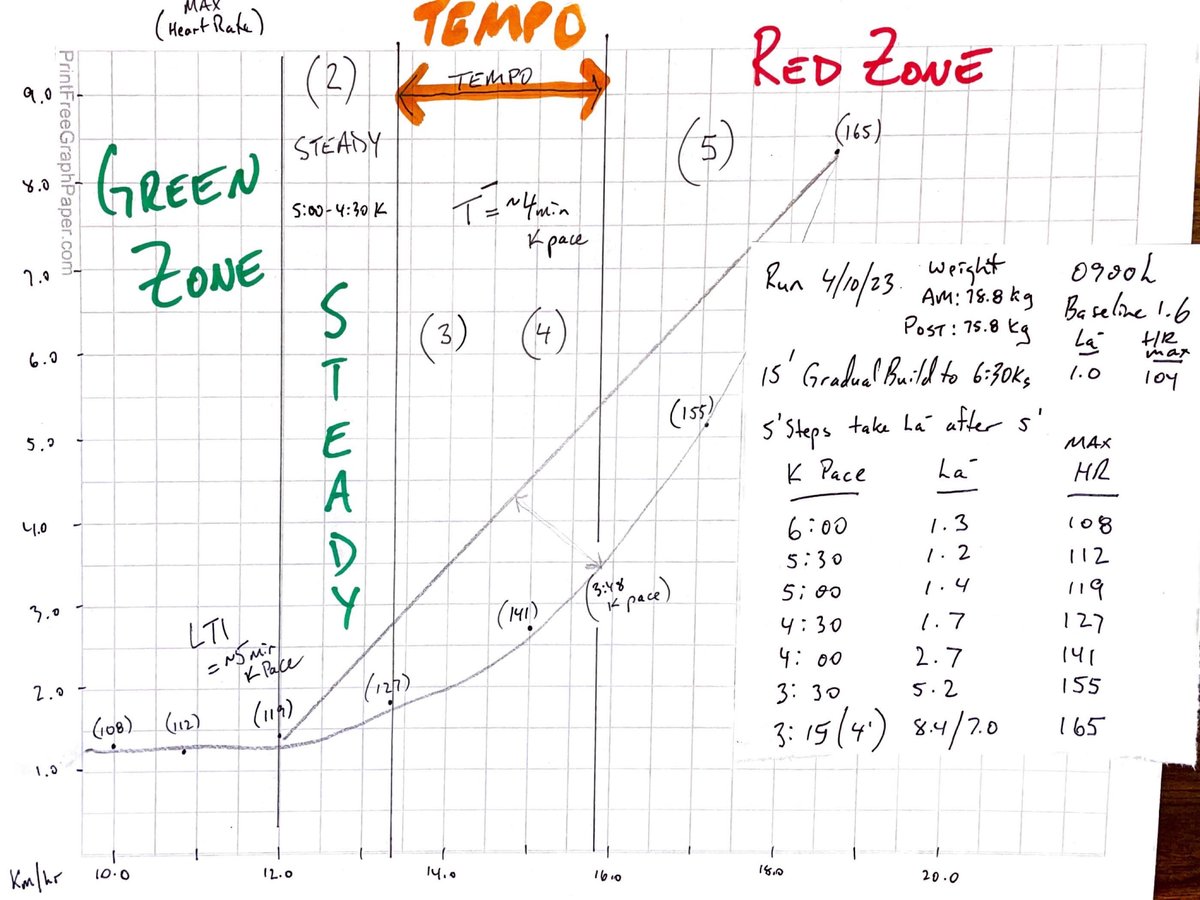
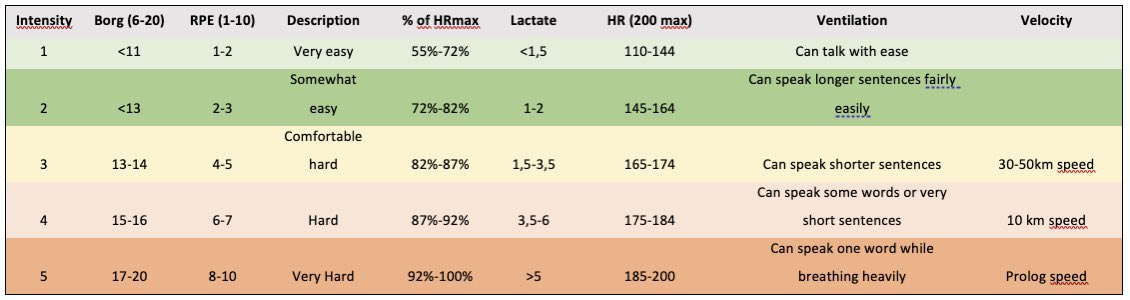
Zone Application & Allocation Part Two of Zone Basics In Part One [Quoted Below], I explained how to determine three target intensities: 1⃣Green Zone 2⃣Tempo 3⃣Red Zone Across those targets I explained five intensity zones: 1⃣Easy 2⃣Steady 3⃣Moderately-Hard 4⃣Hard 5⃣Very Hard If you are interested in learning more about these zones then please refer to our previous article, Building Athlete Profiles. Inside you’ll find John Hellemans’ five-zone system. ++ Gaps & Caps The targets for Green-Tempo-Red have gaps between them. Some of these gaps are large, especially the gap between the Tempo & Red Zone. ➡️The Tempo target is set at the border between Zone 3 & 4. ➡️The Red Zone target is set as best 6 minute power/pace. Depending on athlete fitness, the Tempo target can be sustained for 1-4 hours, or more. Why such a big gap? In a word, or two… Energy Management. All three targets are set conservatively. Rather than nudging intensity upwards, increase session frequency and duration. Take advantage of the conservative targets to roll up more time at a given intensity. Each target intensity is set high enough to cause a specific adaptation. ✅Do enough to create a small adaptation. ✅Absorb the stress. ✅Repeat. Picture 1 is a Sample Run Profile showing Zones 1 through 5 and Green-Tempo-Red Athletes are constantly tempted to nudge intensity up, and give themselves more than they can absorb. Heart rate caps have a role to play in better dosing. Picture 2 is a Sample Set Of Zones The top half of Zone 2 and Zone 4 represent metabolic grey zones. As explained in Part One’s videos, they are transition areas. The natural variation in training powers/paces means the physiological nature of the session changes around these areas. By capping Green Zone efforts at the middle of Zone 2, and Tempo efforts at the middle of Zone 4, we avoid changing the nature of the session. Using the sample set of zones [Picture 2], the instruction for the athlete would be… ➡️Endurance Effort, use a hard cap of 128 bpm and spend most of your time 115-123 bpm. ➡️Tempo Effort, build to the low 140s, stay under 148 bpm. Importantly, if power/pace are dropping and the athlete is approaching the heart rate cap then the athlete has given themselves enough stress and can back off, or shut the session down. Afterwards, the athlete should consider: ❓Was the target set too high? ❓Was there an error relative to conditions? For example, targets should be adjusted downwards in high heat. ❓Was there an error in execution? Fast start, lack of fluids, poor nutrition, frequent brief spiking one (or more) zone higher. There isn’t always a reason, and that’s OK. The game is compound load over time. There’s no need to overthink it. ++ Real-World Application A heart rate cap is NOT a target. The heart rate caps are an early warning system that the workout nature is about to shift. Know the session goals and use heart rate caps to keep from creating strain. In time, the athlete will need to add Specific Capacity sessions. These sessions will be targeted based on the athlete’s goal event and may fall between the three targets (Green-Tempo-Red). Athletes will be moving up and down their intensity profiles across the week as they transition from different targets and terrains. This is OK. What I’m encouraging is the avoidance of sitting in the transition zones. The key thing I want you to remember => Volume Is A Good Explanation These targets will result more work done and, hopefully, more enjoyment from your program. They will also ensure the General Capacity, and mojo, to perform when it matters. Picture 3 is the Norwegian Zone Presentation, Discussed in Part One, Velocity Column is Elite Nordic Skiing, HR column based on 200 bpm maximum HR. ++ Zone Allocation If the #1 Error is training too intensely then the #2 error is too much Tempo and Red Zone work. Here is a starting point for training intensity allocation. ➡️Force (10%) - Always maintain a Force component in your week. John and I gave you many ideas in the Strength Section [See Endurance Essentials eBook]. ➡️Green Zone (80%) - As you build General Capacity you will be able to fit more and more into this allocation (hills, terrain, pace changes). This drives endurance performance. ➡️Tempo & Red Zone (10%) - Use a 9/1 split for Tempo/Red Zone. For a 15-hour week (900 minutes) this implies 9 minutes of Red Zone per week. Target your intense sessions with precision and intent. Place these sessions when, and where, you will most benefit from them. Gains come from getting the 90% right and not wrecking ourselves with the 10%. Endurance, Strength, Sleep & Nutrition => that’s where the action’s at. If you seek to compete with athletes one level up from you. Allocate even more to Green Zone & Strength, with an emphasis on Easy training to improve metabolic fitness and increase work capacity. [See My Metaboic Manifesto on Endurance Essentials.] If the above allocation results in unusual fatigue then assume there’s “hidden intensity” in the program. I discussed where to look, and how to solve, in My Metabolic Manifesto. Have Fun - Keep It Simple - Persist ++ Notes: 1⃣More information in my video on Decoupling & Duration Curves. 2⃣Stephen Seiler’s presentation on Load, Stress & Strain is excellent. 3⃣For examples of Specific Preparation workouts, see: Core Pace and Race Pace sections. 4⃣Athlete Levels are discussed in article: Three Types of Athlete. ++ You can subscribe to all of my content via the link in my Profile.
Gordo Byrn tweet mediaGordo Byrn tweet mediaGordo Byrn tweet media
Gordo Byrn@feelthebyrn1

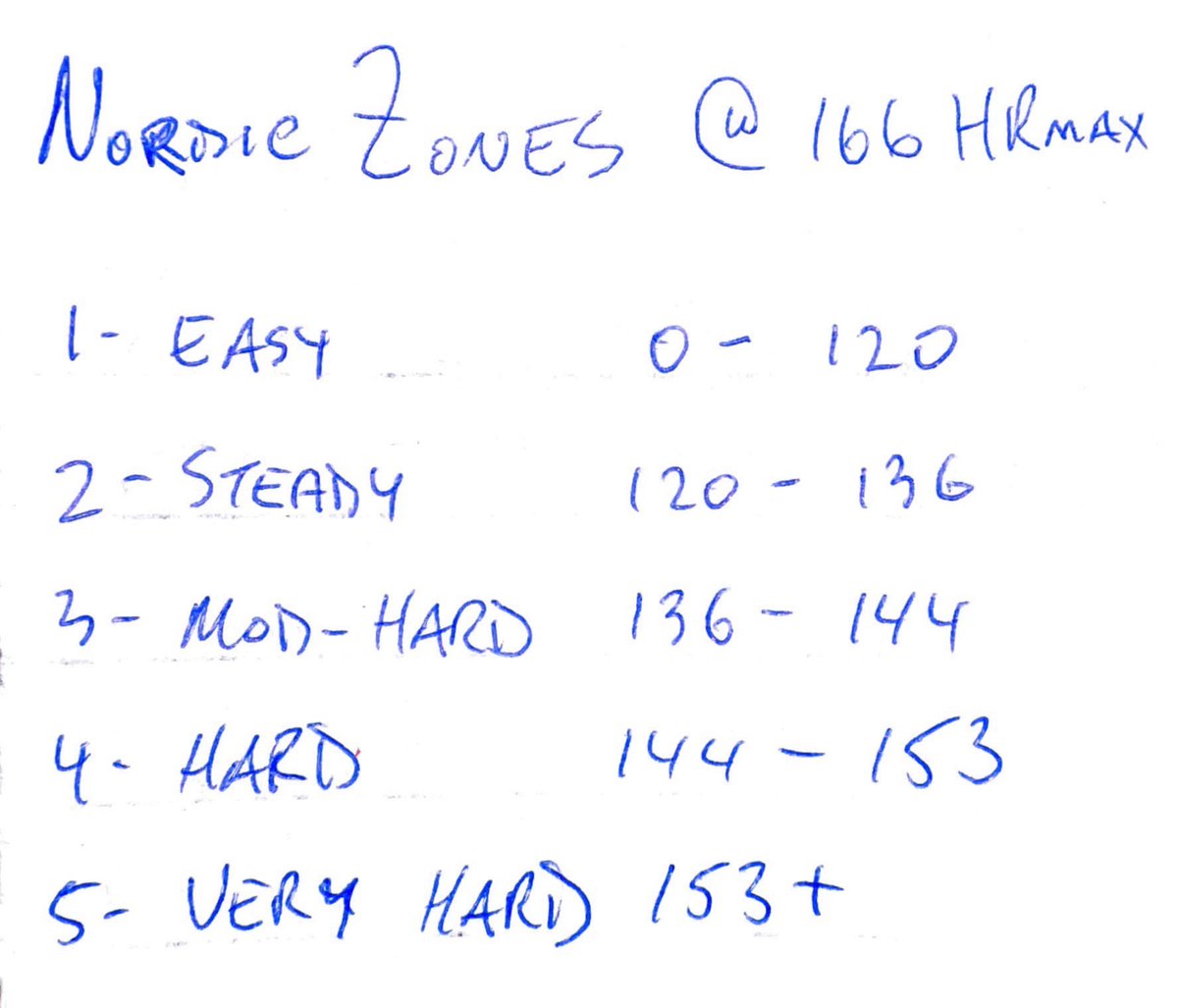
Zone Basics Easy, Steady, Moderately-Hard, Hard, Very Hard We make this too complicated. I’m going to lay out three targets to cover the bulk of your training. 1⃣Green => Zone 1 & 2 2⃣Tempo => Zone 3 & 4 3⃣Red => Zone 5 From these targets, you’ll be able to get really fit. I’ll explain both application and dosing. As you gain fitness, your individual response provides feedback. This feedback may indicate you need to reduce your target intensity. Be open to that adjustment, it’s the most common one I make when working 1-on-1 with an athlete. Once your fitness is well established, but not before, add specific preparation sessions based on your goal event. Let’s start by linking up everything we’ve published on Zones so far: [Links in original at Endurance Essentials] ✅The Importance of Submax Benchmarking ✅Defining Terms for Athlete Profiles ➡️Zone 2 ➡️Five-Zone System ➡️Eight-Zone System ➡️Three-Zone System ✅Videos: ➡️Finding Aerobic Threshold ➡️Intensity Domains, Zones and Anchors ➡️Breath Markers ➡️Targeted Endurance ➡️Lactate Testing ➡️Lactate Interpretation In Part One & Two, we will discuss five topics: 1⃣Determining Zone 1 & 2 2⃣Determining Zone 3 & 4 3⃣Determining Zone 5 4⃣Practical Application 5⃣How Much Of Each Zone We will be referring to the table (Picture 1) that came from an article called, You Are Training Too Hard and Will Never Reach Your Full Potential. In the table (Picture 1), the heart rate zone ranges have been set based on a maximum heart rate of 200 bpm. My max from last season was 166 bpm. So, for comparison purposes, see my zones derived using a 166 bpm max (Picture 2). ++ Determining Zone 1 & 2 - Green Zone If you don’t have access to lactate or metabolic testing then you can: 1⃣Start with percentage of max heart rate zones. 2⃣Pay attention to your Breath Markers (see video above). 3⃣Keep your endurance training feeling comfortable. 4⃣Track your fatigue from your endurance sessions. Of the above, fatigue and feeling will be the most useful. They will be different from what you expect. Sustainable Green Zone training is comfortable, repeatable and enjoyable. If you use the Percentage of Maximum Heart Rate method then: ✅Before testing, make sure your doctor is OK with doing a max heart rate test. ✅You probably have a different max by sport. For example, most athletes can achieve higher heart rates running than cycling. ✅Use a current maximum value, not something you saw when dehydrated, on a hot summer day, years ago… ✅You will have different maxes by terrain. Nearly everyone can generate higher maxes when going uphill. It is best to benchmark your maximum in flat terrain. ✅As a general rule of thumb, experienced runners will find their cycling zones at least 10bpm lower than their run zones. ✅New, and returning, runners… you should assume that if you push the pace, even gently, you will be above your Green Zone. A range of 65-75% of heart rate max is a reasonable starting point. Give yourself a gradual warm-up and let your heart rate rise naturally. There is no pressure to sit at the top of the range. The video [in original article] explains: ✅How To Set Zone 1 & 2, including with lactate. ✅How Zones Change With Fitness. ✅Using Effective Range To Guide Your Training Key Lessons Applying Zone 1 & 2: ➡️Don’t push heart rate early in an endurance session. Let heart rate come up gradually. ➡️Once warmed up, stick around the top of Zone 1 / bottom of Zone 2. ➡️As fitness develops, resist the urge to push power/pace. Instead, add frequency and extend duration. ➡️Most Common Error => Pushing Into Zone 3 Thinking It Is Better Harder is not better, it is different and more fatiguing. ++ Determining Zone 3 & 4 - Tempo & The Heavy Domain Avoid the trap of targeting your endurance training at a Tempo effort. Aim the bulk of your training in the Green Zone. With your Tempo training, you will be tempted the push intensity up. This is commonly called Zone Creep, because your heart rate creeps up across the session. To avoid Zone Creep, target the top of Zone 3. If you don't have access to lactate testing then I’ll give you three heart rate based methods to Triangulate Your Tempo. 1⃣Bottom Up - Add 15 bpm to your LT1 (Top of Zone 1) heart rate 2⃣Top Down - Subtract 8-12 bpm from your hour-of-power heart rate. This is the heart rate you settle into during a flat, best effort for 60 minutes duration. 3⃣85% of Maximum Heart Rate For example, using my most recent bike data: • Bottom Up: 135 bpm • Top Down: 140-145 bpm • 85% of Max: 141 bpm I end up with a target range of 135-145 bpm. When I apply this zone, I settle into a low-140s bpm effort and know that I’m working hard enough. At any time, I could lift my effort, but I don’t. Contrast my 54-year-old Bike Tempo Target (above) with my elite running numbers from 2003-2010 (below). • Bottom Up: 153 bpm • Top Down: 151-156 bpm • 85% of Max: 150 bpm My elite Running Tempo Target was 150-156 bpm. The pace at this effort was demanding. In application, I spent most of my time at the bottom of my Tempo range. Recreational, Competitive and Elite… use trial and error to discover what’s most effective for you. Judge the quality of your session by what happens afterwards. We want to avoid prolonged recovery (called strain). ➡️There Is A Cost To Everything. Each of us is constrained in different ways. Spend energy wisely. ➡️Higher Isn’t Better. Smaller, and less fit, athletes may find they can “rev higher.” Just because you can, doesn’t mean you should. ➡️Volume Is A Good Explanation. Protect your Green Zone training. If you have to cut Green Zone volume then reduce the dose and the target of your Tempo sessions. ➡️Targets Change Over Time, particularly for the aging athlete. After a break, over long time horizons… our targets will change. Be willing to adjust downwards when indicated. If you have access to lactate then you can dial your zones further. The video [in original] explains how to set Zone 3 & 4. ++ Determining Zone 5 Different from Zones 1 to 4, I recommend you determine Zone 5 directly via a 6-minute best effort TT. However, before launching into a block that contains Red Zone training, perform a progressive step test and assess your Full Profile. Previously, I’ve shared protocols and tips for your Full Profiles. [Links in original, see Picture 3] ➡️Benchmarking Your Swimming ➡️Specific Targeting for your Bike Training ➡️Your First Track Session & Using The Progressive Run Test When setting the test steps: ✅Make sure you get a look at each Zone, 1 through 5. ✅Use a gentle warm up. ✅Start EASY. ✅Multisport athletes, consider an easy bike (or submax cycling test) before your run test. I walk you through additional tips in the video [linked in original]. Consider the data from the Full Profile(s). ➡️Is the athlete going faster? Does increased heart rate, and effort, imply increased speed? If not then focus on Green Zone, Strength & Quickness, rather than seeking to “raise the roof” with Red Zone Training. Strength-focused in-sport sessions should be considered for more intensive training. ➡️Did the athlete show a normal heart rate and lactate response? If heart rate or lactate response is lower than usual, it could be a sign that the athlete is fatigued. Pay attention to the final step - was the athlete able to achieve normal values for max heart rate and lactate? There is no quicker way to bring on overtraining than applying intense load to an athlete who is run down and/or depleted. ➡️The Final Step. The power/pace held for the final interval in the Full Profile is a helpful start point for the 6-minute best effort TT. The 6-Minute TT • John and I wrote out a specific protocol for running. • For swimming, choose a distance that will take you ~6 minutes. • For cycling, use time and start at the power averaged in the final step of the Full Profile. Work upwards from there. The athlete does not need to set a lifetime best. All you need is a reasonable benchmark to apply in training. A strong effort, where you don’t blow up, will work well. Following the TT(s), you will have: • Swim - Zone 5 pace per 100 meters • Bike - Zone 5 power in watts • Run - Zone 5 velocity Next time, we discuss Application and Allocation. ++ You'll find additional links to previous articles inside the original article at Endurance Essentials. Subscription is free and you can access via my profile link.


English
6
11
80
28.6K
Alex retweetet
El País Cultura
El País Cultura@elpais_cultura·
España suma ya 50 enclaves en este listado y se convierte en uno de los países con más inscripciones. Solo los cinco primeros están por encima del medio centenar #Echobox=1695038971" target="_blank" rel="nofollow noopener">elpais.com/cultura/2023-0…
Español
2
5
24
26.5K
Alex retweetet
IB3 Notícies
IB3 Notícies@IB3noticies·
#ÚLTIMAHORA La Menorca Talaiòtica és declarada Patrimoni de la Humanitat per la UNESCO. Suposa la culminació de 13 anys de feina i del reconeixement mundial de l'excepcionalitat de monuments com la Naveta des Tudons o les taules prehistòriques ib3.org/?p=449373
Català
0
130
433
50.4K