Angehefteter Tweet

Si a Popper le costó tiempo reconocerlo, es normal que nos cueste tanto trabajo al resto.

Español
Che Cabello
31.7K posts
@checabello
Profesor de Universidad. Políticamente incorrecto.
Este señor me ha amenazado y me ha insultado. Y esto que ven es lo que ha pasado cuando le he empezado a grabar. Si me ayudan a conocer su identidad me será más sencillo denunciarle. A los ultras y a los violentos no hay que pasarles ni una

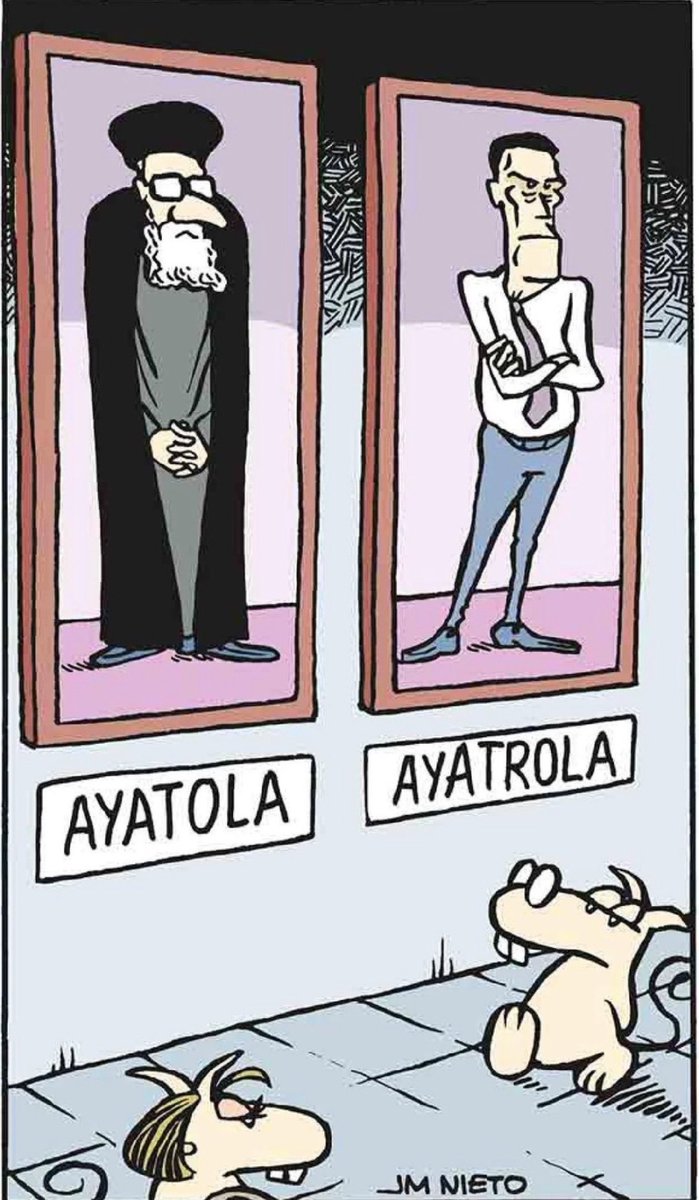






C’est ça la « super gauche espagnol » que les petits gauchistes acclament et vantent, ici en France : celle qui accueille, à bras ouverts, le Président du Sénégal qui vient de valider une loi condamnant les homosexuels à 10 ans de prison. 🙃



On Tuesday, I shared the twelve arguments for traditional higher education. Today, I will outline the framework I plan to use to evaluate them; a complete evaluation will be in a follow-up post. Before addressing each argument, I want to outline two principles that any economist would emphasize but are largely missing from the public debate about AI and higher education. The first is heterogeneity. A college-major combination is the appropriate unit of analysis. A finance degree from Wharton is not equivalent to a philosophy degree from a small, non-selective liberal arts college in Vermont, which in turn is not the same as an education degree from an open-admission commuter college in a large city. These are fundamentally different products serving fundamentally different populations, and it makes no more sense to analyze them as a single entity than it would to categorize “food” as a homogeneous good when studying the restaurant industry. The twelve arguments I outlined on Tuesday have very different relevance to each of these. The networking value of Wharton is enormous; the networking value of an open-admission commuting school where students drive in, attend classes, and drive home is nearly nonexistent. The peer effects at a selective residential college are real; at a large commuting institution, they are minimal. Proximity to the research frontier matters at a research university; it is simply absent at most teaching-focused institutions. The commitment device of a structured four-year residential program is powerful; the commitment device of a part-time evening program that students can drop in and out of is weak. The cultural capital acquired at a place like Yale, where students absorb norms and social codes through four years of immersion, is substantial; at a commuter campus where students spend twenty minutes between classes checking their phones in a parking lot, it is negligible. Any serious analysis of how AI will reshape higher education must be conducted at the level of these college-major pairs, not at the level of “college” as a single homogeneous entity. The impact will vary greatly across market segments, and people who talk about “the future of higher education” without specifying which segment they mean are not saying anything useful. The second concept is marginal thinking. Nobody seriously argues that universities will disappear. The real issue is what happens at the margin. Currently, about 63 percent of recent high school graduates in the United States enroll in college. Imagine that this number drops to 50 percent over the next decade due to AI. That wouldn’t spell the end of higher education, but it would mean losing roughly 20 percent of the student body. This loss would mainly affect institutions and programs where the value proposition was already weakest. To put it in perspective, such a decline would surpass the enrollment decrease during the demographic trough of the 1980s, which led to the closure of hundreds of institutions. This time, the impact wouldn’t be evenly distributed; it would mostly hit the lower end of the selectivity spectrum, affecting programs already struggling to justify their costs, especially in regions where the labor market offers immediate alternatives that don’t require a degree. Consider master’s programs: many professional master’s degrees mainly serve to transmit codified knowledge that a motivated student can now acquire independently at very low cost. In most cases, there is no intrinsic educational merit in a master’s degree in accounting. There is no deeper intellectual experience than learning how to compute EBITDA. I say this without any disrespect toward accounting, which is a perfectly useful skill. But it is a skill, and skills can be taught in many ways. The degree exists because employers use it as a filter and because students believe, often correctly, that the credential opens doors that would otherwise remain closed. But if the knowledge itself becomes cheaply available, the only thing holding up demand is the credential, and credentials without underlying value are precisely the kind of equilibrium that does not survive a large enough shock. If master’s enrollment drops by a third, overall undergraduate enrollment statistics hardly change, but individual departments and institutions face existential pressure as they lose one of their main sources of free cash flow. At many universities, professional master’s programs cross-subsidize doctoral students, fund faculty lines, and keep entire departments financially viable. I know of departments at good universities where master’s tuition revenue covers more than half the operating budget. Pull that revenue stream, and the effects cascade quickly. This is how economists think about structural transformation. Not as a binary (universities survive or they don’t) but as a shift in the decision of the marginal agent. The student who was indifferent between enrolling and not enrolling, the student who was choosing between a third-tier program and entering the labor market directly, the student who was considering a professional master’s to acquire a specific body of knowledge: these are the decisions that AI changes first. The infra-marginal student at MIT is fine. She was going to MIT regardless, because MIT offers things that no technology can substitute. The marginal student at a low-ranked regional institution with negative ROI and no campus life is the one whose calculation shifts. And there are a lot more marginal students than inframarginal ones. With these two principles in mind, I will examine the twelve arguments. The preview is this: some of them (signaling at elite institutions, networking at residential colleges, physical infrastructure in laboratory sciences) are largely robust to AI, because they depend on things AI cannot provide. Others (skill acquisition, topic curation, assessment at scale) are highly vulnerable, as they depend on capabilities AI already performs well and will soon perform better. The most interesting cases are the ones in the middle, where the outcome depends entirely on the specific college-major pair involved. A peer effect argument that is decisive for a residential honors program is irrelevant for a commuter campus. A credentialing argument that matters in nursing is meaningless in communications. The framework forces you to be specific, and specificity is where the interesting answers live. More soon, but in the meantime, let me focus on the great conference where I am today: egc.yale.edu/events/simon-k… I need to review my slides😁


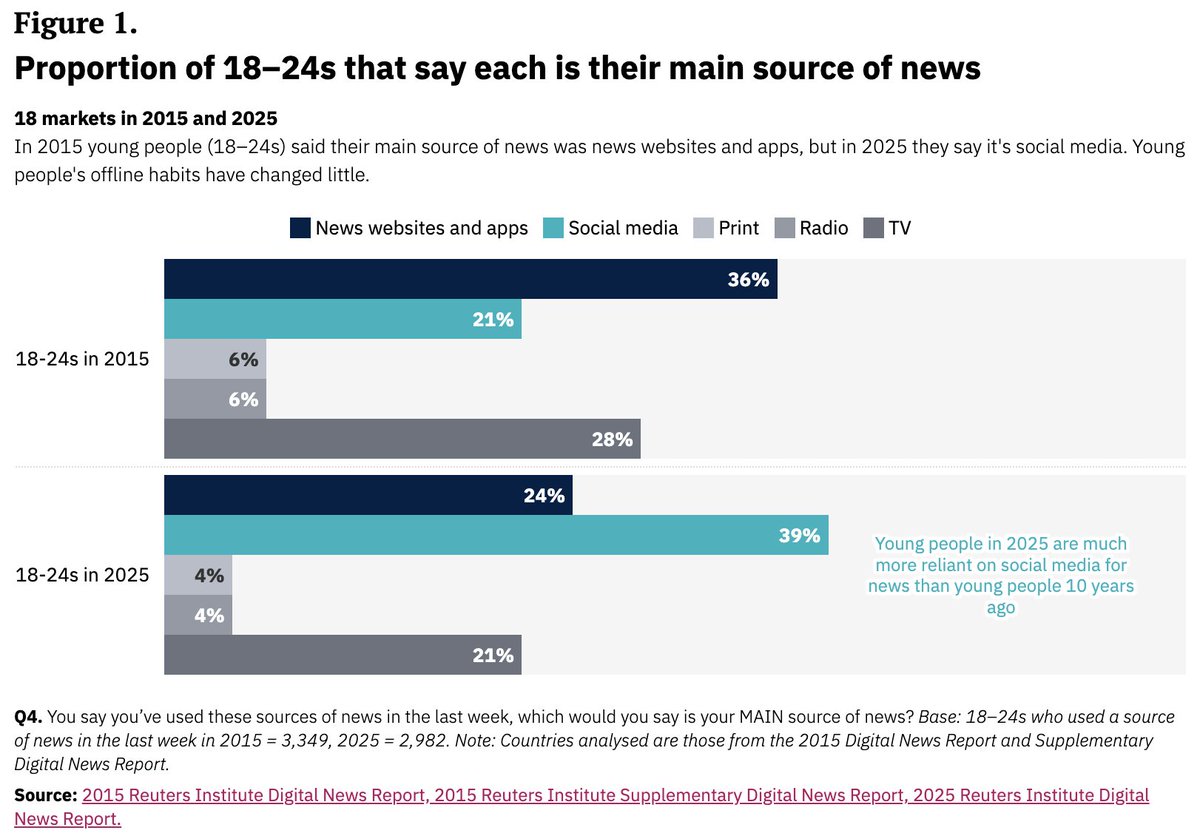
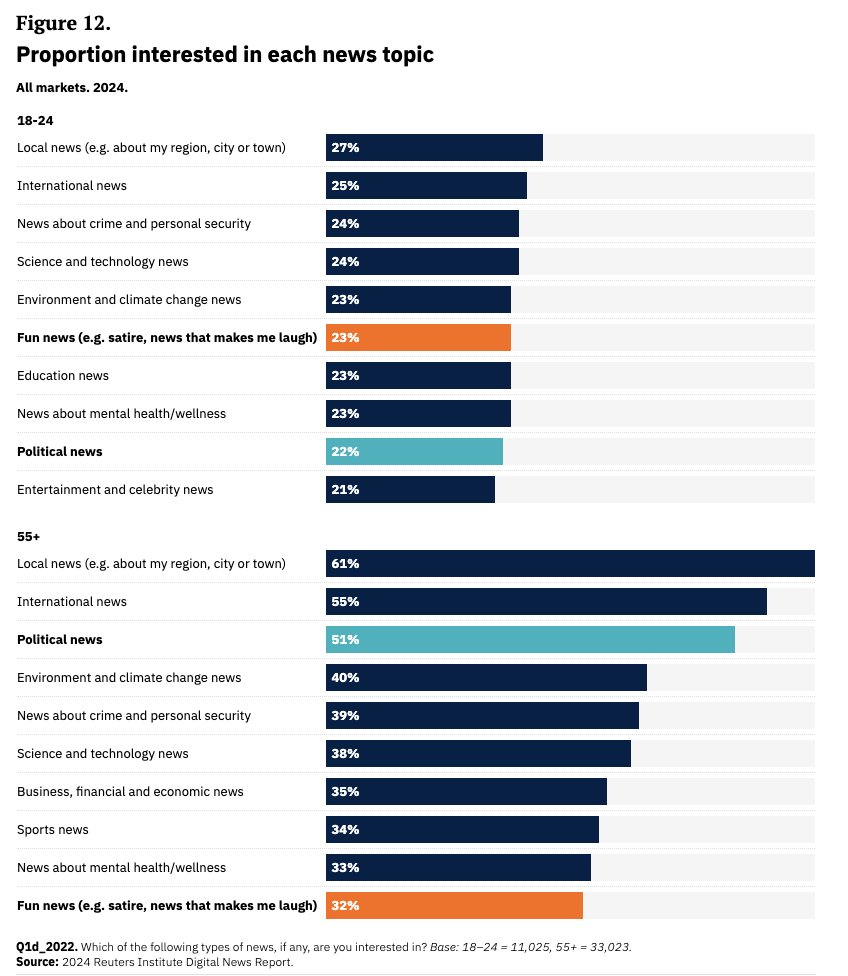
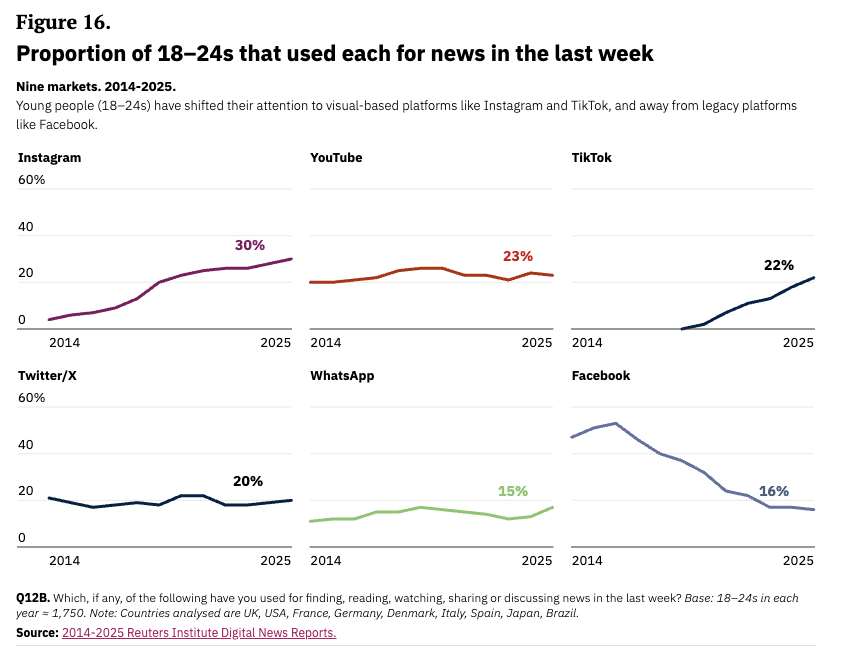

Dating among teenagers has plummeted. Less than half of high school seniors report dating today: down from 80% in the 1990s. Meanwhile, almost 80% of messages to OnlyFans creators aren't sexual, but rather about pets and daily routines. Young men are clearly seeking emotional connection wherever they can find it.

🔵La excepción ibérica: la luz más baja de la UE Alemania, Francia e Italia superan los 100 euros/MWh por su dependencia del gas y en España la cifra cae a 9,04 euros MWh #Mañaneros27M rtve.es/directo/la-1


La universidad medieval evaluaba con exámenes orales. Evaluar es exigir que el conocimiento se interiorice. Si la IA reduce el esfuerzo, la universidad debe reintroducirlo de otra forma. La IA está forzando otro cambio: menos tareas en casa, más interacción directa, más conversación socrática. The New York Times: Si la escritura “aceptable” se automatiza, la educación superior debe centrarse en pensamiento crítico, identidad intelectual y evaluación relacional nytimes.com/es/2025/08/27/… m.youtube.com/watch?v=kZXzZH…