Ayush Kalani ⚡

2.2K posts

Ayush Kalani ⚡ banner
Ayush Kalani ⚡

Ayush Kalani ⚡

@chill_scenes

Banter on tech, startups, life, and growth.

Hacker Hostel Beigetreten Mart 2013
758 Folgt210 Follower
Angehefteter Tweet
Ayush Kalani ⚡
Ayush Kalani ⚡@chill_scenes·
Your story won't be written with a pen. It won't be written through imagination, dreams, nor aspirations. It will be written by you living it. What story will you tell? @techleadhd
English
0
5
29
0
Ayush Kalani ⚡ retweetet
Aiden Bai
Aiden Bai@aidenybai·
you can just clone entire YC startups now
English
207
313
5.3K
698.4K
Ayush Kalani ⚡ retweetet
Atty Eleti
Atty Eleti@athyuttamre·
Introducing the Responses API: the new primitive of the OpenAI API. It is the culmination of 2 years of learnings designing the OpenAI API, and the foundation of our next chapter of building agents. 🧵Here’s the story of how we designed it:
English
116
356
2.8K
2M
Ayush Kalani ⚡ retweetet
ChatGPT
ChatGPT@ChatGPTapp·
4e8 🫂
QST
274
120
3.5K
688.4K
Ayush Kalani ⚡ retweetet
evan conrad
evan conrad@evanjconrad·
Hey friends, we're excited to announce that an additional 2,000 H100s will be added @sfcompute's on-demand market. It's the largest* interconnected cluster, from any provider (including hyperscalers), that you can get on a per hour basis. You're not locked in with San Francisco Compute. If DeepSeek can compete with OpenAI using 2,000 H800s, you too can train a state of the art RL model without ever having to sign a long-term contract that you can't exit. You could have trained DeepSeek-v3 for $4.5m for 1.5mo on SFC or $35m if you could only buy a 1 year contract off market. This was the dream Alex & I had since our audio model company (Junelark) died because it couldn't procure enough GPUs, and it's what we've been working towards for nearly two years. Long-term contracts are a trap; they make it so only the biggest of the big can compete in AI. They force startup founders to raise at massive valuations pre-revenue, which dilutes founders and employees and sets them up to fail when they can't raise their next round. This cluster will roll out over the next few weeks as we scale our infrastructure. Soon you'll be able to access it via our managed Kubernetes service or by reaching out to set up a custom solution. We're also exploring other ways of partnering with service providers to let them offer GPU-based services, like workers and inference endpoints, without being forced into a long-term contract with a hyperscaler. You no longer need to bet your company on GPU prices to offer GPU-based services. * We think! If you know of a larger, please correct us!
English
35
38
679
92.5K
Ayush Kalani ⚡
Ayush Kalani ⚡@chill_scenes·
Major outage at claude, /A. Middle of the work
English
0
0
1
65
Ayush Kalani ⚡ retweetet
Subhash Choudhary
Subhash Choudhary@subhashchy·
i am building an open-source foundational model, from India, for the world. Who is in? And what can you contribute?
English
659
266
4.9K
594.9K
Ayush Kalani ⚡ retweetet
evan conrad
evan conrad@evanjconrad·
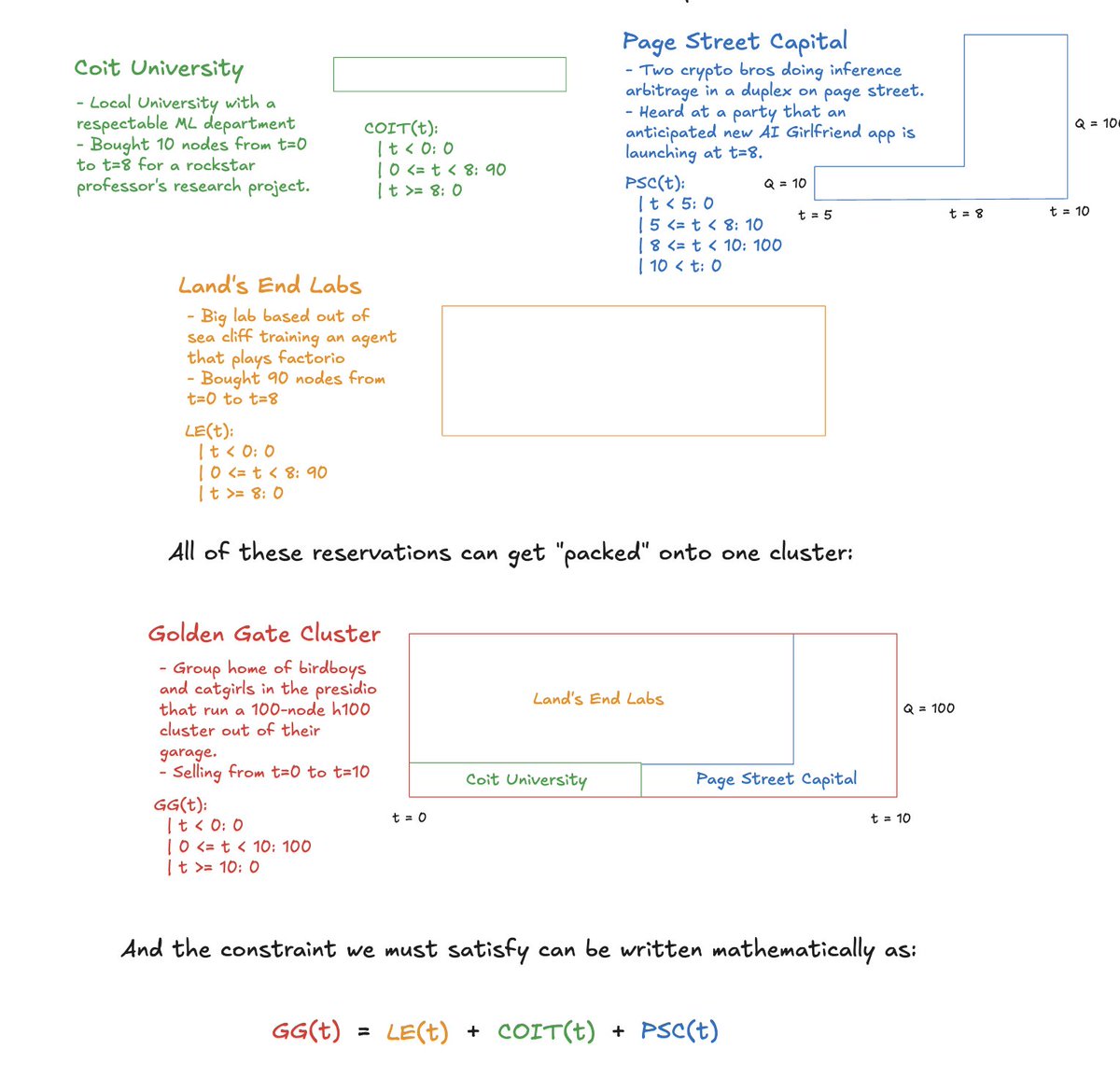
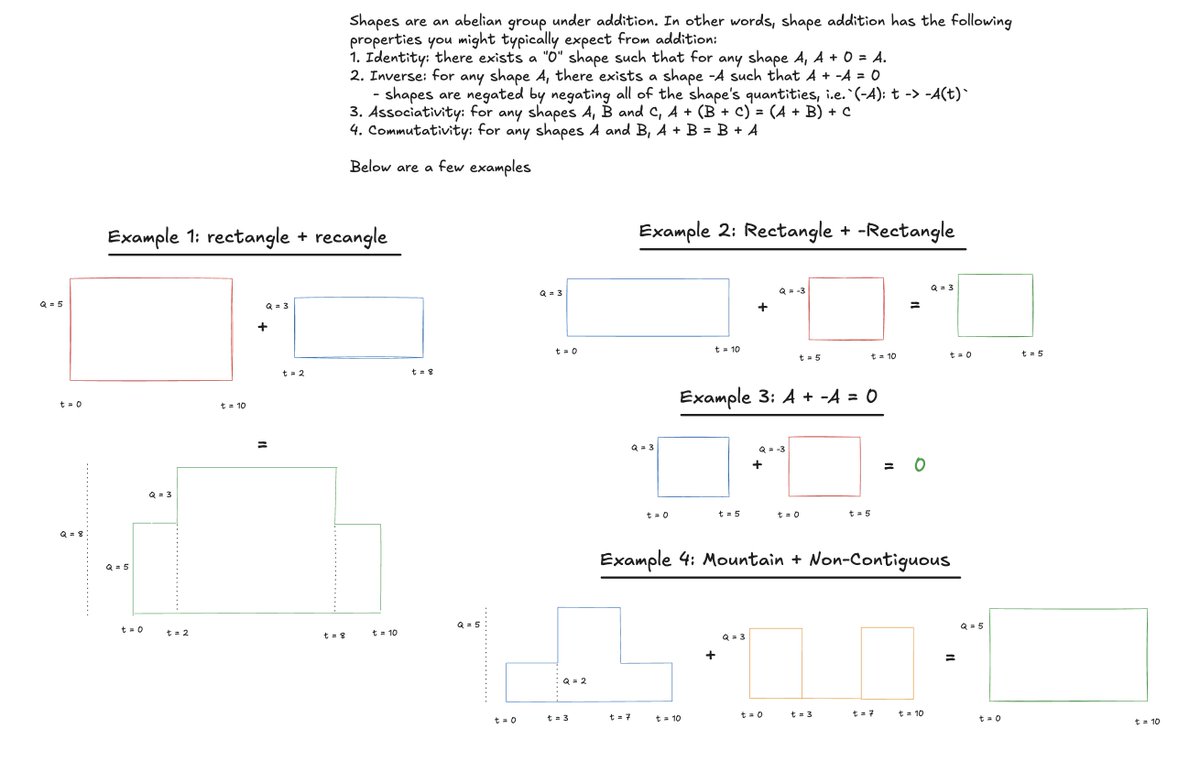
This is a little guide to how @sfcompute market works. The primary goal of SFC is to reduce inventory risk for vendors & buyers. Because of scaling laws, customers push to spend their compute budgets as optimally as possible, which makes them price sensitive. That pushes down margins for GPU clouds and increases capex for them at the same time. That makes them very sensitive to swings in the market price, because minor adjustments can make slim margins go negative. To prevent this, vendors push their customers to buy large volumes, which offsets the cloud's risk, but then customers end up over paying for compute they don't necessarily need, to the tune of hundreds of millions of dollars. SFC's market is designed to optimally price the risk of owning any block of compute and increase liquidity for the buyers and sellers. Literally that means that there's always a buyer and always a seller, at SOME price, for any "shape" of compute that you want to buy or sell. Have only one node for a few hours in the evening? That has a price. Have 200 nodes for exactly 2 days? That has a price. By pricing EVERY block, we get rid of gaps in capacity, which means higher margins for vendors, and more options for buyers. That's why SFC's prices are so good. Some corners of the market can be as low as 50c! Other corners can be as high as $2.80! To make this work, SFC assigns a "shape" to every buy and sell. This is an abstract, 2-dimensional object that associates every discrete unit of time, (we call it an "epoch"), with a "quantity" (nodes). In some markets, the things being traded are perfectly fungible. As in, one share of AAPL is the same as one share of AAPL. In ours, there's one additional constraint: packing. Folks doing training care if their nodes are colocated. Having two H100 nodes in one cluster (specifically on the same InfiniBand fabric) isn't the same as having two H100 nodes in two different clusters. To solve for this, the market keeps track of all the clusters available on the system, and represent how much capacity they have in total as a shape. When people buy & sell, they get "contracts", which represent how many nodes they own and for how long. On every transaction, the market guarantees that all the contracts can fit within all the clusters. Once a contract has started, it's pinned to that cluster, but contracts that have not started can move around, which means every transaction plays a massive game of binpacking to optimally place new orders. That means every shape on the market is priced differently and optimally for what you're trying to buy! Just sampling some of the orders, there's currently ~1.4k open orders, with prices as high as $6/hr and low as 99c. We have lots of new things we're shipping this year in the market, and we'd love if you join us! If you're math-inclined and like Rust, please come talk to us! My DMs are open.
evan conrad tweet mediaevan conrad tweet mediaevan conrad tweet media
English
14
18
359
118.1K
Ayush Kalani ⚡ retweetet
Kyle Vogt
Kyle Vogt@kvogt·
In case it was unclear before, it is clear now: GM are a bunch of dummies.
English
398
270
4.5K
1.3M
Ayush Kalani ⚡
Ayush Kalani ⚡@chill_scenes·
"The single greatest task for any founder or CEO is to recruit the right people. No company has a culture; every company is different, and the CEO is the one most responsible for the difference. Hire people who are extremely smart, independent, and had intense personalities."
English
0
0
1
42
Ayush Kalani ⚡
Ayush Kalani ⚡@chill_scenes·
impatient with actions, patient with results.
English
0
0
2
39
Ayush Kalani ⚡ retweetet
Nikita Bier
Nikita Bier@nikitabier·
FAANG Engineer vs. Startup Founder
Nikita Bier tweet mediaNikita Bier tweet media
Nederlands
54
524
8.1K
497.9K
Ayush Kalani ⚡ retweetet
Vivek Raju
Vivek Raju@vivekraju93·
VC funded startup Marwadi with slack, crm, business with aws, analytics... with whatsapp
Vivek Raju tweet media
English
48
905
11.4K
455K
Ayush Kalani ⚡ retweetet
Tomas Hernando Kofman
Tomas Hernando Kofman@tomas_hk·
We’re building the “meta-model” of AI. Robust routing infrastructure will be critical to effective AI, and by shifting the future towards networks of specialized models rather using a single giant monolithic model for everything, we can create a much safer world to live in.
English
1
1
16
726
Ayush Kalani ⚡ retweetet
Tomas Hernando Kofman
Tomas Hernando Kofman@tomas_hk·
Another feature I’m excited about is the ability to jointly-optimize prompts and model routing recommendations. Not Diamond integrates with auto-prompt frameworks like DSPy and SAMMO so you can translate prompts across models and always call the best model with the best prompt.
English
1
2
16
876
Ayush Kalani ⚡ retweetet
Tomas Hernando Kofman
Tomas Hernando Kofman@tomas_hk·
By default, Not Diamond maximizes quality above all else. But Not Diamond also allows you make optimized tradeoffs that can drastically lower your costs and latency by routing to smaller models when doing so doesn’t impact quality.
English
1
2
12
874
Ayush Kalani ⚡ retweetet
Tomas Hernando Kofman
Tomas Hernando Kofman@tomas_hk·
Small, specialized models can outperform larger models on narrow domains. Routing gives specialized models the robustness of general ones. This is not only more computationally efficient—we get huge interpretability and safety benefits as a free bonus. This is our trojan horse.
English
1
2
15
762