
Angehefteter Tweet

chris
8.5K posts

@chrisduffel
The medium is what happens to you, and that is the message.
On the evening of May 23, Daniel C. Green created an image that created a ripple effect across the internet—and possibly the American patriotic landscape as we know it. In response to a post online requesting an image portraying Lewis and Clark in the style of J.R.R. Tolkien's Amoranth (as popularized by the early 2000s movies). Before doing so, Green researched what it would take to make such a monument and how to make the design correctly. He then fed a detailed prompt into an AI model and shared his photo response. Little did he know the reaction that the public would have to this photo. Over a span of 24 hours, the post amassed hundreds, thousands, and ultimately millions of views, creating a bipartisan fervor for the concept: Two 300-foot-tall copper statues of Lewis and Clark along the Missouri River in Montana, hollowed on the inside for defense, tourism, the private sector, research, libraries, or a multitude of other purposes. The idea spread rapidly, drawing people wanting to put money towards the project, debating on the best way to do it, and questioning why America no longer raises such emaculate, megalithic monuments to the American past any longer. Upon reading dozens—and then hundreds, to thousands—of these responses, many from notable figures, Green began to ponder if there was a legitimate tailwind behind this conceptual project. Early on Monday morning, Green learned that multiple people of note had taken an interest in this concept, requesting that the project actually be started. These included a political reporter with a multi-million-person following, the CEO of the American Conservation Coalition, and Senator Eric Schmitt (who publicly endorsed the idea). The idea was further popularized by a notable foundry in France—Atelier Missor. All of these factors combined caused Green to start floating an idea—that he could personally spearhead the project. This idea gained instantaneous popularity to the extent that, within hours, he had been connected with famous monument makers, connected with hundreds of potential donors and contributors, and witnessed the idea spread like wildfire. Progress has happened rather quickly. Green has created a landing page for this project, directing people to follow the page closely as he secures a 501(c)(3) sponsor to begin taking donations for the project. These donations will fund an artistic rendering, a small clay model that will be reproduced through a 3D company run by a supporter of the project, a 10-foot scale model of the statue, surveying of the land, and ultimately funding the construction of the megalithic statue. This is a massive undertaking from Daniel C. Green, his company, The Eagle Eye, and the undertaking to preserve America's past for the future. To follow the daily and weekly updates, see the page on The Eagle Eye's official site: The contribution link is now live (non-tax-deductible) theeagleye.net/lewis-and-clar…

Following a bit of the Protestant polemics against Orthodoxy recently, and I realize just how difficult it is to communicate the mind of the Church across these lines. A simple example is seeing people confused about whether someone who is not baptised and participating in Orthodox communion can be "saved". Protestant are noticing that there are different answers in their estimation, and so are confused about them. The confusion comes from the belief that being "saved" or not is about "where you go after you die", when for the Orthodox "saved" means being made whole, being healed, being restored to the original purpose God had for us. For this reason, when Protestants see declarations of how communion in the body of Christ is the only way to salvation, they immediately think this is a declaration that all the non-Orthodox are going to hell after they die. When Protestants then hear the very same person who just told them that salvation is in full participation to the body of Christ go on to intimate we have nothing to say about the eschatological finality of any specific soul, it is like a short circuit that many Protestants cannot compute. This is what I could see when @OrthodoxEthos and @Acts17David were discussing and it is what I have seen in @gavinortlund's videos. In a similar vein, when a Protestant says he has the "assurance of his own personal salvation", this is confusing to the Orthodox. Orthodox also obviously have assurance of salvation, that assurance is Christ. He shows us what it means to be made whole and makes us participate in that wholeness. But how can I say that I am "saved" if I see that I am still a wretch, still prideful and arrogant and sinful? So the Orthodox, knowing they are are still sinning, though also knowing Christ has made them grow in the virtues will say something like: "I know that I am being saved." That is I can see that I am being healed, being made whole, being reformed to the resemblence of God. But again, this completely confuses the Protestant who just wants to know what will happen when you die. What side of the fence will you end up on? I am not sure how to get accross these lines, and I feel that unless we can, we will perpetually be talking past each other.
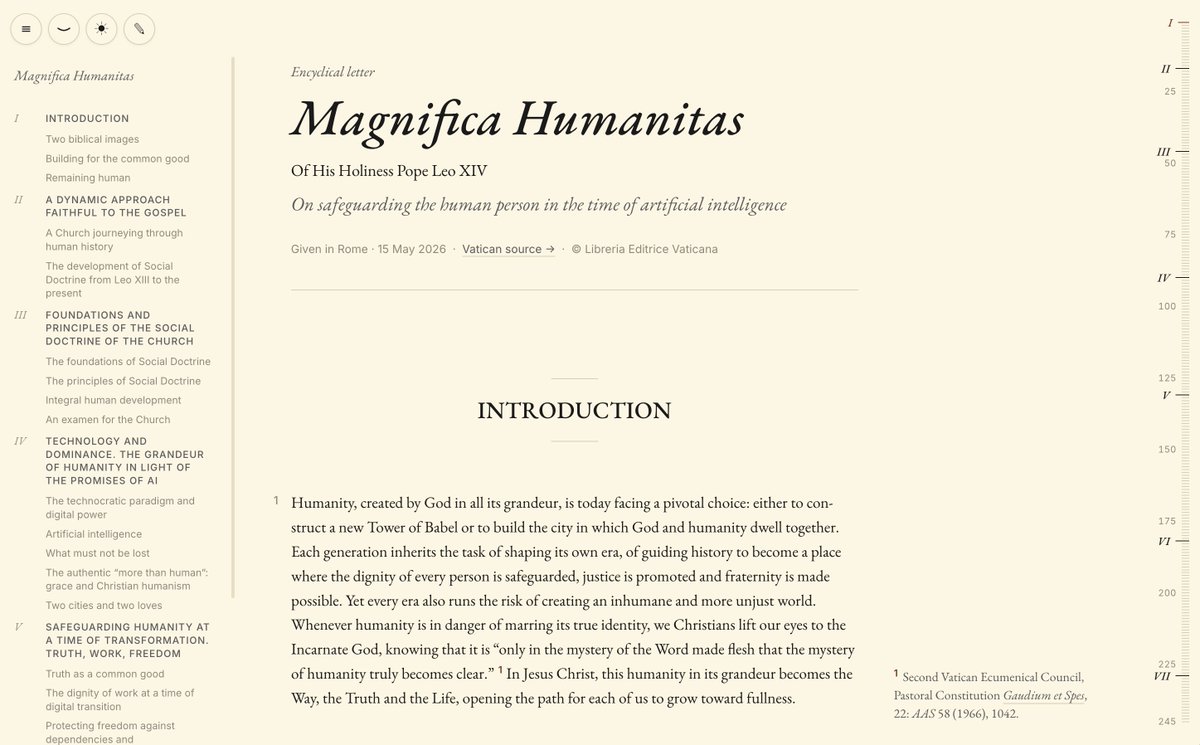
On the eve of the new encyclical, here are some of the questions that I will bring to a first reading: How explicitly does it relate itself to, echo, or extend Rerum Novarum? What other papal documents of the last 100 years will it most rely on? Gaudium et Spes? Others? How philosophical is it? (I.e., does it mostly appeal to natural reason, or to a signifant degree also on specifically Christian revelation?) How much does it draw on Thomas Aquinas? What other thinkers, if any, does it treat as helpful or authoritative? Will its anthropology attempt to relate itself to that of John Paul II? Will it explicitly attempt to display a continuity of thought with all three previous popes? In addressing man’s social nature, how much will it articulate a social or even political philosophy? Will there be anything in it to continue some earlier pope’s efforts to provide a “hermeneutic key” to Vatican II? What Biblical stories, imagery, etc. will it find useful to advance its arguments? On AI, will it seek to carve out a “middle path,” and warn of dangers on the side of eager adoption and extreme opposition? Also on AI, will it formulate specific principles? Offer practical counsel? Will it find any particular saints as apt models? Will it end with an invocation of Mary, and if so what Marian virtues specifically will it emphasize?
On the eve of the new encyclical, here are some of the questions that I will bring to a first reading: How explicitly does it relate itself to, echo, or extend Rerum Novarum? What other papal documents of the last 100 years will it most rely on? Gaudium et Spes? Others? How philosophical is it? (I.e., does it mostly appeal to natural reason, or to a signifant degree also on specifically Christian revelation?) How much does it draw on Thomas Aquinas? What other thinkers, if any, does it treat as helpful or authoritative? Will its anthropology attempt to relate itself to that of John Paul II? Will it explicitly attempt to display a continuity of thought with all three previous popes? In addressing man’s social nature, how much will it articulate a social or even political philosophy? Will there be anything in it to continue some earlier pope’s efforts to provide a “hermeneutic key” to Vatican II? What Biblical stories, imagery, etc. will it find useful to advance its arguments? On AI, will it seek to carve out a “middle path,” and warn of dangers on the side of eager adoption and extreme opposition? Also on AI, will it formulate specific principles? Offer practical counsel? Will it find any particular saints as apt models? Will it end with an invocation of Mary, and if so what Marian virtues specifically will it emphasize?
Imagine being this early

The medium is the message. Who said that? Anyway, in short - social media creates an ecosystem of vanity and self-promotion. Which in turn has the potential to warp our spiritual sensibilities, inverting them, in fact, creating a world in which humility is a vice and centering the self is a virtue. amywelborn.wordpress.com/2025/07/15/the…

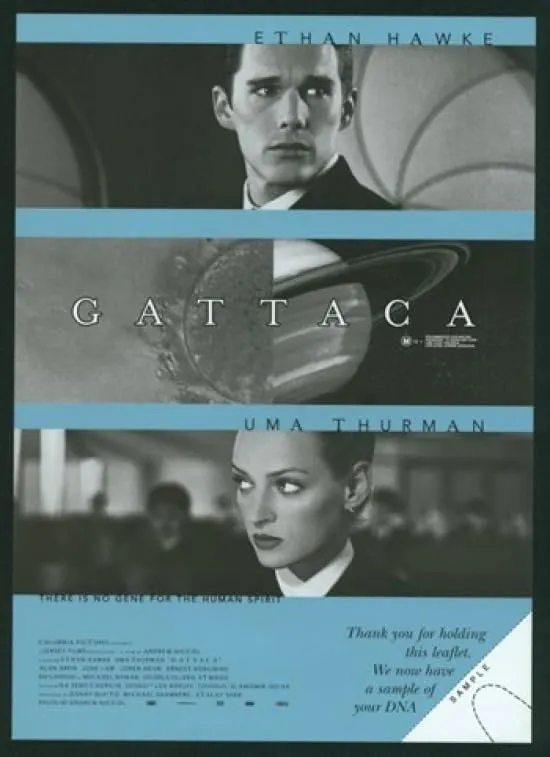
Imagine thinking you could pick better than God. You would choose a Frankenstein-ass child who would be smart (sure) but would come with a slew of other traits you’d regret engineering. Then you throw away 30 children and live your whole life wondering if you made the right decision.


A friend of mine had her embryos screened by Herasight and they found one with an IQ score in the 99.99th percentile
The challenge we face is that of *desire* oriented ultimately to love (caritas). We can in someway know the ends (telos) and the anthropology perfectly and still not have life abundant, still not be fully alive. Satan himself is the prime example. He knows full well the ontological and anthropological stakes, better than any human could without a singular grace from God. But he lacks love.
In connection with @Pontifex’s forthcoming encyclical on AI, some readers might be interested in chapter 9 of my book Immortal Souls: A Treatise on Human Nature, which sets out the deep metaphysical reasons why so-called artificial intelligence – whether on the traditional Turing machine model, or LLMs and other forms of machine learning, or whatever – is not and cannot be genuine intelligence. Available via Amazon: t.co/lRdfZKiwnT
