Sabitlenmiş Tweet
Orthodox Ethos
13.9K posts

Orthodox Ethos
@OrthodoxEthos
☦️ Presenting the Orthodox Way, Truth, and Life through Orthodox Christian catechesis, following the Holy Fathers. Join our newsletter 👇
Katılım Ekim 2014
865 Takip Edilen31.7K Takipçiler
Orthodox Ethos retweetledi

LIVE AT 9:30 PM EASTERN!
Fr. Peter Heers @OrthodoxEthos & Neil DeGraide @dirtpoorrobins RETURN!
Discussing The Orthodox Vision of Redemption!
BE HERE FOR THIS!!!
LINK>>youtube.com/live/D4ic57JRp…

YouTube

English

Uncut Mountain Press is pleased to announce the Uncreated Light Orthodox Student Planner for 2026-27 📖
Updated edition with new features! Link below ⬇️
The Uncreated Light Orthodox Student Planner is designed especially for Orthodox Christians and while crafted for students it is suitable for everyone, every Orthodox Christian of every age who wants to keep on track every day, spiritually, educationally and organizationally.

English

@ZiriDZed @chunguskitten If you are implying that the very old practice of baptizing Latins is equivalent to donatism than you should include St. Basil the Great as a “donatist” because he insists on the baptism of heretics in his day who both kept the form and did not have Trinitarian heresy.
English

@OrthodoxEthos @chunguskitten how about you read Canon 7 of the First Council of Constantinople.
English

@OrthodoxEthos @OwenBenjamin @EphraimChrist14 Jeez man. Another Sanctimonious person taking taking X way too serious. It feels like they are having a completely different conversation that doesn’t apply to the context of the situation 😂.
English

@chunguskitten I don’t see the great value in these comments. He made much more relevant and insightful and consequential comments on this matter.
English

@ZiriDZed @chunguskitten Sure. . .
Except that this would make St. Basil the Great a “donatist.” . . .
read Canon 47.
English

You have not studied the matter and rely on contemporary voices and thus have the wrong impression that AMONG THE SAINTS there is disunity on this matter. There is not. There is a Patristic consensus and it is clear.
That you can swallow, not a limited amount of confusion mainly created by academic circles and ecumenist bishops, but chaos and true spiritual disunity (as between “charismatic Catholics and Cistercian or Trappist monks or pre-Vatican II diehards, etc.) that exist today in Rome… is much more to be marveled at…
English

@chunguskitten This issue is what led me to Rome instead, I just can’t see past sacramental disunity as such, personally
English
Orthodox Ethos retweetledi

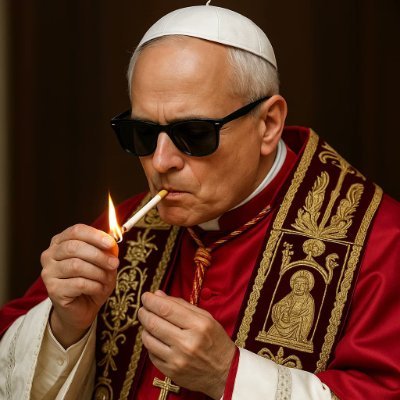
Here’s Fr. Kosmas quoting St. Porphyrios essentially saying that believing that pants can be feminine is a form of nominalism and he compares women wearing them to a bad habit like smoking:
Orthodox Driver Nephi@HabemusMalleum
Wearing pants is worse than not wearing a head covering.
English

@poperespecter1 @RcToOrtho93 You asked for substantial points regarding heresy, not just errors of popes…
I listed 9 books above, some are short and some are long.
Reading these are what serious people do.
A 200 character limit here means this.
English

@OrthodoxEthos @RcToOrtho93 Bro. repeatedly promoting your book gets annoying. If you can't articulate your points on twitter okay and I read a lot of books but just posting books to read is not really how this app works.
English

@poperespecter1 @RcToOrtho93 Read the book… to learn just how far the ecclesiology has departed from not only Orthodox first millenium but pre-Vatican II ecclesiology:
uncutmountainpress.com/products/the-e…
English

@OrthodoxEthos @RcToOrtho93 The Pope is great and not a heretic. But what frustrates me about Orthodoxy is that they say "The pope is a heretic" and when I ask why they point to something that their own patriarchs do. When I say "well, why haven't you removed him?" They have no answer.
English

Why are your popes still in their place?
Physician heal yourself, the Lord said.
Take the plank out of your own eye.
We are not addressing the errors of today’s men; we are addressing dogmatic errors, fundamental matters of Faith and Life which are systematic departures that have been adopted.
English

@OrthodoxEthos @RcToOrtho93 Oh yeah, condemned by who? What Patriarch condemned him? This was years ago, why is he still the Patriarch?
English

…—> The unity of the mysteries and οf the mystical life in Christ means that participation in the Holy Trinity’s life-giving and salvific energy is not given once and for all by Baptism. For not only is initiation into this life-giving energy not by Baptism alone, but our continued sojourning in the Body as Spirit-bearers requires the continual forming of Christ within, through communion in the immaculate mysteries of the Eucharist. From all that this study has striven to present, we believe it should be clear that the theory of baptismal unity presented in Unitatis Redintegratio is incompatible with the ecclesiology of the Holy Fathers. This conclusion has been borne out in the many examples we’ve cited both from Unitatis Redintegratio and commentary on it by leading Latin theologians and from the patristic witness of both the early and the contemporary Church.
English

…—> This idea that, on the strength of ecclesial elements held in common, the “separated brethren” are not only in partial communion with the Roman Church, but, in fact, form a part of the universal Church, even if somehow in a degraded fashion, is largely based upon the acceptance of a “common Baptism.” The image of the Church that emerges in Unitatis Redintegratio and Lumen Gentium is a peculiar two-tiered Church, with two kinds of Baptism, or two results from the one Baptism. According to Unitatis Redintegratio, those who possess Baptism alone, without the reality of the Eucharist (which would mean most Protestants), are “truly incorporated” into the Body of Christ in Baptism without, however, sharing in the Blood of Christ in the Eucharist. For those who are considered to possess a “valid” Eucharist because they possess apostolic succession, which includes the Orthodox, even though they are truly partakers of the Body and Blood of Christ they are still “wounded,” lacking not the fullness of Christ but the fullness of communion with His Vicar, the Supreme Pontiff. This image of the Church, however, and in particular, such an idea of Baptism with such results, is unthinkable for the Holy Fathers and the Orthodox Church. Those who are initiated into Christ are intiated into His Fullness, which is His Body. Can a Baptism not consummated in the Eucharist rightly be called Holy Baptism? And can those who participate in the Eucharist, which is the perfection of communion with Christ and among the Faithful, as Rome grants that the Orthodox do, be said to lack anything? The state of incomplete communion described in Unitatis Redintegratio—a communion based on “elements” and outside the unity of Faith—has no precedent or place in the Church. It stands in direct contradiction of the letter and spirit of Holy Scripture and the mind of Christ as clearly presented by the Apostle Paul. Communion in Christ means to hold Him, or be held by Him, in common: “we, being many, are one body in Christ, and every one members one of another” (Rom. 12:5). Unity in Christ means to be in the same “space” with Him, that is, to be in Him, as members of His Body. As the proponents of the new ecclesiology themselves admitted when avoiding the term “member” as inconvenient, there can be no “incomplete members” of Christ, “from whom the whole body fitly joined together and compacted by that which every joint supplieth, according to the effectual working in the measure of every part, maketh increase of the body unto the edifying of itself in love” (Eph. 4:16). There is no incomplete union or communion in the Church because the Church is fullness, the Church is “his body, the fulness of him that filleth all in all” (Eph. 1:23). There cannot be two different realms of ecclesial possibilities, or two different classes of the baptized, for “in one Spirit are we all baptized into one body” (1 Cor. 12:13). There cannot be two different kinds of communion or unity in Christ—one full and another incomplete, for we “are all one in Christ Jesus” (Gal. 3:28). There are not two different kinds of churches or bodies of Christians within the One Church—one that is by the will of God and another that is not the express will of Christ, for the entire “church is subject unto Christ” (Eph. 5:24), Who sanctifies and cleanses “that he might present it to himself a glorious church, not having spot, or wrinkle, or any such thing; but that it should be holy and without blemish” (Eph. 5:27). The Church is one, and her unity is both vertical and horizontal, with God and among men, with the Holy Fathers of the past and the Christians of the last time. This unity encompasses only those who are communicants of the life-giving energy of the Holy Trinity. As St. Nicholas Cabasilas has written, this unity is made manifest in the mysteries—each one separately and all of them together… —>
English

And he was condemned universally for this.
And he has had many predecessors that have erred.
And this is nothing new.
And his error does not imply very foundation of the church is shaken.
When you put all your marbles in the one basket of an all-powerful, infallible prelate such errors mean something very different.
English

@RcToOrtho93 @OrthodoxEthos He didn't but your patriarch does call the Koran Holy and hands them out as gifts.
English