Cornelius Sendagire, MD

1.3K posts

Cornelius Sendagire, MD banner
Cornelius Sendagire, MD

Cornelius Sendagire, MD

@cornels77

Cardiac anesthesiologist | Intensivist • Founder, Africa’s first Hypoxia Lab • Scalable ICU systems in Africa • Global Health • Medical Simulationist

kampala, Uganda Beigetreten Kasım 2012
393 Folgt867 Follower
Cornelius Sendagire, MD retweetet

Irampaye Dan
Irampaye Dan@IrampayeDan·
Hello @UEDCLTD No power in Bugolobi, Can you please look into it....Tuffa 😢.
English
3
2
5
2.6K
Cornelius Sendagire, MD retweetet
Radiology Masterclass
Radiology Masterclass@RadMasterclass·
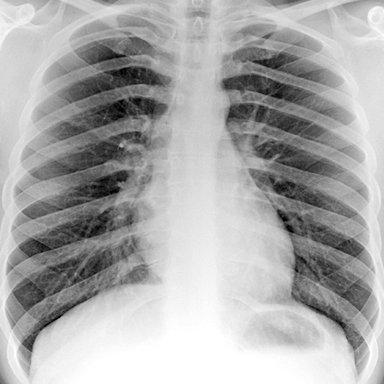
CHEST X-RAY 36: What is the classic pattern of shadowing on this chest X-ray? What does it signify? Answer buff.ly/3PA4Cfl
Radiology Masterclass tweet media
English
16
29
289
29.8K
Cornelius Sendagire, MD retweetet
Ashley Miller
Ashley Miller@icmteaching·
🧩 Part 3 – Why you usually can’t move one curve without the other 1️⃣ So far, we’ve treated the cardiac and venous return curves as two lines that meet. In theory, you can move one without the other – and sometimes that’s true. But in physiology, they almost always move together – because they share the same inlet.
English
4
51
193
31.8K
Cornelius Sendagire, MD retweetet
Critical Care Reviews
Critical Care Reviews@CritCareReviews·
Interesting trial result, ahead of ANDROMEDA-SHOCK 2 in a fortnight Targeted Tissue Perfusion vs Macrocirculatory-Guided Standard Care in Patients With Septic Shock: - The TARTARE-2S RCT CCR Journal Watch criticalcarereviews.com/latest-evidenc…
Critical Care Reviews tweet media
English
0
30
82
5.8K
Cornelius Sendagire, MD retweetet
POCUSmedicine
POCUSmedicine@POCUSpeek·
🔍 Ultrasound-Guided Lumbar Puncture – an essential POCUS technique for improving procedural success in CSF sampling, especially in ↑BMI or anatomically challenging patients with spinal deformities or prior surgeries, minimizing traumatic taps, needle redirects, and complications to enhance diagnostic accuracy and patient safety in emergency, neurology, and critical care environments. Best annotated and explained video I’ve seen 🤩 ⚡ Employ pre-procedural static marking to locate optimal L3-L4/L4-L5 interspace, boosting first-pass success rates to over 90% in difficult cases and reducing overall attempts. 🩺 📏 paramedian sagittal views for hyperechoic spinous processes (crescent-shaped with shadowing) and transverse views for midline identification, ensuring precise needle trajectory and depth estimation. 📐 🚨 Switch to curvilinear probes in obese patients for better penetration; this halves failure rates compared to landmark-based methods, particularly when BMI exceeds 30. 📈 🔍 Incorporate real-time guidance to avoid bone contacts and minimize traumatic LPs (e.g., RBC counts <400/mm³), with meta-analyses showing fewer complications like post-dural puncture headaches. ⚠️ 🤝 Integrate ultrasound with clinical assessment (e.g., palpation, patient positioning in sitting/lateral recumbent) for holistic management, supported by randomized trials in adult and pediatric populations across ED and ICU settings. 👥
English
9
106
401
19.8K
Cornelius Sendagire, MD retweetet
Fluid Academy
Fluid Academy@Fluid_Academy·
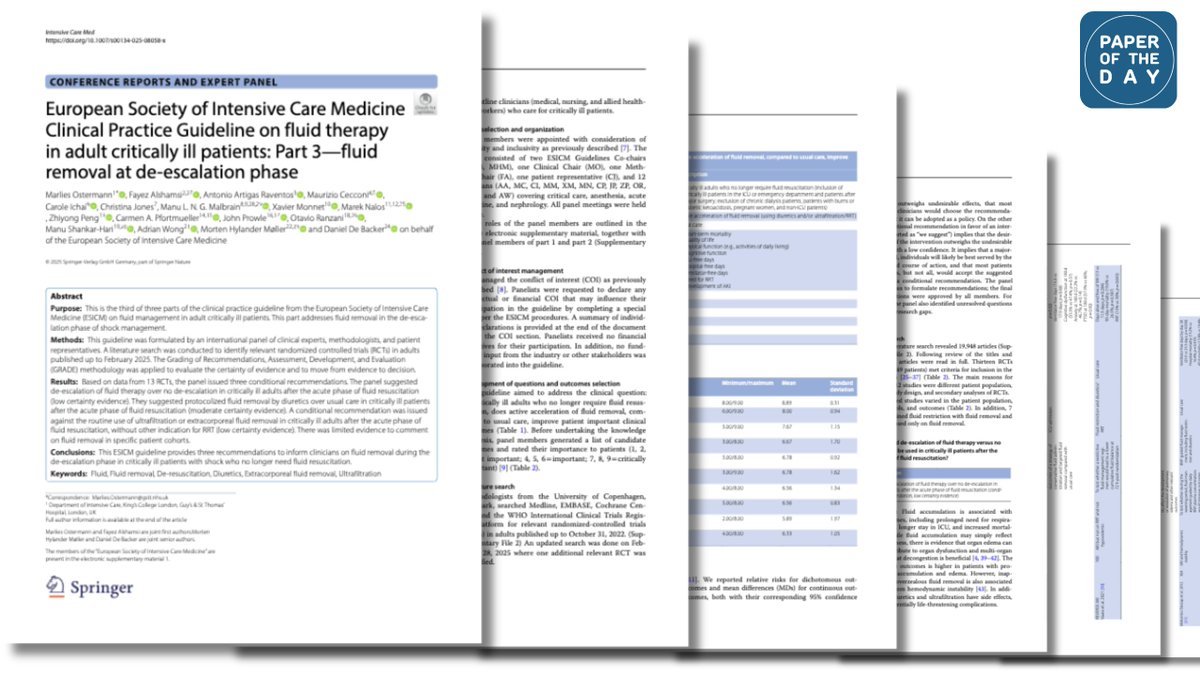
New ESICM Guidelines Alert — Part 3: Fluid Removal in ICU 🚨 The European Society of Intensive Care Medicine (ESICM) has just published Part 3 of their framework on fluid therapy in critically ill adults: fluid removal during the de-escalation phase. 👉 Key take-aways: - After the acute resuscitation phase, removing excess fluid is just as important as giving fluids. - Guidance on when and how to remove fluid safely. - Individualized strategies based on monitoring and patient condition. - Complements earlier parts on fluid choice (Part 1) and volume (Part 2). 💧 Want to learn more? Join our free webinar on the new guidelines and their practical implications for ICU care. 🔗 icom.zoom.us/webinar/regist… More resources: fluidacademy.mn.co/spaces/1298391… Paper: link.springer.com/epdf/10.1007/s…
Fluid Academy tweet media
English
0
27
64
4.7K
Cornelius Sendagire, MD retweetet
Eddy J. Gutierrez, MD
Eddy J. Gutierrez, MD@eddyjoemd·
Providing IV fluids in surgical patients requires careful consideration. At this point, the decision regarding which fluid has been mostly settled, with BSS like LR or PL being the preferred choice in most. 🎩 tip to the authors, including @Manu_Malbrain eddyjoemd.com/foamed
Eddy J. Gutierrez, MD tweet media
English
0
38
132
7.2K
Cornelius Sendagire, MD retweetet
Martina Baiardo Redaelli
Martina Baiardo Redaelli@BaiardoMartina·
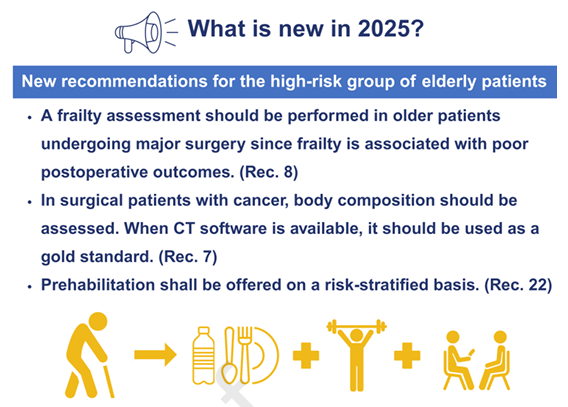
🚨ESPEN Guideline on Clinical Nutrition in Surgery – 2025 Update has just been released ➡️ 44 recommendations for clinical practice, including: 🔪elective & non-elective surgery 🩼frailty assessment 🥓sarcopenia diagnosis 🏋️‍♀️prehabilitation 🔗clinicalnutritionjournal.com
Martina Baiardo Redaelli tweet media
English
1
8
15
1.2K
Cornelius Sendagire, MD retweetet
Eddy J. Gutierrez, MD
Eddy J. Gutierrez, MD@eddyjoemd·
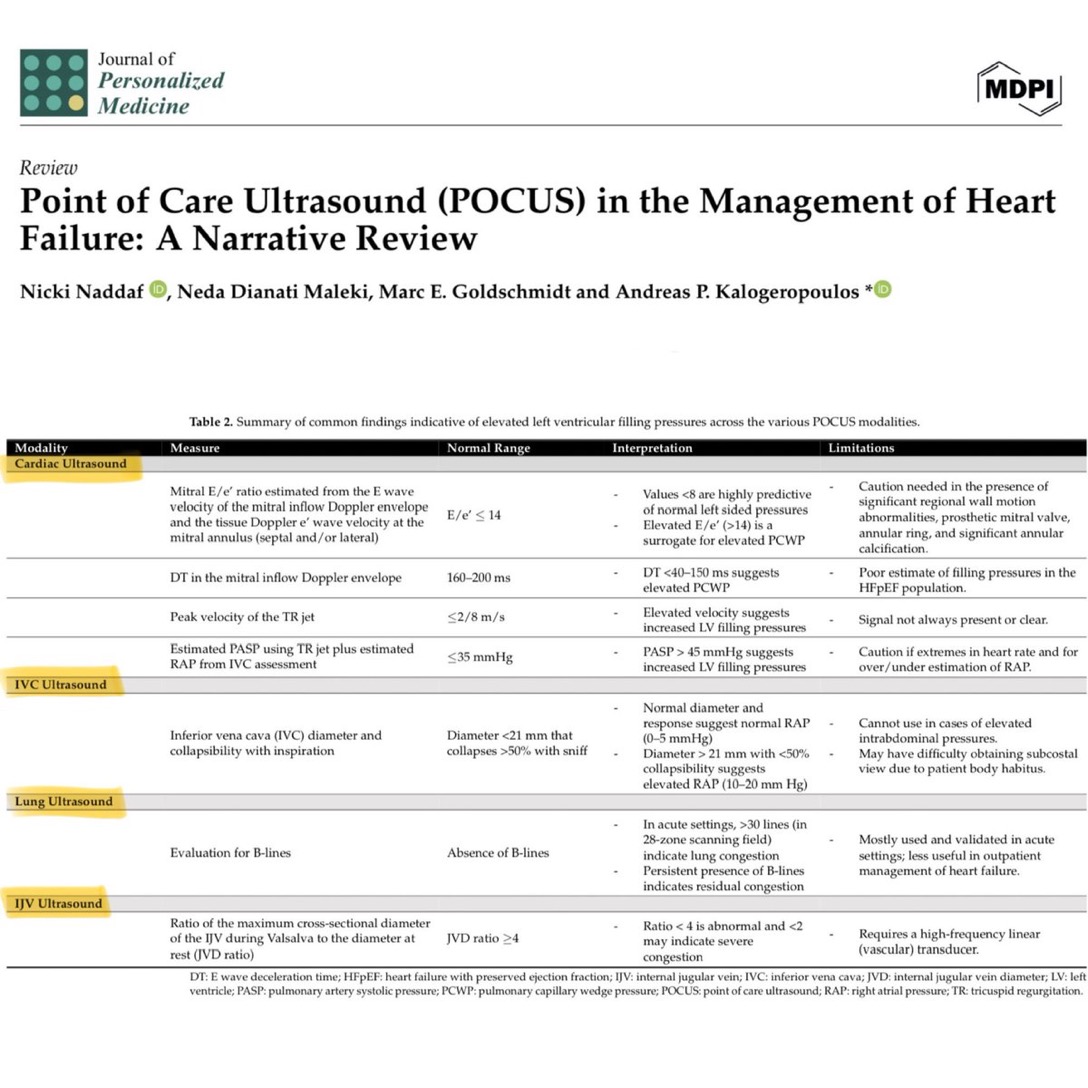
Using the eyeball test when performing bedside POCUS for heart failure can be helpful, but taking our skills up a notch can prove to be worthwhile for our patients. Here are some key points to consider. 🎩 tip to the authors. eddyjoemd.com/foamed
Eddy J. Gutierrez, MD tweet media
English
1
30
107
6.1K
Cornelius Sendagire, MD retweetet
Fluid Academy
Fluid Academy@Fluid_Academy·
📢 New Clinical Practice Guideline from ESICM on Fluid Removal during De-escalation The European Society of Intensive Care Medicine (ESICM) has released the third installment of its fluid therapy guidelines—Part 3: Fluid Removal at the De-escalation Phase (Intensive Care Medicine, August 2025). This comprehensive guideline, developed by an international panel of clinicians, methodologists, and patient representatives using the GRADE framework, is grounded in data from 13 randomized controlled trials. Key recommendations include: Active de-escalation of fluid therapy after the acute resuscitation stage is advised over continuing standard care (low-certainty evidence). Protocolized use of diuretics is suggested in place of usual care for fluid removal (moderate-certainty evidence). Routine ultrafiltration or extracorporeal fluid removal should be avoided unless there are other indications for renal replacement therapy (low-certainty evidence) These recommendations are designed to guide clinicians managing fluid removal in critically ill patients with shock who no longer require resuscitative fluids. Join us as the International Fluid Academy (IFA) continues to champion evidence-based fluid stewardship and translate cutting-edge guidelines into improved critical care practice. ➡ fluidacademy.mn.co/posts/european…
Fluid Academy tweet media
English
1
27
90
4.8K
Cornelius Sendagire, MD
Cornelius Sendagire, MD@cornels77·
@XplodingNoema @DailyMonitor Oh totally—because keeping someone unconscious, pain-free, and not dead during surgery is clearly overrated. After all, it’s far more glamorous to chase pandemics or wave scalpels theatrically—just as long as someone else ensures the patient survives the performance.
English
1
0
4
75
#ExplodingNoema
#ExplodingNoema@XplodingNoema·
@DailyMonitor Not gonna lie, if I had an MBChB, I wouldn’t be pushing propofol... I’d be out chasing pandemics, decoding genomes, or at least doing surgery with jazz hands. But anaesthesia? that’s what I thought nurses were fighting for 😂😂😇
English
6
0
1
507