
daando37

4.3K posts

daando37 banner
daando37

daando37

@daando37

side quest. always dyor. all my takes are no financial advices.

Deutschland Beigetreten Ocak 2021
858 Folgt1K Follower
Dwayne Sparkes
Dwayne Sparkes@sparkes_dwayne·
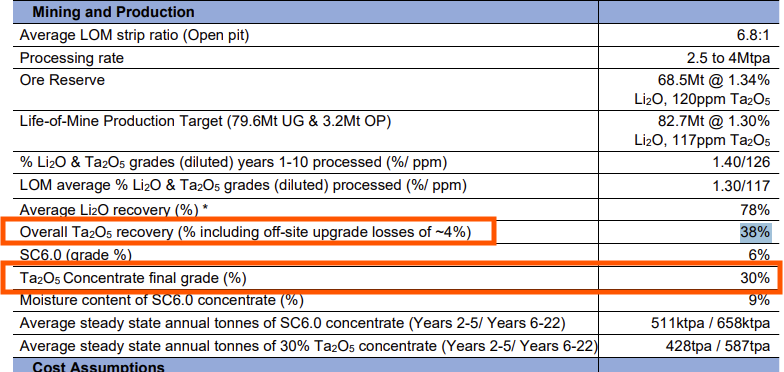
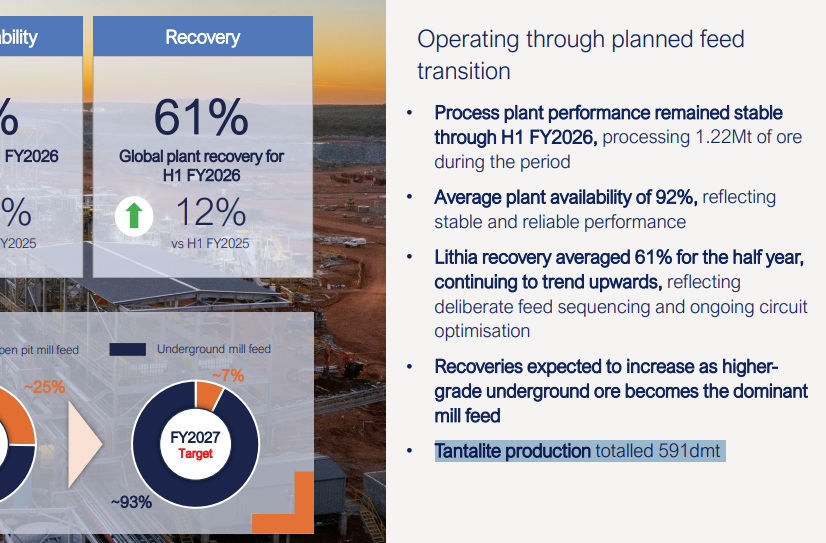
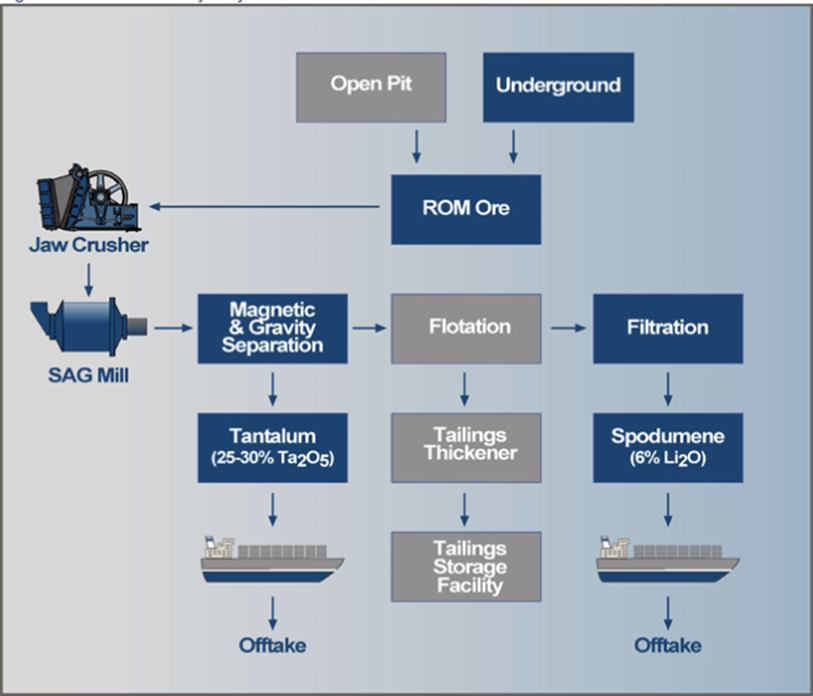
Some random thoughts on the hard rock pegmatites as I sip my morning coffee. Nobody seems to be talking about the price of Tantalum which has just reached its highest price in 20 years. A lot of hard rock lithium companies produce Tantalum as a by-product. It’s a relatively rare metal that occurs in small quantities in pegmatites. Most deposits have an average grade of around ~130ppm Ta. It’s quite easy to concentrate given just how heavy it is compared to spodumene and the typical pegmatite associated deleterious elements. Tantalite a specific gravity of ~8 whereas spodumene comes in at ~3.1. However, its worth noting, like all metals and minerals, some deposits will have higher recovery rates and better metallurgy than others. As you can see on the diagram below, given just how heavy it is, and also that it generally contains iron, it can be removed before the flotation step with gravity and magnetic separation. The recoveries are generally quite low (I note LTR’s came in at 38% in their DFS - not sure what they are in operation). Whilst it’s low, it’s not bad for a by-product and such a simple and relatively low cost process (magnetic and gravity separation after SAG). I’d imagine it would be relatively straight forward to increase the recovery rates. For example the grind size is optimised to suit the spodumene as it’s the main game. If the tantalum price increases enough I’m wondering if there’s a sweet spot where you’d ideally tweak the grind to suit the tantalum recoveries a bit. Although I’m not sure what tantalum price you’d need to warrant that. Companies generally list it as a credit against the operating costs. In LTR’s DFS for example, they were estimating a US$48 credit per tonne thanks to tantalum concentrate sales. Which equates to a tantalum price somewhere around the ~US$84/lb CIF China mark. The current price of >30% Ta2O5 concentrate is $US260/lb (this is per contained Ta2O5). So to run through an example, last half yearly, LTR produced around 591dmt of Tantalum concentrate, which equates to 1,302,930 pounds. However, this would come out as a 12% graded product as stated in their DFS and is further upgraded offsite for a 4% loss. So total contained Ta2O5 would be 1,302,930 * 12% * (0.96) = 150,098 lbs of Ta2O5 per half year. So if you crunch the math, 150,098 x ~$US230(rough realised price) x 1.43(US to AUD) x 2 = ~$A98.7 million annually. It starts to become quite a significant credit, especially if you take into account the simplicity of concentrating it. I'm not sure of the offsite concentrating costs and its not listed anywhere. I'd imagine its still largely magnetic and gravity based so shouldn't be overly high relatively speaking compared to other processes. If the price of Tantalum continues to increase, you would think companies would start to implement/tweak processing to increase recoveries given how low they are. 38% is quite low if you ask me (using LTR as an example) and I'm sure there would be ways to increase this without hurting the spodumene output. Just a benefit hard rock mining has over brines! Maybe some of the smaller lithium players could look to implement a small scale WHIMS, etc. and start concentrating tantalum to raise early stage cash? If the price of spodumene holds above US$2000, and you throw in a juicy tantalum credit, you’re going to see some pretty decent quarters for lithium producers I'd say! Thanks for reading!
Dwayne Sparkes tweet mediaDwayne Sparkes tweet mediaDwayne Sparkes tweet mediaDwayne Sparkes tweet media
English
8
8
106
5K
daando37
daando37@daando37·
@sparkes_dwayne good catch as always. what's the real marginal dollar here: higher tantalum recovery? or the first dollar lost from worse spod recovery, lower li2o grade, more fines or more circuit instability?
English
1
0
1
31
daando37
daando37@daando37·
$QTWO $QTWO.V the visuals support the idea of a continuous mineralized package w/ meaningful thickness, plus indications that the system remains open. multiple holes show long runs of spodumene bearing pegmatite & some holes end in mineralization, implying upside potential beyond current drill depth. but it's still visual. the real headline is the mre slip: timeline extended 'cause the model is larger/more complex & bba needs more interpretation/modelling. '26 assays won't be in the first mre & 'open at depth' is only upside if grade + spec survive the variability envelope (domains, dilution, fines). otherwise it's just deeper rock. still holding. dyor. no financial advice.
Q2 Metals - Cisco Lithium Project@Q2Metals

🚨Q2 Metals Announces Multiple 200+ Metre Intervals of Continuous Spodumene Pegmatite and Provides an Update on the Inaugural Mineral Resource Estimate at the Cisco Lithium Project, Quebec, Canada $QTWO $QTWO.V $QUEXF Read the full press release 👇: q2metals.com/news/q2-metals…

English
0
0
2
209
daando37
daando37@daando37·
good release. what i like is that the core asset is finally giving the growth story something solid to stand on. the lazy read is that cauchari-olaroz ramped badly. the better read is that brine projects age investors faster than the sun ages the ponds. olaroz stage 1 is the benchmark people should never forget. nameplate was 17.5ktpa. operations began in '15. first year production was about 1.7kt. the next year got to 11.9kt. fy18 was still only 12.5kt. '22 sat around 14kt. only in fy23, at 16.7kt, did it finally look like a project that could say 'near nameplate' w/o blushing. that is a painfully long curve for an operation the market once treated like a straightforward brine build. cauchari-olaroz has had fewer birthdays to get there. '23 production was about 6kt. '24 reached 25.4kt & q4 was running around 85% of design capacity. then '25 printed 34.1kt, w/ management saying the year ended near full capacity. '26 guided at 35-40kt. the market's frustration w/ cauchari is understandable 'cause the original timeline was cleaner than reality. but if you compare the actual operating trajectory to olaroz, cauchari looks less like a disaster & more like a normal brine project that investors briefly convinced themselves would behave abnormally well. the core issue is always the same: brine nameplate is not just a plant number. it is the end result of a full chemical chain working properly: extraction wells, pond sequencing, residence time, concentration, impurity management, reagent additions, plant recoveries, carbonate quality & repeatability. any wobble in one part can drag the whole ramp up. this is why brine projects keep humiliating people who model them like modular industrial equipment. olaroz needed most of a decade to grow into itself. cauchari is doing it faster, but still slow enough to remind everyone that the word ramp up in brine almost always means prepare to get annoyed.
daando37@daando37

lithium argentina finally looks less like a concept & more like a company. that's a meaningful shift.

English
2
0
1
229
daando37
daando37@daando37·
olaroz wasn't slow 'cause the idea was bad. it was slow 'cause brine projects only look simple to people who stop their analysis at the plant gate. cauchari moved faster 'cause the industry had already paid some tuition on that lesson. the blind spot is still the same: investors price the factory, while the real project lives upstream in the ponds & the chemistry.
English
0
0
0
43
daando37
daando37@daando37·
@DonDurrett they don't all need to stop planting. enough of them just need to plant poorer.
English
1
0
1
38
daando37
daando37@daando37·
said it before, saying it again: hated sectors pay best when reality sends the invoice. $WHC never needed popularity. it needed the world to remember what reliable energy is worth. coal doesn't need to win the pr war. when gas gets politically/physically uglier, coal plants stop being yesterday's villain & go straight back to being today's insurance policy.
daando37@daando37

can't explain the unpopularity of an entire sector that literally prints money. $whc $whc.ax #coal

English
1
0
8
708
daando37
daando37@daando37·
wrong framing. i accumulated $WHC last year & added $YAL in early march. the market loves to sneer at unloved assets right up until reality sends the invoice. when people get reminded that one policy error, one war shock or one regulatory fantasy can take away cheap power/industrial stability. the assets they mocked suddenly become the ones printing the cash.
English
1
0
1
115
daando37
daando37@daando37·
thermal coal doesn't need to win the future to stay brutally relevant. it just needs demand to keep outrunning the industry's ability or willingness to replace depleting supply. + that is where the setup gets uncomfortable for the ESG crowd. yrs of capital starvation, permitting hostility & policy theater have not killed demand. they've mostly constrained replacement supply. so the market ends up w/ the worst possible combination for bears: structurally hated fuel, structurally sticky demand & an industry that still throws off serious cash 'cause nobody wanted to build the next mine in time. the slide's big message is not that coal is immortal. it's that depletion is real, supply pipelines are thin & 'transition' was never the same thing as 'demand disappears on schedule'. if anything, robust asian load growth, underbuilt grids & security of supply politics keep extending the life of assets that polite western narratives had already written off. that is why established producers matter. in this kind of market, the guys w/ reserves in the ground, infrastructure in place, permits already won & operating muscle already built get paid first. not 'cause coal became fashionable. 'cause replacing real tonnes in the real world is a lot harder than virtue signaling them out of a powerpoint.
Coal@LukeyTrags

Compelling slide from $NHC highlights the onset of a structural thermal coal supply shortfall.. ESG-driven regulatory hurdles severely limit new projects, while global demand expands robustly against consensus, creating a highly favourable setup.. IMO the energy complex remains misunderstood: focus not on shifting source percentages, but on the rapid expansion of the overall global energy pie (see quoted post).. geopolitical pressures like the US-Israel-Iran conflict add near-term strain, yet the dynamic is fundamentally structural and accelerating.. Established producers with proven reserves and operational strengths stand to benefit disproportionately, especially given the inherent valuation discounts the coalies typically trade on.. $YAL.AX $WHC.AX $NHC.AX $TER.AX $CNR $BTU #coaltwitter

English
2
0
32
3.3K
daando37
daando37@daando37·
i like reliable power too. i also like projects that can actually be built before the next decade. energy systems run on more than physics. they run on timelines, capital & political reality. nuclear fans keep forgetting the last three. + the word 'capacity' is doing all the dishonest work here. nameplate capacity is not delivered electricity. a nuclear reactor can run at very high capacity factors. solar can't. so saying 'same capacity' w/o talking about output across hours, seasons & weather is just metric shopping for engagement.
Mick Mechanics@MickMechanics

One nuclear reactor. 1.9 million solar panels. Same capacity, but nuclear runs 24/7 regardless of weather. I'll take boring and reliable over expensive and intermittent any day.

English
0
0
2
271
daando37
daando37@daando37·
the answer to a physical shortage is not cheaper fuel for everyone. it's targeted household support, faster supply logistics, protected critical demand & enough price signal left in the system to kill non-essential consumption. you don't fix missing barrels by subsidising their consumption. you fix it by moving the remaining barrels to their highest value use while buying time for supply to catch up.
daando37@daando37

same barrel. different tax stack. different pain threshold. at $194-276 brent, germany isn't dealing w/ an oil move. it's dealing w/ a consumer squeeze that turns political fast. the uk gets squeezed hard. the us still feels it, but from a much lower all-in base.

English
0
0
2
275
daando37
daando37@daando37·
@jtourzan correct. africa is where the 'same barrel, different pain threshold' framework gets uglier. parts of the continent produce the crude but still rely on imported products, weak currencies & fragile subsidy systems. that's how an oil exporter ends up feeling like an energy hostage.
English
0
0
0
20
The Mining Bartender
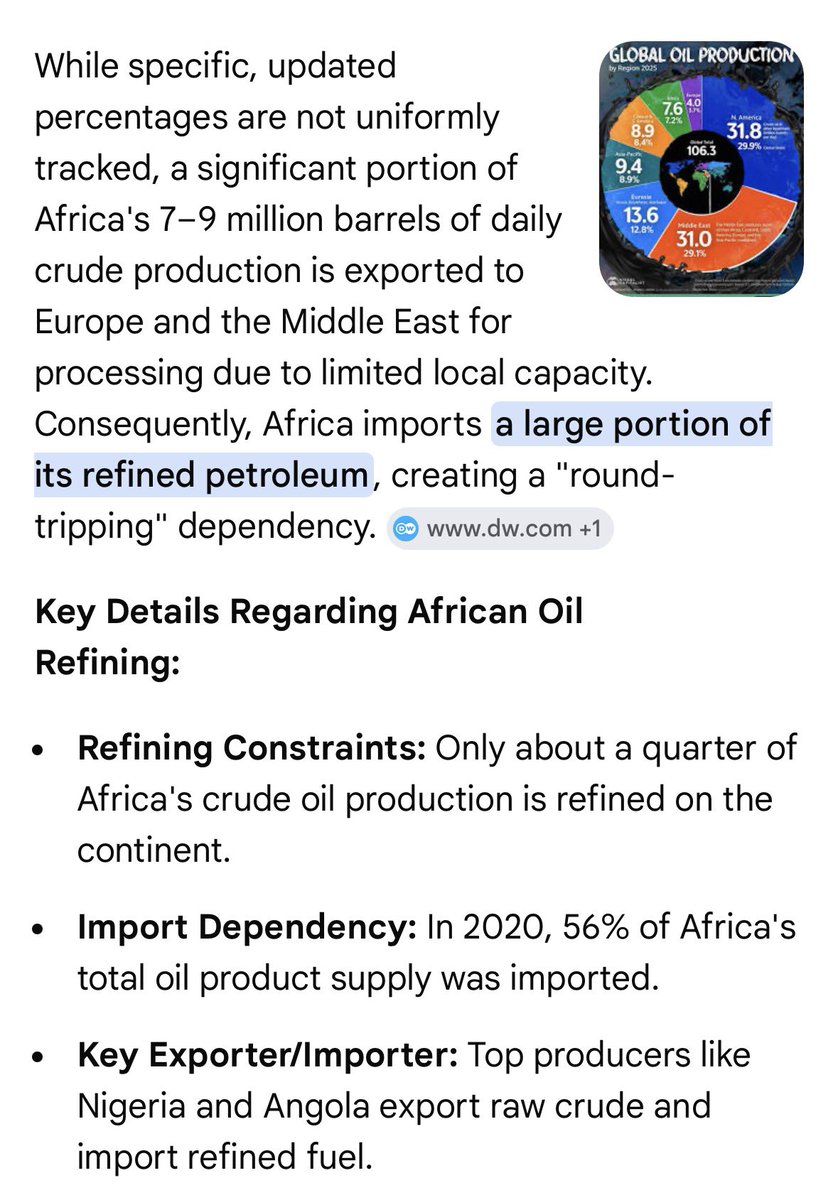
@daando37 Who is the most screwed? Obviously Africa. Even Nigeria and Angola are in big trouble and they are oil exporters.
The Mining Bartender tweet media
English
1
0
2
189
daando37
daando37@daando37·
brent futures can sit around $107-113/bbl & still tell you almost nothing about how savage the end user shock will be. 'cause crude is just the entry ticket. once that barrel moves through real economies, the pain gets repriced country by country. at the pump, the same barrel equivalent is already closer to $372 in germany, $286 in the uk, ~$191 in japan & india, $189 in china & $140 in the us. same oil. very different trauma. so in a real disruption, you don't just get a higher chart on a terminal. you get asymmetric economic stress. high tax/import dependent systems get punished first. consumers feel it faster. politicians panic sooner. demand destruction starts earlier. that's the part people keep glossing over. oil shocks are never just about the futures screen. they're about who has the weakest downstream tolerance once crude starts climbing. & on that front, some countries are walking into the storm wearing body armor. others are walking in wearing a receipt.
English
1
0
1
471
daando37
daando37@daando37·
this is not just LNG. qatar said associated exports are also hit. condensates down 24%, LPG 13%, helium 14%, naphtha & sulfur 6%. so the shock bleeds into chemicals, refining inputs, industrial gases & broader energy linked supply chains. that is how one strike turns into a potential future cross market inflation problem.
QatarEnergy@qatarenergy

Providing an update on the damage from the missile attacks on Ras Laffan Industrial City H.E. Minister Saad Sherida Al-Kaabi: The missile attacks reduced Qatar’s LNG export capacity by 17% and caused an estimated loss of $20 billion in annual revenue - Extensive damage to our production facilities will take up to five years to repair and will compel us to declare long-term force majeure QatarEnergy expects the damage to its Ras Laffan Industrial City caused by missile strikes, which occurred on Wednesday 18 March 2026, and in the early hours of Thursday 19 March 2026, to cost about $20 billion a year in lost revenue and to take up to five years to repair, impacting supply to markets in Europe and Asia. Providing an update on the damage to the facilities at Ras Laffan Industrial City, His Excellency Mr. Saad Sherida Al-Kaabi, the Minister of State for Energy Affairs, the President and CEO of QatarEnergy, said “I am relieved to confirm that no one was injured by these unjustified and senseless attacks, which weren’t just an attack on the State of Qatar but attacks on global energy security and stability. This was an attack on all of us who stand for development and human progress that is sustained by a fair, reliable, and secure access to energy.” The attacks damaged two liquefied natural gas (LNG) producing Trains 4 and 6 totaling 12.8 million tons per annum (MTPA) of production, representing approximately 17% of Qatar’s exports. Train 4 is a joint venture between QatarEnergy (66%) and ExxonMobil (34%), and Train 6 is a joint venture between QatarEnergy (70%) and ExxonMobil (30%). His Excellency Minister Al-Kaabi said: “The damage sustained by the LNG facilities will take between three to five years to repair. The impact is on China, South Korea, Italy and Belgium. This means that we will be compelled to declare force majeure for up to five years on some long-term LNG contracts.” The attacks also targeted the Pearl GTL (Gas-to-Liquids) facility, a production sharing agreement operated by Shell, that converts natural gas into high-quality cleaner burning drop-in fuels and produces base oils used to make premium engine oils and lubricants, and paraffins and waxes. “The damage caused to one of the two trains at Pearl GTL is being assessed and is expected to be offline for a minimum of one year” His Excellency Minister Al-Kaabi added. It should be noted that there will be a loss of associated product production due to this outage as follows: · Condensates: 18.6 million barrels which is around 24% of Qatar’s exports · LPG: 1.281 MT which is around 13% of Qatar’s exports · Naphtha: 0.594 MT which is around 6% of Qatar’s exports · Sulfur: 0.18 MT which is around 6% of Qatar’s exports · Helium: 309.54 MCFA which is around 14% of Qatar’s exports His Excellency the Minister of State for Energy Affairs, the President and CEO of QatarEnergy paid tribute to the Qatari military and security forces and to the energy sector emergency response teams whose courage and extraordinary professionalism ensured the situation was contained quickly and safely. #Qatar

English
0
0
0
221