david belay retweetet

French Foreign Minister Barrot to visit Israel on Friday. Rumour has it he will be meeting Hillel Neuer and Gideon Saar to put the final touches on yet another doctored video to smear @FranceskAlbs
English
david belay
17.9K posts



This is probably the most important article of the month: an op-ed by Oman's Foreign Minister, who mediated the talks between the U.S. and Iran, in which he writes that the U.S. "has lost control of its foreign policy" to Israel. He repeats that a deal was possible as an outcome of the talks (something confirmed by the UK's National Security Advisor, who also attended: x.com/i/status/20341…) and that the military strike by the U.S. and Israel was "a shock." Interestingly, given he is one of Iran's neighbors and given that Oman has been struck multiple times by Iran since the war began (en.wikipedia.org/wiki/2026_Iran…), he writes that "Iran’s retaliation against what it claims are American targets on the territory of its neighbours was an inevitable result" of the U.S.-Israeli attack. He describes it as "probably the only rational option available to the Iranian leadership." He says the war "endangers" the region's entire "economic model in which global sport, tourism, aviation and technology were to play an important role." He adds that "if this had not been anticipated by the architects of this war, that was surely a grave miscalculation." But, he adds, the "greatest miscalculation" of all for the U.S. "was allowing itself to be drawn into this war in the first place." In his view this was the doing of "Israel’s leadership" who "persuaded America that Iran had been so weakened by sanctions, internal divisions and the American-Israeli bombings of its nuclear sites last June, that an unconditional surrender would swiftly follow the initial assault and the assassination of the supreme leader." Obviously, this proved completely wrong, and the U.S. is now in a quagmire. He says that, given this, "America’s friends have a responsibility to tell the truth," which is that "there are two parties to this war who have nothing to gain from it," namely "Iran and America." He says that all of the U.S. interests in the region (end to nuclear proliferation, secure energy supply chains, investment opportunities) are "best achieved with Iran at peace." As he writes, "this is an uncomfortable truth to tell, because it involves indicating the extent to which America has lost control of its own foreign policy. But it must be told." He then proposes a couple of paths to get back to the negotiating table, although he recognizes how difficult it would be for Iran "to return to dialogue with an administration that twice switched abruptly from talks to bombing and assassination." That's perhaps the most profound damage Trump did during this entire episode: the complete discrediting of diplomacy. If Iran was taught anything, it is: don't negotiate with the U.S., it's a trap that will literally kill you. The great irony of the man who sold himself as a dealmaker is that he taught the world one thing: don't make deals with my country. Link to the article: economist.com/by-invitation/…

🔥 European gas prices in 2026 January 1: €28.16 / MWh March 19: €69.10 / MWh



Grieving Parents in Iran Spend Every Night at the Graves of Their Children, Killed by U.S. Strike open.substack.com/pub/dropsitene…



BREAKING: The world thought Hormuz was an oil story. Then it became an LNG story. If the damage assessment holds, it becomes a civilisation-input story that lasts half a decade. There is a difference between a shipping shock and a capacity shock that the market has not yet priced. A shipping shock traps molecules. The oil exists, the gas exists, the tankers are anchored, and when the strait reopens the molecules flow again. A capacity shock destroys molecules. The liquefaction trains that convert gas into LNG are physically damaged. The molecules cannot be produced even if every ship in the world is available to carry them. QatarEnergy’s CEO Saad al-Kaabi told Reuters that damage to Ras Laffan is severe. Repairs to impaired liquefaction capacity could take three to five years. Force majeure was declared on March 4 and has since escalated as the damage assessment worsened through March 18 and 19. Long-term contract buyers including Italy, Belgium, South Korea, and China face multi-year delivery disruptions. Shell declared force majeure on cargoes it resells from QatarEnergy. The market must now confront a possibility it has refused to model: that roughly 17 percent of Qatar’s 77 million tonne per annum capacity is not delayed but structurally impaired. JERA’s CEO stated that the global LNG market does not have the spare capacity to bridge the gap if Hormuz-linked supply is meaningfully lost. That single sentence reprices everything. If the replacement molecules do not exist in sufficient volume, the adjustment mechanism is not alternative supply. It is fuel switching, demand destruction, and rationing by balance-sheet strength. Rich buyers can pay more. Poor buyers cannot. The poor buyers are already breaking. Vietnam’s diesel is up 40 to 59 percent. Australia’s petrol is up 70 cents per litre. Sri Lanka is rationing fuel with QR codes at 15 litres per car per week, a four-day workweek, and Wednesday school closures. India raised LPG prices while importing 85 percent of its crude through a strait that is 90 percent shut. Gulf air cargo collapsed 79 percent. Jet fuel surged 58 percent. IndiGo and Akasa imposed surcharges. Vietnam Airlines warned of shortages from April. Ninety-five countries have reported petrol price increases since February 28. Ras Laffan is not just LNG. It is helium, urea, methanol, polyethylene, and sulfur. The downstream cascade from a multi-year Qatari impairment runs through semiconductor fabrication, pharmaceutical synthesis, phosphate fertiliser production, food packaging, and desalination. The facility that is damaged produces the molecules that four billion people depend on for chips, medicine, fertiliser, plastic, and drinking water. Europe’s post-2022 gas security was built on Qatari LNG replacing Russian pipelines. A structural impairment does not merely make gas expensive. It makes gas unavailable to industry. That is how an LNG shock becomes a deindustrialisation shock. BASF and Yara are already cutting fertiliser output. Russian LNG fills the gap at 18 to 22 percent of European imports. The country Europe sanctioned is the country Europe now depends on because the country Europe trusted was struck in a war Europe refused to join. Anyone arguing this resolves quickly now carries the burden of proof. They must explain where the replacement molecules come from when the world’s largest LNG hub is physically impaired, the strait is commercially closed, and the CEO of Asia’s biggest power buyer says there is no bridge. The market priced a shipping delay. The evidence demands a capacity repricing. The difference between those two words is measured in years, in trillions of dollars, and in whether the lights stay on. Full analysis: open.substack.com/pub/shanakaans…



Greta Thunberg in 2023: If we don't end fossil fuels, it will be a "death sentence." Greta Thunberg in 2026: President Trump must allow oil imports to Cuba. I guess the "climate crisis" has negotiable deadlines.
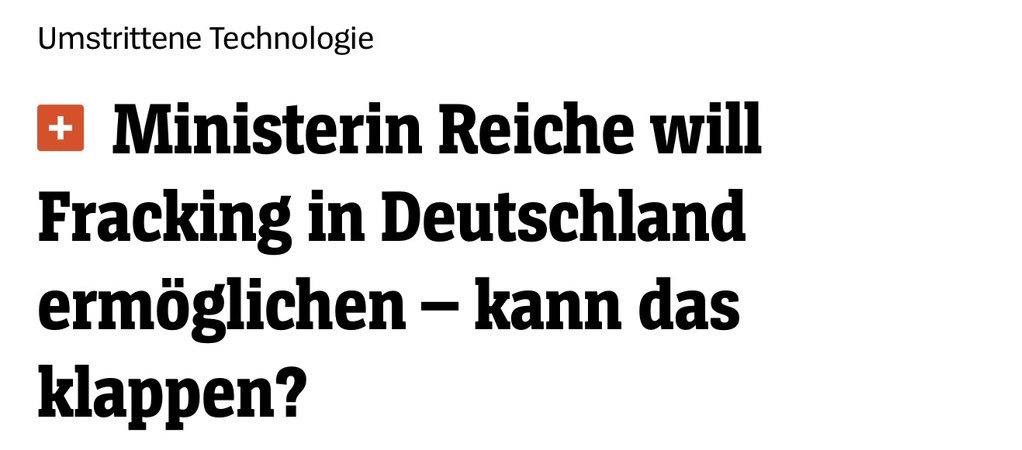
Wieviele Rüstungsaktien haben unsere Bundesminister?


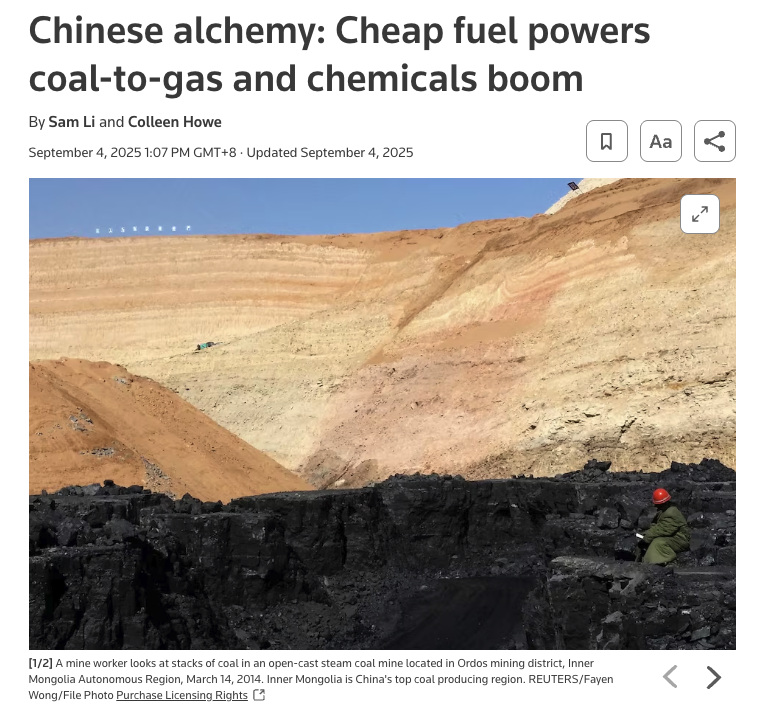
In the midst of the current energy crisis in #Cuba, the installation of 5,000 solar systems donated by the People's Republic of China is underway across the country.