
Sabitlenmiş Tweet
Balaji
31.1K posts


Balaji
@balajis
Author of the Network State. Founder of the Network School.
The Network School Katılım Kasım 2013
3.9K Takip Edilen1.4M Takipçiler
@harryhendrix27 @apruden08 To clarify: one can start new things without existing ones failing.
I also agree that there are many potential integrations of cloud communities with existing states, like startup cities, but also things like Estonian e-residency.
English

@apruden08 @balajis I agree the blockchains largely encode America’s political ideology into protocol rules
But does their ascendency require the failure and collapse of the US state? I don’t think so, I could easily imagine a future where the state embraces them to a degree far greater than today
English

I respect Balaji, Nic, and Zeihan as thinkers: recommend checking out their thoughts in full (Balaji is responding to Nic the OP in this Q/T here)
View I completely agree with from @balajis:
"I think that better way begins with the Internet, which is the successor to America as America was to Britain. Because it's the only thing with global economic scale comparable to China"
The the original architecture of the Internet (and their technological successor, decentralized blockchains) strongly encodes our political values. We should actively embrace and promote vs. vainly attempting to control
Balaji@balajis
English
@bsilone See thread below. There's a lag as different regions start to hit scarcity. There are also stockpiles of oil and gas to exhaust first. Finally, many had been assuming (wishfully) that the conflict would end soon. As each new refinery is vaporized...
x.com/biancoresearch…
Jim Bianco@biancoresearch
1/5 Where Is the Demand Destruction? tl:dr - Asia because they are reliant on Middle Eastern Crude oil, and it is now over $150/barrel. This is keeping (for now) the American and European grades "only" ~$100. (% gain since the war)
English

@balajis Just not seeing that bad of effects still. It’s possible, but there are far too many false warnings to believe any of them without more evidence.

English
I'm going to make some obvious points.
(1) Blowing up all the oil infrastructure in the Middle East is an insane idea, and may well result in a global economic crash and humanitarian crisis unrivaled in the lives of those now living. We're talking about the price of everything everywhere rising, from food to gas, at a moment when inflation was already high. All of that will be laid at the feet of the authors of this war.
(2) The antebellum status quo of Feb 27, 2026 was just not that bad, but we're unlikely to return to it. Expect indefinite, long-term, ongoing disruptions to everything out of the Middle East.
(3) Also assume tech financing crashes for the indefinite future. The genius plan to get the Gulf states caught in the crossfire has incinerated much of the funding for LPs, for datacenters, and for IPOs. Anyone in tech who supported this war may soon learn the meaning of "force majeure" as funding gets yanked.
(4) Many capital allocators will instead be allocating much further down Maslow's hierarchy of needs, towards useful basic things like food and energy.
(5) It's fortunate that all those progressives yelled about the "climate crisis." Yes, their reasoning about timelines was wrong, and much of the money was wasted in graft, but the result was right: we all need energy independence from the Middle East, pronto. It's also fortunate that Elon and China autistically took climate seriously. Now they're going to need to ship a billion solar panels, electric vehicles, batteries, nuclear power plants, and the like to get everyone off oil, immediately.
(6) It's not just an oil and gas problem, of course. It's also a fertilizer problem, and a chemical precursor problem. Maybe some new sources will come online at the new prices, but it takes time to dial stuff up, particularly at this scale, so shortages are almost a certainty.
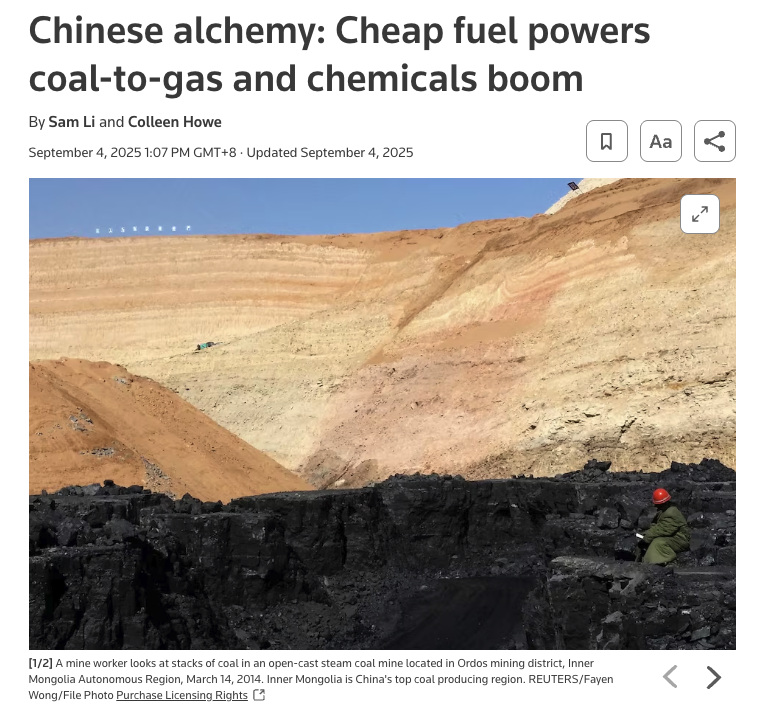
That said, China has actually scaled up coal-to-chemicals[a,c] (C2C), and there's also something more sci-fi called Power-to-X[b] which turns arbitrary power + water + air into hydrocarbons. But all of that will need to get accelerated. I have a background in chemical engineering so may start funding things in this area.
(7) Ultimately, this war is going to result in tremendous blame for anyone associated with it. It's a no-win scenario to blow up this much infrastructure for so many people. Simply not worth it for whatever objective they thought they were going to attain. But unless you're actually in a position to stop the madness, the pragmatic thing to do is: scramble to mitigate the fallout to yourself, your business, and your people.
[a]: reuters.com/business/energ…
[b]: alfalaval.com/industries/ene…
[c]: reuters.com/sustainability…
English
Btw, I do give @PeterZeihan credit for talking about axes that few were considering 10+ years ago. Those constants like shipping lanes did become variables. I mainly disagree with the sign of his conclusions, in terms of what he expects to rise and fall.
x.com/balajis/status…
Balaji@balajis
Conversely, I do give Zeihan credit for identifying interesting axes, things that people took for granted as constants that he rightly recognized to be variables. Like US willingness to guard shipping lanes, or commodity exports, or geographical chokepoints. I mainly disagree with the sign of his conclusions, not the specific axes he flags.
English
Conversely, I do give Zeihan credit for identifying interesting axes, things that people took for granted as constants that he rightly recognized to be variables. Like US willingness to guard shipping lanes, or commodity exports, or geographical chokepoints.
I mainly disagree with the sign of his conclusions, not the specific axes he flags.
English

@balajis I 100% agree that Zeihan has been / is weak on China. Underrates the importance of AI + future tech.
Remains to be seen if China wants to / can fill the US' shoes as the guarantor of global trade security.
English
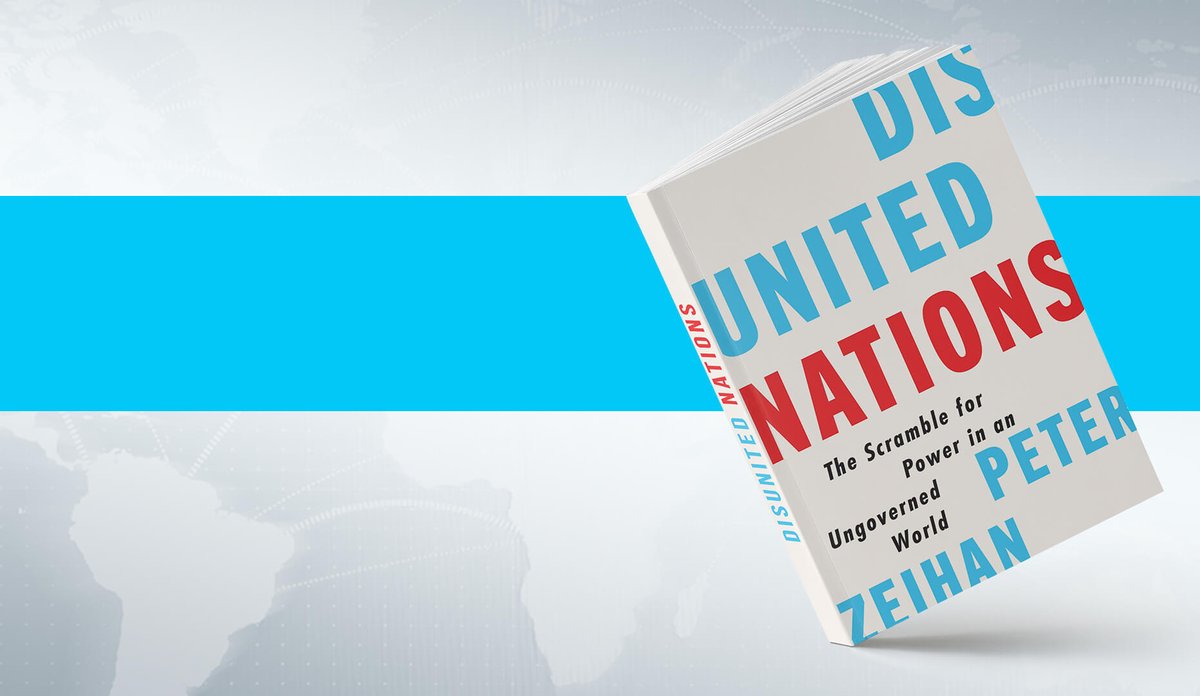
it's uncanny how the Straits crisis and its reverberations was completely anticipated by peter zeihan in this 2020 book
core thesis:
- the US as a reluctant increasingly isolationist hegemon unwilling or unable to maintain food energy security for the whole planet
- the US able to weather this transition as it has the continental resources it needs, but its erstwhile freeloader allies totally hung out to dry in the new order
- no hegemon willing or able to fill the gap; no one else post '45 has the blue water navy and power projection ability that the US had; trade becomes more disordered and more expensive
- trade becomes more regionalized, countries dependent on seamlessly functioning global food/fertilizer/energy trade are big big losers, globalization retreats
haven't seen any good counter arguments to this thesis. the realignment is happening in real time. listen to what the Euros are saying about the Strait and their energy security and see what Trump is saying about Europe. (not saying anyone is "right" or "morally justified" just calling balls and strikes)
English
You’re talking about the late Soviets. By the Brezhnev era, I agree, they weren’t as psycho.
But the early Soviets, namely Lenin and Trotsky and Stalin, did a whole lot of evil that could fill dozens of movies.
Lenin’s Hanging Order
White Sea Labor Canal
The Russian Civil War
The Red Terror
Katyn Forest
Berlin Airlift
Just off the top of my head. All very dramatic stories that could become films.
state secession@state_secession
@balajis @RamboVanHalen Nazis are far better villains, because commies are sad, low IQ biomass and boring. They exemplify the BANALITY of evil. Soviets had some great weapons, so they were OK in some Bond movies. But Nazi's are your father. The people you resent for being better than you.
English
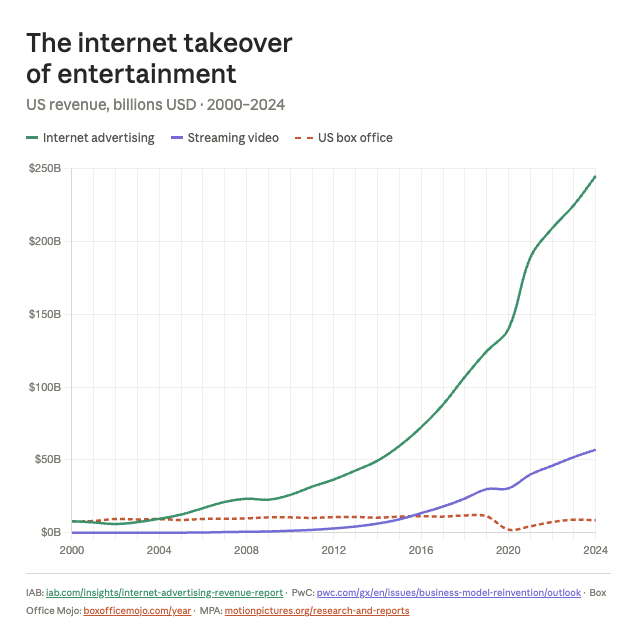
Yeah, but streaming is a transitional form. It will likely be replaced by AI-generated video over time.
Streaming already competes with everything else on the Internet. You don’t commit to a two hour stream. Users click away quickly.
Moreover, AI video will reduce the cost of hiring new actors (who are often hard to manage) and increase the lifespan of old ones indefinitely.
So you’ll see Stallone and Schwarzenegger, in their prime, forever. They’ll be like Mickey Mouse.
In a real sense, American culture is now a “finished product”, like French culture. It’s not like France is innovating on baguettes and the Eiffel Tower.
Similarly, thanks to AI, you will see endless remixes of the past glory days of America, especially the 1980s, but also earlier eras. You already see that now on X. All the romanticized past.
That’s part of why Hollywood is getting deprecated. You can only tell the same stories, the same sequels, with the same actors, to the same audience, so many times.
Meanwhile, all cultural innovation has moved to the Internet.
WildPinesAI@wildpinesai
@balajis coal mine didn't close, it changed owners. streamers spend $101B on content this year with the same Hollywood talent
English
@AngelicaOung One can argue that type of internationalist is really a imperialist in disguise. All countries may exist, so long as they bend to the order.
What makes it complex is that empire really does have a logic to it. If it's not growing, it's dying.
x.com/balajis/status…
Balaji@balajis
Btw: it’s true that there are both imperialist nationalists and autarkic nationalists. The imperialists want to conquer other countries, while the autarkics want nothing to do with them. Both actually have a logic and an illogic. The logic of empire is: like any business, if you're not growing you're dying. But there's also an illogic, the illogic of imperial overstretch. Similarly, the logic of autarky is: it's good to be able to build it yourself. The illogic is when that's taken so far that there's a rejection of the division of labor intrinsic to capitalism, or the idea of learning from others. Generally it's better to treat these political paradigms like programming paradigms. Just like there's sometimes a time for a recursive approach vs an imperative approach, there's sometimes a time for an autarkic approach. But you need not identify yourself as a recursionist or an autarkicist. Just use the best tool available. There's also in theory a third path that's neither expansionist nor autarkic. Just be a "normal" country, trading with others, neither conquering nor hating them! In practice, though, this means you're either part of an empire or you're autarkic enough to survive outside that empire.
English

Dunno. I feel like internationalists (libs who believe in the rules-based international order and Atlanticism etc) are the least flexible and available to diplomacy. If you are a nationalist you tend to think of national interests. Once you think in terms of interests you are already in a diplomatic framework.
English
You know how socialists don't get capitalism?
Well, nationalists don't get diplomacy.
The socialist thinks their state is all-powerful domestically, and the nationalist thinks their state is all-powerful globally, so it can seize whatever it wants by force, because it's so strong, and nothing will ever happen, and no one can resist.
Both worldviews are wrong, for similar reasons.
The socialist hates capitalists so much, and the nationalist hates foreigners so much, that they often just become blinded by hatred. They come to believe the outgroup is so incompetent that they aren't a threat, and have no use, so long as maximum force is employed.
And sometimes this mindset takes them surprisingly far!
They loot or conquer much more than you'd expect.
But eventually, they encounter constraint.
English
Btw: it’s true that there are both imperialist nationalists and autarkic nationalists.
The imperialists want to conquer other countries, while the autarkics want nothing to do with them. Both actually have a logic and an illogic.
The logic of empire is: like any business, if you're not growing you're dying. But there's also an illogic, the illogic of imperial overstretch.
Similarly, the logic of autarky is: it's good to be able to build it yourself. The illogic is when that's taken so far that there's a rejection of the division of labor intrinsic to capitalism, or the idea of learning from others.
Generally it's better to treat these political paradigms like programming paradigms. Just like there's sometimes a time for a recursive approach vs an imperative approach, there's sometimes a time for an autarkic approach. But you need not identify yourself as a recursionist or an autarkicist. Just use the best tool available.
There's also in theory a third path that's neither expansionist nor autarkic. Just be a "normal" country, trading with others, neither conquering nor hating them! In practice, though, this means you're either part of an empire or you're autarkic enough to survive outside that empire.
English
If you can't put yourself in another man's shoes, you can't sign a deal, whether in diplomacy or capitalism.
Empathy is politically and economically important.
x.com/balajis/status…
Balaji@balajis
Wokes abused the idea of “empathy” for years. But empathy is an important concept even for a calm, cold-blooded capitalist. Because one must understand the position of (say) a businessman in Europe. Everyone is questioning how much US exposure they want after the tariffs.
English
Networks are a better mental model than states.
Within a state, there are many networks. From ideological groupings to digital communities. They aren’t internally homogenous.
Between states, the countries themselves belong to networks. Multilateral fora like ASEAN or WEF.
China is the closest exception to the rule. Perhaps the most internally homogenous large state, and least globally dependent on others. But even China isn’t fully an exception, if you look closely.
All these types of informal networks are becoming more important, relative to formal states, as the 20th century ends and the Internet century begins.
Walter Kirn@walterkirn
I have a friend in the security world, high in the security world, who speaks of "power centers" rather than govt's or nations and seems to feel that the world is more a set of rival and allied "ventures" than a game of Risk in the old sense. I'm coming around to this idea.
English
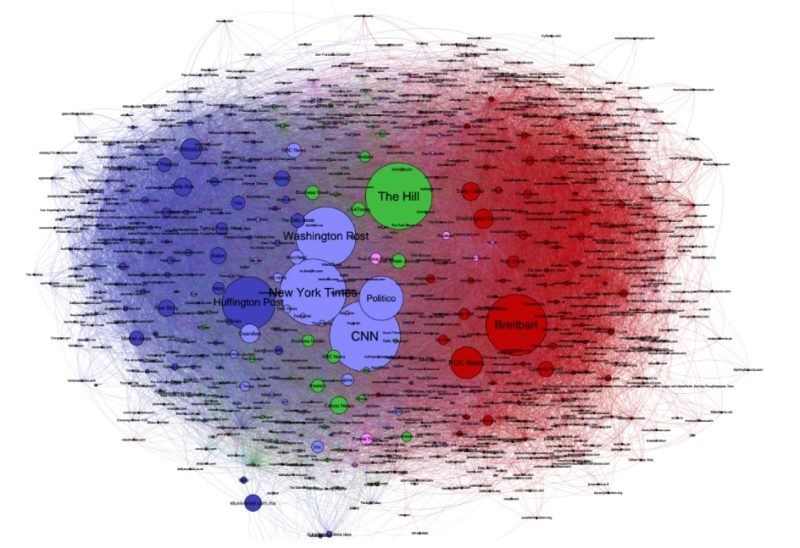
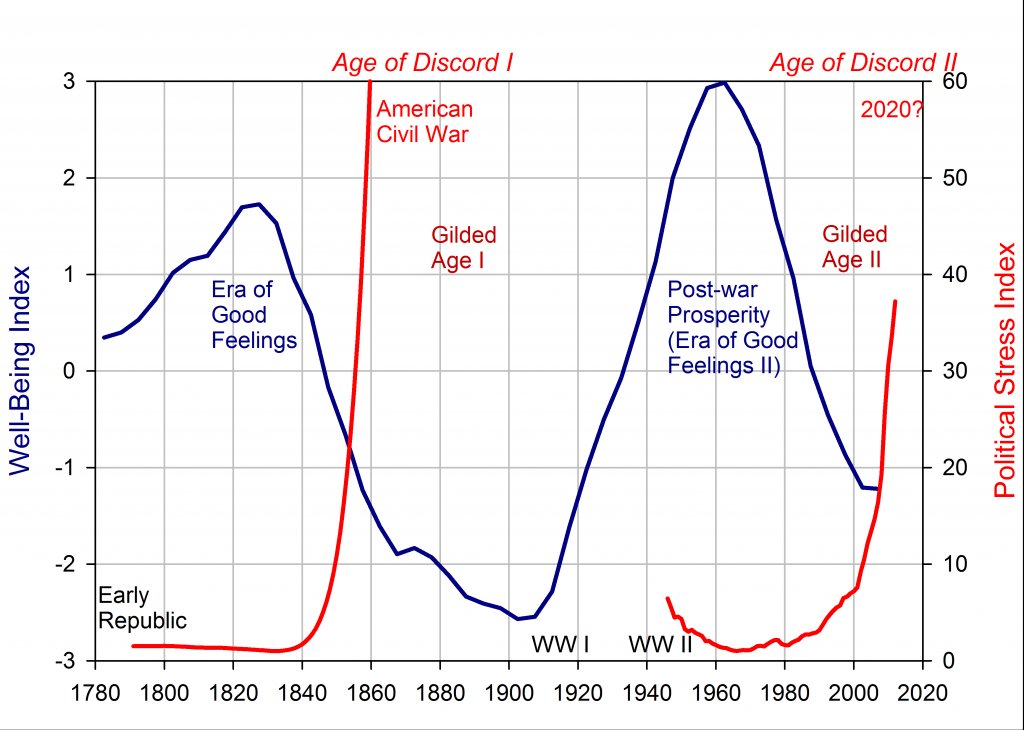
Here are several different graphs of US political polarization. Whether you look at Congressmen in votes or individuals on social media, it's rising.
2015: Plos One
vox.com/2015/4/23/8485…
2016: Vox
vox.com/polyarchy/2016…
2017: CJR
cjr.org/analysis/breit…
2017: Pew
carnegieendowment.org/research/2023/…
2020: Turchin
noemamag.com/welcome-to-the…


English
If Iran wins, it's the end of five eras.
1991-2026: the unipolar era
1974-2026: the petrodollar era
1945-2026: the postwar era
1776-2026: the union era
1492-2026: the Western era
Specifically, the end of the petrodollar (1974) would also be the end of the unipolar moment (1991) and the postwar order (1945). It would mark the moment when Eurasian powers were once again dominant over Western powers (1492). Finally, a rapid crash in the dollar's purchasing power coupled with military defeat could well break apart the American union (1776).
Few seem to viscerally understand just how dependent America is on money printing. But the end of the petrodollar is the end of Keynesianism as we know it.
And if there's a sudden cost-of-living spike on top of pre-existing levels of political polarization, which are already near Civil War levels...we could see the scenarios that Dalio, the Fourth Turning, and Turchin have described.
English