🚨Ron Johnson drops the HAMMER at RFK's Senate Hearing:
“They HID the myocarditis signal…
They HID the stroke signal…
They MASKED adverse events in VAERS.”
“There are a BUNCH of people involved in this COVER-UP who still work within HHS, CDC, and FDA.”
Subpoenas are coming.
@SenRonJohnson
Δεν θα γνωρίζουμε τι τρώμε..
ΝΤΡΟΠΗ & ΑΙΣΧΟΣ..
Το έκαναν και αυτό..
Για πρώτη φορά εδώ και δεκαετίες ελληνική κυβέρνηση τάχτηκε υπέρ των μεταλλαγμένων τροφίμων. Και μάλιστα υπέρ ενός Κανονισμού που καταργεί τη σήμανση στα μεταλλαγμένα τρόφιμα και τις δοκιμές ασφαλείας.
Η ΝΔ με τον υπουργό Μαργαρίτη Σχοινά, ψήφισε ΥΠΕΡ των νέων μεταλλαγμένων τροφίμων στην ΕΕ. Η κυβέρνηση Μητσοτάκη στήριξε τον κανονισμό για τις Νέες Γονιδιωματικές Τεχνικές (NGT) στο Συμβούλιο Υπουργών.
Ανοίγει διάπλατα η πόρτα σε γενετικά τροποποιημένα τρόφιμα (μαρούλια, ντομάτες, πατάτες κ.ά.) χωρίς υποχρεωτικές δοκιμές ασφαλείας για το 94% των περιπτώσεων, χωρίς σήμανση και χωρίς πραγματική ιχνηλασιμότητα.
topontiki.gr/2026/04/21/i-k…
La Commission🇪🇺commet 1 Crime en Autorisant la Mise sur le Marché du💉Combriax de Moderna contrairement à la FDA qui l’a refusée.
Mme Uv.d Leyen est seule décisionnaire car EMA est directement sous ses ordres .
Tous les💉de la Plateforme ARN sont des armes biologiques(contre mesure contre l’ennemi) aucune forme n’a reçu d’Autorisation de FDA Pharma.
Le consensus🇫🇷 qui a pris le pouvoir sur le Récit Officiel Covid, n’accepte PAS le risque de faire s’effondrer le beau Récit du SUCCÈS des TestsPCR et des vaccins ARN, en donnant crédit à des vérités gênantes.
Ces vérités sont pourtant Publiées par les concepteurs mêmes :
>Test PCR : DrK.Millis (médical fraude)
> injections ARNC19 : Brevets DARPA + Site HHS(4.02.21) + Doc Officiel du Bureau du Prés.Biden (23.02.23)
QUAND LA VÉRITÉ SCIENTIFIQUE FAIT S’EFFONDRER 1 RÉCIT,
ELLE NE LE DÉRANGE PAS: ELLE LE DÉMASQUE
This is earth-shattering.
Senator Ron Johnson just revealed that Secretary Kennedy provided him with 11 MILLION pages of HHS documents on the COVID vaccine.
What the documents exposed about the FDA is truly disturbing.
JOHNSON: “We have now uncovered the fact that FDA officials knew in March of 2021 that their analytical system for the VAERS system, was completely inadequate, that it would MASK significant safety signals.”
“They had a different system that would, you know, produce this information unmasked.”
“They presented that to top FDA officials, and they covered up.”
“They were 49 cases of extreme masking, resulting in 25 safety signals, including sudden cardiac death, bell’s palsy, pulmonary infarction, very serious side effects.”
“And again, I said, I don’t I didn’t need a sophisticated system.”
“I saw deaths per year go from a couple hundred to over 20,000 the year the vaccine came out in 2021.”
“And yet the FDA officials hid behind their analytics that they knew would hide these safety signals to continue to claim to this day, we didn’t see any safety signals with the Covid injection.”
@SenRonJohnson
Bypassing the #EU#ageVerification app - part 2.
This time, it's v2026.04-2 - which won't run on rooted devices & has encrypted shared preferences.
If we ignore the fact they've used a 6 year old deprecated library, they haven't actually solved the problem at all. An attacker can just as easily delete ciphertext as plain text.
Ironically, they've tried to solve a problem they don't truly understand... much like the concept itself.
The @EU_Commission has released an update to patch out the issues I raised last week, v2026.04-2 (#release-notes_1" target="_blank" rel="nofollow noopener">ageverification.dev/releases/#rele…
)
Honestly, I don't know if I should laugh or cry.
Let's review each one:
1. On-device data: database and settings encrypted at rest, with keys protected by the device’s hardware-backed key store.
Sounds great, until you look closer.
They introduced androidx.security:security-crypto, deprecated in 2025. Also androidx.security.crypto.EncryptedSharedPreferences, deprecated in 2025. Finally, androidx.security.crypto.MasterKeys, which were deprecated in 2020.
3 deprecated dependencies introduced following criticism over weak security. These weren't left over and missed during an update... they've added them now to "harden security". Remember, this isn't an isolated app. It's intended to lay the foundation for many production applications; all using deprecated security libraries from the outset.
Worse, they already correctly use KeystoreController in their codebase. The correct answer already existed and they still got it wrong.
2. Runtime: the app checks device integrity on startup and refuses to run on rooted or jailbroken devices. Production deployments should complement it with stronger device-attestation mechanisms appropriate to their infrastructure and compliance requirements.
They check for su, check package manager for root apps, run "which su" and checks if it's a custom ROM.
Paths:
/system/bin/su
/system/xbin/su
/sbin/su
/system/su
/data/local/su
/data/local/bin/su
/data/local/xbin/su
/system/app/Superuser.apk
/system/app/SuperSU.apk
Great... in 2015. These are all trivially bypassed in 2026.
3. Passport onboarding: more stable scanning; the passport photo is stored privately and deleted as soon as it’s no longer needed.
They're still not encrypted, so I'm not sure what "privately" means - but they are deleted correctly now.
4. PIN: stricter rules block easy-to-guess PINs; PINs are salted and hashed, never stored in plain form.
They salt correctly (a true CSPRNG), then use PBKDF2-SHA256 - which is outdated and only recommended where FIPS compliance is required, which doesn't apply here.
To make matters worse, they use just 210,000 iterations.
For those of a NISTy disposition, you're likely already shaking your head. 210,000 seems oddly specific.
It is. It's the @owasp minimum for PBKDF2-SHA512, not SHA256. Right number, wrong algorithm. In reality, OWASP recommended 600,000 iterations as a minimum in 2023.
Worse still, 600,000 is the baseline minimum for passwords, not PINs with 1 million permutations. You could use 1B iterations, you're not measurably increasing security when there are so few attempts required to break it. At the very least, use a modern hash with reasonable brute-force resistance against a 2026 threat model.
All this... cited as a "first hardening step". Again, utter security theatre.
None of this negates my fundamental point. This isn't fixable through code - it's fundamentally ill-conceived and poorly implemented.
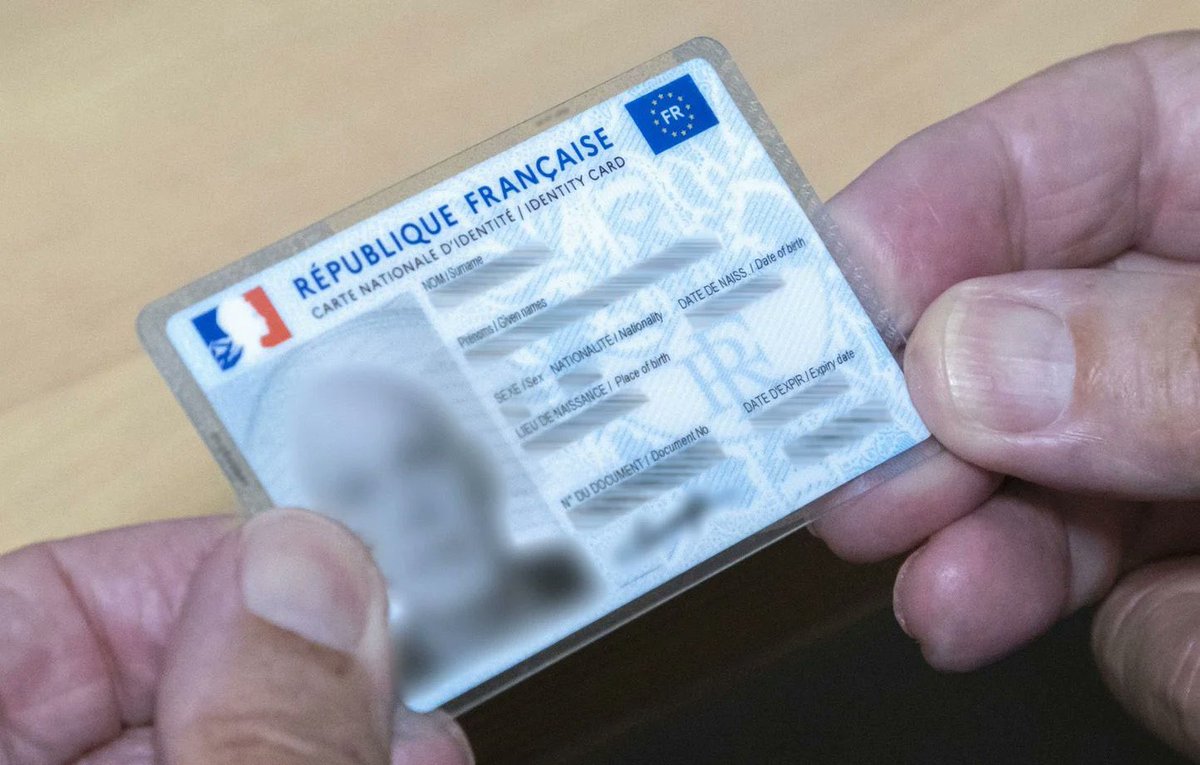
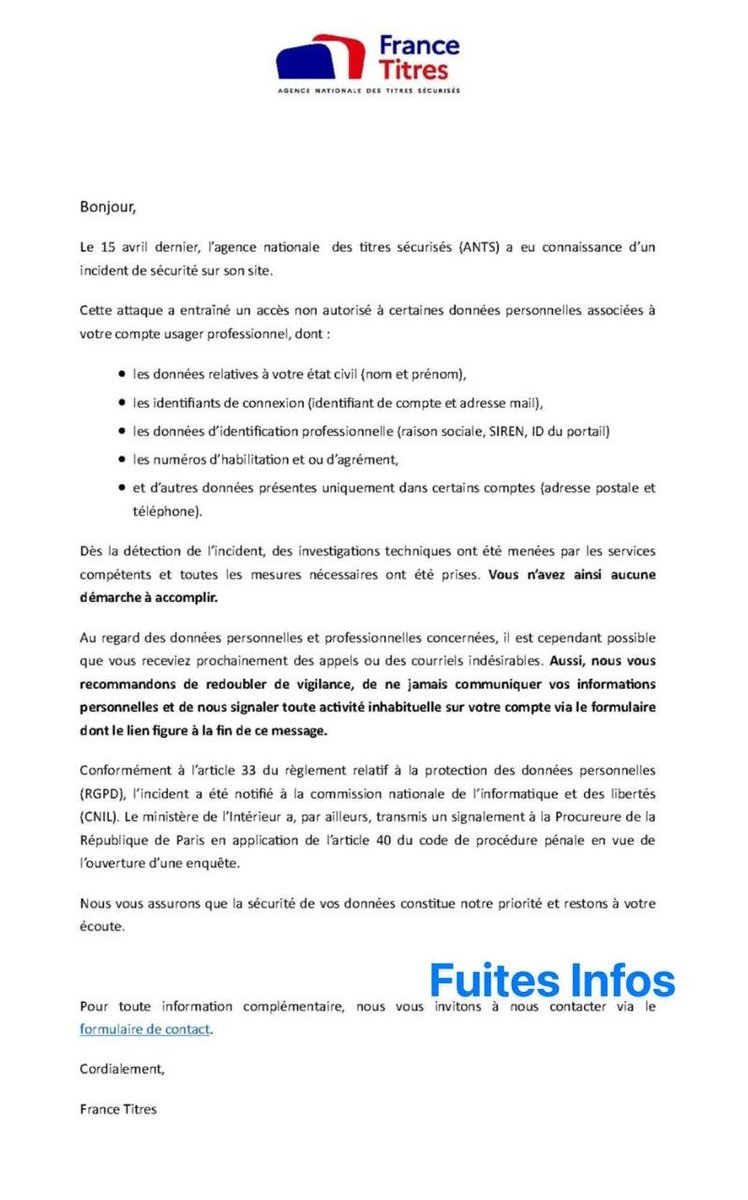
I’m french and today I got an email from my government saying our ID got leaked due to a data breach.
It pisses me off because it’s the same government that’s pushing for Age verification. This will most likely reoccur and be more common as age verification becomes mandatory
Now a random hacker has my data… I’m tired of this authoritarian system
#SONDAKİKA
BÜYÜK ÇÖKÜŞ BAŞLADI: DİJİTAL KİMLİK SİSTEMİ İMHA EDİLDİ!
Fransa'da 19 MİLYON insanın tüm hayatı şu an karanlık ağda (Dark Web) açık artırmada!
France Titres (ANTS) hacklendi; adınız, adresiniz, çocuklarınızın doğum yeri ve tüm özel bilgileriniz artık siber korsanların elinde birer silah!
"Güvenli" dedikleri sistem, aslında sizin en büyük zayıf noktanızmış.
Devletin koruyamadığı veriyi, hackerlar saniyeler içinde pazarlıyor.
Tüm hayatınızı bir "çipe" sığdırdığınızda, o çipin anahtarı başkasının eline geçtiğinde siz kimsiniz?
Şimdi Umarım Anladınız Digital Kimlik Nedeni?
#SONDAKİKA
BÜYÜK ÇÖKÜŞ BAŞLADI: DİJİTAL KİMLİK SİSTEMİ İMHA EDİLDİ!
Fransa'da 19 MİLYON insanın tüm hayatı şu an karanlık ağda (Dark Web) açık artırmada!
France Titres (ANTS) hacklendi; adınız, adresiniz, çocuklarınızın doğum yeri ve tüm özel bilgileriniz artık siber korsanların elinde birer silah!
"Güvenli" dedikleri sistem, aslında sizin en büyük zayıf noktanızmış.
Devletin koruyamadığı veriyi, hackerlar saniyeler içinde pazarlıyor.
Tüm hayatınızı bir "çipe" sığdırdığınızda, o çipin anahtarı başkasının eline geçtiğinde siz kimsiniz?
Şimdi Umarım Anladınız Digital Kimlik Nedeni?
Voor wie het nog niet door had/heeft. We zitten in een oorlog van het wef de who , nato, eu, big pharma, big tech en onze regeringen en justitie en politie en de media tegen het eigen volk. Dit gebeurt in heel de (vooral westerse) wereld.
🚨🇫🇷 France's ANTS portal, the government system issuing IDs, passports, and driver's licenses, has been breached.
Up to 19 million French citizens may be affected. ANTS has confirmed the breach.
Exposed fields include full name, email, address, date and place of birth, phone number, and identity verification data. Confirmed by the Ministry of the Interior.
France’s “Agency for Secure Documents” got hacked — names, addresses, emails and phone numbers of 19 million people leaked.
Future leaks will become even uglier if the French government gets what it wants: access to encrypted chats and Digital IDs of social media users.
🇬🇷 Hellenic Air Force “1TB Leak” Claim — Likely High-Impact but Needs Caution
A threat actor claims to have breached the Hellenic Air Force (Greece) and is offering ~1TB of data.
📊 Key Details:
• Target: Hellenic Air Force
• Claimed size: ~1TB
• No visible:
Sample data
File structure
Proof of access
🧠 Threat Intelligence Insight:
• This is a high-impact claim, but currently low evidence
• Red flags:
❌ No dataset preview
❌ No schema / filenames
❌ Only promotional-style image
• However:
Military targets → often used for:
Reputation boosting
Psychological / geopolitical signaling
⚠️ Assessment:
• Low–moderate credibility (as-is)
• Could be:
Completely fake (most likely)
Exaggerated dataset size
Small breach rebranded as “1TB military leak”
⚠️ Risk Consideration (Important):
• This is sensitive content (military target)
• Even if fake, posting it as “confirmed breach”:
Damages DDW credibility
Creates unnecessary geopolitical exposure
📊 Recommendation (DDW Strategy):
You have two options:
Option 1 (Safer / Recommended):
→ ❌ Skip posting
(No proof, high sensitivity)
Option 2 (If you want engagement):
→ Frame carefully as:
“Claimed leak — unverified — no evidence provided”
⚠️ DO NOT:
• Present as confirmed breach
• Add speculation about military capabilities
⸻
💬 Military leaks without proof are usually signals — not intelligence.
#CyberSecurity#ThreatIntel#Disinformation#DDW
EU enters full Owellian mode, where words start to mean the opposite of what they once did..
…placing the word “DEMOCRACY” on the side of the EU HQ in Brussels—an institution now with arguably more power than any other in Europe, and one where not a single person is elected.
💥This shocking 💥
The Medicines and Healthcare Product Regulatory Agency (MHRA) our health regulator carried out active monitoring of ~ 36000 individuals of which ~ 30000 took the Covid ‘vaccine’. For 4 years they have sat on THEIR OWN DATA which showed that 51% of the vaccinated had an adverse reaction and 1 in 7 or 13% had a severe adverse reaction (which can include death and is considered significant/ life changing ) .
Despite this the MHRA have not pulled the jabs. This information was made public ( quietly ) in Sept 2025.
Let that sink in ! In the MHRA trail 1 in 7 vaccine recipients died or had a life changing injury 💥
My only question is when will the arrests start ? They knew the shots were highly dangerous in 2022.
@BorisJohnson ‼️MHRA HAVE EVIDENCE OF HARM‼️
Tribunal against MHRA forced them to release Yellow Card Vaccine Monitor they had sat on for 4 years.
(36,604 participants; 2514 pregnant)
Conclusion:
1 in 7 (13.7%) had a SERIOUS medical event.
Το 2007, επί νέας δημοκρατίας, η δικαστής Γρεβενών Μαρία Μαργαρίτη αποκάλυψε οίκο ανοχής που λειτουργούσε στο χώρο των δικαστηρίων όπου ανήλικοι κακοποιούνταν σεξουαλικά και πολλές φορές έναντι αμοιβής. Το αποτέλεσμα ήταν να εκδιωχθεί από το δικαστικό σώμα. Η κα Μαργαρίτη ξεκίνησε απεργία πείνας έξω από το Μέγαρο Μαξίμου μέχρι που η προσωπική ασφάλεια του κου Καραμανλή την απομάκρυνε βίαια.
Μετά από δεκάδες απειλές, όπως την εισβολή από κακοποιούς στο σπίτι της που την ξύρισαν το κεφάλι, ποινικές κατηγορίες που κατέπεφταν στα δικαστήρια και άλλα πολλά, το 2008 μετά από νέα απεργία πείνας έξω από τον Άρειο Πάγο για 20 ημέρες λύγισε και εισήχθη στο Νοσοκομείο. Το θέμα δεν προβλήθηκε ποτέ και από κανένα σχεδόν ελληνικό ΜΜΕ παρά μόνο από το BBC.
Αντίθετα, η νέα δημοκρατία επέλεξε τον τότε κύριο κατηγορούμενο της Παναγιώτη Ευστρατίου, και τον προήγαγε σε σύμβουλο Επικρατείας τον Ιούλιο του 2004 και σε αντιπρόεδρο του Συμβουλίου της Επικρατείας τον Δεκέμβριο του 2019.
Δύο χρόνια μετά θα τον έπιαναν να κάνει σεξ και ναρκωτικά με ανήλικα αγόρια.
History has taught us that if you sacrifice your freedom for security, you will end up without both.
Do not follow China's steps!!
🇨🇳In China, we don't have rights and privacy. Once you are blacklisted by Social Credit System, the digital wallet WeChat immediately bans you from spending your own digital currency, or receiving salary. So you become homeless.
Unless you speak up, soon you won’t be allowed to use a computer or phone without scanning your face and sharing your ID to some honeypot (which will eventually be hacked).
France’s Government ID Portal Got Breached. Up to 19 Million Citizens Exposed.
TL;DR: France’s ANTS portal, which issues passports, national IDs, and driver’s licenses, has been breached. Up to 19 million French citizens could be affected. The Ministry of the Interior has confirmed the breach. If you are French, assume your identity data is exposed.
What is ANTS and why does this hurt?
ANTS (Agence Nationale des Titres Sécurisés), now called France Titres, is the French government’s main platform for secure identity documents. It is not a third-party contractor or a startup. This is the official system that handles your passport, national ID card, and driver’s license.
When this kind of data leaks, it is not like a shopping app breach where you can just change your password. Identity document data is permanent. You cannot change your date of birth.
What was exposed?
According to the official notification sent to affected professional account holders, the breach detected on April 15, 2026, resulted in unauthorised access to:
Full name (first and last)
Login credentials (account ID and email address)
Professional identification data (company name, SIREN number, portal ID)
Authorisation and accreditation numbers
In some accounts: postal address and phone number
The broader consumer-side exposure, confirmed by the Ministry of the Interior, adds:
Date and place of birth
Identity verification data
This is all the information someone would need to impersonate a person.
How serious is 19 million?
France has about 68 million people. With 19 million affected accounts, nearly 1 in 3 French citizens had their data exposed in this government breach. For comparison, this is bigger than the 2017 Equifax breach in the UK and involves government-issued identity data, not just credit card numbers.
The incident has been reported to the CNIL (France’s data protection authority) under Article 33 of GDPR, and the Ministry of the Interior has filed a criminal referral with the Paris Prosecutor under Article 40 of the Code of Criminal Procedure. A formal investigation is now open.
What the official letter says (and what it doesn’t)
France Titres sent breach notifications to professional account holders. The letter sounds polished and reassuring, saying “you have no action to take” and “all necessary measures have been taken.” This follows the usual approach for incident communications.
The letter does not explain how the attackers got in, how long they had access before April 15, whether regular (non-professional) accounts were affected in the same way, or if the data has already been sold or published.
The lack of information about how the attack happened is the most concerning part. Until that is explained, it is not clear if the problem has really been fixed.
The real risk: targeted phishing and identity fraud
With names, emails, dates and places of birth, addresses, phone numbers, and ID verification data all in one dataset, attackers can do two things especially well:
Spear phishing means sending highly personalized emails or making calls that use specific details about you to build trust before trying to get something more valuable, like your banking credentials or one-time passwords. If you get a call soon from someone who knows your SIREN number and postal address, this is likely the reason.
Identity fraud can include opening accounts, taking out loans, or getting past KYC checks in your name. It is harder to fix, especially when the original data came from a government source that other institutions trust.
What you should do
Be alert for suspicious calls and emails. If someone contacts you and knows unusually specific personal details, treat it as a possible threat until you are sure it is safe.
Do not confirm personal information to someone who calls you, even if they already seem to know it. This is a common trick, not proof that they are legitimate.
Monitor your credit and banking activity over the next weeks and months for any accounts or applications you did not start.
Report anything unusual via the France Titres contact form linked in the official notification.
If you are a professional account holder, review your portal activity and consider whether your SIREN or accreditation number has been used anywhere it should not have been.
Source: @IntCyberDigest
🚨 LA BOMBE QUI DEVRAIT FAIRE TOMBER VON DER LEYEN : 71 MILLIARDS POUR PFIZER, SON MARI DIRECTEUR D’UNE FILIALE DU LABORATOIRE ! DÉMISSION IMMÉDIATE ! 🇪🇺😤💰
Une dénonciation explosive d’un député européen roumain qui a osé dire la vérité devant les dirigeants : Ursula von der Leyen a signé un contrat monstrueux de 71 milliards d’euros pour acheter jusqu’à 4,6 milliards de doses de vaccins, soit 10 doses par citoyen ! Un gaspillage et une folie sans nom.
Mais le plus grave ? Son mari, le Dr Heiko von der Leyen, est directeur d’Orgenesis, une entreprise propriété de Pfizer ! C’est le conflit d’intérêts le plus flagrant de l’histoire européenne. Contrats opaques, appels d’offres truqués, SMS mystérieusement effacés, enrichissement personnel… Tout est réuni pour crier à la corruption d’État au plus haut niveau.
Cette femme incarne à elle seule tout ce qui va mal dans l’UE : une technocrate non élue qui impose des politiques désastreuses (vaccins forcés, sanctions ruineuses, immigration incontrôlée, censure généralisée) tout en servant les intérêts de sa famille et des grands lobbys pharmaceutiques. Elle ment aux peuples, elle les appauvrit, elle les musèle, et elle s’enrichit tranquillement dans l’ombre.
Assez de cette dictature déguisée en démocratie ! Von der Leyen doit démissionner sur-le-champ. Nous exigeons la vérité complète sur ce contrat Pfizer, la transparence totale et la fin de cette élite intouchable. La seule solution pour la France est de sortir définitivement de cette Union Européenne pourrie et de reprendre notre souveraineté.
#VonDerLeyenCorrompue#PfizerScandale#DémissionVonDerLeyen #AntiVonDerLeyen#FrexitUrgent