Angehefteter Tweet
Kevin Hoepel
8.4K posts

Kevin Hoepel
@directRmarketer
Deep unconventional -conversion focus- Marketing Insights. Keeping it real. No cold DMs. Nothing.
Beigetreten Ocak 2011
311 Folgt384 Follower

@PaulBachman3 @ExploreCosmos_ Yeah that is maybe more mature. Instead of accepting things that do not exist like dark matter/energy.. yeah we just have to accept it, I guess, lol. It's just conflicting things always keep sticking. But indeed just have to accept the incompleteness
English

@directRmarketer @ExploreCosmos_ Let's just say the models are incomplete at best. Maybe in a few hundred years we will discover the theory of everything - if we don't destroy ourselves in the meantime.
English

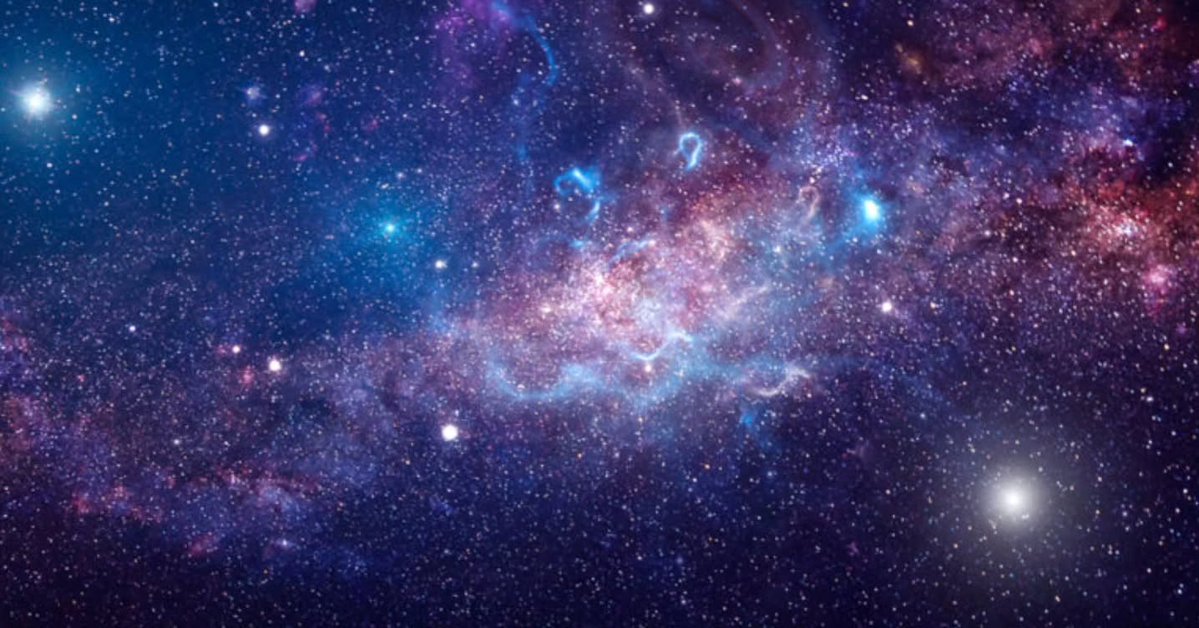
For decades, we’ve lived with a mystery that is deceptively simple: galaxies aren’t following the rules. When astronomers measure how fast stars orbit within galaxies, something doesn’t add up. The outer regions rotate far too quickly, as if there were much more mass present than we can see.
If Newton or Einstein were entirely sufficient to describe what’s happening, those outer stars should be moving more slowly. In fact, many of them should be flying off into intergalactic space. But they don’t. Something is holding galaxies together.
One way to explain this is to assume that there is additional mass, an unseen component we now call dark matter. It does not emit or absorb light, but it does exert gravity. In this picture, galaxies are embedded in vast halos of invisible matter that provide the extra gravitational pull needed to keep stars in orbit.
But there is another possibility. Instead of adding something new to the universe, maybe the problem lies in our understanding of gravity itself. Perhaps the laws we use, so successful on Earth and in the Solar System, break down on galactic scales.
This is where MOND (Modified Newtonian Dynamics) comes in. MOND proposes that gravity behaves differently at extremely low accelerations. With a relatively simple modification, it can reproduce the rotation curves of many galaxies without invoking dark matter at all. In that sense, it works remarkably well.
But there’s an important nuance here. MOND is essentially an empirical rule, it tells us how galaxies behave, but not necessarily what underlying physical entity is responsible. Dark matter, by contrast, is a hypothesis about something real: a new form of matter that exists independently of the visible universe.
And galaxies are only part of the story.
When we look at galaxy clusters, the discrepancy becomes even more pronounced. The visible matter, mostly hot gas, is simply not enough to account for the gravitational effects we observe. Even with modified gravity, something extra still seems to be required.
Gravitational lensing adds another layer of evidence. Massive objects bend light, allowing us to map where mass is located. In systems like the Bullet Cluster, something striking appears: most of the mass is not where the visible matter is. The gas from the collision slows down and lags behind, while the dominant mass component passes straight through.
That’s a crucial observation.
For many physicists, this is where the debate shifts, from “maybe gravity is wrong” to “something unseen must actually be there.”
The early universe tells a similar story. The cosmic microwave background contains a detailed imprint of how matter was distributed just after the Big Bang. The pattern we observe matches extremely well with models that include dark matter as a distinct component. Reproducing that same pattern with modified gravity alone has proven extremely difficult.
Then there is the question of how structure formed in the first place. Galaxies did not appear instantly, they grew from tiny fluctuations in density. Dark matter provides a natural explanation for this process because it does not interact with radiation, allowing it to collapse early and form the gravitational scaffolding that ordinary matter later falls into.
Without dark matter acting as the cosmic “glue,” the universe simply wouldn’t have had enough time to assemble the galaxies we see today.
Taken together, these observations point toward a consistent picture. Whatever is causing these gravitational effects behaves like additional mass, something that moves, clusters, and interacts gravitationally, but not electromagnetically.
That is why most of modern cosmology leans toward the idea that dark matter is made of particles. Candidates such as WIMPs, axions, or other yet-undiscovered particles arise naturally in extensions of known physics, and experiments around the world are actively trying to detect them.
Still, the story is not closed.
Modified gravity remains an active area of research, especially because of its success on galactic scales. Some researchers are even exploring hybrid models that combine both ideas.
But until we actually touch a dark matter particle, until we detect it directly, the case remains one of the greatest scientific whodunits of our time.

English

This thought made me think twice. We see that energy is literally a constantly dynamic. The single reason for state change & an evolving cosmos. If dark energy were real wouldn't it also produce 'energy-like' dynamics? Wouldn't gravity be even stranger?
x.com/directRmarkete…
Kevin Hoepel@directRmarketer
@ExploreCosmos_ Even more deeply we've observed matter, stars, exploding/imploding, and energetic tensor release. Planets torn apart by tidal forces. Gas emerging from explosion/implosion. What dynamics would this invisible matter have in space, or are they a constant undynamic state? It's weird

English

@ExploreCosmos_ Even more deeply we've observed matter, stars, exploding/imploding, and energetic tensor release. Planets torn apart by tidal forces. Gas emerging from explosion/implosion. What dynamics would this invisible matter have in space, or are they a constant undynamic state? It's weird

English

@ExploreCosmos_ & why it's called dark energy, e=mc2, without energy no matter. But how can we otherwise explain the nature of gravitational like behavior that contradicts our own? Well if we put dark matter there, since matter & gravity are related, we can put it anywhere. Voila the math works!
English

@theoliverxp The best antidote is good sleep and meditation. Genuinely. Such a solid pattern. I know exactly how to reset. Took years to know exactly how to reset. And not be so intense. But I keep that intensity for work ethic. But not for personal life stuff. So I needed my reset button
English

@theoliverxp For me before is definitely 15 years ago🤣 but sharp I realized this a year ago or something. But it is not a good thing. It means we are so long comfortable in distressed and super unregulated nervous system it became our new normal. In my teen i never had it, always chill
English
Kevin Hoepel retweetet