Angehefteter Tweet
Christian Eggert
415 posts

Christian Eggert
@egg_ert
founder. angel investor. collective at https://t.co/GOj6yhvFqG. prev head of product at personio, founder of back (acq by Personio). running builders europe

🌍 Beigetreten Mayıs 2008
533 Folgt1.5K Follower

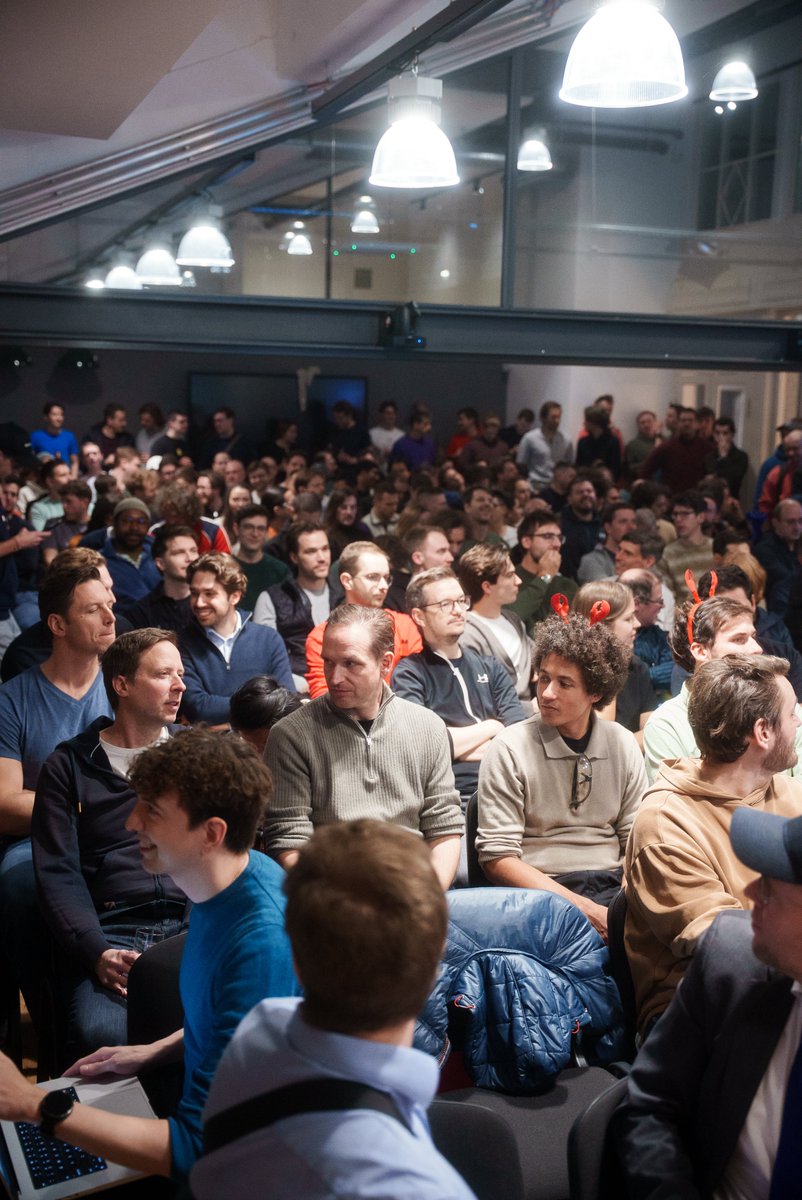
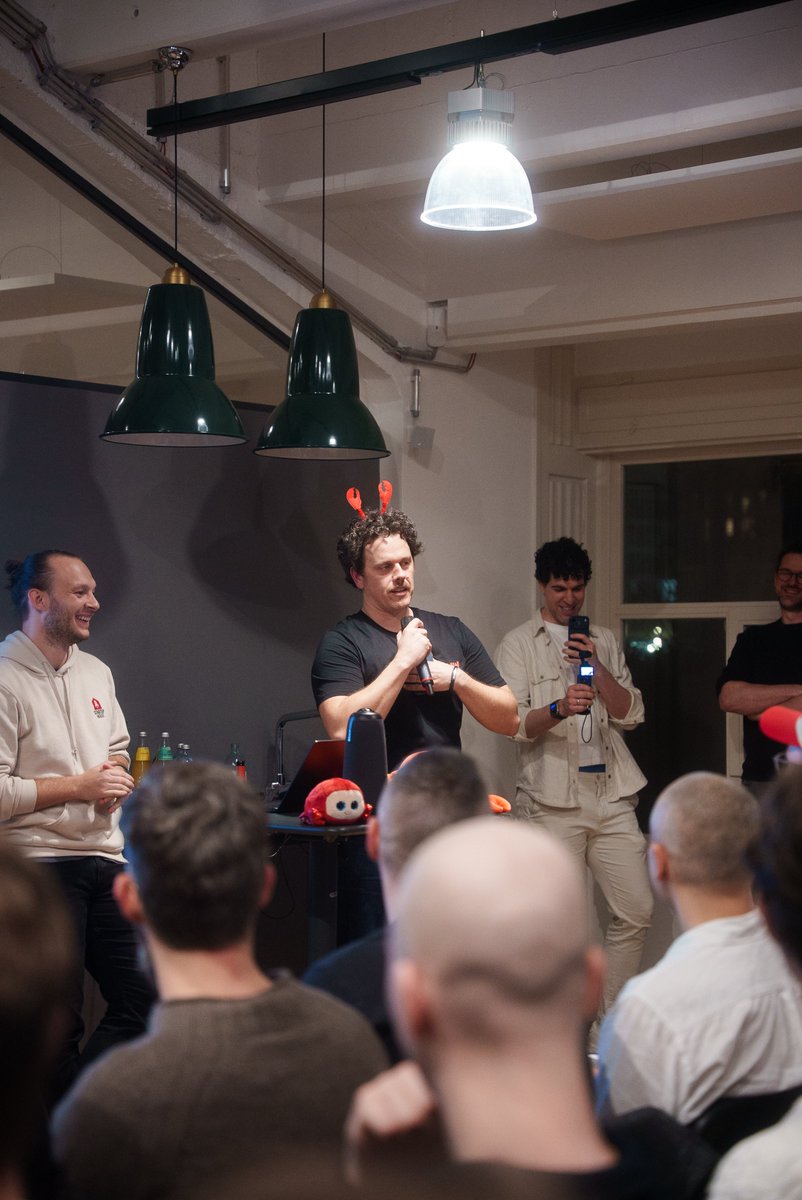
Following the awesome @openclaw meetup in Vienna yesterday, who's up for an Open Claw meetup in Berlin in a few weeks (e.g. March 10 or 12)?
1) "like" if you like it
2) + retweet if you love it
3) + add a comment if you're game so we can keep you posted


English

@julianlehr Maybe. Might not need it in their case and just take a commission on marketplace like model without the ad bidding. But I am not convinced they see the chatbot experience as their core biz
English

@egg_ert yea, the whole campaign is A+ ... but I'm 100% convinced they'll do ads (they'll just call it "promoted agentic commerce" or something)
English

chat, remind me of this tweet in 10 years
Claude@claudeai
Ads are coming to AI. But not to Claude. Keep thinking.
English

Today we're launching Ask Attio, and it's one of the biggest moments in our company's history.
When we founded Attio, we made a big bet that CRM needed to be rebuilt around unstructured data. Not structured fields or rigid schemas, but the messy reality of how GTM works.
Emails, calls, relationships, all the context that actually brings you the most clarity to make your decisions. We believed all of that should be inside and accessible in your CRM.
This wasn't a popular idea at the time. In fact, dozens of VCs we talked to told us we were wrong to even try. CRM was solved, so why bother?
But we kept building anyway. We spent three years building a data model and platform designed to hold the full context of how GTM teams actually operate and mold exactly to how your business works.
We call this Universal Context, and it's what makes Ask Attio possible.
Ask Attio is our new conversational AI layer that can reason over and act on everything in your CRM - emails, notes, calendars, product data, billing data, interactions, anything you've synced in.
You can understand what's happening across your entire business, search for anything, create and update records, trigger workflows and automations, all through conversation.
This is a fundamental shift in how CRM works. We used to input all our data, read everything, synthesize it, pull out what matters. Now, with Attio, your CRM does this for you at a massive scale. It pulls signal from the noise in ways that just weren't possible before, and acts on it with all that context.
Some of today's top GTM teams like @WisprFlow, @ListenLabs, @plainsupport, and @lightdash_devs are already using Ask Attio to unlock context across their entire business and act on it.
Ask Attio is live today. We can’t wait for you to try it: attio.xyz/ask_attio
English
Christian Eggert retweetet

Proof literally anything can be a business. We did the same - manually - with our dog last year, and everyone loves it.
Anton Osika – eu/acc@antonosika
A Lovable user recently built a service that turns your pet photos into renaissance portraits and ships them to you. The app is now making $100k/month, and we ordered one for our office dog!

English
Christian Eggert retweetet

Parkinson's second law: The number of workers within public administration, bureaucracy, or officialdom tends to grow, regardless of the amount of work to be done, attributable mainly to two factors: officials want subordinates, not rivals, and officials make work for each other.
AI's second law: The number of agents tends to grow, regardless of the amount of work to be done, attributable mainly to two factors: humans want subordinates, not rivals, and agents make work for each other.
English
Christian Eggert retweetet

Missionaries, Managers, Masters
In the 1980s, every ambitious restaurant hired more cooks, bought bigger spaces, opened multiple locations. Then something curious happened: three-star Michelin restaurants started getting smaller. Fewer tables. Tiny kitchens. The chef back on the line. Why? Because at the frontier of taste, coordination costs more than the coordination buys you. Every hand that touches the dish dilutes the vision.
One question I’m wondering these days: Are technology startups having their Michelin moment?
Tldr; in this essay I will argue that:
* New startups are bifurcating between large upfront bets and momentum companies; ‘growing into quality’ is a luxury that only few founders can afford now.
* What’s required in most categories is a combination of momentum + excellence; mission and money alone often fails in today’s environment.
* There is a new founder generation that I call ‘masters’: they are neither missionaries or mercenaries but rather treat company-building as a craft.
Setting The Table
Every successful venture is a mirror of its time - shaped by the capital, culture, and crises that define its era. So it’s important to understand how the environment for venture-backed startups has fundamentally changed.
The ecosystem evolved from a small cottage industry to a headline industry. Take the coverage as an example. In early days, a handful of small blogs posted about startup news. Now, we have entire live programming platforms covering non-stop in CBNC style. Hires are portrayed as if they were NBA trades.
This evolution has significant impact on how founders and companies operate.
Today, most early-stage startups face hyper-competition in their respective categories. Ideas with clear market need attract dozens of competitors. Take for example the GEO space, which tracks close to 100 companies. Every category has at least a handful of well-funded players.
Meanwhile, venture firms have grown in size and quantity. Only nine firms were accountable for 50% of capital raised in 2024. A16z alone raised roughly 11%, and just announced new funds totaling $10bn.
Founders find themselves in a binary fundraising environment. Ever larger seeds have become common, but fewer companies get funded overall. These mega seeds are not the ‘avocado seeds’ from a few years ago, but surpass traditional growth stage sizes. Only a few of these fat bets on elite proven founders + large mission exist, so most of the remaining money is flowing into momentum rounds.
What investors value today has not fundamentally changed: Team pedigree, unique insight, and momentum - ideally a combination of them. But how exactly these crystallize depends on the cycle of the market. Momentum therefore functions like norm-referenced grading in relation to other companies in the market. You get compared to the best in the class.
Of course momentum is equally important for founders that want to build lasting companies. In hyper-competitive markets, you might get only a short window to establish category position before markets consolidate. No one expects 50+ companies to survive within one category. Like in social networks, ride-sharing, and delivery apps before, consolidation will happen from from hundreds of companies to only a few.
Taking competitive density, capital concentration, and acceleration dynamics together, today’s environment favors founders who know how to build.
The structural market changes require adaptations on how to build early-stage startups compared to earlier periods (e.g. compared to the last SaaS decade):
(1) The ‘growing into quality’ model is dead. When money was cheap during ZIRP and expected growth timelines longer, you could hire your way through problems. The environment rewarded process over judgment, scale over craft, ‘let’s try everything’ (aka growth-hacking) over conviction. Today, the market expects excellence and high quality products from day one.
(2) Building in stealth is similarly dying out. In a market filled with noise and countless competitors, your main goal is to stay top of mind. Distribution is key for generating momentum. Being in stealth for 2 years means dozens of direct competitors are gaining your buyer’s attention. The public is watching your release log closely.
So what does it take for founders to build a world-class business in this era?
I’ve started to think about three different archetypes:
The Missionary, the Manager, the Master.
English