crack-a-boom

15 posts

crack-a-boom

crack-a-boom

@fallacy_fail

Beigetreten Ekim 2024
136 Folgt4 Follower
crack-a-boom
crack-a-boom@fallacy_fail·
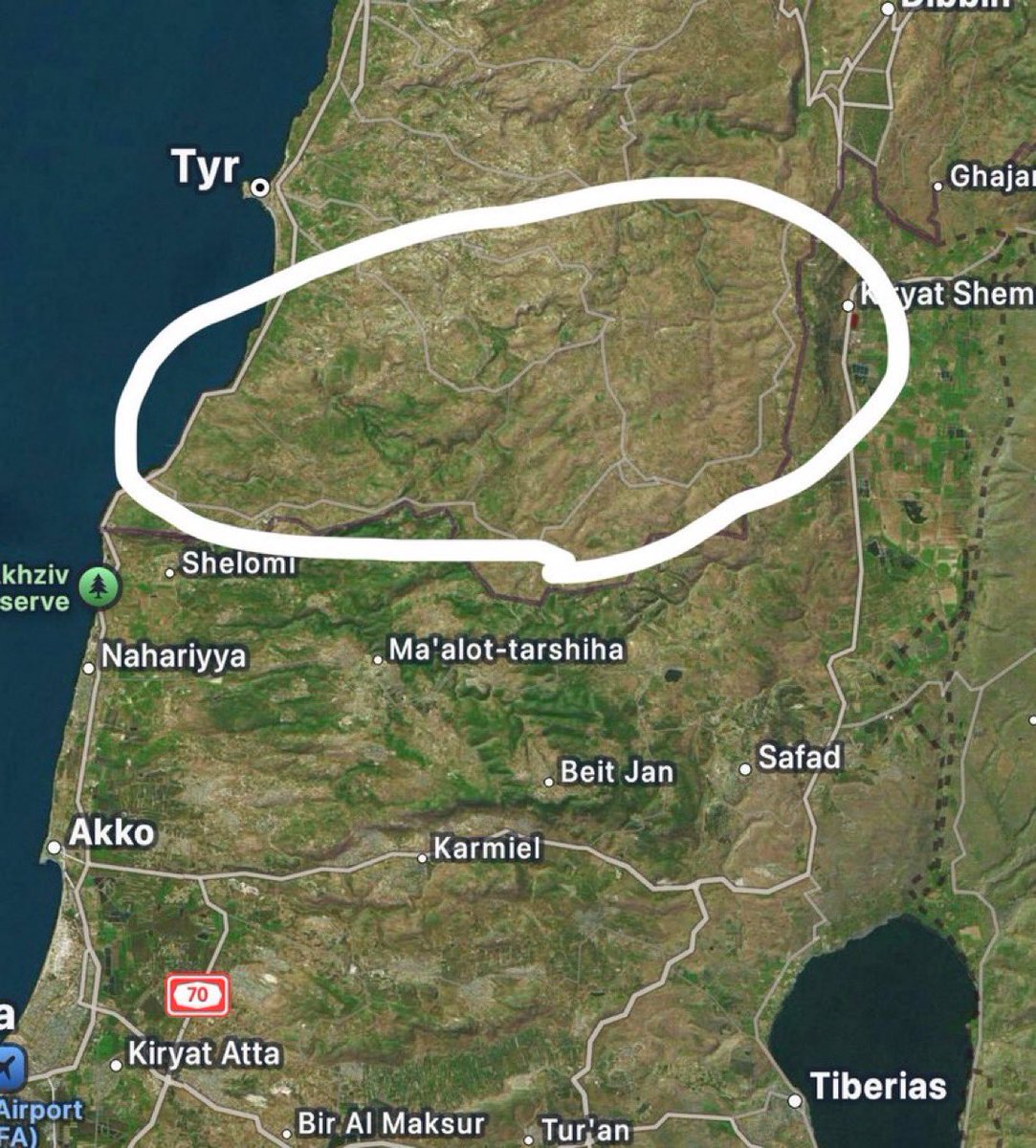
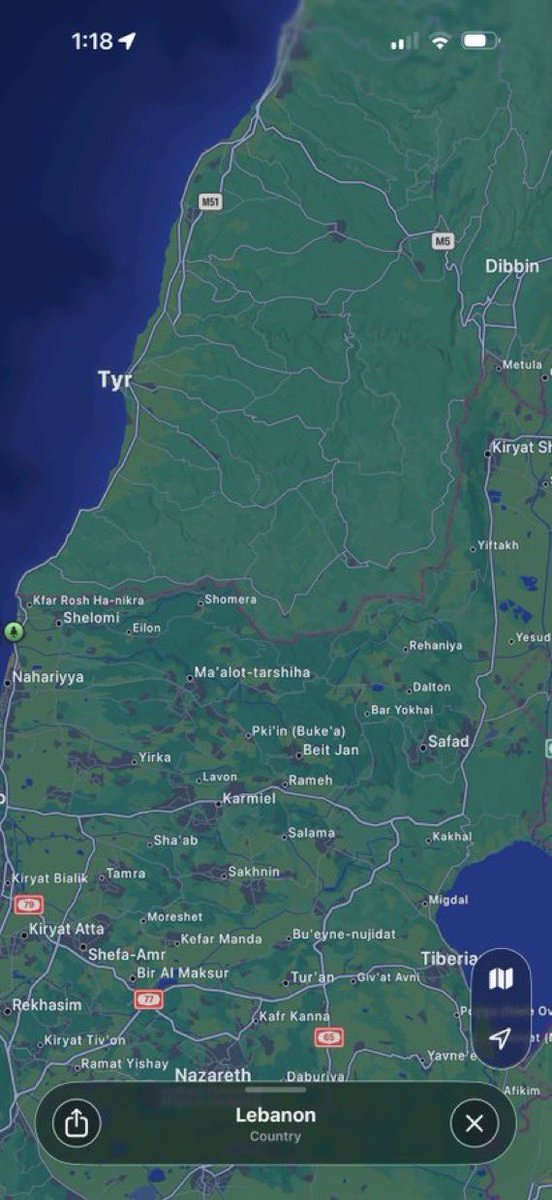
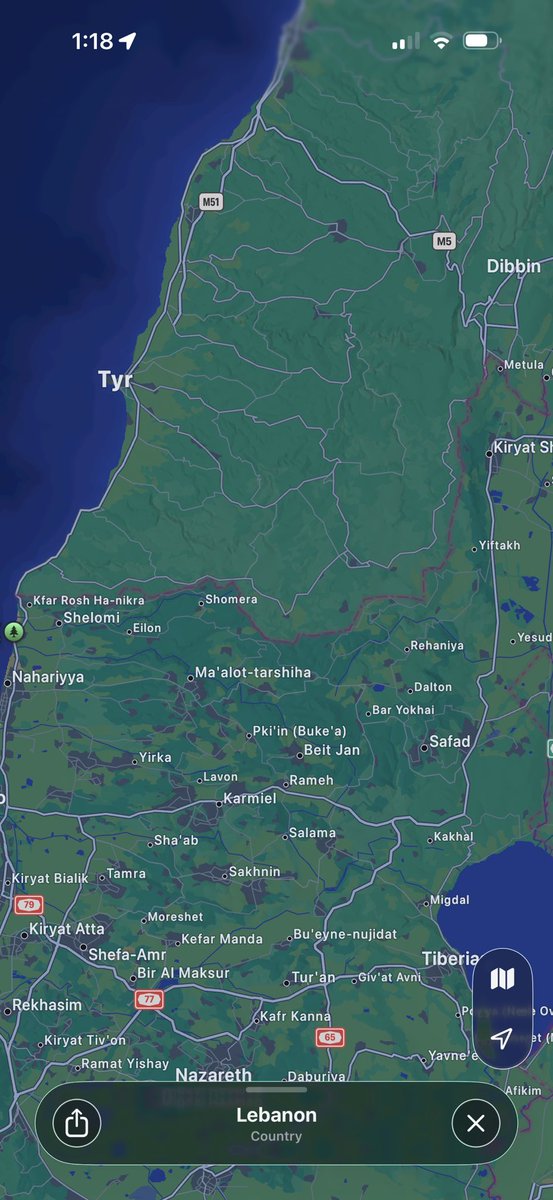
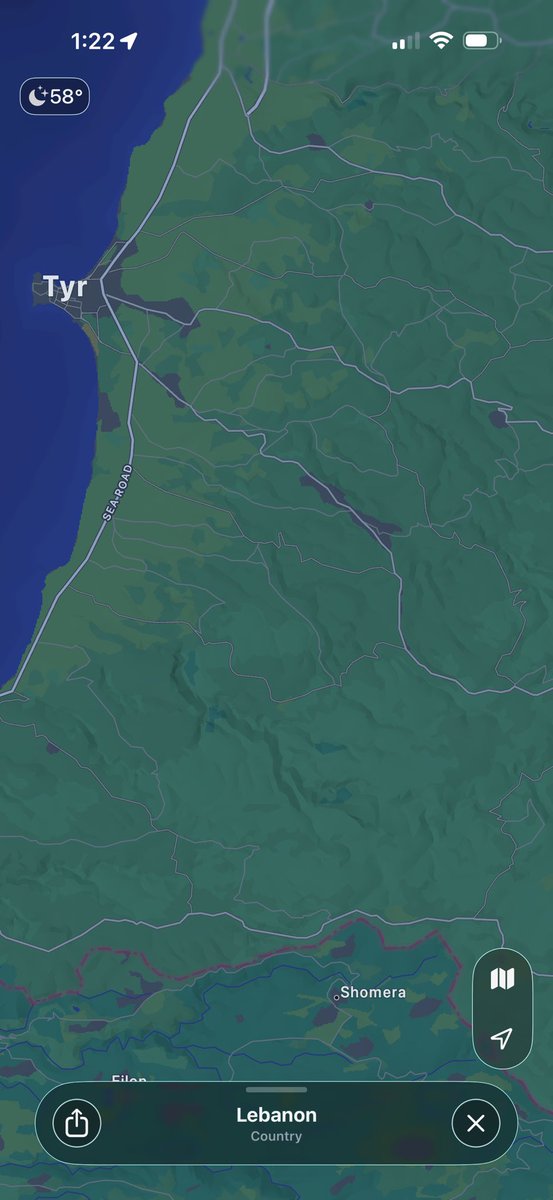
@Partisangirl Do you not do a basic check before you post this plainly false crap? It really brings into question whether you can trusted.
English
0
0
0
534
Syrian Girl
Syrian Girl@Partisangirl·
BREAKING 🚨 google maps has removed every south Lebanese village on the map in a digital genocide.
Syrian Girl tweet mediaSyrian Girl tweet mediaSyrian Girl tweet media
English
89
651
2.7K
43.3K
crack-a-boom
crack-a-boom@fallacy_fail·
@Villgecrazylady I’m sure there are tech whizzes that could do a waybackmachine type thing for Apple Maps. That’s the only way we can know for sure.
English
1
0
4
731
crack-a-boom
crack-a-boom@fallacy_fail·
@Villgecrazylady My question is did Apple Maps shows these missing villages before? Even the north of Lebanon looks empty so perhaps they just haven’t gotten around to filling it in?
English
9
3
49
44.7K
crack-a-boom
crack-a-boom@fallacy_fail·
@DropSiteNews We just saw American ships suffering a "laundry fire" and hanging way out in the Arabian Sea while hostilities were active. A blockade (another act of war) would require close proximity to the Iranian shoreline. The American boats will be sitting ducks for hypersonic missiles.
English
0
0
0
331
Drop Site
Drop Site@DropSiteNews·
💢 Strait of Hormuz Commission — “Open for All or Closed to All” Richard Haass, former head of the Council on Foreign Relations, says Washington is not negotiating from strength and and that Iran has emerged from the war with greater leverage. 🔸On Hormuz, he suggests Washington should tell Iran that the Strait of Hormuz can be “open to all or closed to all.” ➤ Proposes an international governing commission, including Iran and Gulf states, to oversee transit though Hormuz ➤ Open to tolls and shared revenue as part of the framework 🔸Crucially, Haass says if Iran refuses, the U.S. should consider blockading Hormuz at the Gulf of Oman to stop Iranian oil exports. 🔸His view: ➤ Washington should not accept Iran’s sole control over Hormuz ➤ But also cannot realistically exclude Iran from the strait ➤ Haass says the war has made a return to the pre-war status quo impossible and U.S. has lost the war in a strategic and political sense. Separately. he calls on Trump to pressure Israel to stop what he describes as a “discretionary war” in Lebanon. “Knock it off,” he suggests Trump tell Netanyahu.
Drop Site@DropSiteNews

💢 Trump’s First Post After Failed Islamabad Talks: A Naval Blockade of Iran President Trump’s first Truth Social post after JD Vance left Pakistan without a deal was a link to a Just The News analysis laying out the U.S. naval blockade of Iran as his next option if Tehran refuses to accept Washington’s “final and best offer.” The article argues Trump could flip Iran’s Hormuz tollbooth strategy against it — stationing U.S. warships at the strait’s 21-mile chokepoint to physically control which vessels pass, cutting off Iranian oil exports and squeezing China and India, Tehran’s two largest customers, into pushing for a deal. “It would be very easy for the U.S. Navy to exert complete control over what does and does not go in and out of that Strait,” Lexington Institute defense analyst Rebecca Grant told the outlet. The piece notes the USS Gerald Ford — the carrier that led Trump’s naval blockade of Venezuela before the U.S.-backed ouster of Nicolás Maduro — is now in the Persian Gulf alongside the USS Abraham Lincoln.

English
89
142
738
109.1K
crack-a-boom
crack-a-boom@fallacy_fail·
@TheAnalysisMan Do you think anyone is going to take the time to read this AI slop? Please learn how to write concisely so we're not bored to death before finally understanding your points.
English
0
0
3
78
Levantine Logic
Levantine Logic@TheAnalysisMan·
Syria’s Next Army Must Not Be Assad’s Army in New Clothes The future of Syria will be decided not only in ministries, parliaments, and reconstruction contracts. It will also be decided in the doctrinal creed of the next Syrian army. The old Syrian army did not simply fail because it lost battles. It failed because it lost its meaning. It ceased to be an army of the state and became, in the eyes of millions of Syrians, an instrument of the state against society rather than a shield for the republic. That is why the fall of the regime and even the dissolution of the old military institution did not produce the kind of instinctive public mourning one would expect in a normal state. Many Syrians had come to see that army and its security branches as tools of domination, not organs of national sovereignty. This point matters enormously. A military institution is not saved by uniforms, barracks, or flags alone. It is saved by the answer it gives to the most fundamental questions: Who are we? What are we for? Whom do we serve? Under what moral law do we fight? A fighting doctrine is ultimately an answer to identity, mission, method, and historical memory. In the early Islamic model, the army’s fighting doctrine and its religious doctrine were not separate realms. The soldier was not merely a bearer of force, but a bearer of duty, moral restraint, and sacred responsibility. That is why the question of doctrine is not secondary in Syria. It is the question. The Assad-era military doctrine was structurally disfigured long before 2011. The army began historically with the idea of a national army tasked with protecting the homeland and the people. But over time, that doctrine was emptied out. Under Ba’ath rule and then, more intensely, under Hafez and Bashar al-Assad, military doctrine was transformed from loyalty to Syria into loyalty to the party and ultimately to the ruler himself. The country was reduced to the image of its leader, the state to his person, and the military to the armed executor of that personalization of power. And once a military is built on that basis, its corruption is not accidental. It is inevitable. An army built to defend a ruler will eventually turn its guns inward. An army taught to worship the leader will cease to respect the citizen. An army that sees itself as the private estate of a regime will not defend society when society rises to demand dignity; it will attempt to discipline society back into submission. That is exactly what happened in Syria. When the uprising began, many foolish outside observers imagined the Syrian army might act like the militaryof Tunisia and decline to crush the people. But that expectation rested on a deep misunderstanding of the Syrian military’s actual structure and doctrine. The old Syrian army did not remain on the borders. It moved into Daraa, Baniyas, Homs, Hama, Idlib, and the neighborhoods of Syria’s own cities. It besieged towns, shelled communities, blurred the line between army and security services, and turned the “guardian” into the jailer. Even more revealing, the regime itself did not truly trust the army it ruled. It relied disproportionately on formations deemed more loyal, used security logic inside military deployment, disguised army units as internal security, and later compensated for weakness with auxiliary militias and foreign-backed structures. It was a force that was not only morally compromised, but structurally exhausted and increasingly dependent on Iran, Hezbollah, and later Russia for survival. By that point, the Syrian army was no longer even consistently operating according to a sovereign Syrian strategic logic. It was being pulled by the priorities of its patrons. That is not an army. That is a dependency mechanism with uniforms. This is why merely “rebuilding the army” is not enough. Syria cannot afford to restore a structurally fallen institution in updated packaging. It cannot create a healthy republic with a military still shaped by cult-of-personality logic, sectarian capture at the command level, external patronage, or morally empty obedience. The old institution was not simply ethically fallen. It was structurally fallen. And one does not build something modern on top of what is already broken at the foundation. So what should replace it? My view, is that Syria’s way forward is neither a sterile nationalist doctrine nor a sectarian militia doctrine nor a merely technocratic doctrine imported from foreign academies. The answer is an Islamic doctrine rightly understood. Not a reckless doctrine. Not a sloganized doctrine. Not the doctrine of factions. Not the doctrine of takfir. Not the doctrine of a ruler hiding behind religion to monopolize power. But an Islamic doctrine in the highest and most civilizational sense: a doctrine that reorders the army around amanah, justice, discipline, sacred restraint, service to the people, and accountability before Allah. Why is this the answer? Because the core Syrian crisis was not merely one of tactics. It was a crisis of moral anthropology. The old army forgot what man is, what power is, and what rule is for. Once the soldier no longer sees himself as morally answerable except to command, he can become the instrument of any atrocity. Once the officer sees his career as advancement inside a private order rather than stewardship within a public trust, the institution decays from within. An Islamic doctrine repairs precisely that fracture. It teaches that force is not self-justifying. That obedience is not absolute. That oppression of the people is a sin, not a duty. That the soldier is not the slave of the ruler, but a servant of the Ummah and a guardian of public safety under God. Islam elevated the fighter from a man proud merely of his strength into a man performing an act of worship and fulfilling a legal and moral duty. It presents the military institution not as a mere workplace, but as something sacred in the hearts of people because it is bound to sacrifice, defense, and protection. In that telling, the classical Islamic army’s fighting doctrine was continuous with its religious doctrine. This does not mean Syria needs a sermon instead of a general staff. It means Syria needs a moral architecture strong enough to govern the general staff. The practical implications are immense. A genuinely Islamic doctrine for the next Syrian army would mean: → The army exists to defend the people, not frighten them. → Its legitimacy comes from protecting life, honor, land, and dignity. → Its ethic is not worship of the ruler, but fidelity to truth and justice. → Its command culture must reject sectarian capture and personalist idolization. → Its use of force must be bounded by moral law, not by raw expediency. → Its officers must be educated not only in combat and logistics, but in responsibility, restraint, and the consequences of injustice before God. This would not weaken the army. It would strengthen it. Once armies lose doctrine, they become easy prey for foreign templates, imported loyalties, and empty professionalism detached from purpose. That is part of what happened in the entire modern Arab world: armies became either instruments of internal repression, commercial conglomerates in uniform, or externally sponsored bureaucracies with no spiritual center. The soldier ceased to know who he was except as an employee of power. Syria cannot afford that model. A post-revolutionary Syrian army must be feared by enemies and trusted by the public. It must be disciplined enough to fight, but morally bounded enough not to become a predator. It must be nationally inclusive, but not spiritually empty. It must be professional, but not detached from the civilizational identity of the society it defends. That is why Islamic doctrine matters. It is the only framework with enough depth to answer both the military and moral crisis at once. Nationalism alone is too thin; Assad proved how easily “the nation” can be hijacked by the palace. Sectarianism is poison; Syria has already paid for that in blood. Foreign doctrinal imitation creates capability without legitimacy. Technocracy alone produces efficient machines that may again serve the wrong master. Only an Islamic doctrine, properly disciplined and properly understood, can provide Syria with a military identity that is morally serious, socially rooted, politically restraining, and civilizationally coherent. In other words: the next Syrian army must not merely be stronger than the last one. It must be better. Better in creed. Better in purpose. Better in moral formation. Better in its relationship to society. Better in its understanding of power. The future Syrian army must know, with clarity, that it is not the property of a man, a clan, a sect, or a foreign sponsor. It is an amanah. And only when Syria rebuilds its army on that basis will it truly have left the age of Assad behind. And never forget: Islam's main purpose is to eliminate the lordship of man over man and establish the lordship of God over man. The spirit of Islam is that no one should be the slave of anyone except God, and no one should be the lord of anyone except God. May the Syrian Arab Army be ever-so firm in its absolute obedience to god, and may its submission to the will of God be a testimony for all mankind. ترنو البلاد إلى الشام وتحسدها فراية التوحيد تحكمها وتحميها 🏴🕌⚔️
Levantine Logic tweet media
English
4
8
64
4.9K
crack-a-boom
crack-a-boom@fallacy_fail·
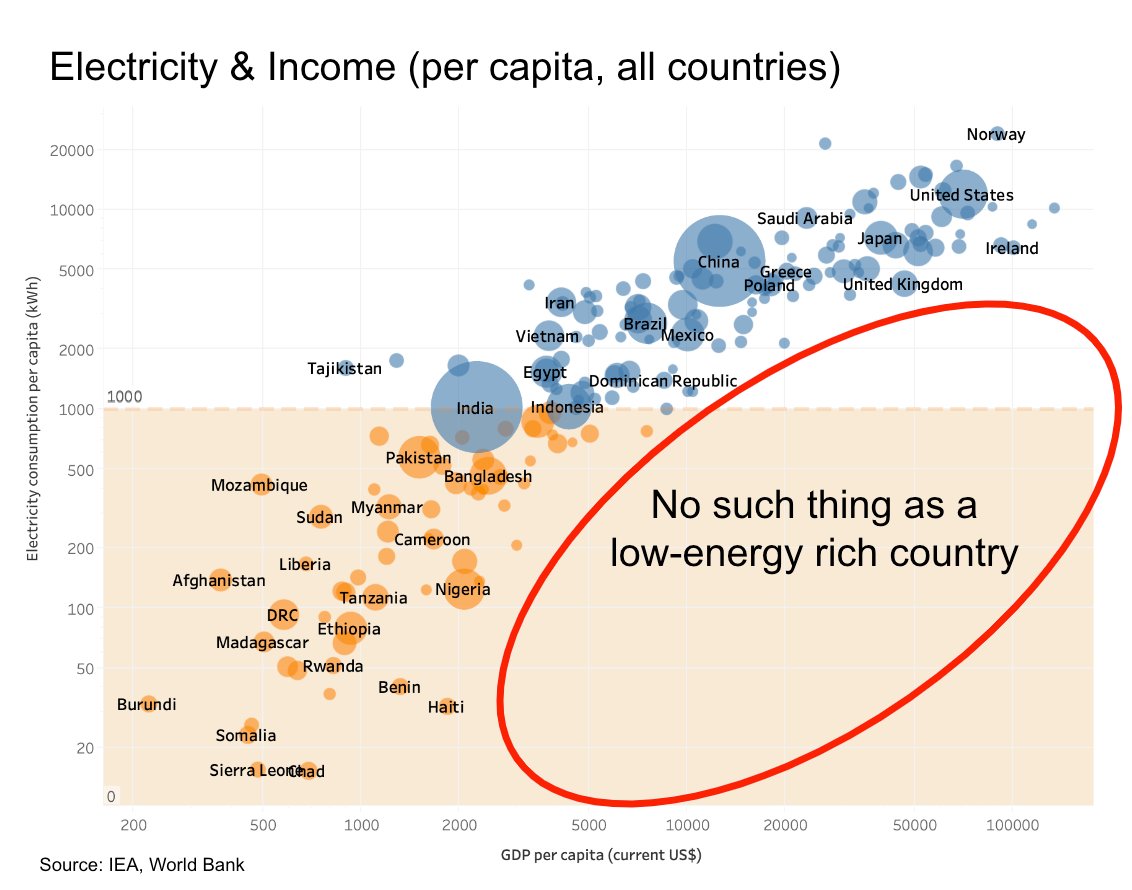
@TheAnalysisMan And it can never solve its energy problems without access to energy 🤔
English
0
0
0
169
Levantine Logic
Levantine Logic@TheAnalysisMan·
Syria 🇸🇾 can never become prosperous as long as it suffers from energy ⚡ problems.
Levantine Logic tweet media
English
8
10
91
9.9K
crack-a-boom
crack-a-boom@fallacy_fail·
@Partisangirl You’re playing up the Christian card a bit much lately. I know you think you’re appealing to Westerners in a way that will make them care more, but it’s debasing.
English
0
0
1
833
Syrian Girl
Syrian Girl@Partisangirl·
BREAKING 🚨 Israel is unleashing hell on Lebanon’s capital Beirut in response to Trump’s call for ceasefire. Lebanon is The most Christian country in the middle east. Israel is demonic.
English
1.8K
14.9K
54.6K
1.6M
Syrian Girl
Syrian Girl@Partisangirl·
Profile photo change?
Syrian Girl tweet media
Français
1.1K
368
10.2K
477.8K
crack-a-boom
crack-a-boom@fallacy_fail·
@joshua_landis What is the real reason for Iraq's decision? The vague reference to security concerns doesn't make sense.
English
0
0
0
31
crack-a-boom
crack-a-boom@fallacy_fail·
@joshua_landis Step 4 in CIA instructions to appear moderate: Meet with quisling leader of Druze community and pose for photos.
English
0
0
0
91
Joshua Landis
Joshua Landis@joshua_landis·
Rulers of Saudi Arabia, UAE, Egypt, & Jordan pushing Washington not to recognize Ahmad al-Sharaa's new #Syria gov.
Syria 2024@Aleppo2024

Strong campaigning is underway by #SaudiArabia #UAE #Jordan #Egypt to pressure Western capitals and especially Washington not to offer the new rulers of #Syria any legitimacy Above regional capitals are insisting on both Resolution 2254 and the fact that many of the individuals and groups in charge now are previously designated terrorists

English
25
114
199
85.4K
crack-a-boom
crack-a-boom@fallacy_fail·
@MyLordBebo You can see she was trying to give him a sexy look. Women lust after men with power even if they’re treated like cattle.
English
0
0
2
164
Lord Bebo
Lord Bebo@MyLordBebo·
🇸🇾🚨‼️ The new leader of Syria, Al Jolani, tells a woman to cover up. “Diversity is our strength” he proclaimed last week.
English
599
2.4K
8.4K
914.2K
crack-a-boom
crack-a-boom@fallacy_fail·
@KevorkAlmassian How do you know this? You need to provide proof with a claim like this.
English
0
0
0
627
Kevork Almassian
Kevork Almassian@KevorkAlmassian·
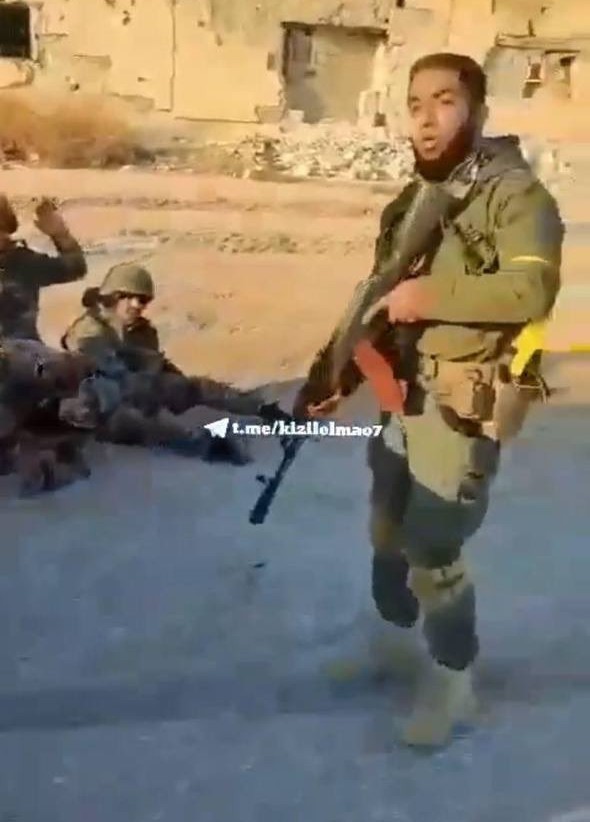
🇸🇾🚨 This Turkish-backed terrorist who executed Syrian POWs in the infamous video from Aleppo has been liquidated by the SAA.
Kevork Almassian tweet media
English
163
722
5.3K
184.2K
crack-a-boom
crack-a-boom@fallacy_fail·
@VivekGRamaswamy The conflating of WFH with “not showing up to work” is insidious. If you actually want savings, cut DOD programs which are dropping with fat. Let’s not beat up on civil servants just because they are weak and easy targets.
English
0
0
1
33
Vivek Ramaswamy
Vivek Ramaswamy@VivekGRamaswamy·
Sorry, taxpayers shouldn’t be funding COVID-era workforce privileges for federal employees. It’s nothing personal, it’s just bad public policy.
English
617
5.9K
36K
638.6K
Stop Arab Hate
Stop Arab Hate@StopArabHate·
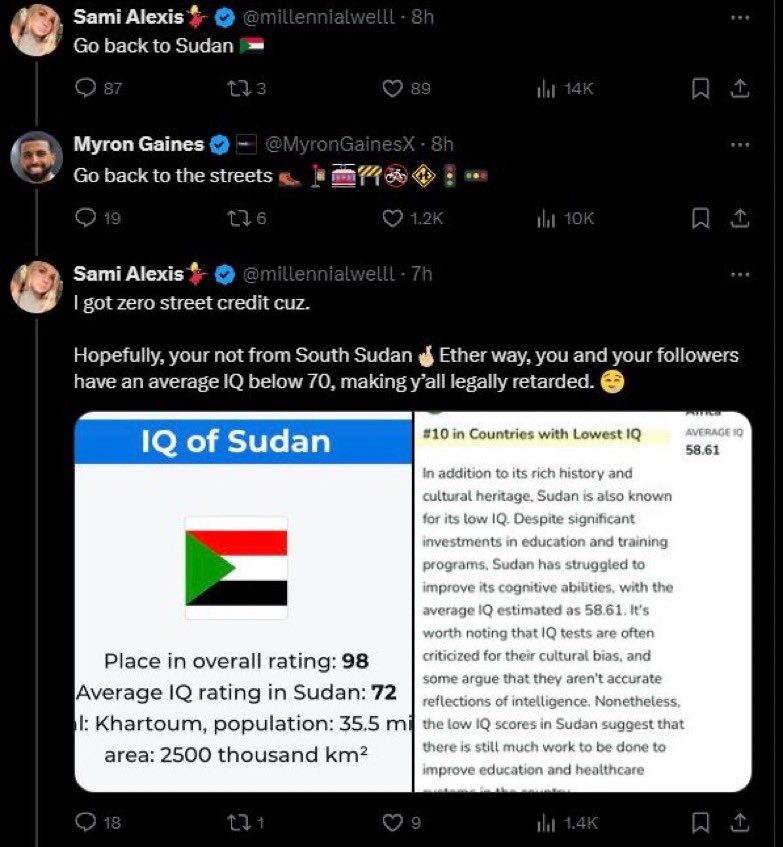
🚨 “Go back to Sudan… you have an average IQ below 70, making y’all legally retarded” Sami Alexis is a homeschool teacher at Firefly Tutors in California. To raise awareness: 📧 CEO: diane@fireflytutors.com
Stop Arab Hate tweet mediaStop Arab Hate tweet media
English
131
1.2K
3.3K
103.9K