Dr. Gina Cherkowski

21K posts

Dr. Gina Cherkowski banner
Dr. Gina Cherkowski

Dr. Gina Cherkowski

@gcherkowski

School Mental Health, Belonging, Social & Emotional Intelligence Change Agent. Working to ensure all kids are engaged, supported, empowered & successful.

Calgary Alberta Beigetreten Ekim 2013
5.7K Folgt4.7K Follower
Dr. Gina Cherkowski retweetet
Steve Magness
Steve Magness@stevemagness·
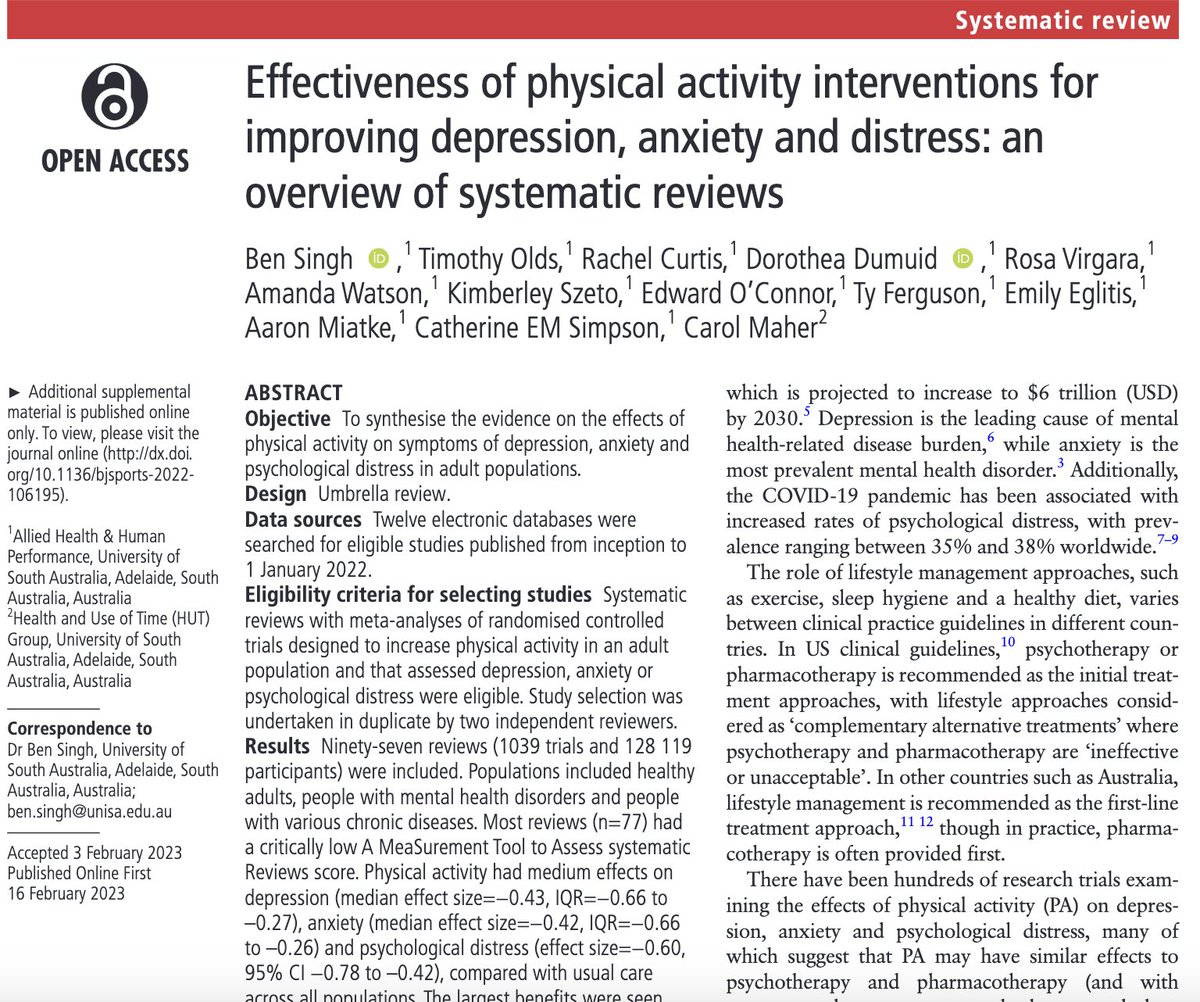
Movement is medicine. Large systematic review of over 1,000 trials and 120,000 participants finds that exercise has a significant effect on symptoms of depression, anxiety, and psychological distress. We need to do a better job of integrating mental and physical health.
Steve Magness tweet media
English
21
175
621
28.1K
Dr. Gina Cherkowski retweetet
Nicholas Fabiano, MD
Nicholas Fabiano, MD@NTFabiano·
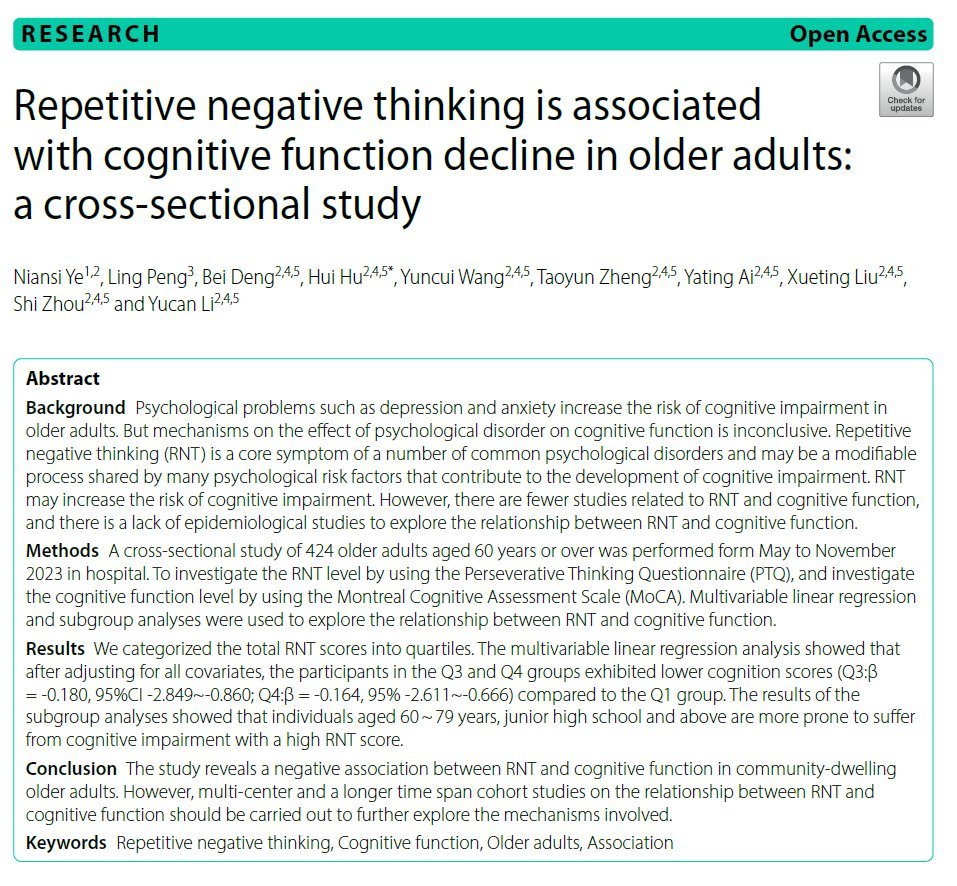
Repetitive negative thinking is associated with cognitive decline. A positive mindset is a superpower.
Nicholas Fabiano, MD tweet media
Andrew D. Huberman, Ph.D.@hubermanlab

The new Huberman Lab episode is out: Unlearn Negative Thoughts & Behaviors Patterns | Dr. Alok Kanojia (@HealthyGamerGG) 0:00 Alok Kanojia (Dr. K) 3:09 Internet, Computer Games; Academic Pressure 7:11 Millennials & Self-Awareness, Hijacking Mental Health Language 13:24 Sponsors: Lingo & Joovv 16:06 Personality & Individual Road Maps, Misdiagnosis 22:02 Ambiguity, Flirting, Social Skills Decline, Uncertainty Tolerance 26:06 Dating in the Internet Age, Cognitive Bias 30:39 Healthy Distress Tolerance, Tool: How to Feel Your Feelings 39:58 Sponsor: AG1 40:49 Expectations vs Internal Desire Roadmap, Western vs Eastern Theory of Mind, Ego 50:35 Sense Organs, Comparison & Proving Oneself, Internal Drive 59:22 Internet, Ego, "Teflon Buddha", Tool: Dealing with Criticism 1:10:36 Observing One's Mind, Meditation, Psychedelics 1:11:59 Sponsor: Function 1:13:46 Tool: Shunya "Void" Meditation & Resilience 1:24:02 External Reminders, Environment; Men & Emotional Regulation 1:30:04 Samskara, Yoga Nidra, Trauma & Learning, Shunya & Personal Compass 1:39:15 Yoga Nidra, Channeling Divinity, Genius 1:42:30 Sponsor: Eight Sleep 1:43:48 Breathwork Practices; Meditation Science, Self-Esteem & Belief Change 1:53:40 Liminal States, Meditation Types & Benefits; Western & Eastern Balance 2:01:50 Understanding Ego & Perception; AI & Narcissism, Psychosis 2:14:07 Tool: Healthy Social Media Use, When To Not Use, Normal Standards 2:18:38 Social Media & Looks Obsession, Purpose, Charisma 2:24:18 Young Men Falling Behind?, Male Support, Suicide; Men in Relationships 2:30:36 "Stuck" Young Men, Failure to Launch, Tool: Motivation & Understanding Oneself 2:39:03 Pornography, Erectile Dysfunction, Emotions, Addiction; Relationships 2:44:21 Men & Love, Looksmaxxing, Rejection, Partner Characteristics, Tool: Walk Before Dates 2:55:12 Exploring Practices, Meditation, Breathwork 3:01:39 Spirituality, Personal Exploration; Acknowledgements 3:06:12 Zero-Cost Support, YouTube, Spotify & Apple Follow, Reviews & Feedback, Sponsors, Protocols Book, Social Media, Neural Network Newsletter Includes paid partnerships.

English
99
1.3K
9.2K
752.5K
Dr. Gina Cherkowski retweetet
Gerry🧠🌱
Gerry🧠🌱@gerrydiamond71·
Stressed brains can't learn, think, or make the best decisions. It does not have the ability to absorb and retain information. How it does have the ability to learn is how safe it feels within its environment. Educators need to know this. Basic neuroscience. 🧠🌱
Gerry🧠🌱 tweet media
English
2
11
29
936
Dr. Gina Cherkowski retweetet
The Shift Journal
The Shift Journal@TheShiftJournal·
Malcolm Gladwell explaining why some people succeed and some don't.
English
86
2.7K
14.3K
3.5M
Dr. Gina Cherkowski retweetet
Jonathan Haidt
Jonathan Haidt@JonHaidt·
Major new report on global trends in mental health, out today from Sapien Labs. Data from 2.5 million people across 85 countries. Some of the most important findings: 1) Young adults used to generally have good mental health, compared to older generations. But now, in ALL countries examined, they are doing badly compared to older generations in that country. 2) "Four key factors have emerged that together predict three quarters of this effect. These are diminished family bonds, diminished spirituality, smartphones at increasingly young age, and increasing consumption of ultra-processed food." 3) The decline of young people's mental health is "most pronounced in the wealthier and more developed countries." They note that it is in such countries that smartphones are given earliest, junk food is most heavily consumed, spirituality is most diminished, and family ties are looser and often weaker. 4) "A younger age of first smartphone ownership is associated with increased suicidal thoughts, aggression, and other problems in adulthood." 5) Here is their summary of findings on early smartphone ownership: "GenZ is the first generation to grow up with a smartphone. Among this group, the younger they acquired their first smartphone in childhood, the more likely they are to have struggles as adults. These struggles extend beyond sadness and anxiety to less discussed symptoms, such as a sense of being detached from reality, suicidal thoughts, and aggression towards others. The effects arise through disruption of sleep, increased risk of exposure to harmful online content, predators, and explicit material as well as increased probabilities of cyberbullying during crucial developmental years. Excessive time spent on smartphones also diminishes the development of social cognition that requires learned interpretation of facial expressions, body language, and group dynamics. The negative impacts are particularly sharp below age 13." The report is short, accessible, and important. Read it here: sapienlabs.org/global-mind-he…
English
26
592
1.5K
276K
Dr. Gina Cherkowski retweetet
Nicholas Fabiano, MD
Nicholas Fabiano, MD@NTFabiano·
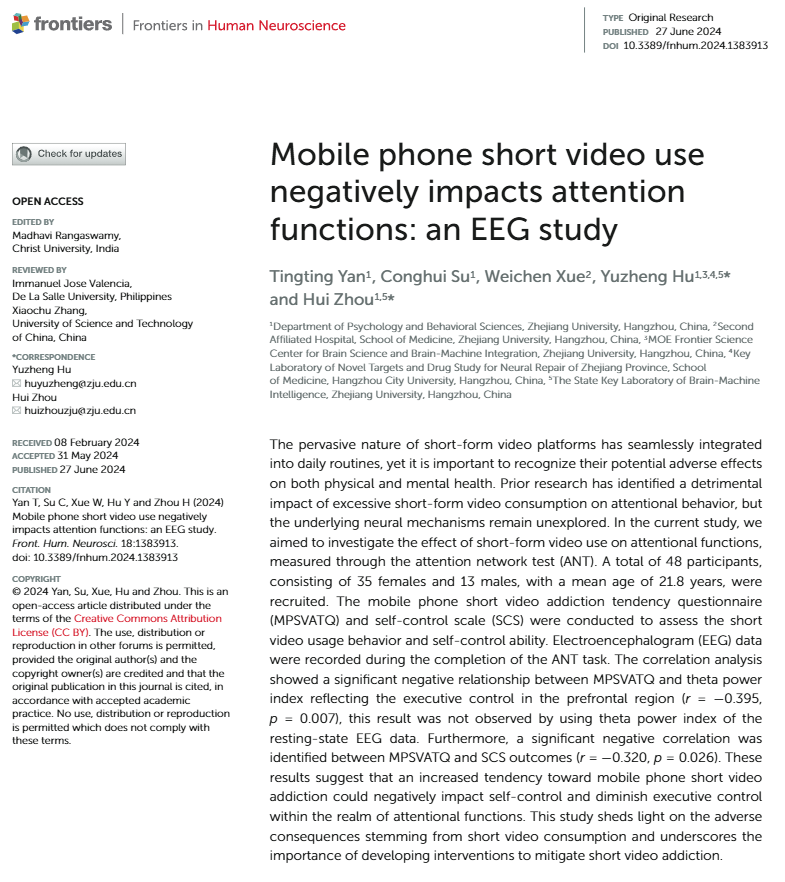
Addiction to short-form videos reduces brain activity in the frontal lobe weakening the ability to focus.
Nicholas Fabiano, MD tweet media
English
761
10.6K
44.5K
9.9M
Dr. Gina Cherkowski retweetet
Andrew D. Huberman, Ph.D.
Andrew D. Huberman, Ph.D.@hubermanlab·
Familiar with this study and the key is to have your phone in a separate room entirely. Off and upside down, in your bag = still “calling” you even if you don’t realize it.
Nicholas Fabiano, MD@NTFabiano

Having your phone on your desk or in your pocket undercuts cognitive performance - even if you don't use it. Put it in another room to maximize your working memory & fluid intelligence.

English
93
421
4.8K
514.1K
Dr. Gina Cherkowski retweetet
Andrew D. Huberman, Ph.D.
Andrew D. Huberman, Ph.D.@hubermanlab·
Showing up to the work, the workout, the relationship etc on the hard days, when you would otherwise not, is how you expand ability. That’s how you get really good at something and in the case of work and performance, gain an edge. ⁦@JamesClear⁩ on the Huberman Lab podcast.
English
48
182
2.1K
129.5K
Dr. Gina Cherkowski retweetet
Jonathan Haidt
Jonathan Haidt@JonHaidt·
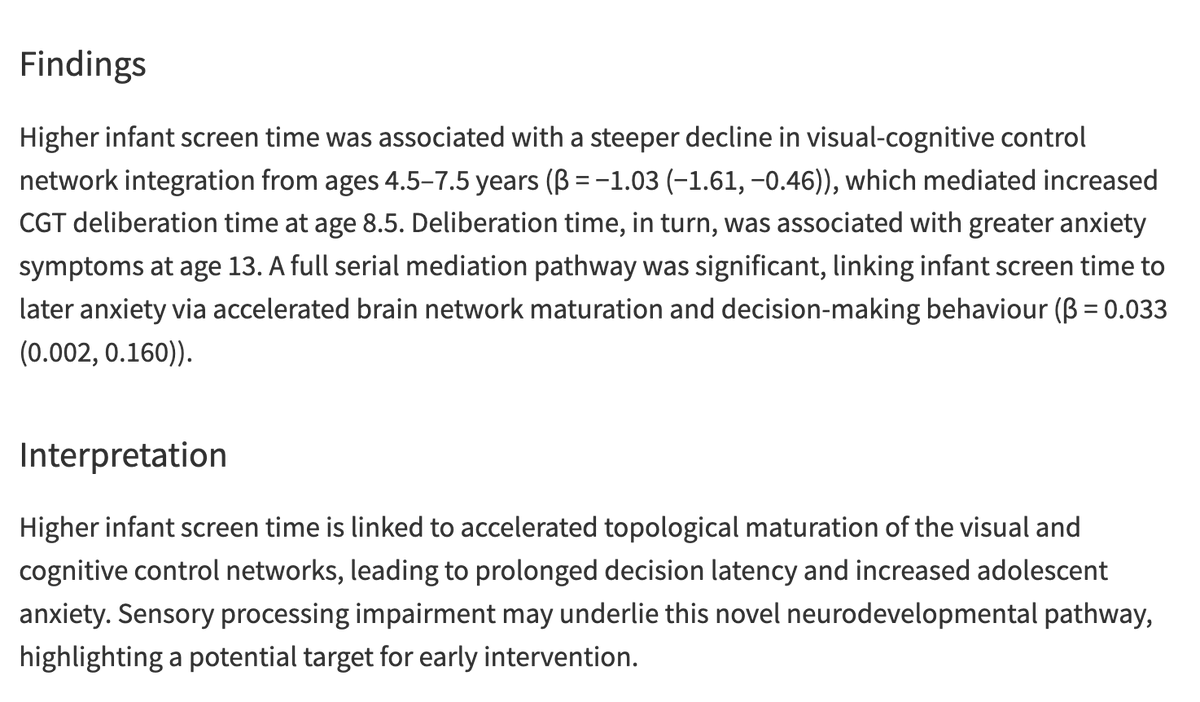
When toddlers get iPads, does it change brain development? A longitudinal study from Singapore says yes and shows links: accelerating visual and cognitive control networks early predicts later effects on decision making, and later increases in anxiety:
Jonathan Haidt tweet media
English
36
419
2K
255.6K
Dr. Gina Cherkowski retweetet
William A. Wallace, Ph.D.
William A. Wallace, Ph.D.@drwilliamwallac·
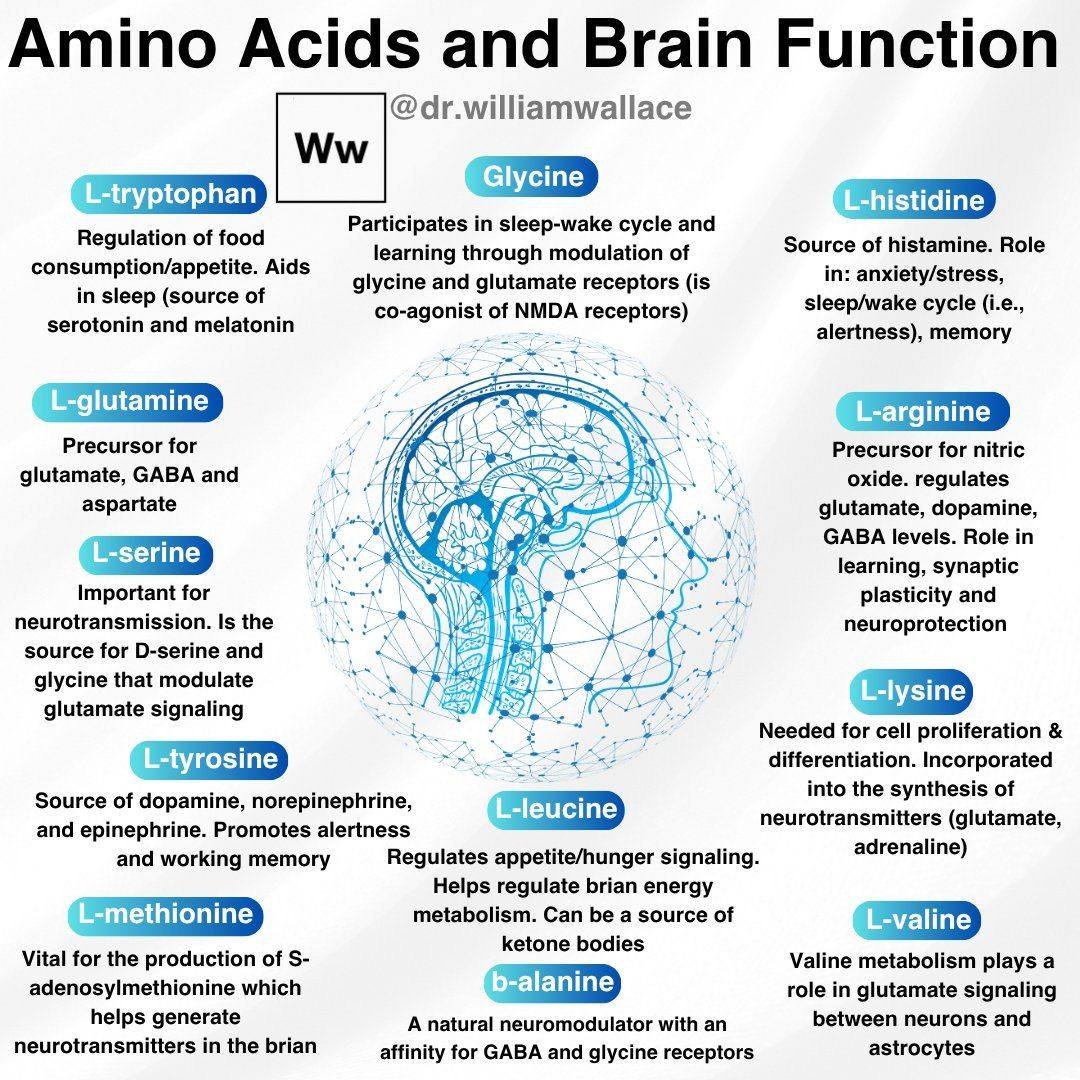
Amino acids and the brain: how protein shapes cognition Amino acids aren’t just for muscle; they’re the raw materials for neurotransmitters, brain energy, and communication between neurons. Every thought, mood, and memory depends on them. 1️⃣ The Building Blocks of Brain Chemistry Amino acids are the foundation of neurotransmitters, the brain’s chemical messengers. Tryptophan → Serotonin & Melatonin (mood and sleep) Tyrosine → Dopamine, Norepinephrine, Epinephrine (motivation, focus, alertness) 🟢 Example: Low tryptophan can flatten mood, while adequate tyrosine supports motivation under stress. 2️⃣ Fuel and Communication for Neurons Amino acids like glutamine, serine, and glycine regulate excitatory and inhibitory balance; the brain’s “on/off switch.” Glutamine → Glutamate & GABA, the main excitatory and calming neurotransmitters. Serine & Glycine fine-tune learning and memory through NMDA receptors. 🟢 Example: Balanced glutamate–GABA activity is essential for focus without overstimulation. 3️⃣ Energy and Cognitive Endurance Some amino acids, like leucine, methionine, and valine, support brain metabolism and mitochondrial function. They can be used as alternate fuels or regulate appetite and alertness signals. 🟢 Example: During fasting or exercise, these amino acids help sustain mental energy. 4️⃣ Neuroprotection and Plasticity Arginine makes nitric oxide, improving blood flow and synaptic plasticity (the brain’s ability to adapt). Histidine produces histamine, which modulates alertness and memory. 🟢 Example: Arginine helps the brain stay flexible - crucial for learning and repair. 5️⃣ Mood, Stress, and Cognition. The "Integration Point" Together, these amino acids fuel neurotransmitter synthesis, energy metabolism, and neuronal communication- the biochemical basis of focus, learning, and mood stability. 🟢 Example: A diet rich in quality protein ensures the brain has the ingredients it needs to think clearly and regulate emotion. Amino acids are more than protein fragments; they’re the language of the brain. They build neurotransmitters, power neurons, and regulate cognition, mood, and focus. Every clear thought and calm mood begins with these molecular messengers.
William A. Wallace, Ph.D. tweet media
English
11
221
802
21K
Dr. Gina Cherkowski retweetet
Lorwen Harris Nagle, PhD
Lorwen Harris Nagle, PhD@LORWEN108·
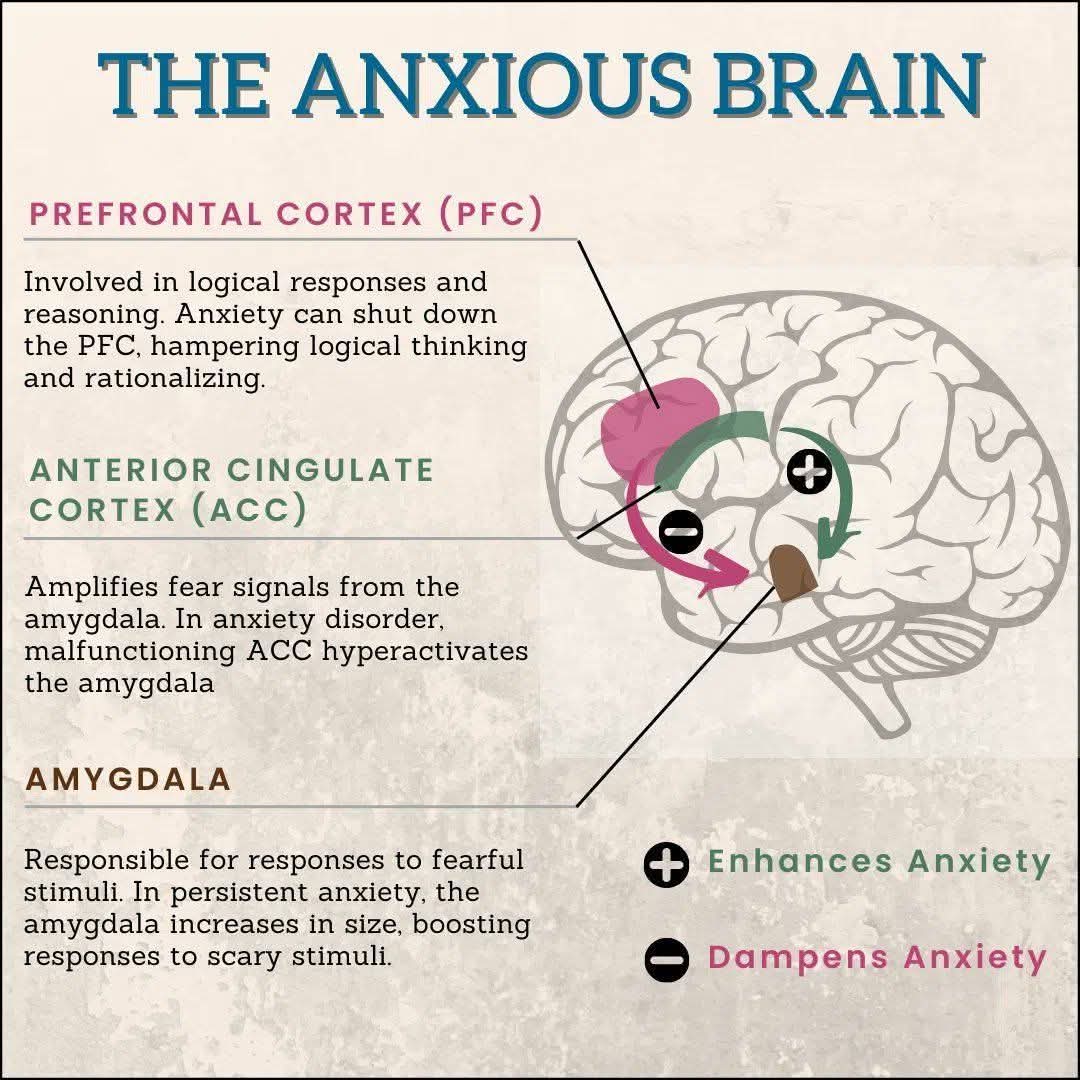
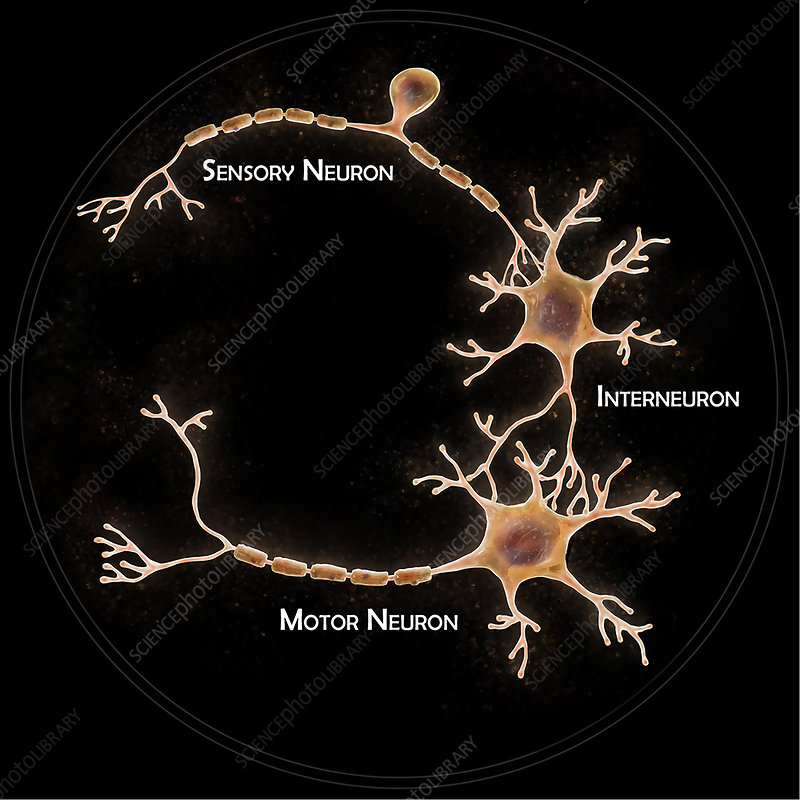
Anxiety isn’t a thinking problem—it’s a signaling problem. We’ve spent years correcting thoughts (cognitive distortions) while the nervous system stays on high alert. Cognitive distortions matter (like catastrophizing) —but they’re the "tip of the iceberg". Beneath them, the Default Mode Network (DMN) is hijacked into prediction, the anterior cingulate hunts for errors, and the amygdala tags everyday life events as dangerous. When this happens, you're not acting, you're REACTING. Overthinking is a symptom, it's not the problem. Clarity doesn’t come from being aware you're catastrophizing. It comes from shifting neural networks. When you switch your attention to a full-body task like walking or drawing, you switch neural networks. You go from the DMN to the sensorimotor/SN. This unlocks the negative thought spirals and brings safety. Then your brain dances rhythmically and predictively through life no longer ruminating and overthinking.
Lorwen Harris Nagle, PhD tweet media
English
46
318
1.3K
52.7K
Dr. Gina Cherkowski retweetet
Jonathan Haidt
Jonathan Haidt@JonHaidt·
Here's yet another study showing that kids who get smartphones earlier have worse mental health as teens. So what's the right age for a first smartphone? I'd say its whatever age you want them to cut back on sleeping, reading, exercise, and socializing. I advise not doing that before 14, at the earliest. Let's make that a new norm, to break out of the collective action trap together. Some parents may then wait even longer. But lets try to get all kids through middle school in the real world, before exposing them to the many harms of adolescence lived on a phone. Note that this research use the ABCD study, which is the highest quality longitudinal study going. It confirms an earlier finding by @sapien_labs that found the same thing nytimes.com/2025/12/01/wel…
English
62
577
2.5K
319.3K