jeevan wijerathna

805 posts

jeevan wijerathna

jeevan wijerathna

@iamjeevanvj

Developer @Datacom

Auckland, New Zealand Beigetreten Aralık 2011
1.6K Folgt215 Follower
jeevan wijerathna retweetet
Wes Bos
Wes Bos@wesbos·
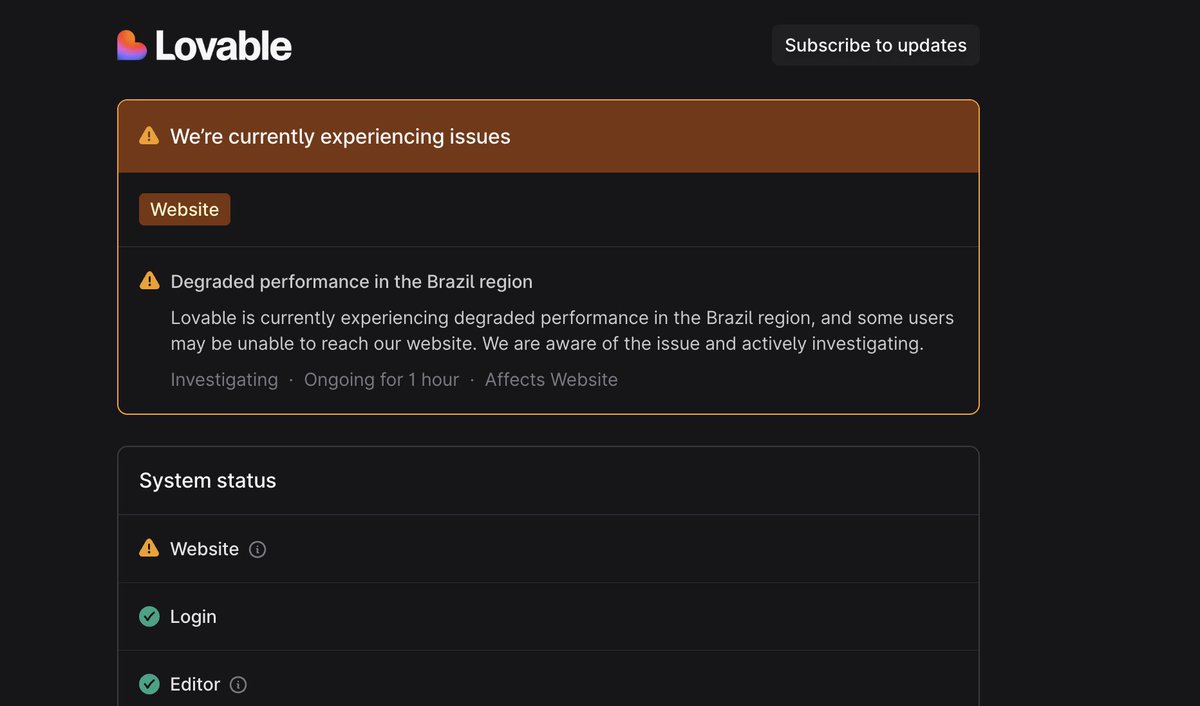
‼️Do not npm install or deploy anything right now Supply chain attack on axios 1.14.1 - even if you don’t use axios it may be a nested dep. Pin versions or wait until this is resolved
Maxwell@mvxvvll

@npmjs @GHSecurityLab there is an active supply chain attack on axios@1.14.1 which pulls in a malicious package published today - plain-crypto-js@4.2.1 - someone took over a maintainer account for Axios

English
168
1.8K
9K
1.6M
jeevan wijerathna
jeevan wijerathna@iamjeevanvj·
I always find that Cursor adheres to instructions and planning better than VS Code.
English
0
0
0
9
jeevan wijerathna
jeevan wijerathna@iamjeevanvj·
📚 Networking Basics TL;DR: The internet runs on protocols: TCP (reliable), UDP (fast), HTTP (web), WebSockets (real-time). DNS translates names to IPs. CDN caches content close to users. Load balancers distribute traffic. Key concept: Network is unreliable and slow - design for it. ━━━━━━━━━━━━━━━━━━━━ 1. OSI Model (Simplified)​ What matters for system design: • Layer 4 (Transport): TCP vs UDP • Layer 7 (Application): HTTP, WebSockets, gRPC 2. TCP vs UDP​ TCP Three-Way Handshake: • TCP: When you need reliability (web requests, APIs, databases) • UDP: When speed matters more than reliability (live video, VoIP, gaming) Examples: → Reliability: Guaranteed delivery, ordered → Connection: Connection-oriented (3-way handshake) → Speed: Slower (overhead for reliability) 3. HTTP/HTTPS​ HTTP (HyperText Transfer Protocol): The foundation of the web. • 2xx Success: 200 OK, 201 Created, 204 No Content • 3xx Redirection: 301 Moved Permanently, 302 Found, 304 Not Modified • 4xx Client Error: 400 Bad Request, 401 Unauthorized, 404 Not Found, 429 Too Many Requests • 5xx Server Error: 500 Internal Server Error, 503 Service Unavailable Examples: → GET: Retrieve data → POST: Create resource → PUT: Update/replace → Protocol: TCP → Multiplexing: ❌ (1 request/connection) → Header Compression: ❌ 4. HTTPS (HTTP + TLS/SSL)​ HTTPS = HTTP + Encryption • Encryption: Can't eavesdrop on traffic • Authentication: Verify server identity via certificates • Integrity: Detect tampering ━━━━━━━━━━━━━━━━━━━━ 📖 Read the full article: notes-zeta-gold.vercel.app/docs/system-de… #systemdesign #interview #networking #protocols #http
English
0
0
0
52
jeevan wijerathna
jeevan wijerathna@iamjeevanvj·
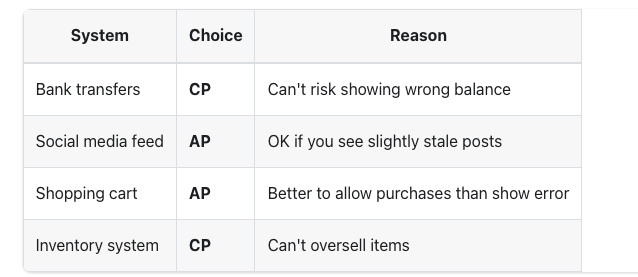
#5-cap-theorem" target="_blank" rel="nofollow noopener">notes-zeta-gold.vercel.app/docs/system-de…
ZXX
0
0
0
12
jeevan wijerathna
jeevan wijerathna@iamjeevanvj·
System design is about trade offs. We can't have infinite scalability, perfect consistency, and 100% availability all at once. The fundamentals are - Scalability: Handle growth (more users, data, requests) - Reliability: Stay operational despite failures - Availability: Minimize downtime - Performance: Low latency, high throughput - Maintainability: Easy to evolve and debug
English
1
0
0
11
jeevan wijerathna
jeevan wijerathna@iamjeevanvj·
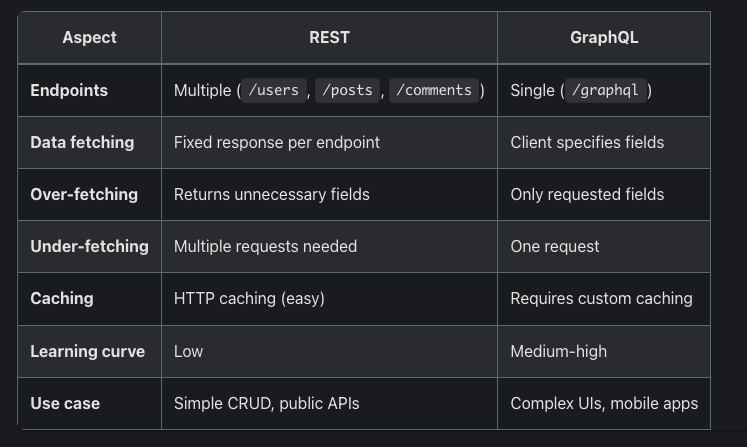
For REST API names use nouns not verbs. ✅ /users ❌ /getUsers Reason: HTTP method is the verb
English
0
0
0
7
jeevan wijerathna
jeevan wijerathna@iamjeevanvj·
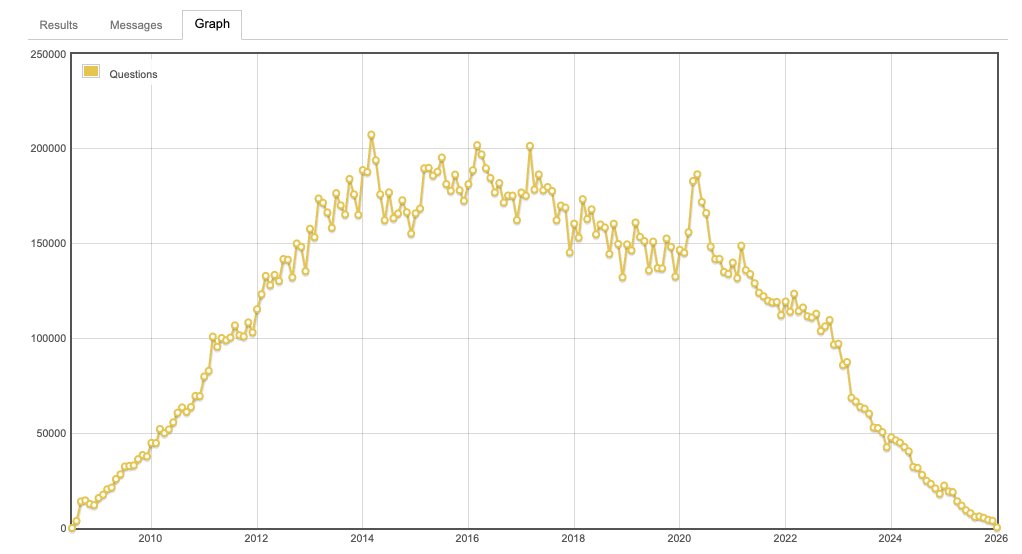
This was Dev's favorite place. Stack Overflow's traffic.
jeevan wijerathna tweet media
English
0
0
0
11
jeevan wijerathna
jeevan wijerathna@iamjeevanvj·
Popularity gain of Typescript 😳
jeevan wijerathna tweet media
English
0
0
0
8
jeevan wijerathna retweetet
Sundar Pichai
Sundar Pichai@sundarpichai·
We’re back in a Flash ⚡ Gemini 3 Flash is our latest model with frontier intelligence built for lightning speed, and pushing the Pareto Frontier of performance and efficiency. It outperforms 2.5 Pro while being 3x faster at a fraction of the cost. With this release, Gemini 3’s next-generation intelligence is now rolling out to everyone across our products including @Geminiapp + AI Mode in Search. Devs can build with it in the Gemini API @GoogleAIStudio, Gemini CLI, and Google @antigravity and enterprises can get it in Vertex AI and Gemini Enterprise.
Sundar Pichai tweet media
English
342
631
7.1K
531.5K
jeevan wijerathna
jeevan wijerathna@iamjeevanvj·
Indexing: Add indexes on frequently queried columns (email, user_id) Caching: Redis for hot data (90% of reads from cache) Read replicas: 5-10 replicas for read traffic (read-heavy workload) Vertical scaling: Upgrade master to larger instance (buy time) Sharding: When single database can't handle writes, shard by user_id (hash-based)
English
0
0
0
21
jeevan wijerathna
jeevan wijerathna@iamjeevanvj·
How do you scale a database to handle 1 billion users?
English
1
0
0
15
jeevan wijerathna
jeevan wijerathna@iamjeevanvj·
Event Souring: 1. The one sentence​ Event sourcing = your database contains facts (events), not the latest state. 2. The 5 objects you should picture​ • Command: “Please do X” (intent). Might be rejected. • Event: “X happened” (fact). Must be true forever. • Aggregate: Runs business rules, turns commands into events. • Event stream: Ordered list of events for one aggregate instance. • Projection: A read-optimized view built from events (can be rebuilt). 3. “Events” are overloaded — don’t confuse these​ • Domain event (event sourcing): internal business fact, usually per aggregate stream. • Integration event (distributed systems): something you publish to other services. 4. What ES gives you (when done right)​ • Audit trail: You can answer “how did we get here?” • Rebuildability: You can delete and rebuild read models safely. • Concurrency that matches the model: streams + expected version. • Temporal queries: “state at time T” by replaying until T (or snapshots). 5. What ES costs you (always)​ • More moving parts: projection pipeline + schema evolution. • Eventual consistency (if you have separate read models). • You must design for idempotency in projections/integration. • You must treat events as contracts (versioning/upcasters).
English
1
0
0
15