ignassew retweetet

bro they're selling pączki for 2 eurocents a piece in Poland
Michał Sagrol@michalchojnice
pączek za 9 groszy u niemca xDD
Polski
ignassew
188 posts

pączek za 9 groszy u niemca xDD



Since Claude 4 launch: SWE friend told me he cleared his backlog for the first time ever, another friend shipped a month's worth of side project work in the past 5 days, and my DMs are full of similar stories. I think it's undebatable that devs are moving at a different speed now. You can almost feel it in the air that this pace is becoming the default norm.







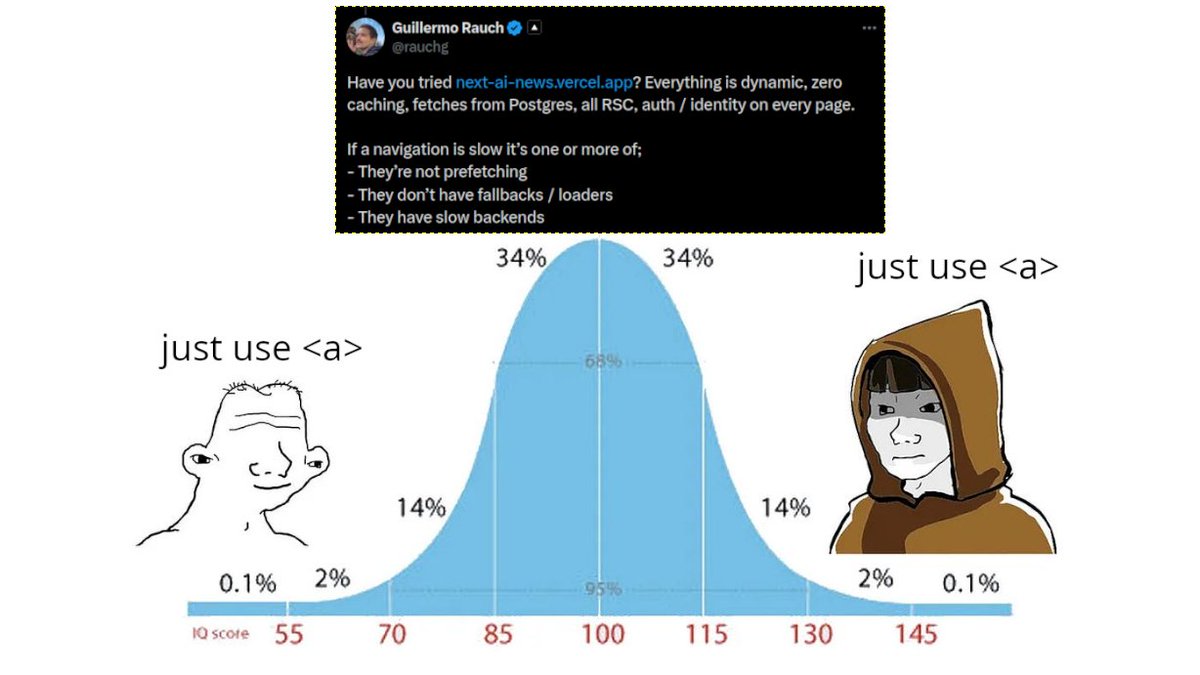
@thdxr Have you tried next-ai-news.vercel.app? Everything is dynamic, zero caching, fetches from Postgres, all RSC, auth / identity on every page. If a navigation is slow it’s one or more of; - They’re not prefetching - They don’t have fallbacks / loaders - They have slow backends

Suppose that you need to write a 1000-LOC function. You ask Grok3, and it fails. In that situation, most devs would fallback to coding manually. I argue that, instead, they should keep giving the AI info, until it succeeds. "Why? Won't it be faster to just type the 1000 lines?" In some cases, perhaps. But you still want the AI to do it, because AIs are *way* less sloppy than humans. They don't flip arguments nor make silly syntax errors. They fail for different (and even complimentary) reasons that humans do: AIs fail because of bad reasoning. So, if you just take charge of the reasoning, you can get the best of both worlds: your code will be in the perfect "AI-generated" shape, and it will have the correct logic, feed by you. This works very well for any reasoning model that exposes its thinking traces, because you can see clearly *why* the AI failed. "Oh, Grok3 spent half of the reasoning trying to figure out where ids are stored. Well, I can just add that to the prompt, and try again." Writing lines manually in 2025 is a harmful, fallback practice.