Patrick (Researching trends before they take off)
13.4K posts
Patrick (Researching trends before they take off)
@itworks
Adviser, Brainstormer and Creative Generalist. Tech Industry Analyst, Trend(W/C)atcher, Knowmad. Loves Zoom/Streamyard/Menti/Mural/Miro/Wonder.me/...
Europe, Belgium, Gent Beigetreten Ocak 2008
3.3K Folgt3.6K Follower

Hey @owasp_be, we would like to organise an afternoon on AI & Security in Bruges end of May. Who could present the AI & Security, LLM Top 10 problems or other related stuff there?
English


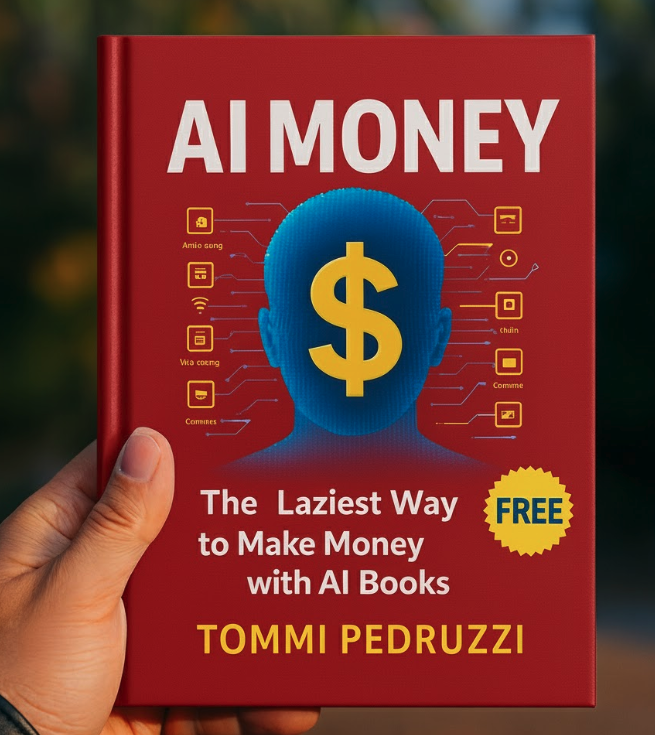
AI eBooks are absolutely CRUSHING it.
I’ve published and analyzed 1500 books eBooks across multiple niches.
And I bulild a system studying them over and over to understand:
- How to find topics people already wanna buy
- How to write and polish your first eBook in only 1 day
- How to make sure your eBook gets searched and ranked on Amazon.
Want my exact system?
Like + comment “Book” and I’ll DM you my AI eBook creation system.
(free, no email needed).
P.S. Drop a follow so I can DM

English
Patrick (Researching trends before they take off) retweetet

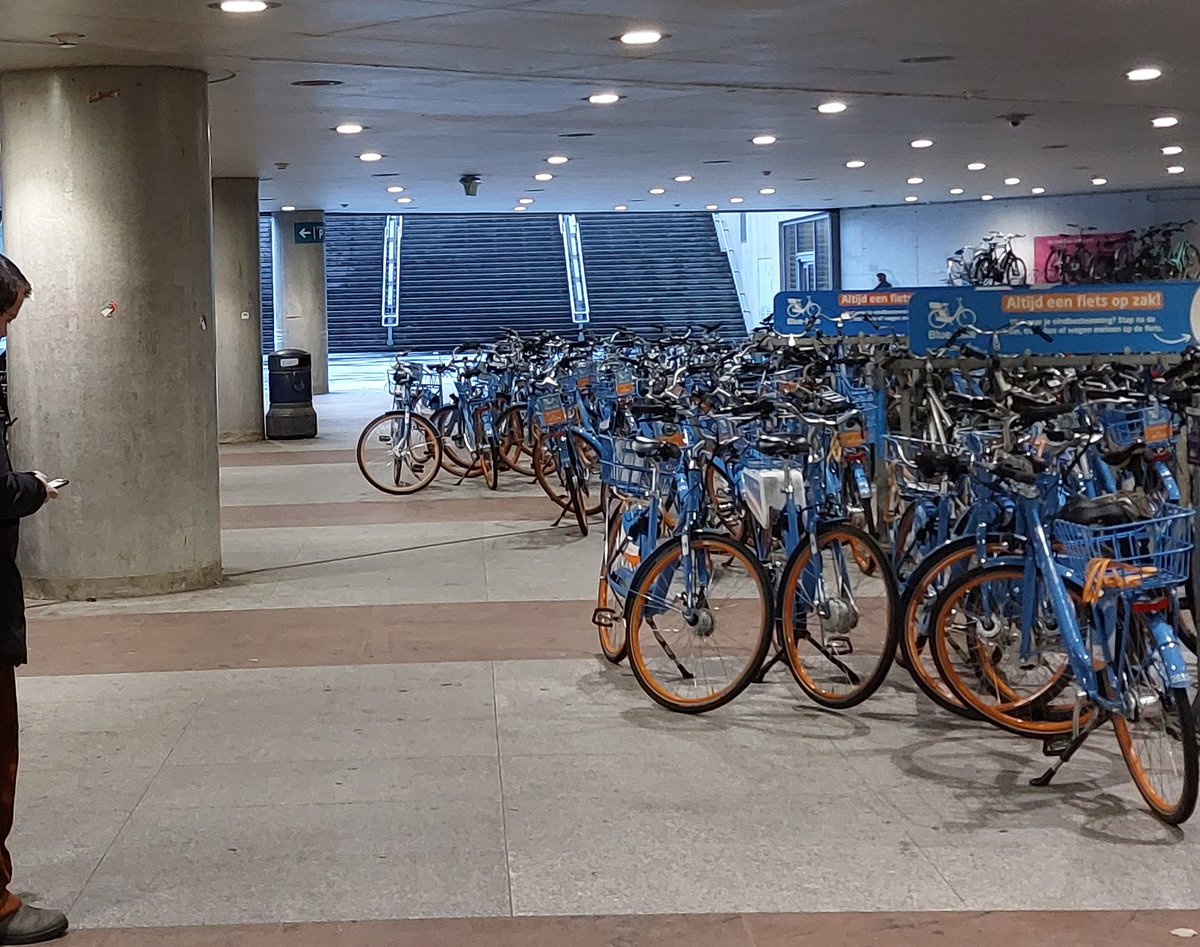
Levensgevaarlijke situatie in fietsenstalling Gent. Kan iemand de veiligheidsregels eind deelfietsen uitleggen aan @BlueBikeBelgium ? Hier komen ongelukken van...

Nederlands

Fascinating marketing tactic to kill iPhone 17
samsung.gadgethacks.com/news/samsung-g…
English

Nieuwe woordje geleerd: Fantoomremmen: auto beslist plots veel trager te gaan rijden. Moet onderzocht worden!
hln.be/auto/fantoomre…
Nederlands
Patrick (Researching trends before they take off) retweetet

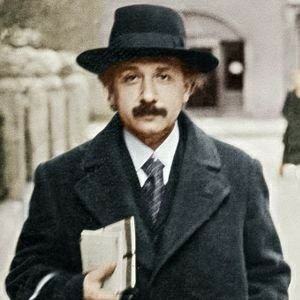
A brief history of Quantum computers 👇
1905: Albert Einstein explains the photoelectric effect and suggests that light consists of quantum particles or photons
1924: Max Born uses the term quantum mechanics for the first time
1925: Werner Heisenberg, Max Born, and Pascual Jordan formulate matrix mechanics, the first formulation of quantum mechanics
1925-1927: Niels Bohr and Werner Heisenberg develop the Copenhagen interpretation, one of the earliest and most common interpretations of quantum mechanics
1930: Paul Dirac publishes The Principles of Quantum Mechanics, a standard textbook on quantum theory
1935: Albert Einstein, Boris Podolsky, and Nathan Rosen publish a paper highlighting the counterintuitive nature of quantum superposition and arguing that quantum mechanics is incomplete
1935: Erwin Schrödinger develops a thought experiment involving a cat that is simultaneously dead and alive, and coins the term “quantum entanglement”
1944: John von Neumann publishes Mathematical Foundations of Quantum Mechanics, a rigorous mathematical framework for quantum theory
1957: Hugh Everett proposes the many-worlds interpretation of quantum mechanics, which suggests that every possible outcome of a quantum measurement actually occurs in a parallel universe
1961: Rolf Landauer shows that erasing a bit of information dissipates a minimum amount of energy, known as Landauer’s principle
1965: John Bell proves that quantum entanglement cannot be explained by any local hidden variable theory, known as Bell’s theorem
1973: Alexander Holevo proves that n qubits cannot carry more than n classical bits of information, known as Holevo’s theorem or Holevo’s bound
1980: Paul Benioff proposes a model of a quantum Turing machine, a theoretical device that can perform any computation using quantum mechanical principles
1981: Richard Feynman suggests that simulating quantum systems would require a new type of computer based on quantum mechanics
1982: David Deutsch generalizes Benioff’s model and proposes the concept of a universal quantum computer
1984: Charles Bennett and Gilles Brassard develop a protocol for quantum key distribution, which allows two parties to securely exchange cryptographic keys using quantum states
1985: David Deutsch and Richard Jozsa devise an algorithm that can solve a specific problem faster than any classical algorithm, known as the Deutsch-Jozsa algorithm
1991: Artur Ekert proposes another protocol for quantum key distribution based on quantum entanglement, known as the E91 protocol
1992: David Deutsch and Richard Jozsa extend their algorithm to handle multiple inputs, known as the Deutsch-Jozsa algorithm
1994: Peter Shor discovers an algorithm that can factor large numbers in polynomial time using a quantum computer, known as Shor’s algorithm
1996: Lov Grover invents an algorithm that can search an unsorted database in square root time using a quantum computer, known as Grover’s algorithm
1997: Isaac Chuang, Neil Gershenfeld, and Mark Kubinec demonstrate the first implementation of Shor’s algorithm using nuclear magnetic resonance (NMR) techniques
2000: David DiVincenzo proposes five criteria for building a practical quantum computer, known as the DiVincenzo criteria
2001: IBM researchers implement Grover’s algorithm using NMR techniques and achieve a modest speedup over classical algorithms
2007: D-Wave Systems claims to have built the first commercial quantum computer, but its validity is disputed by many experts
2019: Google announces that it has achieved quantum supremacy by performing a calculation on a 53-qubit quantum processor that would take a classical supercomputer thousands of years to complete
2020: IBM demonstrates that its 65-qubit quantum processor can perform calculations beyond the reach of any classical computer
📷 An IBM QC photographed by James Estrin

English
Patrick (Researching trends before they take off) retweetet


Steve Jobs on what a brand really is... Trust!
prayingforexits 🏴☠️@mrexits
Steve Jobs on how to build a brand
English

The best companies just create massive amounts of value for the world...
prayingforexits 🏴☠️@mrexits
Sam Altman on how to arbitrage your time
English

Another open-source breakthrough out of China and this one’s built to run, not just walk.
hunyuan.tencent.com
English

Yeah, extremely powerful but possibly a lot of collateral damage..
pcgamer.com/hardware/today…

English


Don't miss our Digital Product Passport conf on May 20th: alwaysontrack.be
DPPs link the physical and the digital world as a secure, protected and private digital identity for physical products.
Yet another concern/opportunity for #CybersecEurope
Cyber3Lab.be
English

At last, a Democrat with guts, balls, a spine and a huge blatter...
25 hours on what is going on in this country 🇺🇸
Aaron Rupar@atrupar
"I don't want a Disney vacation of our history! I don't a whitewashed history, I don't want a homogenized history. Tell me the wretched truth about America, because that speaks to our greatness" -- 20 hours into his speech, Cory Booker is spitting absolute 🔥

English
Patrick (Researching trends before they take off) retweetet

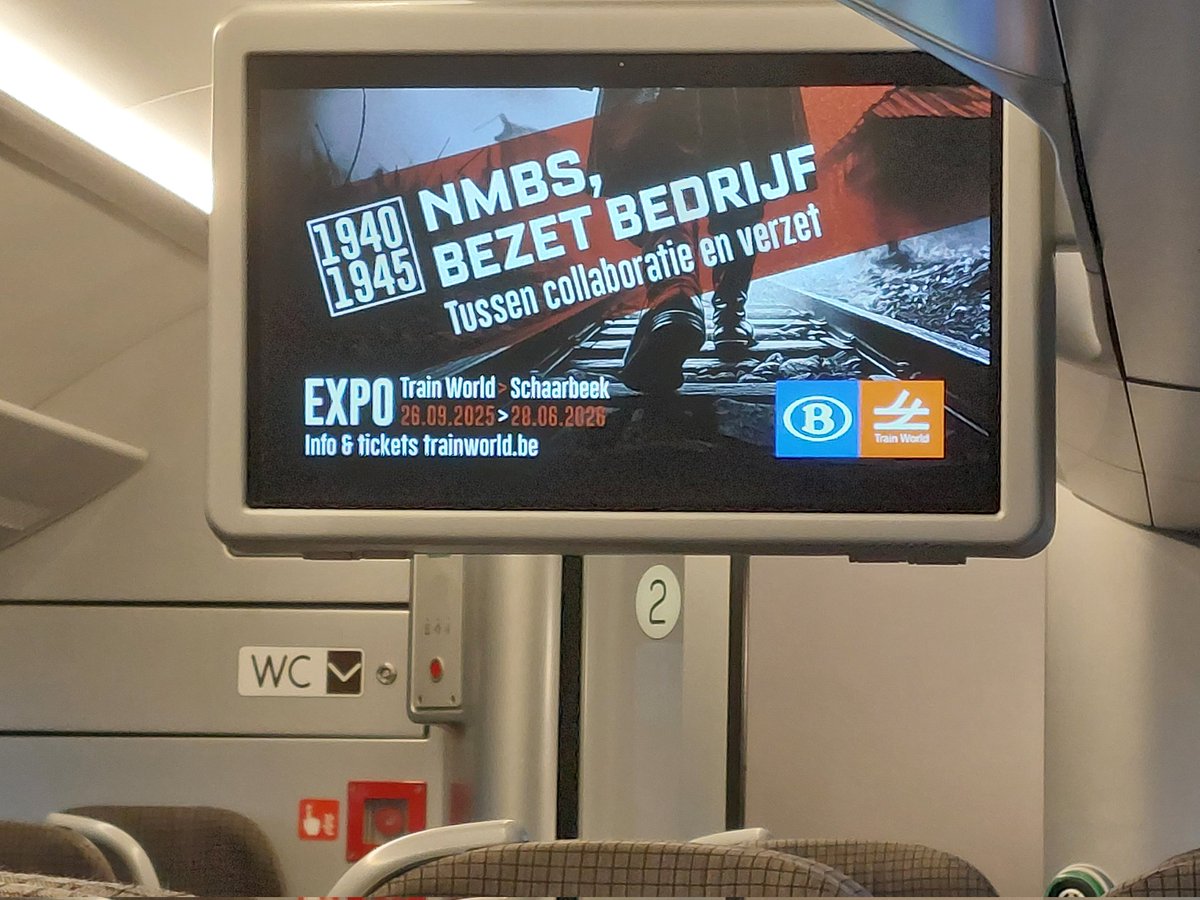
We zijn stilaan maar zeker dicht bij het moment gekomen dat het voor de redactie van Belga makkelijker wordt om te melden wanneer er NIET gestaakt wordt bij de NMBS…
Hans Vandendriessche@HansVDD
ACOD en ACV willen vier dinsdagen staken bij spoorwegen in april #Belga nieuwsblad.be/cnt/dmf2025032…
Nederlands

To check if you are 25+, buy a pack of cigarettes.
perstablo.be/passage
English