
Angehefteter Tweet
@jdrive
18.4K posts


@jdrive
@jdrive
60% water. Also: VC / Entrepreneur / Volunteer / Tinkerer
Earth Beigetreten Haziran 2008
1.1K Folgt6.8K Follower
@jdrive retweetet

@jdrive retweetet
@jdrive retweetet

The most legendary whistle in music history. Avio Focolari performs the iconic theme from The Good, the Bad and the Ugly.
English
@jdrive retweetet

Noah strapped on his $180 Nike Air Jordans this morning—manufactured by Taiwanese contractors paying workers $2.68 per hour—and felt the revolutionary fire burning in his chest.
9:15 am: Posted "ACAB" from his iPhone 14 Pro. Apple's $3 trillion market cap makes it the most valuable corporation in human history, but Jake needed those extra camera features for protest documentation. The lithium in his battery came from Bolivian salt flats, where mining operations displaced indigenous Quechua communities. But Evo Morales opposed American imperialism, so the math works out somehow.
11:30 am: Grabbed his usual oat milk latte ($6.50) from the local coffee collective. The beans traveled 4,200 miles from a Guatemalan cooperative that pays farmers $1.20 per pound while Starbucks charges $12 per pound retail. Jake tipped $2 on his Square reader because workers deserve dignity. The collective's owner graduated from Wharton and drives a Tesla Model S.
2:45 pm: Bought a new black hoodie from an "ethical" streetwear brand. Cotton sourced from Xinjiang province, where the Chinese state apparatus runs the world's largest forced labor program. But the company's Instagram bio says "Anti-Fascist" and donates 2% of profits to local bail funds, so Jake felt good about the purchase. The hoodie cost $85. A Hanes equivalent costs $12.
7:20 pm: Ordered Thai delivery through DoorDash while ranting about gig economy exploitation. The driver earned $3.47 after expenses for a 45-minute round trip. Jake rated him five stars and added a $4 tip, then posted about dismantling capitalism on his $1,200 MacBook Air.
The beautiful irony: every single transaction Jake made today strengthened the exact system he claims to oppose. But he measured his day by his stated intentions, not by where his dollars actually flowed.

English
@jdrive retweetet

Palantir CTO @ssankar in 2024:
“For $10 billion, @elonmusk put 300 rockets in orbit.”
“For $11 billion the state of California has built 1600ft of elevated rail, with no rail.”
Marc Andreessen 🇺🇸@pmarca
Everything costs less than the cost of high speed rail from SF to LA, which is infinite.
English
@jdrive retweetet
American is a healthy 28 year old, he decided to skip paying for health insurance this year because the cheapest plan was $900 per month with a high deductible
He had to spend 2 nights in the ER without insurance, he breaks down the bill
“This is my receipt from spending 2 days in the hospital:
- It totaled about $24,000
- My CT scan alone was $8,300
- Laboratory, 6,000
- IV therapy, $1,020, $4,000 in total
And while $24,000 seems like a lot of money, let me show you something. This is what I'm actually paying, $2,478
because when you don't have insurance, these hospitals give you a discount. They discounted $22,000 off of this bill”
“But if I had insurance, I wouldn't have gotten that discount. So it would've been a $24,000 bill billed to my insurance, and then my insurance would've said, ‘Hey, you have a $5,000 deductible. You need to pay $5,000 for this last emergency room visit.’
Then you tack on the $900 a month that I'd be paying for that insurance. I'd be paying $20K this year for healthcare.
So the craziest part about this is even if I have another hospital visit, by the end of this year, I'm still gonna be paying less than I would if I had insurance. At minimum, my cost for healthcare this year would've been $20,000 with insurance. Right now I'm at $2,400.”
US Health Insurance is a scam
English
@jdrive retweetet

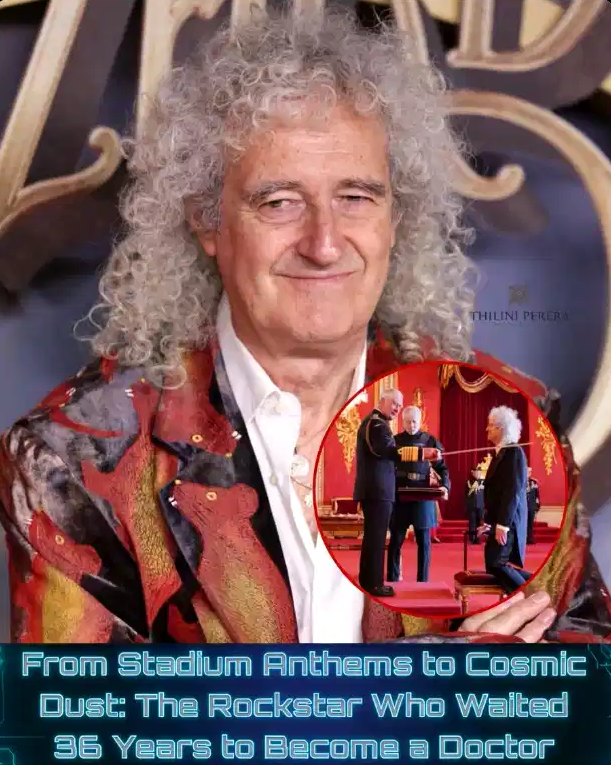
In 1970, a 23-year-old physics student at Imperial College London found himself at a life-altering crossroads.
Brian May was deep into his doctoral research on cosmic dust—specifically the zodiacal dust cloud, the tiny particles that drift through the solar system and scatter sunlight. His PhD was well underway, and a promising academic career in astrophysics lay ahead.
But there was another path calling him.
May was also the lead guitarist of a newly signed rock band named Queen. With a record deal secured and tours on the horizon, the band’s momentum was building fast. Faced with an impossible choice between the guitar and the telescope, May made his decision: he paused his studies and bet everything on music.
Queen’s ascent was meteoric. By the mid-1970s, they had become a global phenomenon. Timeless anthems like “Bohemian Rhapsody” and “We Will Rock You” exploded onto the charts, while May’s iconic homemade guitar, the Red Special, helped define the band’s legendary sound. Stadiums sold out worldwide, and millions of albums flew off the shelves.
Yet throughout his rock stardom, May never fully let go of his scientific passion. Even at the height of Queen’s fame, he stayed connected to astrophysics—reading journals, attending lectures when possible, and maintaining contact with his former supervisor, Professor Michael Rowan-Robinson, who had once told him: “You can always come back and finish.”
Thirty-six years after stepping away, in 2006, May decided the time had finally come. He reached out to Rowan-Robinson, and together they revived the long-dormant project. Though the field had moved forward and his original data needed updating, his early observations still held real scientific value.
Balancing his ongoing music career with late-night research sessions, May updated his work, incorporated new findings, and refined his analysis. In 2007, at the age of 60, Imperial College London officially awarded him a PhD in astrophysics—not an honorary title, but one earned through rigorous research and peer review.
Dr. Brian May had finally completed what he started more than three decades earlier.
His journey is a powerful reminder that passion has no expiration date. Whether on stage under stadium lights or studying the dust between the planets, Brian May proved it’s never too late to finish what you began.
English
@jdrive retweetet

🚨 Andrej Karpathy just explained the scariest thing happening in software right now..
someone poisoned a Python package that gets 97 million downloads a month.. and a simple pip install was enough to steal everything on your machine..
SSH keys.. AWS credentials.. crypto wallets.. database passwords.. git credentials.. shell history.. SSL private keys.. everything..
and here's the part that should terrify every developer alive..
the attack was only discovered because the attacker wrote sloppy code.. the malware used so much RAM that it crashed someone's computer.. if the attacker had been better at coding.. nobody would have noticed for weeks..
one developer.. using Cursor with an MCP plugin.. had litellm pulled in as a dependency they didn't even know about.. their machine crashed.. and that crash saved thousands of companies from getting their entire infrastructure stolen..
Karpathy's take is the real wake up call.. every time you install any package you're trusting every single dependency in its tree.. and any one of them could be poisoned..
vibe coding saved us this time.. the attacker vibe coded the attack and it was too sloppy to work quietly.. next time they won't make that mistake.
Andrej Karpathy@karpathy
Software horror: litellm PyPI supply chain attack. Simple `pip install litellm` was enough to exfiltrate SSH keys, AWS/GCP/Azure creds, Kubernetes configs, git credentials, env vars (all your API keys), shell history, crypto wallets, SSL private keys, CI/CD secrets, database passwords. LiteLLM itself has 97 million downloads per month which is already terrible, but much worse, the contagion spreads to any project that depends on litellm. For example, if you did `pip install dspy` (which depended on litellm>=1.64.0), you'd also be pwnd. Same for any other large project that depended on litellm. Afaict the poisoned version was up for only less than ~1 hour. The attack had a bug which led to its discovery - Callum McMahon was using an MCP plugin inside Cursor that pulled in litellm as a transitive dependency. When litellm 1.82.8 installed, their machine ran out of RAM and crashed. So if the attacker didn't vibe code this attack it could have been undetected for many days or weeks. Supply chain attacks like this are basically the scariest thing imaginable in modern software. Every time you install any depedency you could be pulling in a poisoned package anywhere deep inside its entire depedency tree. This is especially risky with large projects that might have lots and lots of dependencies. The credentials that do get stolen in each attack can then be used to take over more accounts and compromise more packages. Classical software engineering would have you believe that dependencies are good (we're building pyramids from bricks), but imo this has to be re-evaluated, and it's why I've been so growingly averse to them, preferring to use LLMs to "yoink" functionality when it's simple enough and possible.
English
@jdrive retweetet
@jdrive retweetet

Terence Tao is the greatest living mathematician.
Fields Medal at 31. Solved problems that had been open for a century. Widely regarded as the sharpest analytical mind alive.
And he just told you the thing your entire career is built on is now worthless.
Tao: “AI has basically driven the cost of idea generation down to almost zero.”
For five hundred years, the idea was the prize.
The theory. The hypothesis. The flash of insight a physicist chased for twenty years in a lab before it landed.
That was the bottleneck. That was what tenure rewarded. That was what Nobel committees were looking for.
Gone.
A model can generate a thousand candidate theories for a scientific problem in an afternoon. Not noise. Not garbage. Plausible, structured, publishable-grade hypotheses.
A thousand of them. Before dinner.
The idea used to be the scarcest resource in any room.
Now it is the cheapest.
But Tao went somewhere most people are not ready to follow.
Tao: “Verification, validation, and assessing what ideas actually move the subject forward… that’s not something we know how to do at scale.”
Sit with that.
We automated creation.
We did not automate truth.
We can produce ten thousand explanations for a phenomenon.
We cannot tell you which ones are real.
That is not a gap. That is a chasm.
And it is the most important unsolved problem on Earth right now.
Tao: “Human reviewers… they’re already being overwhelmed actually.”
The entire scientific apparatus was built for a world where a single paper took months to produce.
Peer review. Journal boards. Consensus forged over years of replication and debate.
That infrastructure was never designed for what just hit it.
Journals are flooded. Reviewers are buried. The filters that separated signal from noise for decades were engineered for human-speed output.
They are now absorbing machine-speed volume.
And they are cracking under it.
Tao compared it to the internet.
The internet drove the cost of communication to zero. That did not produce clarity. It produced an ocean of noise with islands of signal buried somewhere inside.
AI just did the same thing to knowledge itself.
Infinite generation. Zero verification.
The person who can produce ideas has never mattered less.
The person who can prove which ideas are true has never mattered more.
That is the inversion nobody is processing.
Every company, every lab, every institution is racing to generate more. Faster models. Bigger outputs. More theories. More code. More content.
Nobody is building the system that tells you which of those outputs are actually correct.
And that is the only system that matters.
Whoever solves verification at scale does not win a market.
They become the filter that all of science, all of engineering, all of human discovery flows through.
The bottleneck of the last five hundred years was producing the answer.
The bottleneck of the next fifty is knowing whether the answer is real.
And right now, according to the greatest mathematician alive, we do not know how to do that at the speed the machines demand.
That is not a research problem.
That is the race beneath the race.
And almost nobody has entered it.
English
@jdrive retweetet


@jdrive retweetet
@jdrive retweetet

@jdrive retweetet

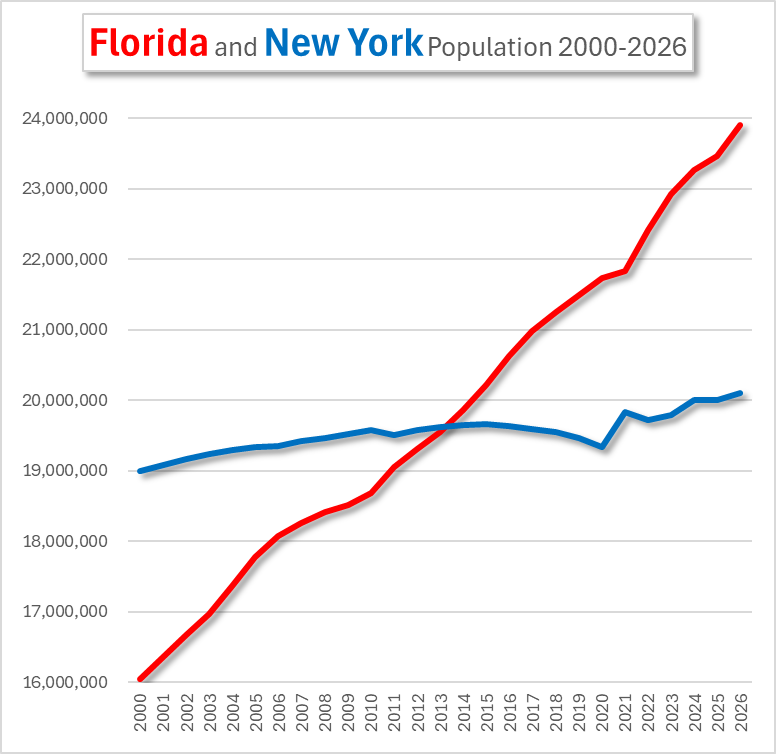
25 years ago, Florida was 16% (3M) smaller than New York.
Today, Florida is 19% (3.8M) larger.
English
@jdrive retweetet

@jdrive retweetet

@jdrive retweetet

A Polish dance group, Fair Play Crew, drew global attention by recreating on stage the stiff and synchronized movements of 1980s fighting video games, such as the classic International Karate.
I've seen this so many times, still cracks me up 😂
English
@jdrive retweetet

Probably the best scene in the series
Chuck Norris will forever be a legend. I don’t care about his politics, he was one of the great ones
English

⚡️This means the rial has stopped being real money.
A 10 million rial note is a public confession that the unit is dead as a store of value and dying as a unit of account. The regime is no longer defending purchasing power. It is trying to keep transactions from seizing up. That is a much darker signal than ordinary inflation. It means the state has crossed from preserving money into administering monetary failure.
The deeper break is civilizational. Money is social trust compressed into paper. Once denominations get absurd, the trust layer is gone. People no longer save in the currency. They no longer think in the currency. They barely even price in the currency except because the state forces them to. Real economic life starts migrating elsewhere. Dollars. gold. inventory. land. black markets. personal networks. barter logic. The official currency remains on paper while the real economy quietly defects.
That is where regimes become hollow. The bureaucracy still functions. Salaries still get paid. Shops still open. But the state is now presiding over a dual reality. The formal layer runs on weak paper and forced compliance. The actual layer runs on hard assets, informal pricing, smuggling, and trust networks outside the regime’s monetary control. Once that split gets wide enough, the state is no longer governing a normal economy. It is governing a deteriorating shell.
This is also why bigger notes are politically sinister. They normalize decline. They make collapse easier to live inside. Instead of fixing the disease, they reduce the friction of dysfunction. The state is telling the population: yes, your money has been destroyed, but here is a larger symbol so daily life can continue a little longer. That is how a regime stretches decay. It cannot restore confidence, so it engineers adaptation.
The part people miss is what this does to behavior. Once money breaks, time horizons break. Households spend faster. Businesses shorten terms. Credit quality collapses. Wage demands accelerate. Corruption deepens. Tax collection gets uglier. Bribery becomes more rational. Elite extraction intensifies because everyone with power knows the local unit is poison. So the system gets more predatory exactly when it is getting weaker.
That is why this matters for the war too. A regime with broken money becomes more dangerous, not less. Internal weakness does not automatically create moderation. It often creates external aggression, because foreign confrontation helps justify repression, capital controls, rationing, and emergency politics. It gives the regime a story for why life is collapsing. It turns economic failure into patriotic necessity. That is a classic move.
So what is really happening?
Iran is shifting from being a stressed nation-state with a damaged currency into a coercive war economy that is increasingly detached from its own monetary base. The rial is becoming administrative paper. Force is becoming the real guarantee behind economic life. That is a sign of internal rot, not just macro stress.
The deepest truth is this:
A giant banknote is the regime admitting that value has left the currency, trust has left the system, and only coercion is keeping the shell standing.
Ash Crypto@AshCrypto
BREAKING: 🇮🇷 Iran has launched a new 10 million Iranian rial note. In dollar terms, this is worth just $7.
English