Angehefteter Tweet

Três coisas não podem ficar ocultas por muito tempo: O Sol, a Lua e a Verdade.
Buda.
Português
🇧🇷Joy Joy🇵🇹
34.2K posts
@joyfco
Chef de Cozinha “O tempo destrói os traidores.” — Cícero (106 a.C. – 43 a.C.)





🇮🇷🇺🇳‼️ URGENTE — Irán acaba de ser nominado para presidir el Comité CPC de la ONU, un programa sobre los derechos de las mujeres, los derechos humanos y la prevención del terrorismo. Su candidatura ha sido respaldada por el Reino Unido, España y Francia.


In February 1928 a Canadian Arctic explorer called Vilhjalmur Stefansson walked into Bellevue Hospital in New York City and announced, to a committee of distinguished physicians who had been waiting for him, that he and his colleague Karsten Anderson were going to live on nothing but meat for the next year, under their direct medical supervision, and they could measure whatever they liked. The committee was thrilled. They were going to watch a man kill himself in the name of science. Stefansson had spent eleven years in the Arctic living among the Inuit. He had eaten what they ate, which was meat and fat from caribou and seal and fish, with effectively no plant matter, for the entire duration. He had not died. He had not got scurvy. He had, in fact, been rather well, and had come back to a country that did not believe him about any of it. So he had offered himself as the experiment. The committee included some of the most prominent nutrition researchers of the era. They were, by their own admission, expecting Stefansson to develop scurvy within weeks, kidney damage within months, and various nutritional collapses across the rest of the year. Stefansson and Anderson spent the year eating beef, lamb, veal, pork, chicken, the occasional fish. They ate the fat with the lean, in roughly the proportion of an Arctic seal, which is to say very fat indeed. They ate organs. They ate marrow. They drank water and coffee. No vegetables, no fruit, no grain, no sugar. At the end of the year both men were in better health than at the start. No scurvy. No kidney damage. No vitamin deficiencies. Stefansson's blood pressure had dropped slightly. His cholesterol had dropped slightly. He had lost a small amount of weight and reported feeling better than he had in years. The committee published the results in the Journal of Biological Chemistry in 1930. There was one short period early on when the supervising physicians, trying to be helpful, gave Stefansson lean meat without sufficient fat. He immediately developed the symptoms the Plains Indians had called rabbit starvation: nausea, weakness, the feeling of being unable to eat enough. He politely explained the problem. The committee, slightly chastened, increased the fat ratio. The symptoms vanished within forty-eight hours and never returned. The experiment was the cleanest possible test of the hypothesis that humans require plant foods to survive, conducted under hospital supervision, by sceptics who expected the subject to fail. The subject did not fail. The subject thrived. Almost nobody has heard of it. It is not in the textbooks. It is not in the dietary guidelines. It is not mentioned by the nutritionists who confidently assert that a varied diet including all food groups is essential for human health, despite the existence of a hospital-supervised year-long experiment that demonstrated otherwise nearly a century ago. When the data does not match the model, you have two options. Revise the model, or ignore the data and hope nobody looks too closely. We chose option two. The paper is sitting in the library. Waiting for option one.






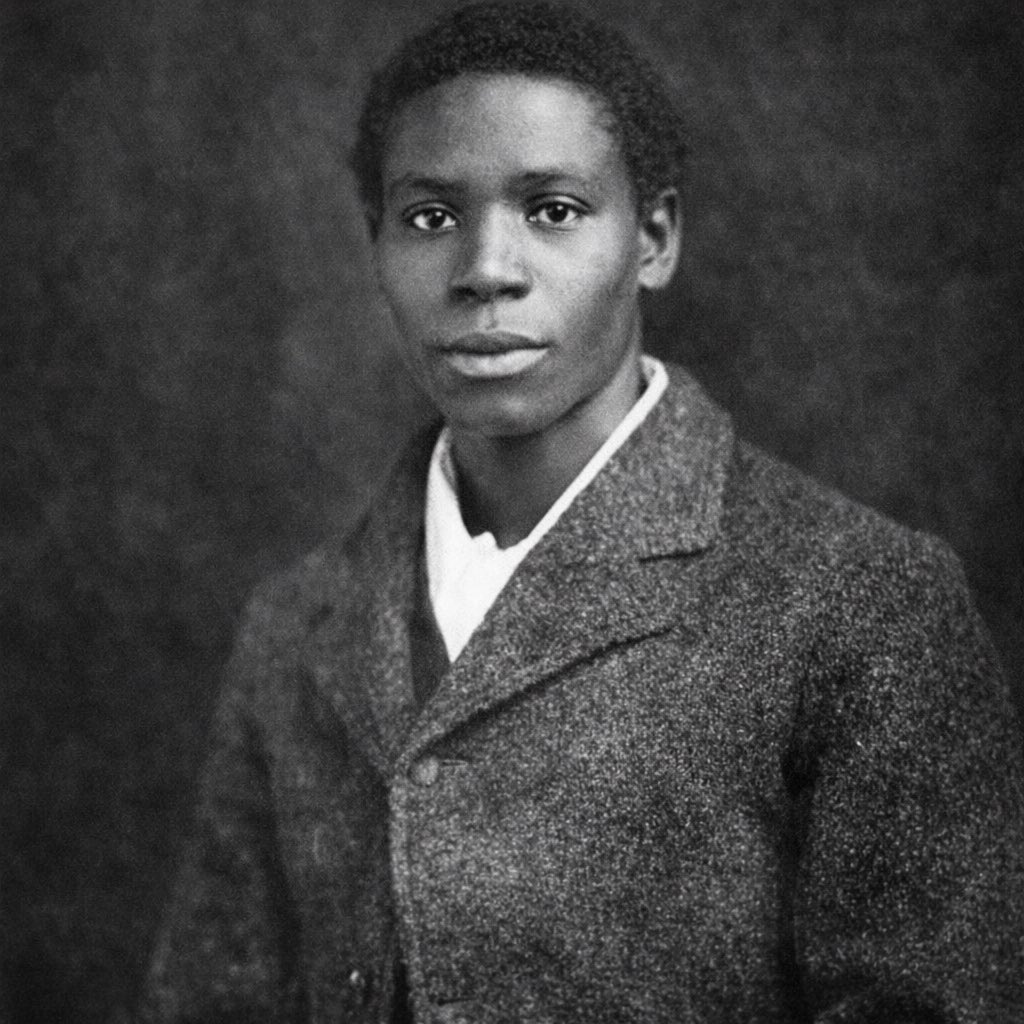
Did you know? The rich, beloved flavor of vanilla in your ice cream, cakes, and coffee owes a huge debt to the sharp observation of a 12-year-old boy named Edmond Albius. In 1841, on the island of Réunion in the Indian Ocean, a vanilla orchid vine had been flowering beautifully for over 20 years on the property where young Edmond worked — yet it had never produced a single pod. One morning, his employer, Ferréol Bellier-Beaumont, was astonished to discover two plump vanilla beans hanging from the vine. When asked how it happened, 12-year-old Edmond calmly explained that he had pollinated the flowers himself. Skeptical at first, Bellier-Beaumont watched as more pods soon appeared. He asked the boy to demonstrate — and what Edmond revealed was pure genius. Drawing on the basic botany his master had taught him (including hand-pollinating watermelon), Edmond had closely studied the delicate vanilla blossom. He noticed that its male and female parts were separated by a thin membrane called the rostellum. Using nothing more than a thin stick, twig, or blade of grass, he gently lifted that flap and, with a quick motion of his thumb, transferred the sticky pollen onto the stigma. The technique was incredibly simple, fast, and reliable — taking just seconds per flower. It worked every time. This breakthrough unlocked commercial vanilla production far from its native Mexico, where special bees once handled pollination. Réunion quickly became a major vanilla-growing region, and the flavor we all love spread around the world. Edmond Albius (c. 1829–1880) spent his life in horticulture on the island and passed away in Sainte-Suzanne, Réunion. Today he is honored with a street, a school, and a sculpture in his memory — a fitting tribute to the curious young mind whose discovery changed the global taste of sweetness forever.