Jason Munro

122 posts

Jason Munro banner
Jason Munro

Jason Munro

@jsnmunro

AI for advanced materials | Co-Founder @atomscale | Prev. scientist and engineer for #materialsproject @BerkeleyLab.

Boston, MA Beigetreten Ağustos 2019
310 Folgt315 Follower
Jason Munro retweetet
Atomscale
Atomscale@atomscale·
We’re hiring a Full Stack Software Engineer to help shape the next generation of our platform. You’ll build end-to-end features that enable materials process engineers and scientists to connect, analyze, and act on complex materials data. This role spans the full stack, turning deep process intelligence into intuitive tools and automation to deliver real impact for engineers and advanced materials manufacturing. More details here: atomscale.ai/careers/softwa… #Boston #DeepTech #Startup #hiring
English
0
1
3
481
Jason Munro retweetet
Atomscale
Atomscale@atomscale·
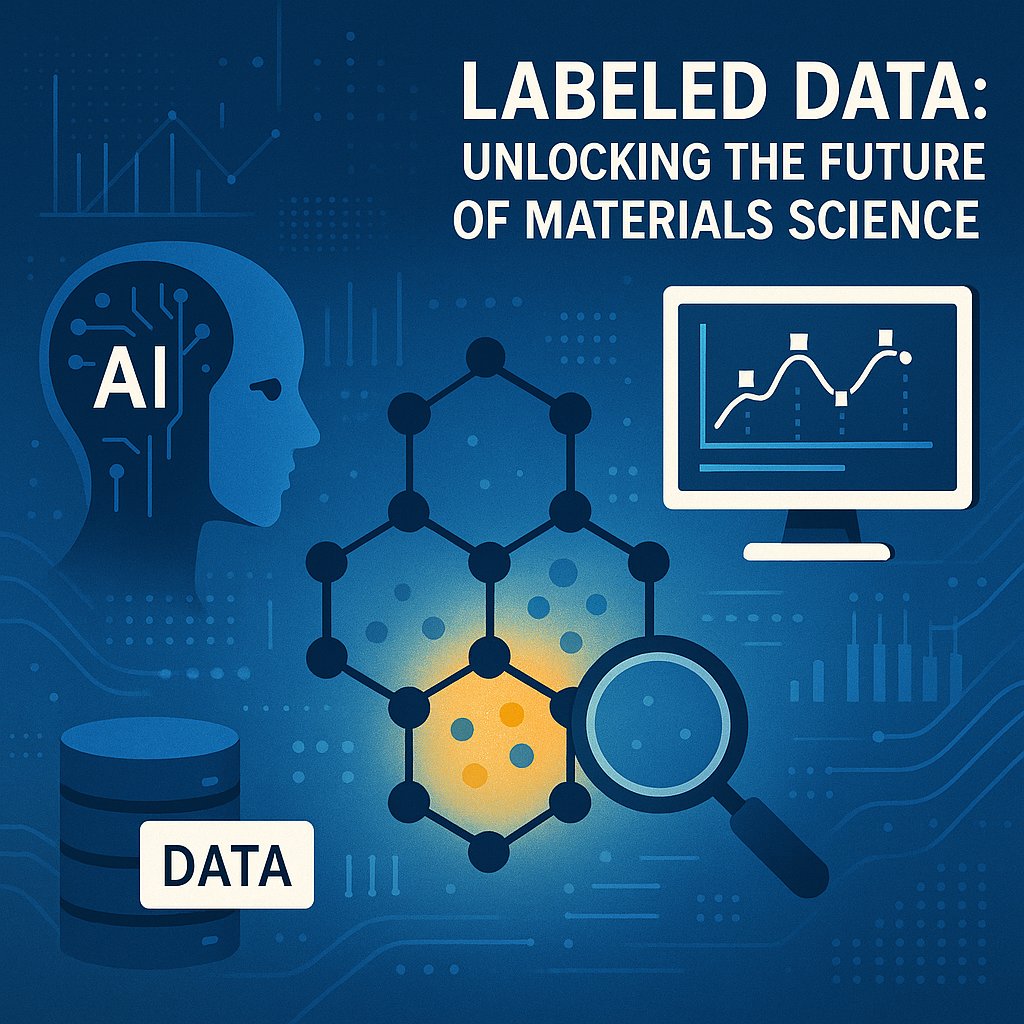
Atomscale exists to build the bridge between raw experimental data and actionable insight to unlock the future of materials science. Read on: In materials science, data is not the problem—context is. Modern synthesis techniques operating at atomic precision now generate exponentially more raw data than they did even a decade ago. Yet, despite this explosion of data, the field continues to face a critical bottleneck: a scarcity of labeled data. Without it, the application of AI and Machine Learning (ML)—technologies with huge potential to improve empirical design and process optimization—remains largely untapped in materials development and scale-up. Labeled data is the cornerstone of effective AI and ML models. It enables algorithms to find patterns, predict outcomes, and optimize processes. In sectors like natural language processing or computer vision, large labeled readily available datasets have catalyzed decades' worth of progress in just a few years. But in materials science, the situation is very different. While experimental tools and simulation engines are vastly more powerful today, the raw data they generate still depends heavily on manual interpretation by domain experts to be transformed into structured, labeled insights and applied in synthesizing the actual materials. This human-in-the-loop approach—tedious, expensive, and error-prone—is incompatible with the scale of challenges facing several critical industries. Advanced semiconductors, solid-state batteries, next-generation photonics, and quantum computing all rely on successful integration of new materials and devices. Yet every step toward innovation introduces complexity at the atomic level: defects, interfaces, novel phases, and unpredictable interactions. Without high-quality, contextualized data at scale, humans and even the best AI tools are flying blind. At Atomscale, we believe this bottleneck must—and can—be broken. Our platform is purpose-built to automate the extraction, integration, and labeling of data across the entire materials lifecycle. Whether it’s microscopy images, spectroscopic data, synthesis logs, or modeling output, our system transforms heterogeneous data into a unified, labeled foundation that can be readily compared across samples and materials systems. Since each of these raw data sources captures just a small slice of the state of the material, we build task-specific models to distill as much signal as possible from each measurement to build this unified foundation. Using models instead of manual effort to achieve this reduces bias and provides the scale needed to input data to our AI agents, which can monitor and deliver feedback on complex processes to enable commercialization of new transformative materials and accelerate production scaling. This is speeding up scaling of materials platforms by applying computation to model the physical world in real-time in a way that’s never been done before, enabling a new era of materials engineering. By automating the creation of labeled datasets at scale, we give our customers the power to identify trends, predict performance, and optimize process variables faster and more reliably than ever before. For companies racing to commercialize new materials, Atomscale delivers a critical capability: data-driven decision-making at the atomic scale. In the years ahead, the pace of innovation will increasingly depend not just on how much data we can gather, but how intelligently we can use it. Labeled data is the bridge between raw experimental output and actionable insight. Atomscale exists to build that bridge—for every lab, every fab, and every breakthrough yet to come.
Atomscale tweet media
English
0
1
2
334
Jason Munro retweetet
Atomscale
Atomscale@atomscale·
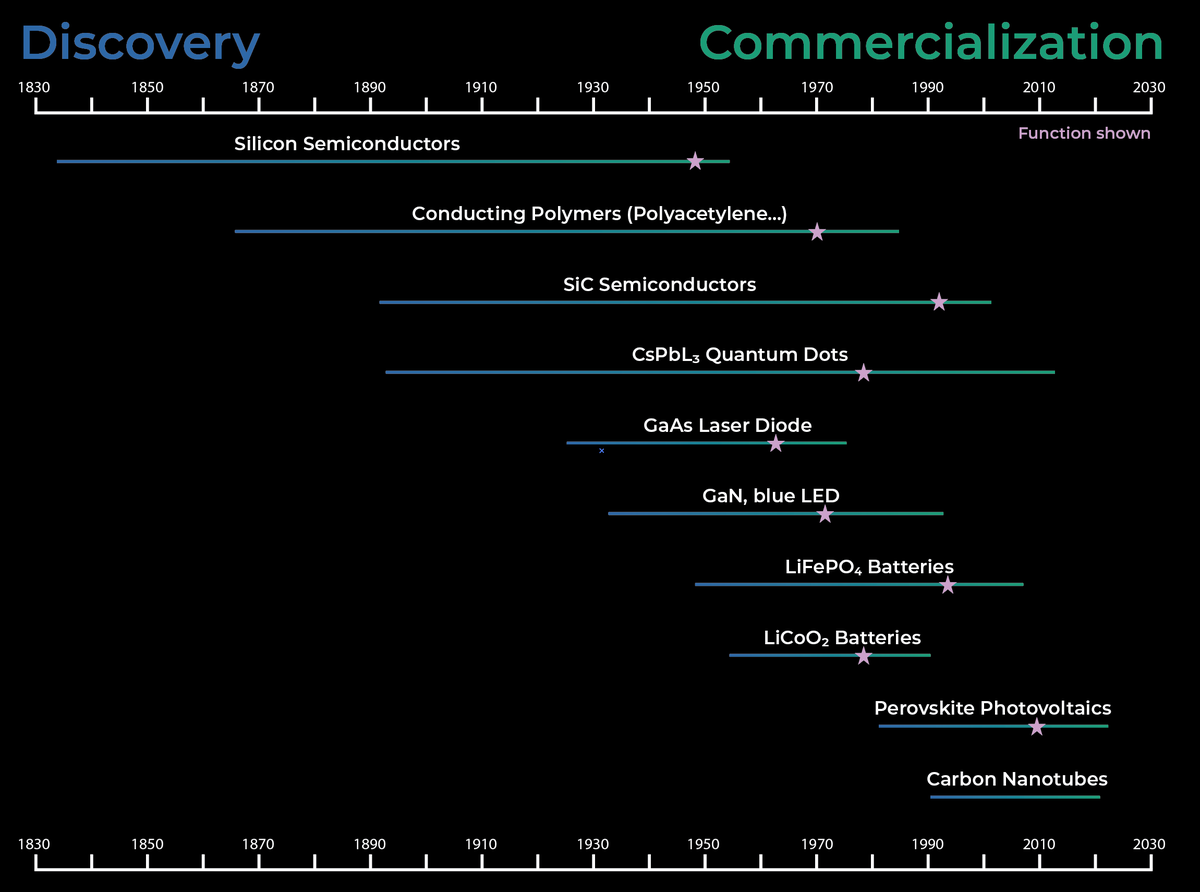
AI agents are poised to transform the commercialization of advanced materials. At Atomscale, we’re driving this transformation with our next-generation AI agents, purpose-built for atomic-scale engineering. Read on: The development of new materials and their integration into devices remains one of the most challenging and costly barriers in advancing foundational technologies. Recent advances in both artificial intelligence and state-of-the-art computational resources are creating a transformative era for materials synthesis empowered by AI agents. These digital collaborators will serve as intelligent decision-making layers that help increase engineering precision to accelerate laboratory breakthroughs and enable industrial-scale production of next-generation materials. From novel semiconductors for next-generation computing to advanced cathode materials for high-performance batteries, progress in advanced materials production is hindered by long development cycles and high costs. As established materials platforms have matured (e.g. silicon, lithium cobalt oxide (LCO), etc…), the gap between successful lab-scale POCs and scalable industrial application has only widened, with commercialization efforts frequently spanning over a decade and costing hundreds of millions to billions of dollars. The combination of artificial intelligence and state-of-the-art computational resources is laying the groundwork to address challenges at the atomic scale that were previously too complex to consider. The attention on generative models has highlighted the use of AI to model atomic interactions and predict new materials, but an even more massive opportunity exists to leverage AI agents to dynamically control and optimize precision materials synthesis – enabling production of more performant and higher quality materials and devices. AI agents do not replace human experts; instead, they augment the decision-making process by acting as effective copilots for human-in-the-loop synthesis. They integrate orders of magnitude higher resolution real-time data analysis with expert context, offering actionable insights that would not otherwise be available with human analysis alone. Agents can be tasked to rapidly identify causes of process variances, assess many parallel opportunities for optimization simultaneously and can be employed to dynamically control processing based on real-time metrology and characterization. Natural language interfaces offer an opportunity to embed rich empirical process context that is difficult to document with rigid data models alone. This intelligence can help shorten commercialization timelines and optimize material performance at the atomic scale. At Atomscale, we are advancing this approach with our next-generation AI agents. Our platform integrates custom AII with real-time in-situ monitoring to streamline the engineering of atomic-scale materials. By analyzing continuously streamed characterization and metrology data on the fly using proprietary models and augmenting these results with agent-driven decision support, our system provides context-aware analysis of materials synthesis. This allows our platform to suggest precise adjustments to growth parameters during or after synthesis, thereby supporting more controlled and efficient material development. AI agents are positioned to play a significant role in accelerating the commercialization of new materials. Through massively scalable data analysis and context aware decision-making, these tools can help streamline the development process and more effectively transition laboratory innovations to commercial  applications. If you are interested in exploring how AI agents can support and enhance your materials research and development efforts, please contact us.
Atomscale tweet media
English
0
2
4
420
Jason Munro retweetet
Atomscale
Atomscale@atomscale·
Exciting news — Atomic Data Sciences is now Atomscale! Our new name reflects our evolution from automating data analysis in materials science to building a comprehensive intelligence layer for atomic-scale engineering. As we grow, our mission remains clear: to drive breakthroughs in advanced materials synthesis from R&D to production with state-of-the-art AI. We're more focused than ever — visit us at atomscale.ai!
Atomscale tweet media
English
1
2
10
581
Jason Munro retweetet
Atomscale
Atomscale@atomscale·
Atomic Data Sciences is delivering the first end-to-end AI solution for advanced materials synthesis, leveraging the convergence of in-situ hardware, applied AI for materials science, and general foundation models to enable a new low-level programming language for the physical world.
Atomscale tweet media
English
1
1
3
237
Jason Munro retweetet
Atomscale
Atomscale@atomscale·
We’re excited to share this perspective, co-authored by co-founder @ccprice19, on the current state of AI/ML application to accelerate discovery and synthesis of advanced electronic materials. We continue to believe there is substantial value to purpose-built AI/ML tools for advanced materials that scale and automate information extraction, delivering significantly shorter time-to-feedback (including real-time) and previously unattainable high-dimensional analysis results from the fusion of many sources of characterization. ieeexplore.ieee.org/document/10857…
English
1
2
10
652
Jason Munro retweetet
Atomscale
Atomscale@atomscale·
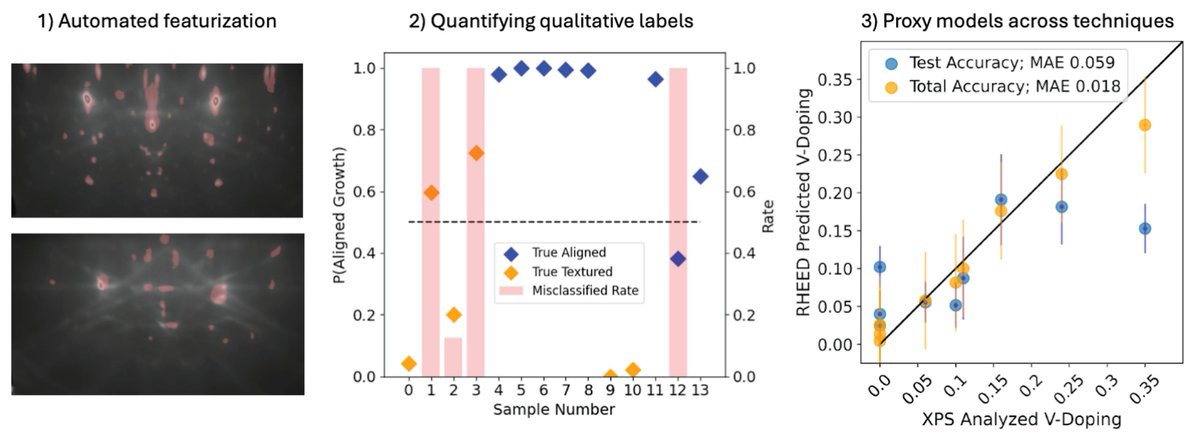
Automated AI accelerates advanced materials workflows! We are excited to share that Predicting and Accelerating Nanomaterial Synthesis Using Machine Learning Featurization, a collaboration between Atomic DS and the Hinkle Lab at the University of Notre Dame, is published in ACS Nano Letters. We develop workflows to improve the efficiency of materials synthesis and characterization using the tools available in AtomCloud. With just ~10 conventionally labeled synthesis trials, we predict the defect rate of future trials with >80% accuracy. We also predict film composition in-process with similar accuracy to expert practitioners. Even within a lab-scale synthesis campaign, applying these predictive models can save hundreds of hours of expert and equipment time. Our featurization scheme generalizes across materials without customization. Some practical insights we found in this work: pubs.acs.org/doi/10.1021/ac…
Atomscale tweet media
English
1
1
5
504
Jason Munro retweetet
Atomscale
Atomscale@atomscale·
Faster, Better Feedback Can Accelerate Materials Commercialization. In the race to commercialize products (chips, batteries, sensors, etc.) founded on new advanced materials platforms , feedback is essential. The process of optimizing materials to deliver ever greater performance is complex and tedious, requiring advanced techniques for measuring and characterizing properties at the nanoscale. By speeding up the feedback loop, we can help engineers make better decisions and accelerate the development and time-to-market of novel materials. A Slow Path to Materials Commercialization Bringing new materials to market has historically been a slow process. Once “commercialized”, materials often go through cycles of incremental improvement rather than transformative innovation. This incremental approach stems from the extensive trial-and-error involved in developing even small changes. Unknown interactions between synthesis equipment, materials, and recipes means each iteration risks introducing unexpected variables. Improved feedback is necessary to shorten the time to optimization and accelerate the development cycle. Materials Engineers Share the Need to Measure Developing new materials and bringing them to market requires optimizing across many dimensions that depend on the target application: 🔸Material Properties: atomic structure, composition, microstructure, and interfaces between materials. 🔸Performance Metrics: resistance, frequency response, optical response, operating ranges, and more. 🔸Commercialization Factors: scalability, repeatability, tolerance, cost-effectiveness and ability to synthesize with production-scale equipment. Relying solely on computer-aided design to address these dimensions isn’t possible as real-world synthesis is challenged by incomplete physical knowledge, uncontrolled variables, and unpredictable complexities that first-principles computational models cannot account for. As a result, materials engineers depend on specialized measurement techniques to refine the synthesis process as they work towards commercial viability. While the materials goals may vary widely by application, the need for effective feedback is universal. Measuring the state of a material to produce this feedback is colloquially known as characterization. The Complexity of Feedback at the Nanoscale Optimizing materials properties at the atomic level requires advanced characterization techniques that are inherently “narrow” in the data they provide, as each is only sensitive to specific properties. For instance, electron microscopy might reveal structural details, while X-ray spectroscopy resolves aggregate chemical composition. Interpreting the results requires domain expertise, and the analysis tools often require significant manual input. In practice, this means that feedback loops remain technically complex, time-intensive, and challenging to scale. Due to limited time, scientists and engineers typically extract only the minimum information required from data collected, leaving valuable data unused. Additionally, the “narrowness” of the data from certain techniques necessitates integration of multiple data streams to form a comprehensive understanding of the material or device. This integration of information has historically been accomplished by the engineer, placing them firmly “in-the-loop” and creating barriers to applying data-driven computational models. Improving this feedback loop, and freeing the engineer to do higher level interpretation work, is essential for accelerating the development of new materials. Faster and Fewer Iterations: The Key to Accelerating Development Reducing the time and number of iterations required for material optimization is key to accelerating the commercialization process. This is why we’re focused on two goals: ▶️Providing Feedback Faster: Quicker feedback allows researchers to adjust parameters in near real-time, cutting down the time spent waiting for data and results. ▶️Improving Decision-Making: With better feedback, engineers can make informed decisions about what to try next. A data-driven approach to experimentation can reduce the guesswork and help teams converge on effective synthesis strategies faster. With faster, better feedback, materials engineers can make more informed decisions earlier in the development cycle. This will not only accelerate commercialization but also unlock the potential for more innovative materials that meet modern needs for efficiency, sustainability, and performance. Unlocking the Next Generation of Materials Ultimately, faster and better feedback isn’t just about making incremental improvements in synthesis. It’s about empowering scientists and engineers with data-driven insights to make smarter, faster decisions. With the right tools, we can unlock the full potential of nano-engineered materials and transform how industries approach material innovation. As we move towards more automated, real-time characterization methods and bring siloed techniques into integrated workflows, advanced materials industries have an opportunity to achieve unprecedented speeds in commercialization. The faster we can refine feedback loops and minimize iteration cycles, the sooner we can bring advanced materials to market, driving innovation across industries. Follow Atomic Data Sciences and check out our case studies to see how we are accelerating materials feedback and working to improve decision-making. Reach out to schedule a demo of our platform or to discuss your feedback needs.
Atomscale tweet media
English
0
1
5
180
Jason Munro retweetet
Atomscale
Atomscale@atomscale·
Great newsletter @techreview on the recent Nobel Prize win for computational protein discovery and great summary @VanRijmenam! David Baker, co-prize winner, notes: "If there were many databases as good as the PDB … [this prize] probably is just the first of many … It's not just the methods, it's the data. And there aren't so many places where we have that kind of data." We couldn’t agree more, which is why we’re building a platform that extracts and coalesces advanced materials data historically locked in files to provide quality data and AI models at scale. High-quality real-world data is necessary to generate useful real-world results for both practitioners and AI alike. @techreview: “The current trend in AI development is training ever-larger models on the entire content of the internet, which is increasingly full of AI-generated slop. This slop in turn gets sucked into datasets and pollutes the outcomes, leading to bias and errors. That's just not good enough for rigorous scientific discovery.” Duplicating the success of LLMs and in-silico models like AlphaFold in real-world materials synthesis requires following the full scaled AI pipeline starting with data, not models. Contact us to learn more about transforming materials synthesis data. #NobelPrize2024 #AI #MaterialsScience technologyreview.com/2024/10/15/110…
Dr Mark van Rijmenam, CSP@VanRijmenam

If AI is supposed to revolutionize science, why are we drowning it in garbage data? ➡️ David Baker, a biochemist and newly-minted Nobel laureate, warns that AI's impact on science will stall unless the data fed into these models improves. Alongside Demis Hassabis and John Jumper from Google DeepMind, Baker was awarded the Chemistry Nobel for AI tools revolutionizing protein research. ➡️ Their success relies heavily on the high-quality Protein Data Bank (PDB), a rare example of well-curated data essential for meaningful scientific progress. However, as AI models increasingly rely on bloated, internet-scraped datasets, the risk of producing biased, erroneous results grows. The roadblock isn’t just model size but data quality: 👉 Garbage in, garbage out: AI outcomes depend on clean, curated inputs. 👉 Unique data sources: Few datasets match the PDB’s rigor and utility. 👉 AI's potential: New tools enable breakthroughs, but without solid data, progress falters. ❓ As AI models scale, will science keep up by curating more high-quality data, or will noisy inputs undermine the breakthroughs we expect? Read the full story in MIT Technology Review: technologyreview.com/2024/10/15/110… #Data #Research #NobelPrize #Future #Science ---- 💡 𝗜𝗳 𝘆𝗼𝘂 𝗲𝗻𝗷𝗼𝘆𝗲𝗱 𝘁𝗵𝗶𝘀 𝗰𝗼𝗻𝘁𝗲𝗻𝘁, 𝗯𝗲 𝘀𝘂𝗿𝗲 𝘁𝗼 𝗱𝗼𝘄𝗻𝗹𝗼𝗮𝗱 𝗺𝘆 𝗻𝗲𝘄 𝗮𝗽𝗽 𝗳𝗼𝗿 𝗮 𝘂𝗻𝗶𝗾𝘂𝗲 𝗲𝘅𝗽𝗲𝗿𝗶𝗲𝗻𝗰𝗲 𝗯𝗲𝘆𝗼𝗻𝗱 𝘆𝗼𝘂𝗿 𝘁𝗿𝗮𝗱𝗶𝘁𝗶𝗼𝗻𝗮𝗹 𝗻𝗲𝘄𝘀𝗹𝗲𝘁𝘁𝗲𝗿 - you can have real-time insights, recommendations (a lot more than I share here) and conversations with my digital twin via text, audio or video in 28 languages! Join >6000 users who went before and go to app.thedigitalspeaker.com to sign up and take our connection to the next level! 🚀


English
0
2
8
796
Jason Munro retweetet
Atomscale
Atomscale@atomscale·
A great day to discuss AI for advanced materials synthesis at the NEMC Fall Meeting @Mass_Tech - check out our platform to quantify your analytical and microscopy data for fab R&D, scale-up, and SPC faster than an @TomBrady 2 minute drive
Atomscale tweet media
English
0
3
5
358
Jason Munro retweetet
Atomscale
Atomscale@atomscale·
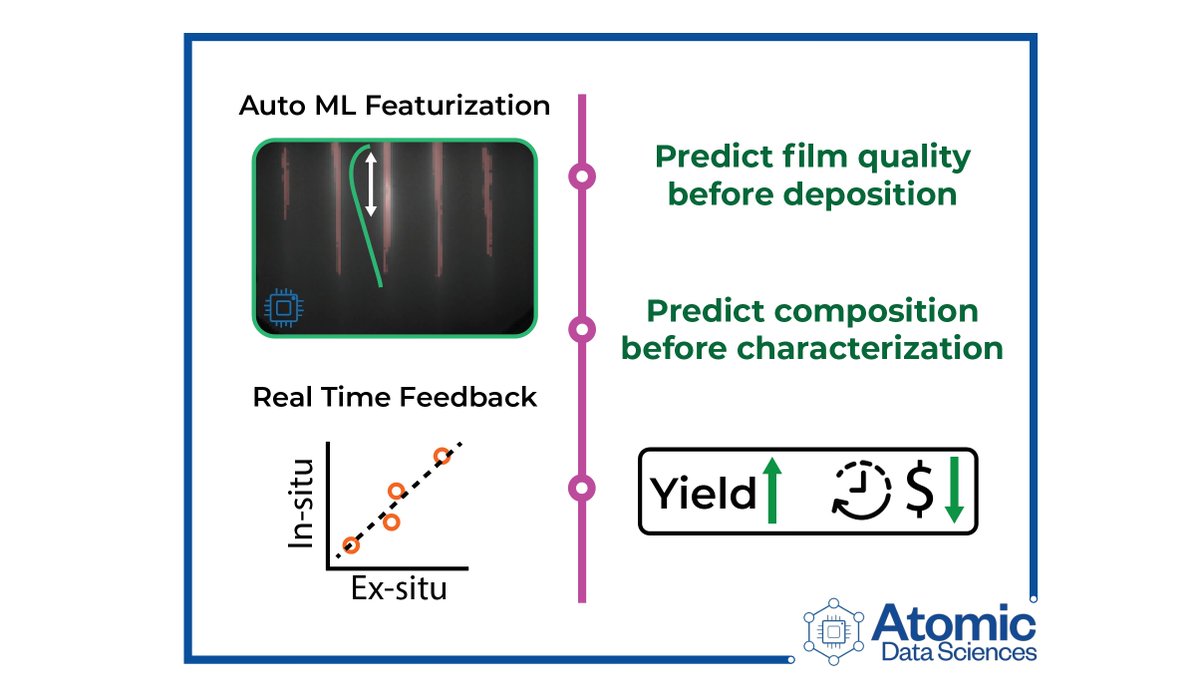
We’re excited to share our latest preprint (arxiv.org/abs/2409.08054) which uses AtomCloud’s AI/ML powered automation to accelerate key steps in the materials synthesis feedback loop, deliver insights faster and earlier, and save time while helping avoid doomed trials.
Atomscale tweet media
English
1
1
5
338
Jason Munro retweetet
Jain Research Papers
Jain Research Papers@jainpapers·
We demonstrate that LLMs can accelerate data extraction from unstructured text (journal articles) using an iterative training procedure. Since the preprint, we show that Llama-2 results are close to GPT-3 results for the task. Dagdelen et al, Nat Comm doi.org/10.1038/s41467…
English
1
2
18
1.9K
Jason Munro retweetet
DOE Office of Science
DOE Office of Science@doescience·
The Stone Age didn't end because people ran out of stones but because they created ways to use other materials. Now, we're developing new materials to enable new technology. The Materials Project #SCPuReData Resource is making these advances possible: energy.gov/science/articl…
DOE Office of Science tweet media
English
0
15
31
5.2K
Jason Munro retweetet
Janosh
Janosh@jrib_·
PSA: Join us tomorrow at 10 am PT (1pm ET) for the next MP seminar. The one and only @tesssmidt will talk about symmetry-aware ML methods, the math underlying them, as well as smoothness, data efficiency, and generalization performance of different methods. Zoom link below:
English
1
5
12
4.5K
Jason Munro retweetet
Tian Xie
Tian Xie@xie_tian·
[1/N] Generative AI has revolutionized how we create text and images. How about designing novel materials? We at @MSFTResearch #AI4Science are thrilled to announce MatterGen: our generative model that enables broad property-guided materials design. 👇 arxiv.org/abs/2312.03687
GIF
English
29
222
840
922.5K
Jason Munro retweetet
Secretary Jennifer Granholm
Secretary Jennifer Granholm@SecGranholm·
👉 Major AI progress out of @BerkeleyLab with Google To transform the future of superconductors, power systems, electric vehicles, and other clean energy tech — we need new materials. A new algorithm to predict them + an AI-driven robotic lab to make them aims to do just that.
Berkeley Lab@BerkeleyLab

Researchers use our Materials Project to develop new materials for future tech - think better batteries or solar cells. With new #materials calculated by @GoogleDeepMind, they’ll have even more data to work with. @Nature #AI #FutureTech The latest ⬇️ newscenter.lbl.gov/2023/11/29/goo…

English
10
43
122
26.7K