Todd Kulick

1.1K posts

Todd Kulick banner
Todd Kulick

Todd Kulick

@kulick

Shelter in place, vaccine cheerleading (from the cheap seats), practice new Instant Pot recipes

I'm Around Beigetreten Ağustos 2007
654 Folgt185 Follower
Todd Kulick retweetet
Jessica Riedl 🧀 🇺🇦
Jessica Riedl 🧀 🇺🇦@JessicaBRiedl·
My long-standing conservative/libertarian political views that now get me called a "radical leftist": - Pro-free trade, free markets, & deficit reduction. - Pro-voter ID with drivers' license (not passport or birth certificate). - Against Washington taking over election vote-counting. - Against jackbooted feds shooting protestors for legally carrying a gun, or kicking down doors without a warrant. - Against invading NATO allies (Greenland) and Russian expansionism. - Against price controls on medicine or credit cards. - Pro-legal immigration. - Pro-Federal Reserve independence. - Against handing our public health system over to anti-vaxxers with worm-eaten brains who do cocaine off toilet seats. - Against nanny state attempts to regulate what we eat. - Against pardoning corrupt Members of Congress. - Against electing politicians who fail to exhibit ethical, moral, and honest behavior. - Against using elected office to get rich. - Against assaulting Capitol Police and trying to overturn elections. - Against disrespecting, deporting, or trying to eliminate the pensions of veterans who have honorably served. - Against firing a Coast Guard pilot for misplacing a cabinet secretary's blanket. - Against starting a mid-decade redistricting war (and crying when the other side fights back). - Against all-power executives trampling Congress, courts, states' rights, and rule of law. - Against protecting and pardoning child predators. - Against declaring the Declaration of Independence, and Constitution outdated relics that ignore "what time it is." - Against cult-like worship of individual politicians, even at the expense of the Constitution and rule of law. - Against cancel culture mobs, even for those who do not express sufficient worship of Charlie Kirk. - Against whining, victimology, identity politics, and antisemitism. I've worked in high-level politics and policy for three decades. For most of this career, these views left me comfortably working within the conservative/ libertarian movement. If some people with no political memory before Trump now want to call these beliefs "radical leftist," knock yourselves out. I'm focused on eternal truths and policy realities, not the partisan flavor of the month. ¯\_(ツ)_/¯
English
0
374
2K
100.8K
Todd Kulick
Todd Kulick@kulick·
This.
Andrej Karpathy@karpathy

A few random notes from claude coding quite a bit last few weeks. Coding workflow. Given the latest lift in LLM coding capability, like many others I rapidly went from about 80% manual+autocomplete coding and 20% agents in November to 80% agent coding and 20% edits+touchups in December. i.e. I really am mostly programming in English now, a bit sheepishly telling the LLM what code to write... in words. It hurts the ego a bit but the power to operate over software in large "code actions" is just too net useful, especially once you adapt to it, configure it, learn to use it, and wrap your head around what it can and cannot do. This is easily the biggest change to my basic coding workflow in ~2 decades of programming and it happened over the course of a few weeks. I'd expect something similar to be happening to well into double digit percent of engineers out there, while the awareness of it in the general population feels well into low single digit percent. IDEs/agent swarms/fallability. Both the "no need for IDE anymore" hype and the "agent swarm" hype is imo too much for right now. The models definitely still make mistakes and if you have any code you actually care about I would watch them like a hawk, in a nice large IDE on the side. The mistakes have changed a lot - they are not simple syntax errors anymore, they are subtle conceptual errors that a slightly sloppy, hasty junior dev might do. The most common category is that the models make wrong assumptions on your behalf and just run along with them without checking. They also don't manage their confusion, they don't seek clarifications, they don't surface inconsistencies, they don't present tradeoffs, they don't push back when they should, and they are still a little too sycophantic. Things get better in plan mode, but there is some need for a lightweight inline plan mode. They also really like to overcomplicate code and APIs, they bloat abstractions, they don't clean up dead code after themselves, etc. They will implement an inefficient, bloated, brittle construction over 1000 lines of code and it's up to you to be like "umm couldn't you just do this instead?" and they will be like "of course!" and immediately cut it down to 100 lines. They still sometimes change/remove comments and code they don't like or don't sufficiently understand as side effects, even if it is orthogonal to the task at hand. All of this happens despite a few simple attempts to fix it via instructions in CLAUDE . md. Despite all these issues, it is still a net huge improvement and it's very difficult to imagine going back to manual coding. TLDR everyone has their developing flow, my current is a small few CC sessions on the left in ghostty windows/tabs and an IDE on the right for viewing the code + manual edits. Tenacity. It's so interesting to watch an agent relentlessly work at something. They never get tired, they never get demoralized, they just keep going and trying things where a person would have given up long ago to fight another day. It's a "feel the AGI" moment to watch it struggle with something for a long time just to come out victorious 30 minutes later. You realize that stamina is a core bottleneck to work and that with LLMs in hand it has been dramatically increased. Speedups. It's not clear how to measure the "speedup" of LLM assistance. Certainly I feel net way faster at what I was going to do, but the main effect is that I do a lot more than I was going to do because 1) I can code up all kinds of things that just wouldn't have been worth coding before and 2) I can approach code that I couldn't work on before because of knowledge/skill issue. So certainly it's speedup, but it's possibly a lot more an expansion. Leverage. LLMs are exceptionally good at looping until they meet specific goals and this is where most of the "feel the AGI" magic is to be found. Don't tell it what to do, give it success criteria and watch it go. Get it to write tests first and then pass them. Put it in the loop with a browser MCP. Write the naive algorithm that is very likely correct first, then ask it to optimize it while preserving correctness. Change your approach from imperative to declarative to get the agents looping longer and gain leverage. Fun. I didn't anticipate that with agents programming feels *more* fun because a lot of the fill in the blanks drudgery is removed and what remains is the creative part. I also feel less blocked/stuck (which is not fun) and I experience a lot more courage because there's almost always a way to work hand in hand with it to make some positive progress. I have seen the opposite sentiment from other people too; LLM coding will split up engineers based on those who primarily liked coding and those who primarily liked building. Atrophy. I've already noticed that I am slowly starting to atrophy my ability to write code manually. Generation (writing code) and discrimination (reading code) are different capabilities in the brain. Largely due to all the little mostly syntactic details involved in programming, you can review code just fine even if you struggle to write it. Slopacolypse. I am bracing for 2026 as the year of the slopacolypse across all of github, substack, arxiv, X/instagram, and generally all digital media. We're also going to see a lot more AI hype productivity theater (is that even possible?), on the side of actual, real improvements. Questions. A few of the questions on my mind: - What happens to the "10X engineer" - the ratio of productivity between the mean and the max engineer? It's quite possible that this grows *a lot*. - Armed with LLMs, do generalists increasingly outperform specialists? LLMs are a lot better at fill in the blanks (the micro) than grand strategy (the macro). - What does LLM coding feel like in the future? Is it like playing StarCraft? Playing Factorio? Playing music? - How much of society is bottlenecked by digital knowledge work? TLDR Where does this leave us? LLM agent capabilities (Claude & Codex especially) have crossed some kind of threshold of coherence around December 2025 and caused a phase shift in software engineering and closely related. The intelligence part suddenly feels quite a bit ahead of all the rest of it - integrations (tools, knowledge), the necessity for new organizational workflows, processes, diffusion more generally. 2026 is going to be a high energy year as the industry metabolizes the new capability.


English
0
0
0
9
Todd Kulick retweetet
Markov
Markov@MarkovMagnifico·
how my codebase written entirely with claude code runs
English
700
3.2K
64.1K
4.4M
Erik Schluntz
Erik Schluntz@ErikSchluntz·
Next iteration of the Vibe Coder's Keyboard - now with Voice Mode!
English
293
397
4.3K
632K
Todd Kulick
Todd Kulick@kulick·
Assertion: Claude Code cannot drink (yet?) Experiment: Can combo of (me+Claude Code) Ballmer peak if only I have beers?
English
0
0
0
18
Todd Kulick
Todd Kulick@kulick·
LLM assisted coding is definitely interesting: fun, new, and sometimes frustrating/challenging. I continue to learn through experience, but I’m also trying to seek out info about others’ experiences/learning. Andrej is a font of generously shared (thank you!) knowledge…🙏👏🎉
Andrej Karpathy@karpathy

Continuing the journey of optimal LLM-assisted coding experience. In particular, I find that instead of narrowing in on a perfect one thing my usage is increasingly diversifying across a few workflows that I "stitch up" the pros/cons of: Personally the bread & butter (~75%?) of my LLM assistance continues to be just (Cursor) tab complete. This is because I find that writing concrete chunks of code/comments myself and in the right part of the code is a high bandwidth way of communicating "task specification" to the LLM, i.e. it's primarily about task specification bits - it takes too many bits and too much latency to communicate what I want in text, and it's faster to just demonstrate it in the code and in the right place. Sometimes the tab complete model is annoying so I toggle it on/off a lot. Next layer up is highlighting a concrete chunk of code and asking for some kind of a modification. Next layer up is Claude Code / Codex / etc, running on the side of Cursor, which I go to for larger chunks of functionality that are also fairly easy to specify in a prompt. These are super helpful, but still mixed overall and slightly frustrating at times. I don't run in YOLO mode because they can go off-track and do dumb things you didn't want/need and I ESC fairly often. I also haven't learned to be productive using more than one instance in parallel - one already feels hard enough. I haven't figured out a good way to keep CLAUDE[.]md good or up to date. I often have to do a pass of "cleanups" for coding style, or matters of code taste. E.g. they are too defensive and often over-use try/catch statements, they often over-complicate abstractions, they overbloat code (e.g. a nested if-the-else constructs when a list comprehension or a one-liner if-then-else would work), or they duplicate code chunks instead of creating a nice helper function, things like that... they basically don't have a sense of taste. They are indispensable in cases where I inch into a more vibe-coding territory where I'm less familiar (e.g. writing some rust recently, or sql commands, or anything else I've done less of before). I also tried CC to teach me things alongside the code it was writing but that didn't work at all - it really wants to just write code a lot more than it wants to explain anything along the way. I tried to get CC to do hyperparameter tuning, which was highly amusing. They are also super helpful in all kinds of lower-stakes one-off custom visualization or utilities or debugging code that I would never write otherwise because it would have taken way too long. E.g. CC can hammer out 1,000 lines of one-off extensive visualization/code just to identify a specific bug, which gets all deleted right after we find it. It's the code post-scarcity era - you can just create and then delete thousands of lines of super custom, super ephemeral code now, it's ok, it's not this precious costly thing anymore. Final layer of defense is GPT5 Pro, which I go to for the hardest things. E.g. it has happened to me a few times now that I / Cursor / CC are all stuck on a bug for 10 minutes, but when I copy paste the whole thing to 5 Pro, it goes off for 10 minutes but then actually finds a really subtle bug. It is very strong. It can dig up all kinds of esoteric docs and papers and such. I've also used it for other meatier tasks, e.g. suggestions on how to clean up abstractions (mixed results, sometimes good ideas but not all), or an entire literature review around how people do this or that and it comes back with good relevant resources / pointers. Anyway, coding feels completely blown open with possibility across a number of "kinds" of coding and then a number of tools with their pros/cons. It's hard to avoid the feeling of anxiety around not being at the frontier of what is collectively possible, hence random sunday shower of thoughts and a good amount of curiosity about what others are finding.

English
0
0
0
60
Todd Kulick retweetet
Ethan Mollick
Ethan Mollick@emollick·
Ha. The fact that this works is just great.
Ethan Mollick tweet mediaEthan Mollick tweet mediaEthan Mollick tweet media
English
15
29
433
37.1K
Todd Kulick
Todd Kulick@kulick·
@omgjjd Tokenizing problem. Let me ask you: How many on bits are in the ASCII binary representation of strawberry? Not so easy, right? ;)
English
1
0
0
12
Todd Kulick retweetet
tender
tender@tenderizzation·
the FP8 values in your model after 50 layers of quantize/dequantize operations
English
23
110
1.8K
102.4K
Todd Kulick retweetet
Dr. Lucky Tran
Dr. Lucky Tran@luckytran·
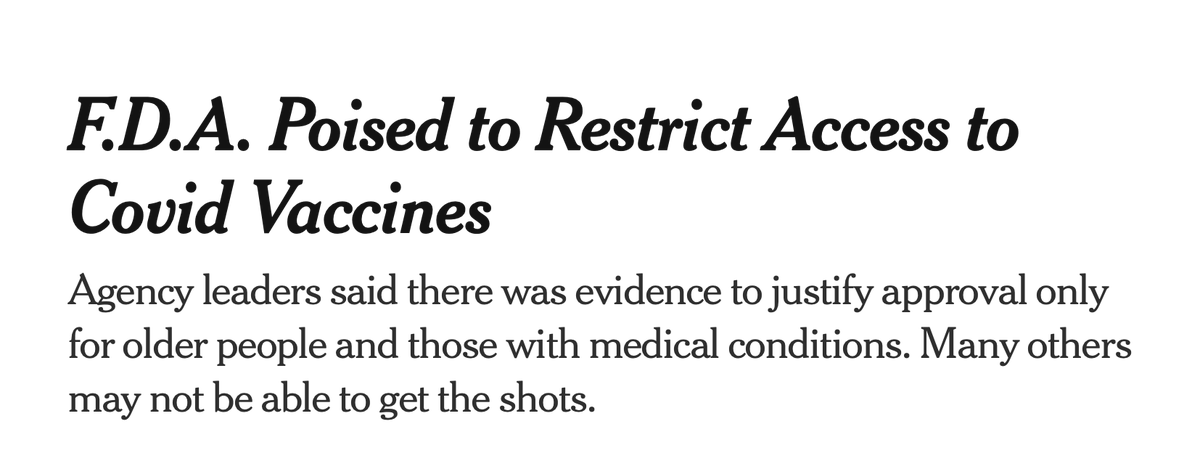
Under new leadership — who spread misinformation throughout the pandemic — the FDA announced it will limit Covid vaccines to adults over 65 & those with certain medical conditions. Covid continues to spread & cause harm. This an anti-science move that will kill more Americans.
Dr. Lucky Tran tweet media
English
77
717
2K
112.5K
Todd Kulick
Todd Kulick@kulick·
Spectacular take on why trade deals are hard and the current US process is the wrong way to get them, and worse, it replaced better processes that actually had a chance of working… open.substack.com/pub/matthewygl…
English
0
0
0
11
Todd Kulick retweetet
Joscha Bach
Joscha Bach@Plinz·
AI automation is bad for people who see their work as a terminal value (it’s good that I do the thing I do) but good for people who see work as instrumental to building and creating (it’s good that I can make this thing happen). Many people will have to reconsider their identity
English
90
158
1.2K
58.7K
Todd Kulick retweetet
GrowSF
GrowSF@GrowSF·
It's been over two decades since SF adopted the "housing first" model for homelessness. While it serves some well, it fails the most vulnerable. Here's how we got from good intentions to bad outcomes. growsf.org/research/2025-…
English
20
27
301
581.1K
Todd Kulick retweetet
Anna Bross
Anna Bross@AnnaCBross·
Attempts to disparage and discredit The Atlantic, our editor, and our reporting follow an obvious playbook by elected officials and others in power who are hostile to journalists and the First Amendment rights of all Americans.
Anna Bross tweet media
English
5.1K
9K
39.8K
1.7M
Todd Kulick retweetet
Samo Burja
Samo Burja@SamoBurja·
As far as I can tell, the most notable political science results of the 21st century is democracy cannot work well with low fertility rates. All converge on prioritizing retirees over workers and immigrants over citizens escalating social transfers beyond sustainability.
English
316
1.2K
11.7K
787.8K
Todd Kulick retweetet
Peter Hague
Peter Hague@peterrhague·
Does anybody else feel that the pandemic was a much bigger break in society than we knew at the time, or that we can even see now? Like in 20-30 years it’s going to be clearly seen as a tipping point.
English
2.8K
3K
70.2K
4.8M