Matteo Di Bernardo

197 posts

Matteo Di Bernardo

Matteo Di Bernardo

@mat10_d

PhD student @MITCSBPhD with @iaincheeseman, previously @FulbrightPrgrm Nigeria, @columbiacancer

Cambridge, MA Beigetreten Kasım 2013
1.2K Folgt438 Follower
Matteo Di Bernardo
Matteo Di Bernardo@mat10_d·
We've had so much fun seeing how targeted & steered interventions with Claude improve and accelerate the ways we interpret results in the @iaincheeseman lab! Very thankful to @AnthropicAI's AI for Science program for the support and for highlighting our work!
Anthropic@AnthropicAI

Since launching our AI for Science program, we’ve been working with scientists to understand how AI is accelerating progress. We spoke with 3 labs where Claude is reshaping research—and starting to point towards novel scientific insights and discoveries. anthropic.com/news/accelerat…

English
0
0
1
109
Matteo Di Bernardo retweetet
Iain Cheeseman
Iain Cheeseman@iaincheeseman·
From an accidental discovery of hidden biology to a new framework to understanding and diagnosing rare disease. Thrilled to share the most recent work from our lab and the amazing Jimmy Ly. wi.mit.edu/news/alternate…
English
0
5
30
3.1K
Matteo Di Bernardo retweetet
Iain Cheeseman
Iain Cheeseman@iaincheeseman·
Today @AnthropicAI released PubMed integration for Claude. No hallucinations. Just real science, real data. As a beta tester, this has been a game changer—like having a supercharged research assistant. Here are 6 prompts that will transform how you search the literature. A 🧵
Anthropic@AnthropicAI

We’re building tools to support research in the life sciences, from early discovery through to commercialization. With Claude for Life Sciences, we’ve added connectors to scientific tools, Skills, and new partnerships to make Claude more useful for scientific work.

English
17
139
1.2K
215K
Matteo Di Bernardo retweetet
Russell Walton
Russell Walton@russelltwalton·
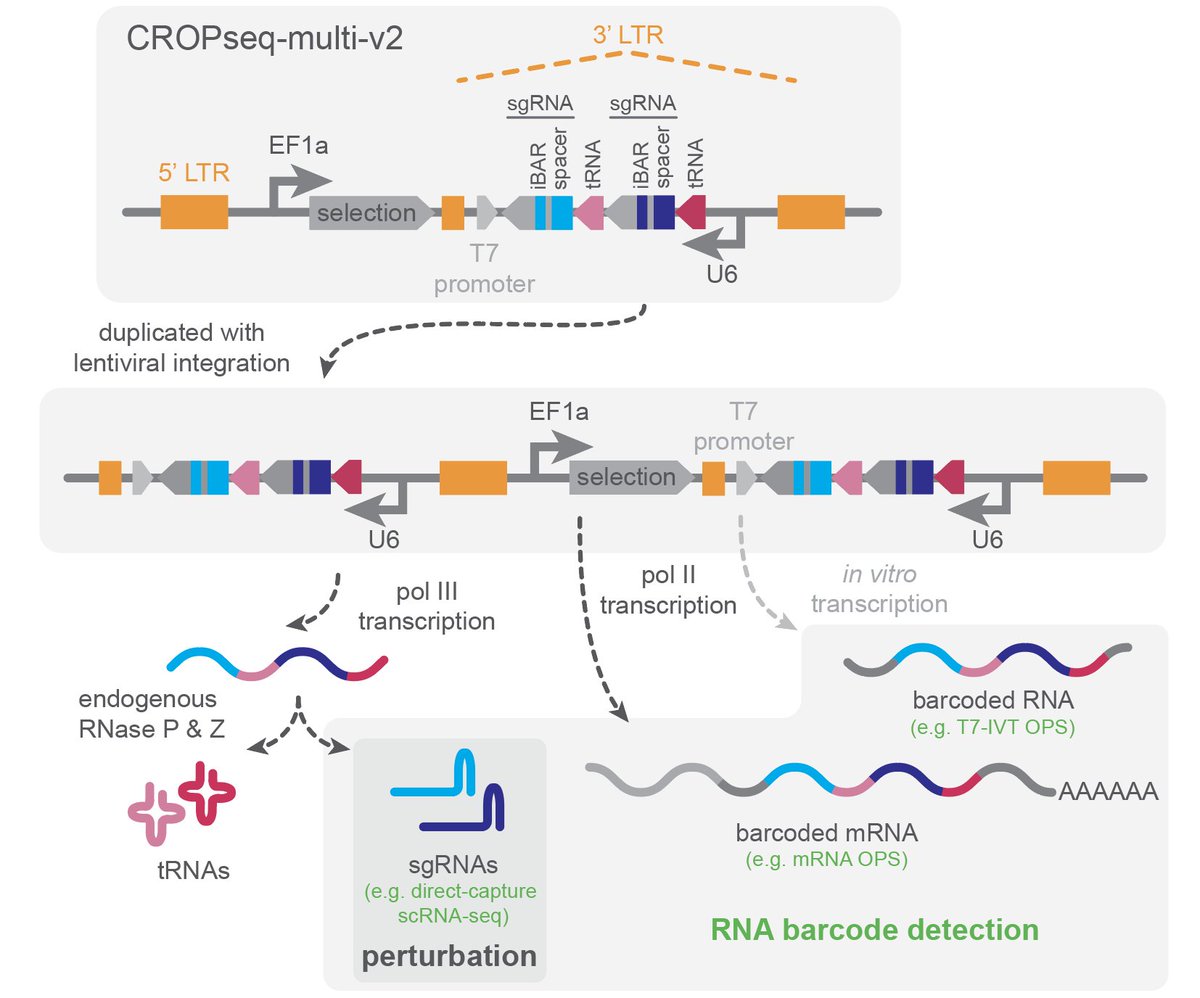
We’re @BlaineyLab sharing a major update to CROPseq-multi, our versatile system for CRISPR screens that is compatible with individual and combinatorial perturbations, diverse SpCas9-based technologies, and multiple high-content, single-cell readouts. biorxiv.org/content/10.110…
Russell Walton tweet media
English
6
46
182
17.4K
Matteo Di Bernardo retweetet
Chan Zuckerberg Biohub Network
🚫 No dyes. No bleaching. 🔬 Just AI + label-free microscopy = vivid virtually stained images New in @NatMachIntell: A deep learning model that enables robust virtual staining across microscopes, cell types & conditions. #CZBiohubSF @mattersOfLight explains:
English
4
86
358
46.3K
Matteo Di Bernardo
Matteo Di Bernardo@mat10_d·
Optical pooled screening is revolutionizing functional genomics by linking genetic perturbations to complex cellular phenotypes at unprecedented scale. But analyzing these massive datasets has been a major bottleneck - researchers face fragmented tools, multiple format conversions, and lack of standardized frameworks. Together with Roshan Kern, Alexa Mallar, and Andy Nutter-Upham, we developed Brieflow, the first end-to-end computational pipeline for optical pooled screening analysis
Matteo Di Bernardo tweet media
Iain Cheeseman@iaincheeseman

Optical Pooled Screening has transformed large-scale cell biology, but lacks robust end-to-end computational strategies to process these Tb-sized datasets. New from Di Bernardo et al (@mat10_d): Brieflow. A game changer for OPS + new biological insights biorxiv.org/content/10.110…

English
2
2
11
1.9K
Matteo Di Bernardo
Matteo Di Bernardo@mat10_d·
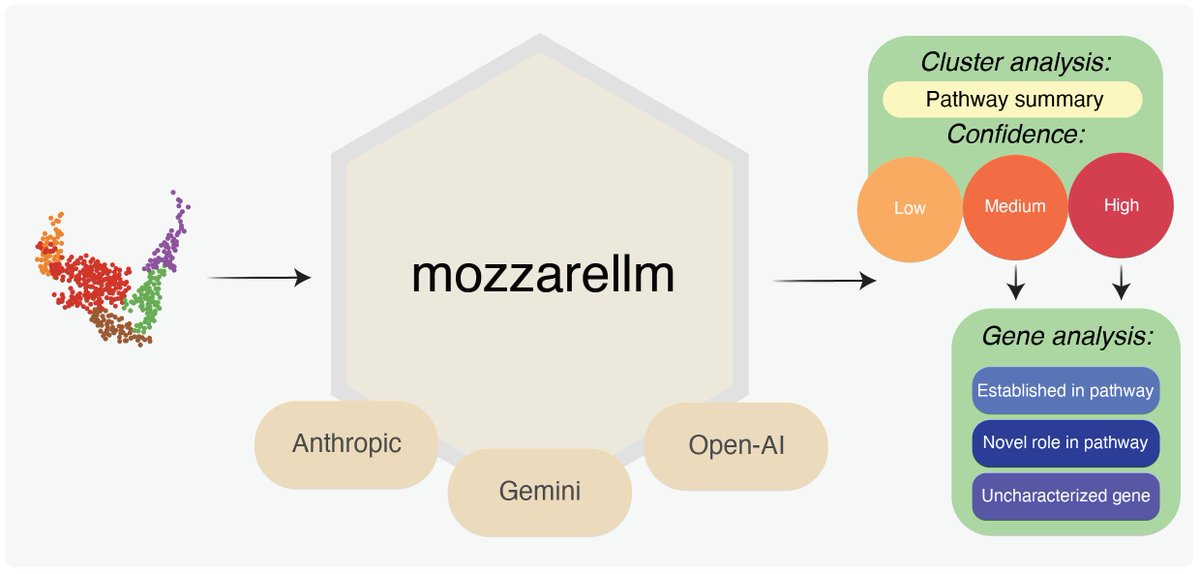
We validated Brieflow by reanalyzing the massive "Vesuvius" dataset: 5,072 genes across 70+ million cells with multiple phenotypic markers. Our improved pipeline uncovered functional relationships completely missed in the original study, including coherent mitochondrial gene clusters, novel ribosome biogenesis components that we experimentally validated, refined MYC transcriptional networks, and unexpected connections between mRNA processing and vesicular trafficking. We also developed MozzareLLM (github.com/cheeseman-lab/…) for automated biological interpretation and candidate prioritization
Matteo Di Bernardo tweet media
English
1
1
1
122
Matteo Di Bernardo retweetet
Whitehead Institute
Whitehead Institute@WhiteheadInst·
"AI: Advancing Foundational Biology," a symposium exploring AI's impact on biology research, is happening one week from tomorrow. Register: wi.mit.edu/events/ai-adva…
Whitehead Institute tweet media
English
0
1
1
650
Matteo Di Bernardo retweetet
Iain Cheeseman
Iain Cheeseman@iaincheeseman·
New preprint drop! Check out work from Jimmy Ly et al for how protein isoforms generated by alternate translation initiation create dual localization, contribute to mitochondrial function, and are mutated in disease. Tweet-tutorial thread below. biorxiv.org/content/10.110…
Iain Cheeseman@iaincheeseman

New preprint countdown! Mitochondria are cells within our cells. They need the same core activities - replication, transcription, translation. How do cells enable these diverse activities in both compartments? We uncover an unexpected strategy with ancient origins. Stay tuned!

English
0
14
55
6.8K
Matteo Di Bernardo retweetet
Wei Li
Wei Li@davidliwei·
Our most recent Nature Cell Biology paper describes an innovative Perturbation-response Score (PS) method to decode heterogeneous responses of cells to perturbations at single-cell level. Particularly helpful for analyzing Perturb-seq data. nature.com/articles/s4155…
English
4
37
195
21.1K
Matteo Di Bernardo retweetet
Mo Lotfollahi
Mo Lotfollahi@mo_lotfollahi·
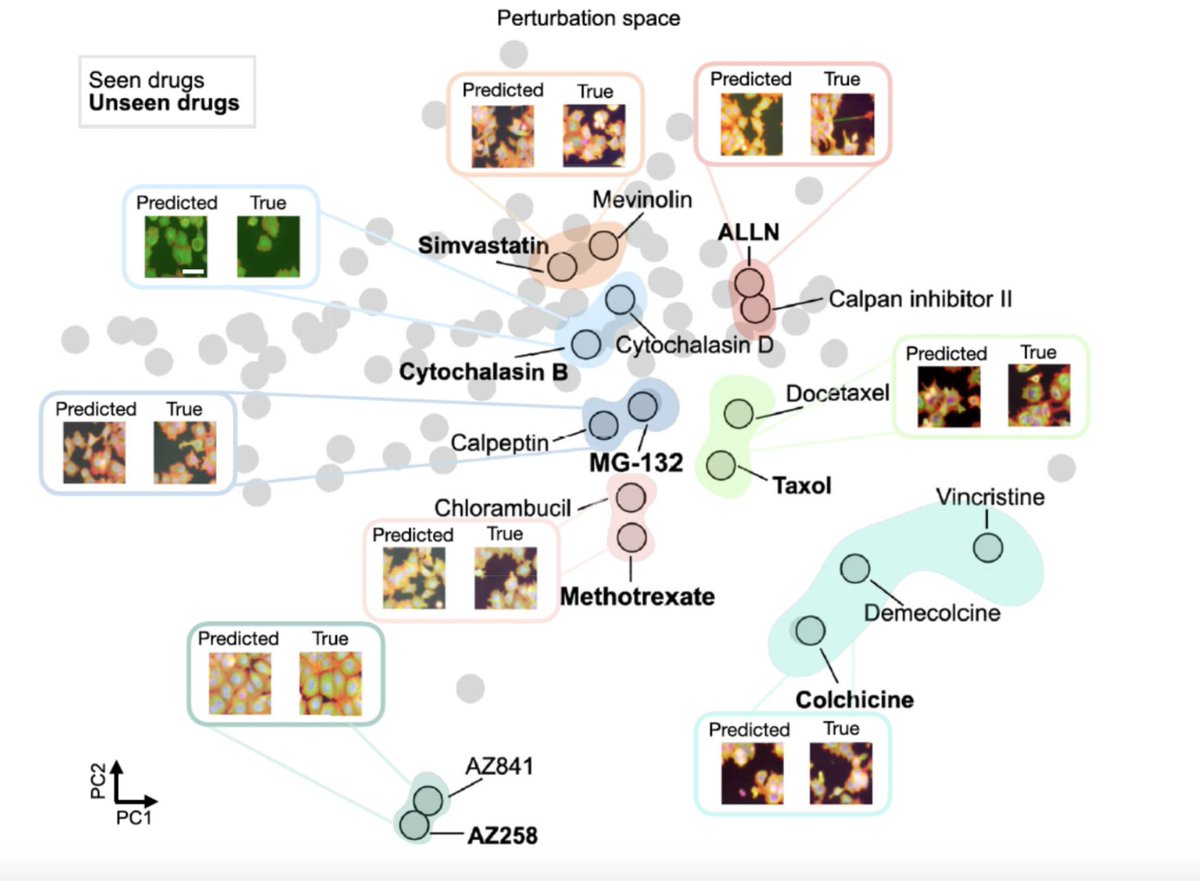
(1/8) IMPA is published now in @NatureComms. (a) It can generate phenotypic cell painting/microscopy data images under unseen drug and genetic perturbations. (b) It learns a perturbation map of treatment similarities (small molecules together with genetic) and (c) it corrects batch effects in microscopy data. This was @ale__palmaa’s master’s thesis, which I supervised with @fabian_theis. link to the paper: shorturl.at/USp57
Mo Lotfollahi tweet media
Mo Lotfollahi@mo_lotfollahi

1/10 image-based screening advanced drug discovery but scaling to massive perturbation space is hard! Given a cell image, we asked if we could predict the morphological effect induced by a perturbation! Led by @ale__palmaa & w @fabian_theis we propose IMPA tinyurl.com/yy4jfn4h

English
4
26
100
13.2K
Matteo Di Bernardo retweetet
Iain Cheeseman
Iain Cheeseman@iaincheeseman·
New preprint w/ surprising insights into proteasomes + mitosis. Océane Marescal found strikingly different cellular phenotypes for proteasome knockouts. 19S lid depletion results in ubiquitin-INDEPENDENT degradation of KIF11 motor + monopolar spindles. biorxiv.org/content/10.110…
English
1
8
21
4.2K
Matteo Di Bernardo retweetet
Ally_Nguyen
Ally_Nguyen@AllyNguyen9·
Excited to share that the Nguyen lab website is live Nguyenlab.org ! Check out what we are working on and if you are at ASCB next week come say hello! We will be presenting a poster Monday at board B277
English
3
12
64
8K
Matteo Di Bernardo retweetet
Anne Carpenter, PhD
Anne Carpenter, PhD@DrAnneCarpenter·
Now on biorxiv! The JUMP-Cell Painting Consortium’s paper: “Morphological map of under- and over-expression of genes in human cells” This is the genetic perturbation portion of the JUMP’s dataset; our chemical perturbation paper will come in a few months biorxiv.org/content/10.110…
English
4
24
116
14.7K