Michy(❖,❖)@mickyinho
Nobody really talks about the hardest part of robotics.
• Not the demo.
• Not the headline.
• Not the moment a robot finally works on its own.
The real work happens long before that.
It happens in silence. In repetition. In thousands of hours where a human sits behind a screen, manually controlling a robot arm, teaching it how the physical world actually behaves.
@PrismaXai is focused on the overlooked layer.
And once you see it, you start to realize something important. Most of the physical AI conversation is skipping the part that matters most.
Think about how humans learn.
A child does not wake up and start walking. There is a process. Slow, messy, and full of failure. They crawl. They fall. They adjust. They try again. Every movement teaches something new.
Learning comes from real interaction, not controlled perfection.
Robots are no different.
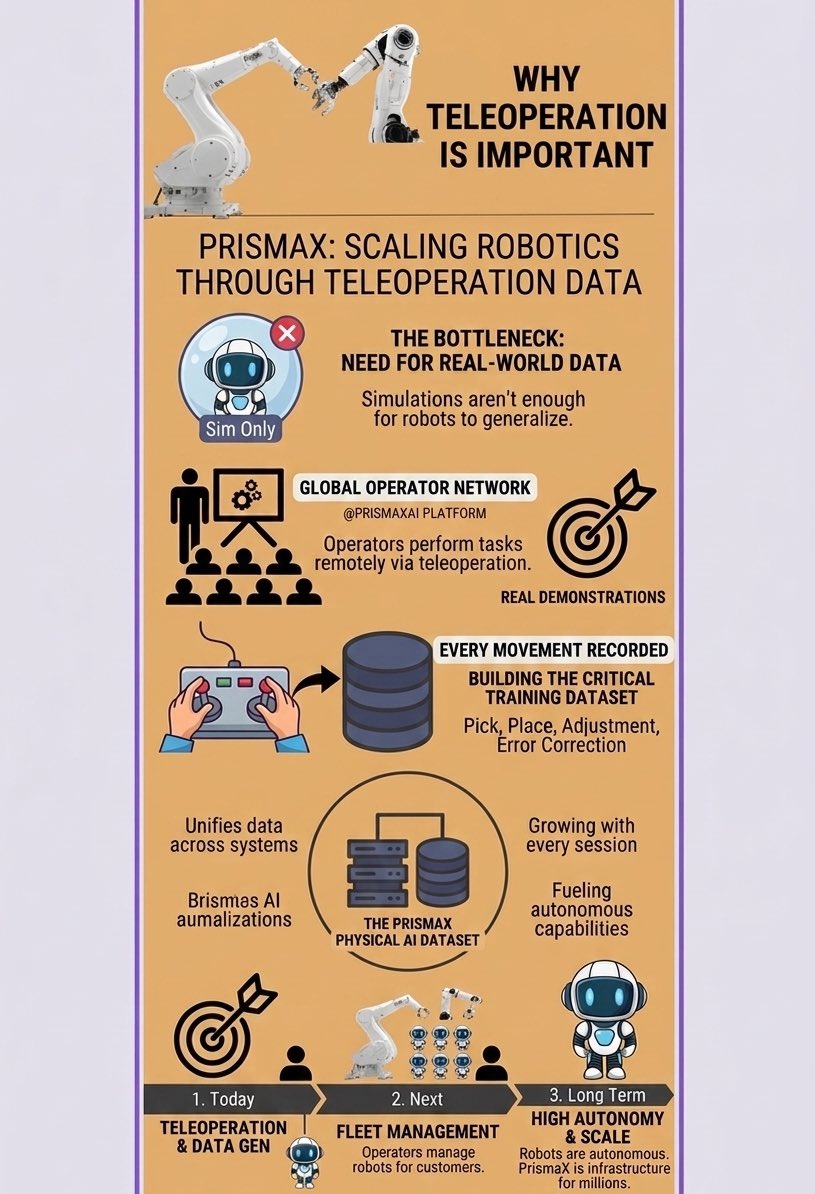
Before autonomy is possible, a robot needs exposure. It needs to observe how actions play out in real environments. It needs to see how decisions are made, how mistakes happen, and how those mistakes get corrected in real time.
In the real world, where nothing behaves exactly as expected.
This is where PrismaX stands out.
The system is simple in concept, but powerful in execution.
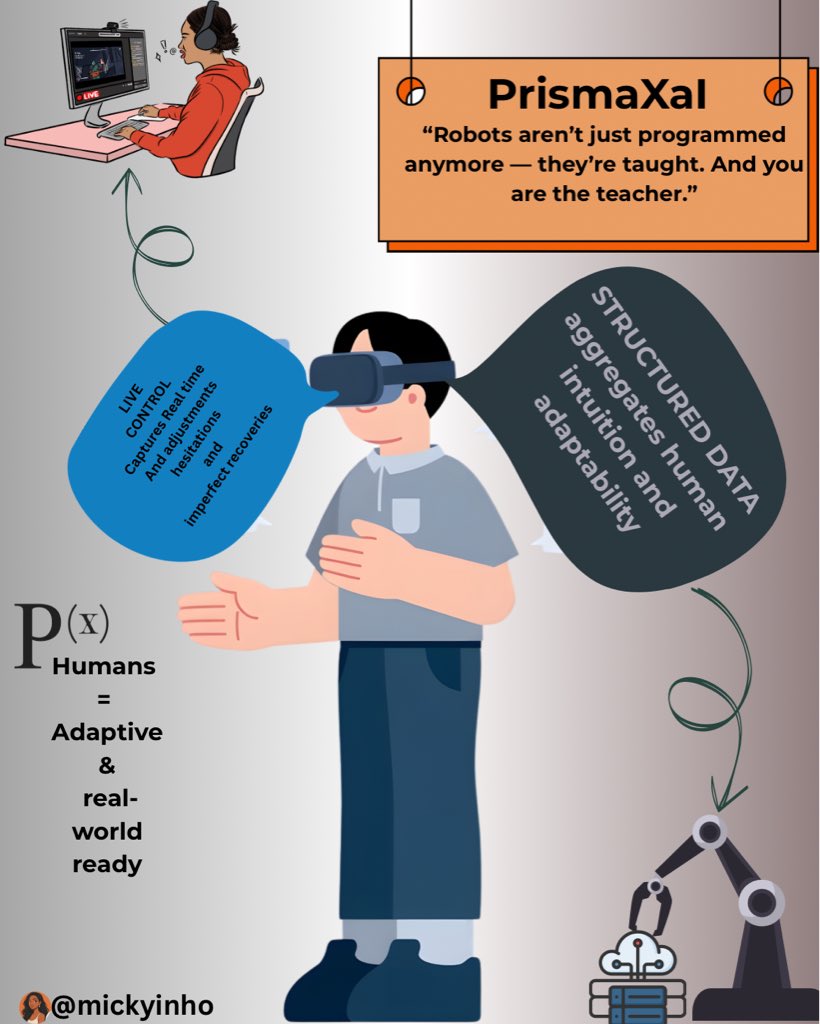
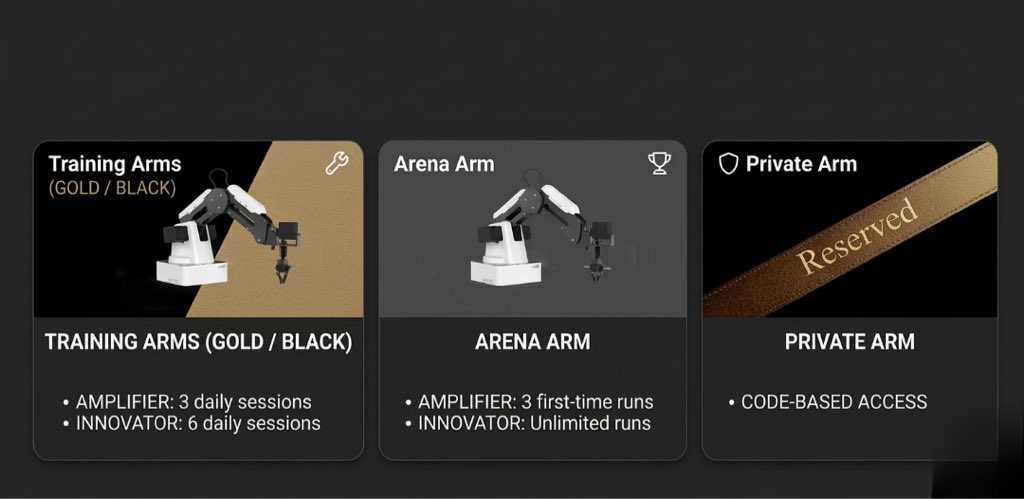
A human logs in and takes control of a robot arm remotely. Every action is captured. Every movement, every correction.
The data becomes training material.
Now scaled across a network of operators, across time, across different environments. What you get is not just data, but experience. Layered, diverse, and grounded in reality.
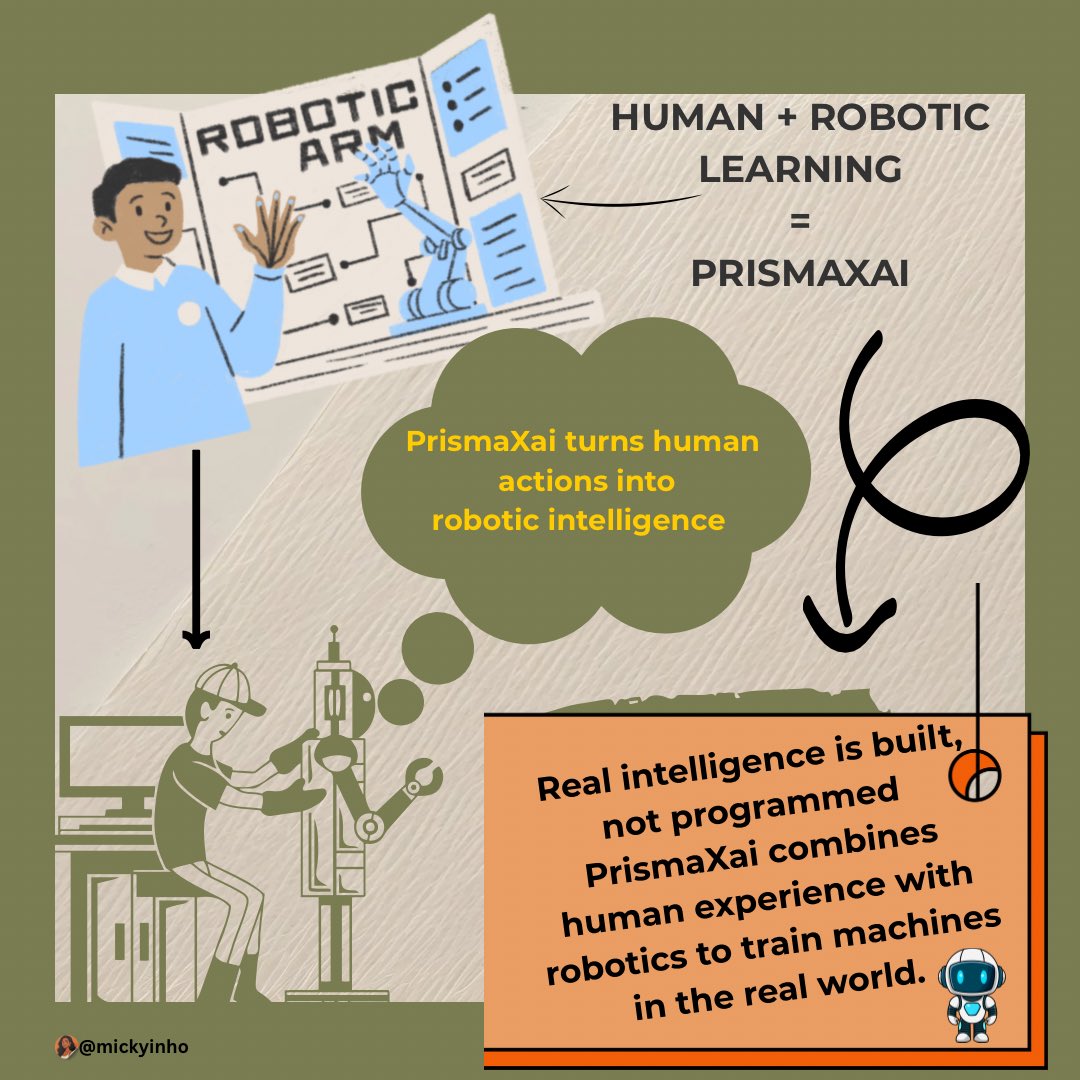
That is how a robot begins to understand the world. Real behavior shaping real intelligence.
This is the part the industry often avoids.
It is easy to showcase hardware. Easy to publish model benchmarks. Easy to promise full autonomy.
But there is a fundamental question most people ignore.
Where does real-world understanding actually come from?
The physical world is inconsistent. Movements are imperfect. Outcomes are unpredictable. And the unpredictability is not a problem to eliminate. It is the training ground.
It is what prepares systems for scenarios they were never explicitly programmed for.
PrismaX is building directly into the reality.
As a working system that is already collecting, already learning, and already improving with every single session.
They are not trying to remove humans too early.
They are using human input as the foundation. As the bridge between zero capability and true autonomy.
And that approach feels different.
More grounded. More practical. More aligned with how intelligence, in any form, is actually built.
• Real robots.
• Real operators.
• Real data.
The future of physical AI is not being imagined.
It is being trained.
And right now, the training is happening in real time.
The operator could be you.
🌐 app.prismax.ai