

Otto Deggeller
12.1K posts

Otto Deggeller
@ottodeggeller
Eerst mijn vrijheid terug. De rest komt later. (no health without freedom)
Culemborg Beigetreten Aralık 2010
309 Folgt291 Follower

Why is sugar harder to kick than alcohol?
You can avoid pubs. You can avoid the wine aisle. You can decline a drink with a polite "I don't" and most people respect it.
Try declining sugar. Try going to a birthday, a wedding, a funeral, a christening, a work event, a date, a dinner party, a child's school play, a Sunday lunch at your in-laws, a meeting with biscuits on the table.
Try doing this and watch what happens. Watch the offence taken. Watch the negotiation. Watch the "just a small one". Watch the "I made it specially". Watch the room rearrange itself around your refusal.
Sugar is woven into the social fabric in a way alcohol never was. Alcohol you can decline at age twenty-five and most rooms will accept it. Sugar you have been declining since you were three and the room still does not accept it.
The hardest substance to give up is the one nobody acknowledges as a substance at all.
English
@SanderSassen @RobJetten En wij maar thuis met Teams ploeteren... 🤦♂️
Nederlands

Onze klimaatdrammer @RobJetten is onderweg naar Sint Maarten. Kennelijk kent hij geen vliegschaamte? Of zijn zijn verkiezingsbeloftes, en principes, geen knip voor de neus waard?

Nederlands
@csgoenjoyer1337 @ProfTimNoakes @ValMThatcher The question remains: what is optimal. Maybe zero isn't, maybe 150gr/hour isn't...
Get rid of ballast before the race is a nobrainer...
businessinsider.com/tour-de-france…
English

@ProfTimNoakes @ValMThatcher @ottodeggeller Could be because it’s very obvious to the athletes themselves that without carbs their high intensity performance hurts. Not one single top 3 finish in any high aerobic event from a low carb athlete has to mean something, except to the scientists who need control groups I guess
English
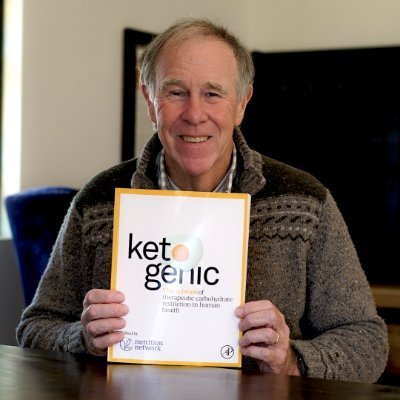
Some laboratory facts about the oxidation of ingested (exogenous) carbohydrate (CHO) during exercise that need to be considered.
1. There is a time delay during which the oxidation ramps up during exercise. It takes about 90 minutes for maximum rates of about 1.8g/min to be achieved from the optimal ingested CHO solutions.
2. During the first hour of a 2 hour marathon one might predict average exogenous CHO oxidation rates of about 1g/min for a total of 60 g oxidized during the first hour. It may be more than this in persons who pre-load their intestine with a large CHO bolus as did Kejelcha prior to the London Marathon but it will not equal the average rate at which he ingested CHO during the race (~120g/hr). Thus after the first hour he will have accumulated a positive exogenous CHO balance of perhaps 60g.
2. During the second hour the average rate of exogenous CHO oxidation will be increased perhaps up to 1.5g/hr for a total oxidation during the second half of the race of 90g. But this is still less than the average rate of CHO ingestion (~120g/hr), leaving the athlete in a positive exogenous CHO balance of perhaps 90g.
3. From 90-120 minutes exogenous CHO oxidation rates remain at the peak value of about 1.8g/min. Thus after 90 minutes the athlete will be oxidizing ingested CHO at about 108g/min, close to the ingestion rate. Yet most are slowing down during this part of the race.
4. As most athletes ingesting CHO at this rate slow down in the final few km of the marathon race, their slowing cannot be because suddenly their rate of exogenous CHO oxidation has fallen below 1.8g/min. This indicates that the reason they slowed down is not because they have a "metabolic fuelling" problem. Perhaps the reason they ran fast in the earlier part of the race is also not because they had a superior fuelling strategy.
5. The obvious question is: What happens to the excess CHO ingested during exercise? And more importantly, if ingested CHO has to be taken in excess of requirement in order to run a sub-2hr marathon, why is this.
It's interesting that the CHO fuelling approach of Kejelcha (as advised by the Spanish company - Santamadre santamadreco.com/en/ - directing his fuelling strategy) differs in many ways from the fuelling strategy adopted by the world record holder Sabastian Sawe, who is advised by the Swiss company, Maurten.
The Santamadre approach seems to be the ingestion of more gels (which produce much higher CHO concentrations in the mouth and stomach) which they refer to as a "CNS (central nervous system) fatigue blocker" designed to "help control muscle damage and reset fatigue. It was one of the key parts of our strategy, exactly as we have seen in the specific training sessions".
Is Santamadre hinting that perhaps it's discovered that high rates of CHO ingestion during marathon racing improves performance by effecting something other than the athlete's muscle energy metabolism, by "resetting fatigue"?
Considering all this, my colleague and co-autheor of the next edition of @LoreofRunning1, Dr Paul Laursen @PaulBLaursen has hypothesized that the repeated ingestion of highly concentrated CHO could activate a specific (well established but currently under-appreciated) neural pathway from brain to skeletal muscle that maintains skeletal muscle function during prolonged exercise. That is, that repeated CHO stimulation of the upper gastrointestinal tract activates CNS pathways that sustains muscle durability/resilience/fatigue resistance even as it should be developing during prolonged competition in elite athletes.
CNS fatigue blocking indeed! Except it's perhaps happening in the exercising muscles. Intriguing hypothesis.
@PaulBLaursen @PhilipPrins11 @AKoutnik @sweatscience @Brady_H @BenBikmanPhD @theplews1 @stevemagness @LoreofRunning1 @zoeharcombe @bigfatsurprise @CarynZinn @grantsnz @TheNoakesF
RUN’IX@RUN_IX
🍼 Découvrez la 𝙨𝙩𝙧𝙖𝙩𝙚́𝙜𝙞𝙚 𝙣𝙪𝙩𝙧𝙞𝙩𝙞𝙤𝙣 millimétrée de Yomif Kejelcha (🇪🇹) à l’occasion de son marathon en 1H59’41 à Londres ! Le plan était simple : survivre 42,195 kilomètres 💪 𝙋𝙤𝙞𝙙𝙨 → 59,5 kilogrammes 𝙏𝙖𝙞𝙡𝙡𝙚 → 1,87 mètres 𝙍𝙚́𝙨𝙚𝙧𝙫𝙚 𝙜𝙡𝙮𝙘𝙤𝙜𝙚̀𝙣𝙚 → 580 grammes 𝘼𝙥𝙥𝙤𝙧𝙩 𝙜𝙡𝙪𝙘𝙞𝙙𝙞𝙦𝙪𝙚 𝙥𝙡𝙖𝙣𝙞𝙛𝙞𝙚́ → 287 grammes Son plan nutrition à la veille du marathon : 𝟴𝗛𝟬𝟬 → Pain blanc avec miel + banane 🍌 𝟵𝗛𝟯𝟬 → Boisson de récup’ + banane 𝟭𝟭𝗛𝟯𝟬 → Boisson Unusual Nitrous 🍼 𝟭𝟮𝗛𝟬𝟬 → Riz, pomme de terre + poulet rôti 𝟭𝟲𝗛𝟬𝟬 → Pain blanc avec miel 𝟭𝟴𝗛𝟯𝟬 → Boisson Unusual Nitrous 🍼 𝟮𝟬𝗛𝟬𝟬 → Riz, pomme de terre + banane 🍌 Son plan nutrition le jour J du marathon : À lire ici ➡️ run-ix.co/4uze31e. « La marge était minimale et l’objectif était clair : arriver au kilomètre 35 avec les réservoirs aussi pleins que possible pour jouer la victoire ! » Histoire, méthode et 𝙙𝙚́𝙩𝙖𝙞𝙡𝙨 très intéressants 👀
English
Nederlands

Hey, Wierd Duk.
Leuk dat je mij blokkeert hoor, maar praat dan niet lafjes over mij.
Misschien kan jij eens GGZ-patiënt en tevens collega @BartNijman aanspreken op zijn baby-killer fantasie.
Maar over een dode baby fantaseren en filosoferen, daar zwijg je.
Echter, je zit wel weer als een domme boomer geknipte fragmenten van @Joey_Ventura_ te beluisteren en op basis daarvan mij een GGZ-patiënt te noemen.
En jij noemt jezelf journalist, terwijl je door De Telegraaf gedegradeerd bent als opiniemaker, omdat zelfs zij jou al meer dan zat zijn.

Nederlands
@ivan_8848 The market is alway right: You get a good indication of the value of the name "Vuitton" ..
English

THE GREAT LUXURY SCAM EXPOSED
Louis Vuitton shoes assembled and packaged in China for a mere $55 end up selling for $2,250 each.
x.com/camille_moscow…
The same goes for Gucci, Prada, and Hermès: low-cost production in Asia, a "Made in Italy/France" label slapped on afterward, and a markup of over 4,000% for the logo and marketing.
While influencers and the Kardashians promote these brands at exorbitant prices, Chinese factories sell the same shoes without the brand name for a tenth of the price. Luxury is, above all, a scam based on perception. The customer pays for the dream, not the product.
English
Nederlands
@ADnl Wat een raar artikel. Het grootste deel van de kosten is belasting, niet de grondstoffen.
Nederlands

Het chagrijn van de hoge olieprijzen is voor de automobilist, de lol voor de aandeelhouders van de grote oliemaatschappijen
ad.nl/economie/frust…
Nederlands
@fleroy1974 @JumboSupermarkt And eh... @JumboSupermarkt . Raapzaadolie in mijn 🐄🥩?
x.com/SamaHoole/stat…
Sama Hoole@SamaHoole
The fat in your bottle of rapeseed oil does not sit politely in your bloodstream waiting to be burned. It rebuilds you. It hijacks your endocannabinoid system, flooding the brain with 2-AG and anandamide, the molecules that trigger the munchies, except the tap never closes. It oxidises in your cell membranes, generating 4-HNE and malondialdehyde, cytotoxic compounds that damage DNA, proteins, and lipids. It corrodes cardiolipin in the inner mitochondrial membrane, sabotaging ATP production from the inside. It accumulates as oxidised metabolites in the liver, driving fatty liver disease and inflammasome activation. It suppresses testosterone within an hour of a single high-PUFA meal. It oxidises in the skin under UV, lowering your sunburn threshold. It drives insulin resistance through oxidative stress on pancreatic beta cells. It bloats adipocytes until the fat cells cannot expand any further and start spilling lipids into the bloodstream. It has a half-life in adipose tissue of around two years. The seed oil you ate in 2024 is still in you. It oxidises in the bottle. In the pan. In your blood. In your tissues for years afterwards. This is one molecule. It is now the single largest source of fat calories in the modern Western diet.
Nederlands
In 2019, a high-profile coordinated campaign, backed by the WEF, sought to shift global diets toward semi-vegetarianism by force, with “alternative proteins” meant to fill the gap left by a decimated meat intake. It failed. But is it now dead and buried, or ...?
Frédéric Leroy@fleroy1974
English
@fleroy1974 @JumboSupermarkt Ik lust geen tuinboneneiwitisolaat...🤮
Nederlands
@markkaplan20 My 2 cents: Tri/HDL is easy. Do it yourself. And some ketones in the evening 3 hours after meal (0.3 or higher?) are a proxy for low insulin.
Mood swings (HANGRY 😡) due to a glucose hypo are an alarm-🔔.
I'm interested in signals before you go to the doctor.
Thank you! 🙏
English

Otto good questions both.
Yes you can be lean and still insulin resistant. The term is TOFI. Thin outside fat inside. Visceral fat hidden around the organs. Liver fat. Pancreatic fat. The mirror lies.
Carb tolerance is real but rare. Most people who think they have it just have not done the right tests yet.
Visible signs without lab work. Post meal energy crashes. Brain fog after carbs. Waking at 3am. Skin tags. Dark patches at the neck. Belly fat that will not move.
But the only definitive answer is the data. Fasting insulin. HOMA-IR. Triglyceride to HDL ratio. Three cheap tests. Most doctors will not order them. Order them yourself.
English
Fellow HealthTruth seekers.
I want to hear from you.
Instead of me choosing the next thread, you choose it. Tell me what you want to learn the truth about.
I have spent 6 years studying root cause medicine. Reading studies buried in journals from the 1960s and 1970s. Published by researchers who lost their funding for telling the truth.
Hundreds of thousands of years on this planet. Different genetics. Different continents. No heart disease. No diabetes. No autoimmune epidemics.
Then we changed the food. And everything broke.
You pick the topic. I will build the thread your doctor wishes you would never read.
Heart disease. Insulin. Thyroid. Statins. Seed oils. Autoimmune. Weight loss. Inflammation. Labs your doctor never orders.etc
Reply below. I will build it.
❤️🙏💪💥
English


🚨New Feldman Protocol Dropping
special guest @KetoCarnivore
🔥 What if keto isn’t low-carb enough?
🥓 What if meat was never the problem?
🧩 Do carbs cause diabetes—or reveal it?
🤔 What if diet debates need linguistics?
Full episode next tweet ⬇️⬇️⬇️
English
@SteveBennettMhP Do you have to measure insulin to detect metabolic disease in lean people (with no visible visceral fat)? Or are there easier signs?
English

Skinny doesn’t mean safe.
You can be lean, stressed, sleep deprived, snacking all day, and have insulin elevated quietly in the background. The body knows. The cells respond.
Thin people get metabolic disease too. We just don’t look for it.
English
Nederlands

Ik schrik hiervan @ICOONtheater….VvMU komt niet overeen met waar jullie voor staan? #Amersfoort #030
Rogier Kahlmann@RKahlmann
Nederlands
@Natas___ja @SanderSassen Dank voor je bijdrage! Maar waarom 'koekoek' dan?
Nederlands

@ottodeggeller @SanderSassen Koekoek.
Een huurder die vermogen opbouwt is een utopie.
Zwolle, Nederland 🇳🇱 Nederlands
Jona van Loenen heeft zeker een Temu-cursus economie gevolgd? Prijzen stijgen vooral door inflatie en schaarste: dat komt door overheidsbeleid. Bovendien zijn woningen niet meer waard geworden: je kunt niet na verkoop ineens veel goedkoper een vergelijkbare woning kopen.
Pauw & De Wit@pauwendewit
Tussen kopers en huurders bestaat een vermogenskloof. Kopers bouwen vermogen op met hun woning, terwijl huurders die mogelijkheid niet hebben. Hoe zou je deze kloof kunnen verkleinen? Econoom Jona van Loenen stelt: “De woningmarkt is de grote ongelijkmaker in deze samenleving.” #pauwendewit
Nederlands
@leest_mee @SanderSassen goed punt! Voor een huis in eigendom zorg je beter. Dat zie je ook met leaseauto's.
De onderhoudskosten vergeten veel mensen. En dat begint al met de schilderbeurt. Een huurder betaalt voor de professionele schilder (in de maandelijkse huur), de eigenaar pakt zuchtend de ladder.
Nederlands

Dat laatste is denk ik waar we eens beter naar moeten kijken.
Als huiseigenaar betaal ik rente, dat is vergelijkbaar met huur. Dan betaal ik af en wordt steeds meer volwaardig eigenaar van het huis. Maar ik heb er ook nog de taak bij om het huis te onderhouden en zelfs te ontwikkelen. Doe ik ook met liefde, is niet gratis. Niet alleen met geld, ook met tijd.
Mensen die huren, investeren die tijd niet. Die gaan er veelal van uit dat ze huur betalen dus recht hebben op een goed onderhouden woning.
Geen besef om hun eigen nest op orde te houden, altijd kijkend naar de buitenwereld.
Misschien is het meer de mentaliteit die ze weerhoudt om vermogen op te bouwen en hangt dat samen met de keuze om te huren, dan dat huren voorkomt dat je vermogen opbouwt.
Nederlands