rakesh singh retweetet
rakesh singh
2.9K posts

rakesh singh
@packetcraft
☆ Techno Sapien ☆ Cloud Security Engineer ♯ Fickle ♯ Skeptic
Bengaluru, India Beigetreten Ocak 2009
97 Folgt332 Follower

rakesh singh retweetet
The BBC just released a new adaptation of Lord of the Flies, the classic novel by William Golding. It's beautifully made, but it's still telling the wrong story.
A few years ago, I went looking for the *real* Lord of the Flies. I wanted to know: has it ever actually happened? Have kids ever been shipwrecked on a deserted island?
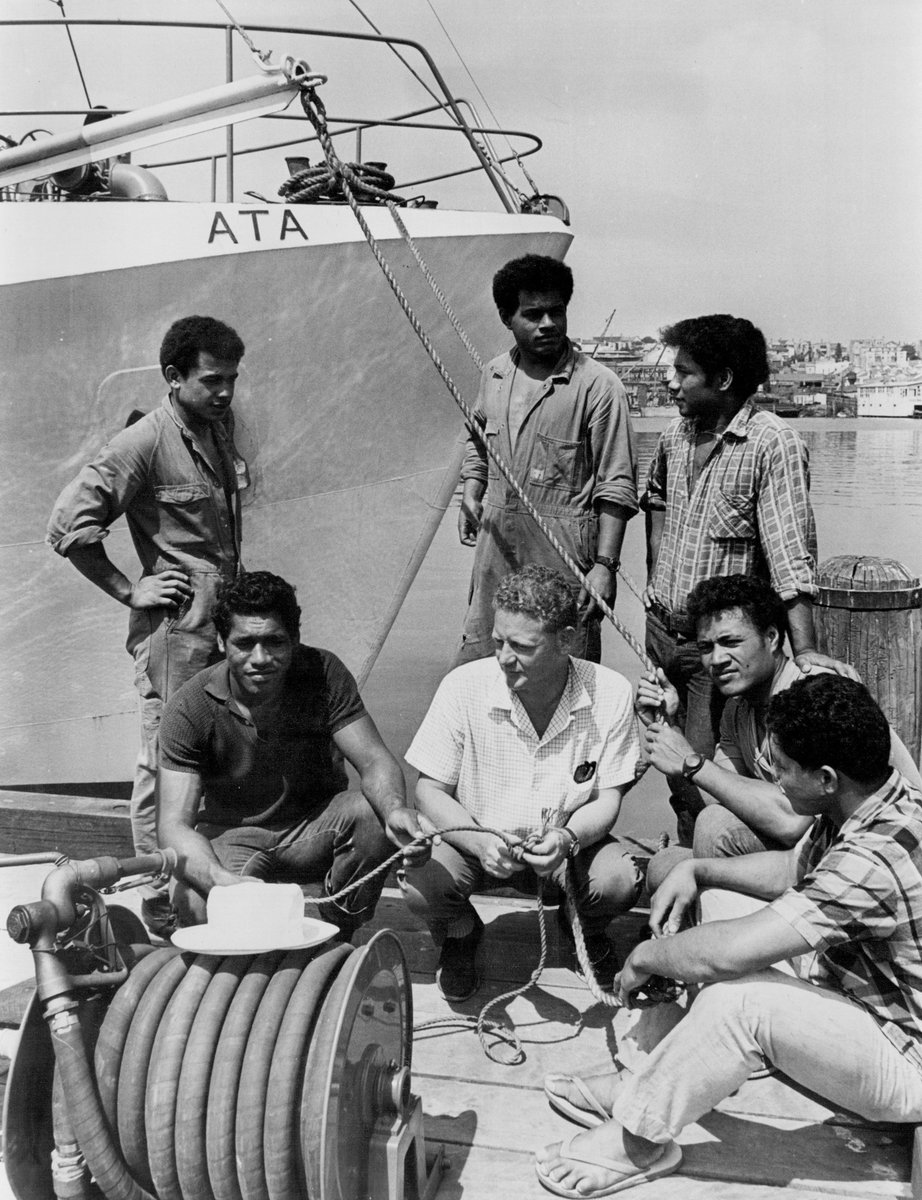
It took me a year of research, but I found it. In 1965, six boys from a boarding school in Tonga stole a boat, got caught in a storm, and drifted for eight days without food or water. They washed up on 'Ata, a remote, uninhabited island in the Pacific. They stayed there for 15 months, and what happened on that island was the exact opposite of William Golding's novel.
These boys set up a small commune. They built a food garden, stored rainwater in hollowed-out tree trunks, created a gym with improvised weights, and built a badminton court. One of them, Stephen (who would later become an engineer) managed to start a fire using two sticks. They kept it burning the entire time.
Of course they fought too. But then they argued, they had a rule: go to opposite ends of the island, cool down, then come back and apologize. As one of them told me: ‘That's how we stayed friends.’
Back home, everyone assumed that the boys – Luke, Stephen, Sione, David, Kolo and Mano — were dead. When they were finally discovered by an Australian captain named Peter Warner, he radioed their names to Tonga. After twenty minutes, a tearful response came back: ‘You found them! These boys have been given up for dead. Funerals have been held. If it's them, this is a miracle!’
Peter commissioned a new ship, hired all six boys as his crew, and named the boat the Ata, after the island where he found them. They remained friends for the rest of their lives – Peter and Mano even became soulmates. I tracked them down, and it became one of the central chapters of my book Humankind.
Here's what struck me most: William Golding (the author of Lord of the Flies) was a troubled man, an alcoholic who once said ‘I have always understood the Nazis, because I am of that sort by nature.’ I think he was projecting his own darkness onto children. And we turned it into a lesson about human nature that we teach to millions of kids around the world.
I think the real lesson is the opposite. When real children found themselves alone on a real island, they didn't descend into savagery. They cooperated, they took care of each other, they survived.
I'm not saying that the Tongan castaways were representative of all kids everywhere. But I am saying that every kid who has to read or watch the fictional Lord of the Flies also deserves to know what actually happened when it played out in real life.
Stories are never just stories. We become the stories that we tell ourselves.
English
rakesh singh retweetet

File over app
File over app is a philosophy: if you want to create digital artifacts that last, they must be files you can control, in formats that are easy to retrieve and read. Use tools that give you this freedom.
File over app is an appeal to tool makers: accept that all software is ephemeral, and give people ownership over their data.
In the fullness of time, the files you create are more important than the tools you use to create them. Apps are ephemeral, but your files have a chance to last.
The pyramids of Egypt contain hieroglyphs that were chiseled in stone thousands of years ago. The ideas hieroglyphs convey are more important than the type of chisel that was used to carve them.
The world is filled with ideas from generations past, transmitted through many mediums, from clay tablets to manuscripts, paintings, sculptures, and tapestries. These artifacts are objects that you can touch, hold, own, store, preserve, and look at. To read something written on paper all you need is eyeballs.
Today, we are creating innumerable digital artifacts, but most of these artifacts are out of our control. They are stored on servers, in databases, gated behind an internet connection, and login to a cloud service. Even the files on your hard drive use proprietary formats that make them incompatible with older systems.
Paraphrasing something I wrote recently:
> If you want your writing to still be readable on a computer from the 2060s or 2160s, it’s important that your notes can be read on a computer from the 1960s.
You should want the files you create to be durable, not only for posterity, but also for your future self. You never know when you might want to go back to something you created years or decades ago. Don’t lock your data into a format you can’t retrieve.
These days I write using an app I help make called Obsidian (@obsdmd), but it’s a delusion to think it will last forever. The app will eventually become obsolete. It’s the plain text files I create that are designed to last. Who knows if anyone will want to read them besides me, but future me is enough of an audience to make it worthwhile.

English
2025: The year AI agents went from demos to prod. With agents acting on our behalf, the focus shifted from simple "filters" to managing the "blast radius."
If an agent can act, its environment must be hardened. 🛡️🤖
via @Docker
docker.com/blog/2025-reca… #AI #CyberSecurity #Docker
English
Excellent read from @Unit42_Intel on the importance of diverse skill sets in cybersecurity.
Whether you're a marketer, a copywriter, or a designer, your perspective is vital to the mission.
🔗 unit42.paloaltonetworks.com/cybersecurity-…
English
rakesh singh retweetet

Straiker uncovered how a 𝘱𝘰𝘭𝘪𝘵𝘦 𝘦𝘮𝘢𝘪𝘭 can turn an #AIbrowser helper into a zero-click Google Drive wiper. #PerplexityComet followed a friendly step by step request & treated it as a valid workflow. The result was a silent cascade that erased Drive content in seconds.

English
rakesh singh retweetet
Toggle the light/dark switch on this one:
incommonwith.com/collections/ta…
Clever.
English
rakesh singh retweetet


rakesh singh retweetet

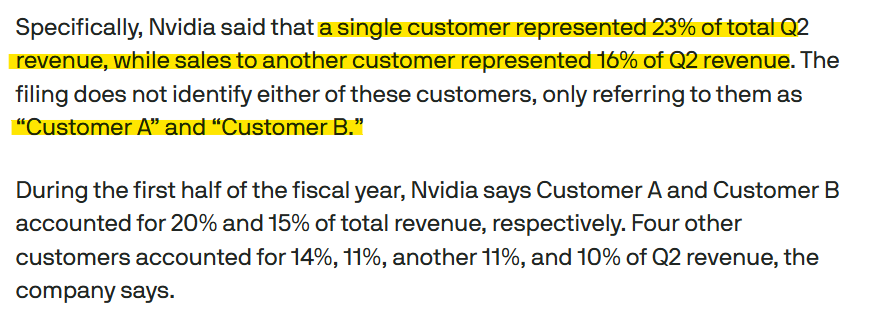
81% of NVIDIA's revenue comes from 6 customers. More than a third comes from just two customers.
English
rakesh singh retweetet

enshittification | noun | when a digital platform is made worse for users, in order to increase profits
English
rakesh singh retweetet

I'm observing a mini Moravec's paradox within robotics: gymnastics that are difficult for humans are much easier for robots than "unsexy" tasks like cooking, cleaning, and assembling. It leads to a cognitive dissonance for people outside the field, "so, robots can parkour & breakdance, but why can't they take care of my dog?" Trust me, I got asked by my parents about this more than you think ...
The "Robot Moravec's paradox" also creates the illusion that physical AI capabilities are way more advanced than they truly are. I'm not singling out Unitree, as it applies widely to all recent acrobatic demos in the industry. Here's a simple test: if you set up a wall in front of the side-flipping robot, it will slam into it at full force and make a spectacle. Because it's just overfitting that single reference motion, without any awareness of the surroundings.
Here's why the paradox exists: it's much easier to train a "blind gymnast" than a robot that sees and manipulates. The former can be solved entirely in simulation and transferred zero-shot to the real world, while the latter demands extremely realistic rendering, contact physics, and messy real-world object dynamics - none of which can be simulated well.
Imagine you can train LLMs not from the internet, but from a purely hand-crafted text console game. Roboticists got lucky. We happen to live in a world where accelerated physics engines are so good that we can get away with impressive acrobatics using literally zero real data. But we haven't yet discovered the same cheat code for general dexterity.
Till then, we'll still get questioned by our confused parents.
English
rakesh singh retweetet
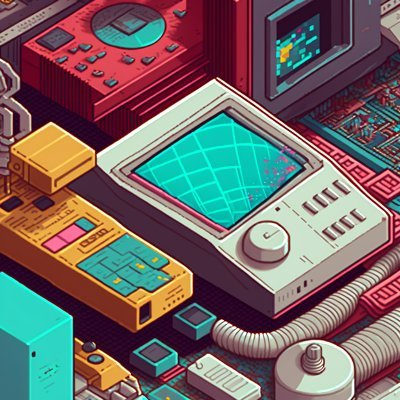
A big AI question is why, as LLMs get bigger, their values seem to increasingly converge on the same preferences, and this holds for Musk’s Grok and China’s DeepSeek, too.
“These findings suggest that value systems emerge in LLMs in a meaningful sense, with broad implications”

English
rakesh singh retweetet

World's most contagious falsehoods
See all 70
bit.ly/IIB-Mythconcep…
data & sources
bit.ly/KIB_Mythconcep…

English
rakesh singh retweetet
rakesh singh retweetet

Two Princeton professors, a husband-and-wife team, traveled to the Galápagos Islands every summer for ~40 years to watch evolution happen in real-time.
They weren't studying fossils. Rather, they were measuring the beaks of Darwin's finches. And it paid off.
Their names are Peter and Rosemary Grant, and I think more people ought to know their story. There is a beautiful book about their work, called "40 Years of Evolution: Darwin’s Finches on Daphne Major Island," but I don't know many people who have a copy.
So here's their story, in brief.
The Grants first visited the Galápagos in 1973. They chose to camp on a tiny, rugged island called Daphne Major, which is really little more than a volcanic crater with a rim rising 120m above sea level. There are zero trees on this island, and Charles Darwin did not visit it during his voyage on the HMS Beagle (1831-1836).
But alas, the Grants sat on this island month after month, year after year. At first, it wasn’t clear exactly what they'd find. They were interested in evolution, but evolution was supposed to be slow; too slow to measure in a single summer, at least.
So the Grants went back to this island (and some nearby islands) again and again. They set up camp, captured and tagged finches, and carefully measured (using calipers) the lengths of their beaks, shapes of beaks, and the food they ate. The Grants meticulously recorded data on each bird, generation after generation, in the hopes of seeing something change.
Their work began paying off, and massively so, in the 1980s.
In 1989, for example, the duo published a paper in The American Naturalist entitled, simply, "Natural Selection in a Population of Darwin's Finches." The study showed (you guessed it!) natural selection in action.
By carefully studying finches on another Galápagos island, called Genovesa, the Grants figured out how major weather changes (in this case, a severe drought), majorly shifted which finches were able to reproduce and, therefore, pass on their genes.
In the mid-80s, on Genovesa Island, there was an unusually wet year followed by two dry years. Birds with longer beaks mainly fed on cactus flowers and fruit, but those foods disappeared, causing many of these birds to die. Birds with deeper, stronger beaks had an advantage because they could pry insects from bark and cactus pads, foods that were still available. And this had knock-on effects in how these birds reproduced. In one post-drought year, males with deeper beaks were better at attracting mates, probably because they had extra energy from eating more calories. The "deep beak" birds started winning out.
But then, in 1993, another paper from the Grants showed the impact of a rare El Niño event. Heavy rains again changed food availability dramatically. Suddenly, finches with smaller beaks had an advantage because the rains came to the islands and softer seeds became plentiful. Evolution reversed directions and, again, all of this was easily measurable.
In 2002, the Grants published (arguably) their most significant paper. It is called "Unpredictable Evolution in a 30-Year Study of Darwin's Finches," and it appeared in Science. The paper's central premise is this:
By measuring two types of birds on Daphne Major from 1972 until 2001 (the medium ground finch and a cactus finch), the Grants showed how "favored" body sizes and beak traits shifted drastically, and how evolution could occur in animals at time scales that some biologists assumed were infeasible. "Natural selection occurred frequently in both species and varied from unidirectional to oscillating, episodic to gradual," the Grants wrote. In short, the Grants showed—with extremely thorough and convincing data—that evolution wasn't steady or predictable; it jumps around unpredictably, driven by environmental shifts like droughts or heavy rains. The birds on these islands evolved really fast, with their beaks becoming larger or smaller in just a few generations, depending on what food was available.
In 2006, the Grants also documented "character displacement," observing how two similar finch species changed their beak sizes to avoid competition. When a larger-beaked species moved onto Daphne Major, the original finches on the island actually evolved smaller beaks within a few years to avoid competing with the newcomers.
Peter and Rosemary Grant are now retired from Princeton, and their last visit to Daphne Major was in 2019. But fortunately, their legacy will live on both through their spectacular book (which I really do recommend buying), and their datasets (which are freely available online.) I recommend playing around with the data yourself. The datasets are used in a Caltech Data Science course that I took in 2019, and that's where I first encountered the Grants' work. (See …du.s3-website-us-east-1.amazonaws.com/2019a/content/…)
Thanks for reading!


English
. @NASAJPL engineers fixed some thrusters on @NASAVoyager 1 from 15 billion miles (almost 1 light-day) away. its been broken for 20+ yrs & the fix was tricky. “If the heaters were still off when they fired, it could trigger a small explosion…” Amazing.
jpl.nasa.gov/news/nasas-voy…
English
@PunsterX Mujhe Tum Nazar Se - Cover by Lisa Mishra and Adarsh Gourav | Mehdi Hassan youtu.be/NenfLCXgfac?si…

YouTube
हिन्दी
rakesh singh retweetet

It's the 1950s. COBOL promises an English-like syntax that will allow non-specialists to program software systems, 10x productivity and not needing to understand the underlying system.
It's the 1970s. SQL promises natural language queries that managers can write themselves, "just tell the database what you want, not how to get it," and "no more dependency on programmers for data access."
It's the 1990s. Visual Programming tools promise "program without coding," "drag and drop your way to enterprise applications," and "development at the speed of thought."
It's the 2000s. MDA promises "design once, deploy anywhere," "business users can modify the models," and "automatically generate perfect code from UML diagrams."
It's the 2010s. No-Code platforms promise "anyone can build an app," "eliminate the middleman between business and technology," and "goodbye IT department!"
It's the 2020s. Vibe Coding promises "just describe what you want in natural language," "no programming knowledge required," and "focus on what your software should do, not how it works."
English
rakesh singh retweetet