
John McMahon

4K posts

John McMahon banner
John McMahon

John McMahon

@phreeskier

A product guy with a ski addiction and a love for good food, live music & the great outdoors | Passionate about Climate, Food & Ag, Tech For Good | #OpenToWork

Bend, Oregon Beigetreten Ağustos 2008
848 Folgt546 Follower
Angehefteter Tweet
John McMahon
John McMahon@phreeskier·
Exciting times! The nonprofit that's benefiting from my 50k trail race in the name of my late mom, @lustgartenfdn, is featuring me. You can read their article and donate @ lustgarten.org/when-the-child…. Thanks for helping in the fight against pancreatic cancer and celebrating her life.
English
4
0
5
0
John McMahon retweetet
Keith Edwards
Keith Edwards@keithedwards·
MAJOR BREAKING: The two agents who murdered Alex Jeffrey Pretti have been identified: Border Patrol agent Jesus Ochoa, 43 CBP officer Raymundo Gutierrez, 35 Make them famous.
English
4.5K
19.4K
87.9K
3.3M
John McMahon retweetet
Keith Edwards
Keith Edwards@keithedwards·
BREAKING: this is the footage from the woman in pink filming from the sidewalk. Via drop site news
English
490
3.3K
13.3K
1.3M
Suzie rizzio
Suzie rizzio@Suzierizzo1·
ICE is hanging out in Walmart & they’re apparently giving them permission to now! You can see this ICE agent is trying to look inconspicuous,but it’s obvious who he is & what he’s up to! Employees said they’re creeping around most Walmarts now & to try & use the delivery app!
English
114
1.8K
5.5K
160.7K
John McMahon retweetet
James Tate
James Tate@JamesTate121·
When her husband died suddenly, she was left with 12 children and massive debt. Companies canceled her contracts for being a woman. So she invented the modern kitchen—and changed the world. In 1924, Lillian Gilbreth had everything figured out. She and her husband Frank were successful industrial engineers, pioneers in efficiency and time management. They had 12 children—a chaotic, loving household that doubled as their laboratory for testing time-saving techniques. Their work was in demand. Their future was secure. Then Frank died. A sudden heart attack at age 55. One moment he was there, planning their next project. The next moment, Lillian was a 46-year-old widow with 12 children ranging in age from 2 to 19, mountains of debt, and a world that suddenly didn't want her. Because the contracts weren't with "Lillian Gilbreth." They were with "Gilbreth and Company." And when companies learned that meant "Mrs. Gilbreth," they canceled. One after another, the corporate clients who had valued the Gilbreths' expertise suddenly had the same message: "We hired Gilbreth, not his widow." It was 1924. Women didn't run engineering firms. Women didn't consult for major corporations. Women certainly didn't support families of twelve on their own. But Lillian Gilbreth wasn't interested in what women supposedly couldn't do. She had a PhD in psychology from Brown University—the first woman to earn a doctorate there. She had pioneered time and motion studies alongside Frank. She understood efficiency, ergonomics, and human behavior better than most men in her field. And now she had 12 children who needed to eat. So Lillian pivoted. If corporations wouldn't hire a woman to consult on factory efficiency, she would take her expertise somewhere they couldn't ignore it: into American homes. Because Lillian understood something that the male-dominated engineering world had overlooked: household work was engineering. Managing a home, preparing meals, cleaning, organizing—these were complex systems of tasks that could be analyzed, optimized, and improved with the same scientific principles used in factories. She had tested these principles in her own home for years. Raising 12 children required military-grade logistics. But instead of viewing domestic work as trivial "women's work," Lillian saw it as a field ripe for innovation. The American kitchen in 1924 was a nightmare of inefficiency. Women walked miles each day between poorly placed appliances. Sinks in one corner, stoves in another, iceboxes (primitive refrigerators) somewhere else entirely. Preparing a single meal required endless back-and-forth, wasted motion, exhausted bodies. Lillian studied her own movements in the kitchen, timing how long it took to complete various tasks, measuring the distances walked. She applied the same rigorous analysis she had used in factories. And she realized: the kitchen could be redesigned entirely. She developed what's now called the "kitchen work triangle"—placing the stove, sink, and refrigerator in a triangular arrangement that minimized the distance between them. She calculated optimal counter heights to reduce back strain. She designed storage that put frequently used items within easy reach. But Lillian's innovations went far beyond layout. She invented shelves inside refrigerator doors (previously, everything was on fixed shelves, making items in the back nearly impossible to reach). She created the foot-pedal trash can so women could throw away scraps while their hands were full. She popularized wall-mounted light switches placed at a consistent, comfortable height. These seem obvious now. In 1924, they were revolutionary. Lillian took her designs to appliance manufacturers and kitchen designers. She gave lectures. She wrote articles. She appeared on radio programs. And slowly, the "modern kitchen" began to emerge—based almost entirely on Lillian Gilbreth's scientific approach to domestic efficiency. But it wasn't easy. Male engineers dismissed her work as trivial. After all, it was just "housework." Industry publications refused to take her seriously. When she presented at conferences, men would ask her to pour coffee rather than recognizing her as a fellow professional. Through it all, Lillian kept working. She accepted a teaching position at Purdue University—one of the first female engineering professors in the country. She continued consulting wherever companies would hire her. She raised her 12 children, getting them all through school, through the Great Depression, into successful lives of their own. She didn't have time for bitterness. She had too much work to do. During World War II, when millions of women entered factories for the first time, Lillian's expertise became suddenly valuable again. The government needed her help designing efficient workspaces. And when disabled veterans began returning home, Lillian pioneered accessible design—creating kitchens and workspaces that allowed people with physical disabilities to work independently. She designed lowered counters for wheelchair users. She created one-handed tools. She proved that with thoughtful design, disability didn't have to mean dependence. The irony wasn't lost on Lillian. The same corporations that had canceled her contracts in 1924 because she was a woman were now begging for her expertise in 1944. Her children watched their mother navigate this world with grace and determination. They saw her wake early to work before anyone else was awake. They saw her turn their household into a laboratory, testing time-saving techniques that made family life run smoothly despite the chaos of 12 children. Two of her children, Frank Jr. and Ernestine, eventually wrote a book about their family life called "Cheaper by the Dozen." It became a bestseller, celebrating the Gilbreths' unconventional approach to parenting—applying industrial efficiency to family management with humor and love. The book spawned movies and brought Lillian's story to millions. But the book was published in 1948, decades after Frank's death. By then, Lillian had already proven everything she needed to prove. In 1965, at age 87, Lillian Gilbreth became the first woman elected to the National Academy of Engineering—the highest honor in her field. She advised five U.S. presidents on home economics and efficiency. She received honorary degrees from multiple universities. She appeared on a U.S. postage stamp—the first woman honored on an engineering stamp. She lived to 93 years old, working almost until her death in 1972. She outlived Frank by 48 years—48 years of proving that the companies who canceled her contracts in 1924 had made a catastrophic mistake. Today, every time you throw something in a foot-pedal trash can, you're using Lillian's invention. Every time you grab milk from a refrigerator door shelf, you're benefiting from her design. Every time you cook in a kitchen with the stove, sink, and fridge arranged in a triangle, you're working in a space Lillian Gilbreth created. Her legacy extends beyond gadgets and layouts. She proved that scientific thinking could improve everyday life, not just factory output. She demonstrated that "women's work" was complex, valuable, and worthy of serious engineering analysis. She showed that efficiency wasn't about making people work harder—it was about making work easier so people had time for what actually mattered. She was told she couldn't support 12 children alone. She did it while revolutionizing American homes and breaking barriers in engineering. She was told that household work was trivial. She proved it was a field worthy of scientific innovation. She was told women couldn't succeed in engineering. She became the first woman in the National Academy of Engineering and advised presidents. When her husband died in 1924, companies canceled her contracts because she was a woman. So Lillian Gilbreth invented the modern kitchen, designed accessible spaces for disabled veterans, raised 12 successful children through the Great Depression, and became one of the most influential engineers of the 20th century. The world tried to erase her after Frank died. Instead, she built a legacy that touches every home, every kitchen, every carefully designed space that makes life a little bit easier. They said "Mrs. Gilbreth" wasn't enough. She proved that Mrs. Gilbreth was more than they could ever imagine
James Tate tweet media
English
114
978
3.2K
92.6K
Aadit Sheth
Aadit Sheth@aaditsh·
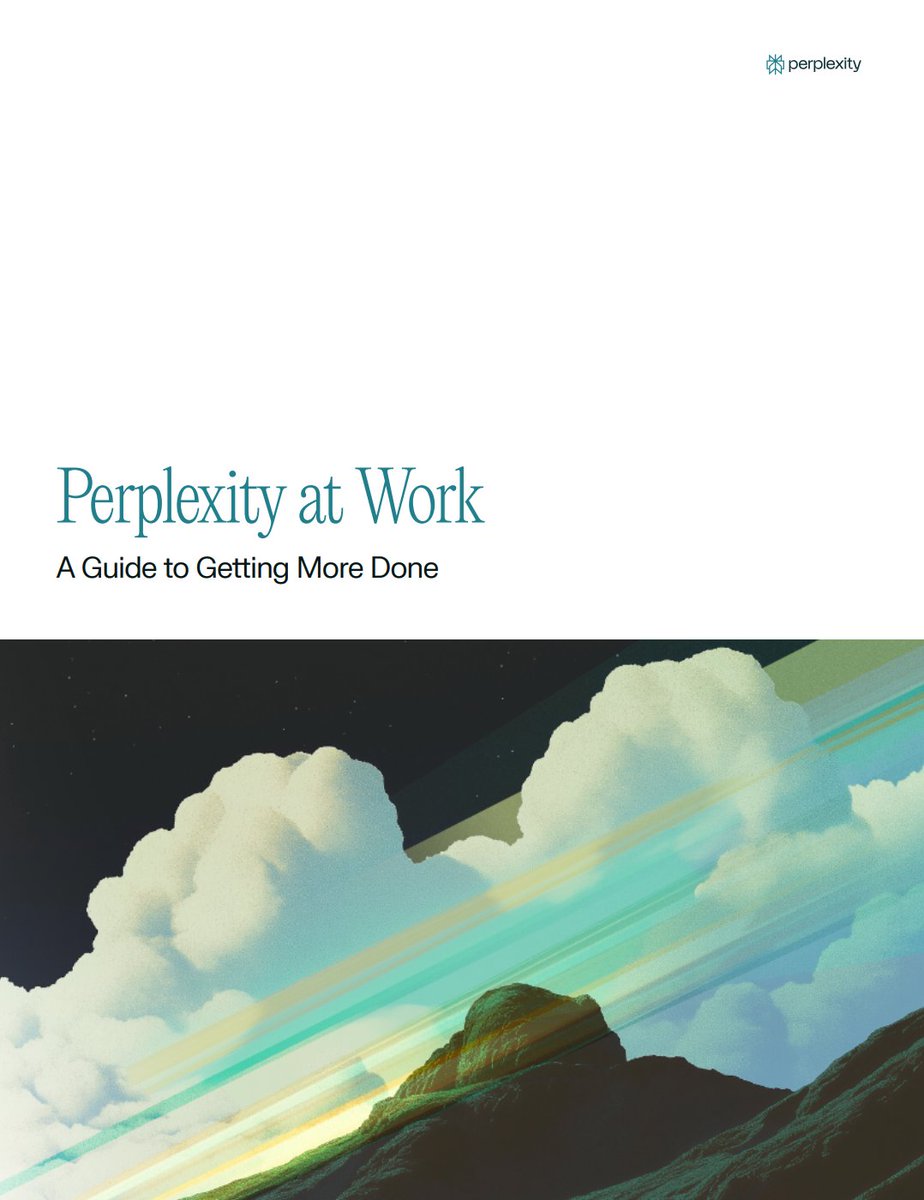
Perplexity just quietly dropped a 42-page internal guide on how they actually use AI at work. What I found most useful: → How they automate the small stuff. Email, meeting prep, research (all done by AI) → Using AI to amplify your curiosity, not replace it. → Their prompting playbook is simple, practical, and genuinely good. Comment “AI” and I’ll send it to you for free.
Aadit Sheth tweet mediaAadit Sheth tweet media
English
6K
1.4K
13.1K
1.6M
John McMahon
John McMahon@phreeskier·
@Meetup your site is down. When will it be back online?
English
0
0
0
24
Keith Edwards
Keith Edwards@keithedwards·
I'm sorry I missed this whole storyline. What do you mean she was in pajamas
Keith Edwards tweet media
English
168
41
641
39.5K
John McMahon
John McMahon@phreeskier·
@Yolo420692 Welcome to the scene. It's dangerously addictive for all the right reasons.
English
0
0
2
71
John McMahon retweetet
Creepy.org
Creepy.org@creepydotorg·
The most creative Halloween costumes ever 🧵 1. 'Carrie Halloween costume
Creepy.org tweet media
English
2.2K
31.2K
609.8K
93.5M
MeNoRnoNiceGuy
MeNoRnoNiceGuy@ranoverray·
@WeekendWook You don't know jack shit about who she is. She does not know who she is , so how could anyone else. She does not want the job , nor can she do it. Please see through this absolutely fake fraud who could care less about you or me.
English
2
0
4
140
John McMahon
John McMahon@phreeskier·
You can learn more and RSVP at meetup.com/what-the-tech-…. If you’ve already bought a ticket for this event or his April talk, you’re all good. See you tonight.
English
0
0
1
32
John McMahon
John McMahon@phreeskier·
... executive / startup / product management experience. Besides an inspiring talk, there will be a free taco bar, beers and other drinks.
English
1
0
0
27
John McMahon
John McMahon@phreeskier·
It’s time to Netflix and chill... with a tech talk! @gibsonbiddle, a former VP of Product at Netflix and Chegg, will present on Netflix’s customer obsession. Gib is an experienced, engaging speaker who cares deeply about sharing his wealth of...
English
1
0
1
87
John McMahon retweetet
Massimo
Massimo@Rainmaker1973·
Light painting stop motion photography [📹 dariustwin]
English
450
4.2K
26.4K
1.9M
Ryan Glasgow
Ryan Glasgow@ryanglasgow·
Wrapping up the week with incredible momentum at Sprig ⚡️ 🚀 Announced Sprig 2.0 - the next-gen of our platform 🤝 Signed five new Sprigsters 📈 Record-breaking pipeline generated last month Onward and upward! And a big thanks to everyone who shared and amplified our launch yesterday 🙏
Ryan Glasgow tweet media
English
1
1
7
2.6K
John McMahon retweetet
Dr. Buzz Aldrin
Dr. Buzz Aldrin@TheRealBuzz·
July 20th, 1969 is a date that stands high in my life – it was the day that we, together as one people, achieved the greatest scientific and technological feat in human history. The specific role that Neil, Mike and I performed in the event was but one part of an immeasurably larger effort – not just for our nation, but for all mankind. As I look back on what we accomplished 55 years ago, I am still inspired by what we all saw and did – the best of America and the best of humanity. Thank you for the privilege and the honor of serving you, and for being part of this exciting and wonderous journey with me. #Apollo11
Dr. Buzz Aldrin tweet media
English
2.1K
12.4K
56.5K
2.8M
John McMahon retweetet
Chef José Andrés 🕊️🥘🍳
Chef José Andrés 🕊️🥘🍳@chefjoseandres·
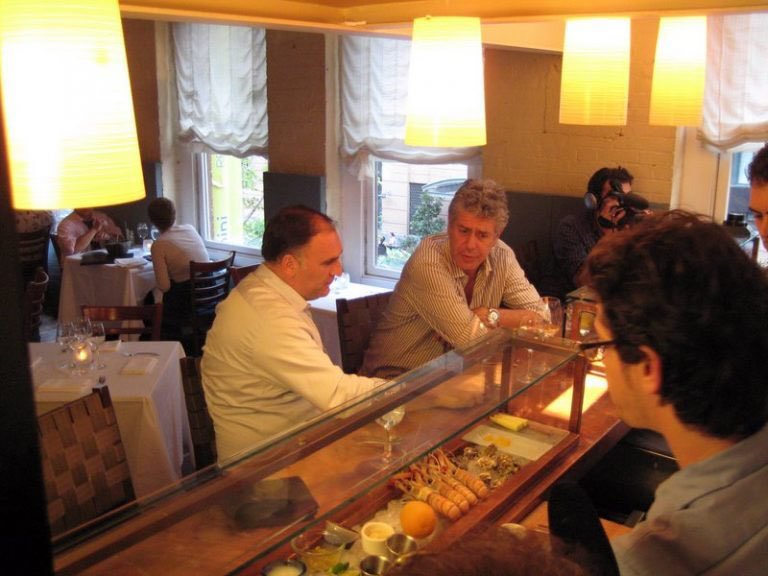
Today is Bourdain Day, my late friend Anthony Bourdain’s 68th birthday. My friend @ericripert and I began this holiday to celebrate everything Tony did for the world, and how he used food to break down walls and build longer tables. He will always be missed terribly by all of us…but we can honor his legacy as we continue to do actions big and small to create a better world. I hope you will join us in celebrating Bourdain Day in a way that is meaningful to you! ❤️🙏
Chef José Andrés 🕊️🥘🍳 tweet mediaChef José Andrés 🕊️🥘🍳 tweet media
English
285
2.1K
15.4K
345.1K