Pierre-Baptiste Borges
3.9K posts



built a fun apple-esque "hello" text animation
works with any text
English

made it to @fdotinc 🎉
see you on campus. back to work.

Hubert Thieblot@hthieblot
Introducing Canopy, our first-ever program, happening in SF and online. Hardware, software, and media. April 15 to May 22. 100 teams will join our 45k SQFT campus in SF. 400 will participate online. $2 million for top teams. Applications are open. Link in comments.
English

on se rapproche du résultat final
vous en pensez quoi ?
commentez
et j’envoie la vidéo YouTube
JA | Ազատ@aubonheurdeja
la voix française est écaltée accent bizarre, son robotique, diction ... j'ai testé : - Kling 3.0 en natif → horrible en français - Grok → pareil - ElevenLabs + lipsync → beaucoup trop long pour faire du volume je sais qu'on est plusieurs à avoir le meme problème si quelqu'un a un workflow qui marche vraiment pour le français on est preneur on a testé plein de truc meme la phonétique etc venez dm
Français

Pierre-Baptiste Borges retweetet

There's a physicist at Stanford named Safi Bahcall who modeled this exact principle and the math is wild.
He calls it "phase transitions in human networks." When you're stationary, your probability of a lucky event is limited to your existing surface area: the people you already know, the places you already go, the ideas you've already been exposed to. Your opportunity window is fixed.
When you move, your collision rate with new nodes in a network increases nonlinearly. Double your movement (new conversations, new cities, new projects) and your probability of a serendipitous encounter doesn't double. It roughly quadruples. Because each new node connects you to their entire network, not just to them.
Richard Wiseman ran a 10-year study at the University of Hertfordshire tracking self-described "lucky" and "unlucky" people. The single biggest differentiator wasn't IQ, education, or family money. Lucky people scored significantly higher on one trait: openness to experience. They talked to strangers more, varied their routines more, and said yes to invitations at nearly twice the rate.
The "unlucky" group followed the same routes, ate at the same restaurants, and talked to the same 5 people. Their networks were closed loops. No new inputs, no new collisions.
Luck isn't random. Luck is surface area. And surface area is a function of movement.
The lobster emoji is doing more work than most people realize. Lobsters grow by shedding their shell when it gets too tight. The growth requires a period of total vulnerability. No protection, no armor, soft body exposed to the ocean.
That's the cost of movement nobody posts about. You have to be uncomfortable first. The new shell only hardens after you've already moved.
ຸ@D9vidson
a moving man will meet his luck 🥀
English


introducing Ascii: The pocket CTO
you send it voice memos on Telegram or instructions from your desktop
then Ascii handles it all:
> writes code and sends you demos, PDF reports and hosted builds when finished
> orchestrates many cloud coding agents working in parallel that can plan, code, test and use their desktop
> uses codex, claude code SDKs & subscriptions, no API keys required
> works on multiple repositories at once
> setups cron jobs and webhooks to schedule work when you sleep
> supports secrets, git hooks, full cloud machines config with sudo & 60fps desktop access
Welcome to a new era of software building
where coding agents aren't mere assistants anymore,
now they're as valuable and proactive as a world-class CTO, always at arm's reach, in your pocket
English
Can brands stop spamming us on WhatsApp?
So intrusive. So out of place.
English
Pierre-Baptiste Borges retweetet

For the first time in half a century, astronauts are going back to the Moon. Well, almost back there. For NASA’s Artemis II mission will not land. Discover how it could pave the way for the space agency’s future plans econ.st/41M1yCV

English

Si je réfléchis trop à ce que ces trois infos sur le live Artemis II veulent dire, ça me terrifie.

Français
Pierre-Baptiste Borges retweetet
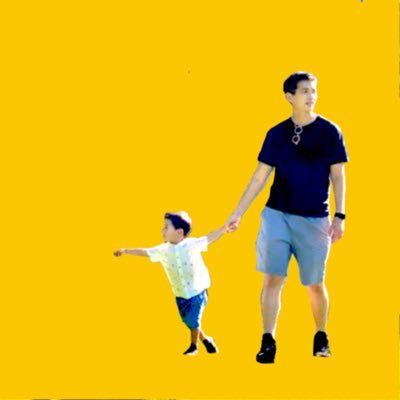
Apple’s first CEO was named — you can’t make this up — Michael Scott.
When Apple went public in 1980 (IPO valuation of $1.8B), Scott owned a 5.6% stake compared to Steve Jobs (15%) and Steve Wozniak (7.9%).
He left Apple in 1981 and became world-renowned gem collector & expert.

English
@patamiel @AnthropicAI S'affiche en français chez moi, sur un browser pourtant anglais !
Peut-être que Claude Code / Codex a préféré utiliser l'IP du visiteur, et voit que je suis en france ;)
Français
Français
Pour celles et ceux qui suivent, le petit site web que j’ai fait en qq minutes via Claude @AnthropicAI (sans aucune connaissance de programmation) ne cesse de se développer
- pages enrichies grâce à vos remarques - merci
- trafic SEO et GEO en croissance
pharmaciedechezy.fr
Français
New Fundraising round for OpenAI. $122 billion in committed capital at an $852 billion post-money valuation.
Damn
openai.com/index/accelera…
English

You asked, we delivered. If you’re a U.S. Google user, you can now change your account username for tools like Gmail, Photos, Drive and more — while keeping your emails, data and account history. Here’s what to know:
1️⃣ You can choose any available @gmail.com username.
2️⃣ Your old username will become an alias, so you won’t lose access to it. You can still sign in and send and receive emails with both usernames. Plus, you can also revert to your old username.
3️⃣ You can choose a new username once a year — up to three times total.
GIF
English
Pierre-Baptiste Borges retweetet

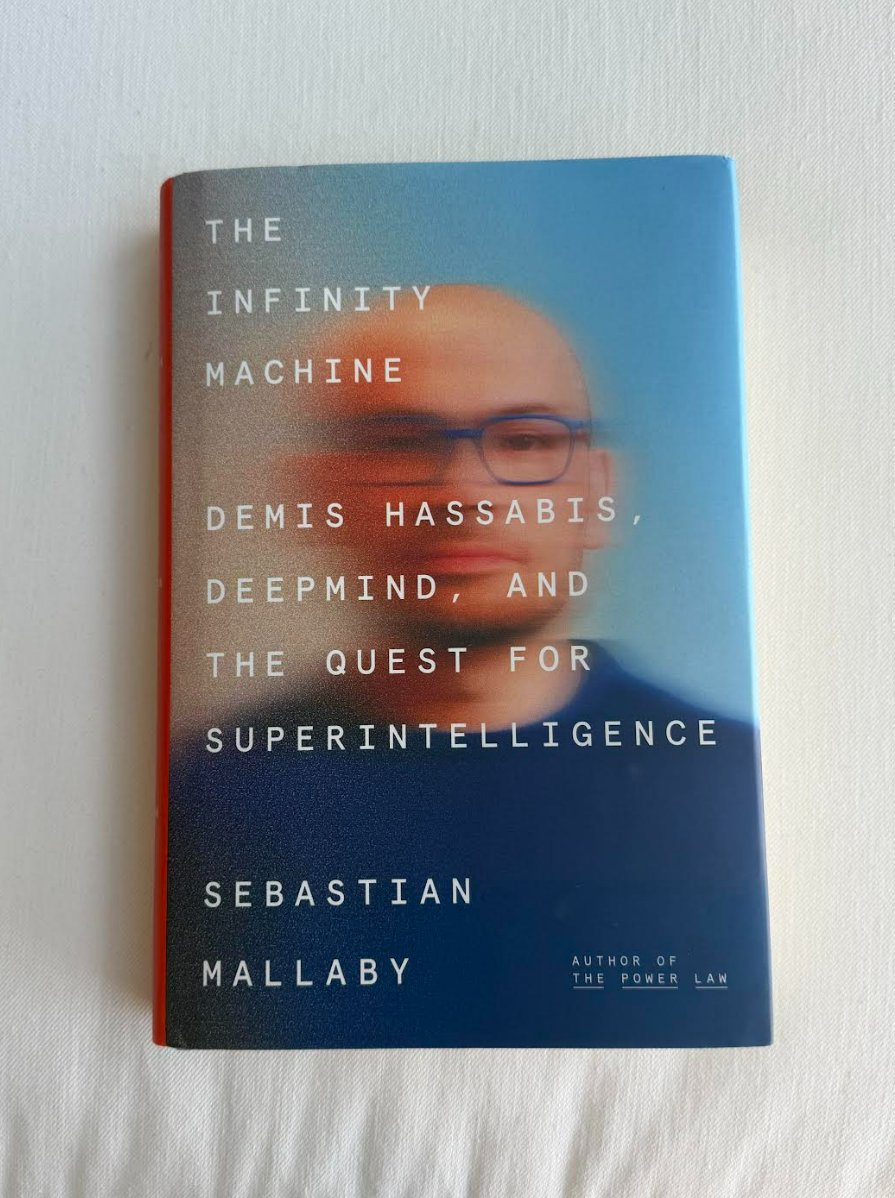
Just finished Sebastian Mallaby's new book on Demis Hassabis and DeepMind.
It's essential reading for anyone who wants to understand not just where AI is going, but the kind of mind that’s shaping its direction.
This book will be talked about for a long time to come.

English

Pierre-Baptiste Borges retweetet