

rajasekhar vanjarapu
239 posts
rajasekhar vanjarapu retweetet

🚨 COMPETITION TIME 🚨
To CELEBRATE Arsenal's Champions League run, I'm teaming up with @play_eFootball to giveaway a 24/25 Arsenal home shirt SIGNED by the Men's First Team! 🔥
For your chance to win, all you have to do is the following THREE things...
1. Follow @play_eFootball
2. Follow @AMonFootball
3. REPOST this, and COMMENT your predicted UCL winners 👀
The winner will be chosen next Tuesday, 22nd April! 😄

English

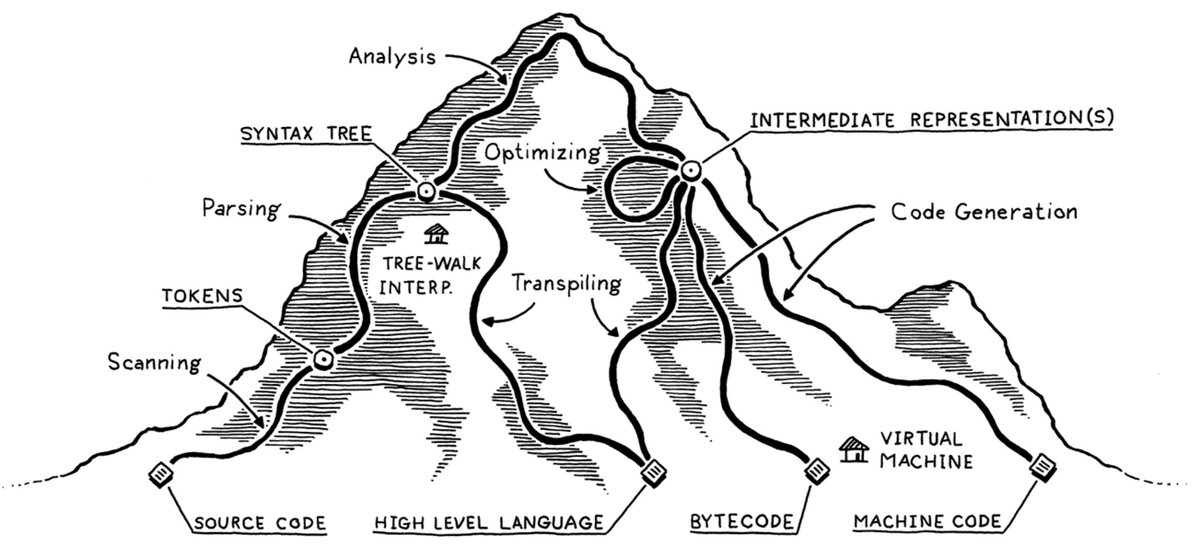
This book of "singleton patterns" has taught me to never write a interpreter this way!
English




@iavins @jorandirkgreef Would you add anything else on top of this?
English

as always, excellent post by @jorandirkgreef
Joran Dirk Greef@jorandirkgreef
For developing a “nifty” DistSys toolbox: - OSTEP by the Arpaci-Dusseau’s is a favorite systems book—the design thinking in here was imbibed by TigerBeetle: pages.cs.wisc.edu/~remzi/OSTEP/ - Hacking bug bounties, finding CVEs, and composing cryptographic primitives (AEADs, HKDF etc.), principles (single use, binding intent, minimizing surface area) and protocols (TLS, Noise) can be good practice for developing the kind of adversarial thinking needed to proactively find DistSys heisenbugs and counter examples. - Chess is great too (when you’re on holiday!). I would find that when my chess was good, my consensus thinking was less bad, and vice-versa, and opponents would sometimes pick up on this (“You’ve been coding hard problems lately?”)—so I think it’s transferable. - TCP congestion control algorithms (especially delay/utility based) are a way to think about resource limits in general (e.g. disks can also exhibit bufferbloat!). - Various hash table designs (Swiss, F14, Cuckoo, Stash techniques) can be a playground for learning “how to go fast!”, simply. - Erasure coding (simple XOR parity, Reed Solomon, Cauchy) for tuning durability/cost/tail tolerance. -Deduplication algorithms (fixed chunking, content-dependent chunking, RabinKarp etc.) usually keep coming up. - Finally, TigerStyle (github.com/tigerbeetle/ti…) came out of a few years’ trial and error (before TigerBeetle), trying to figure out a methodology to approach the design of distributed systems (e.g. full duplex file sync) that would increase the probability of success. We then applied this “all in” to TigerBeetle.
English
@jorandirkgreef Not sure about the schema, But I believe these would be any business transaction taking place (placing an order, or a sale, etc.) which had to be stored in a database, as these were/are referred to transactions in real world, hence the word "Transaction" in the database as well.
English

@ra0van What would you say these are? What would the schema be?
English
History question!
What does the “T” in OLTP (Online Transactions Processing) stand for?
What transactions are these?
(And can you give examples from the last few decades to back this up?)
English
rajasekhar vanjarapu retweetet

The Outbox pattern is a game changer. 📦
Here's everything you need to know.
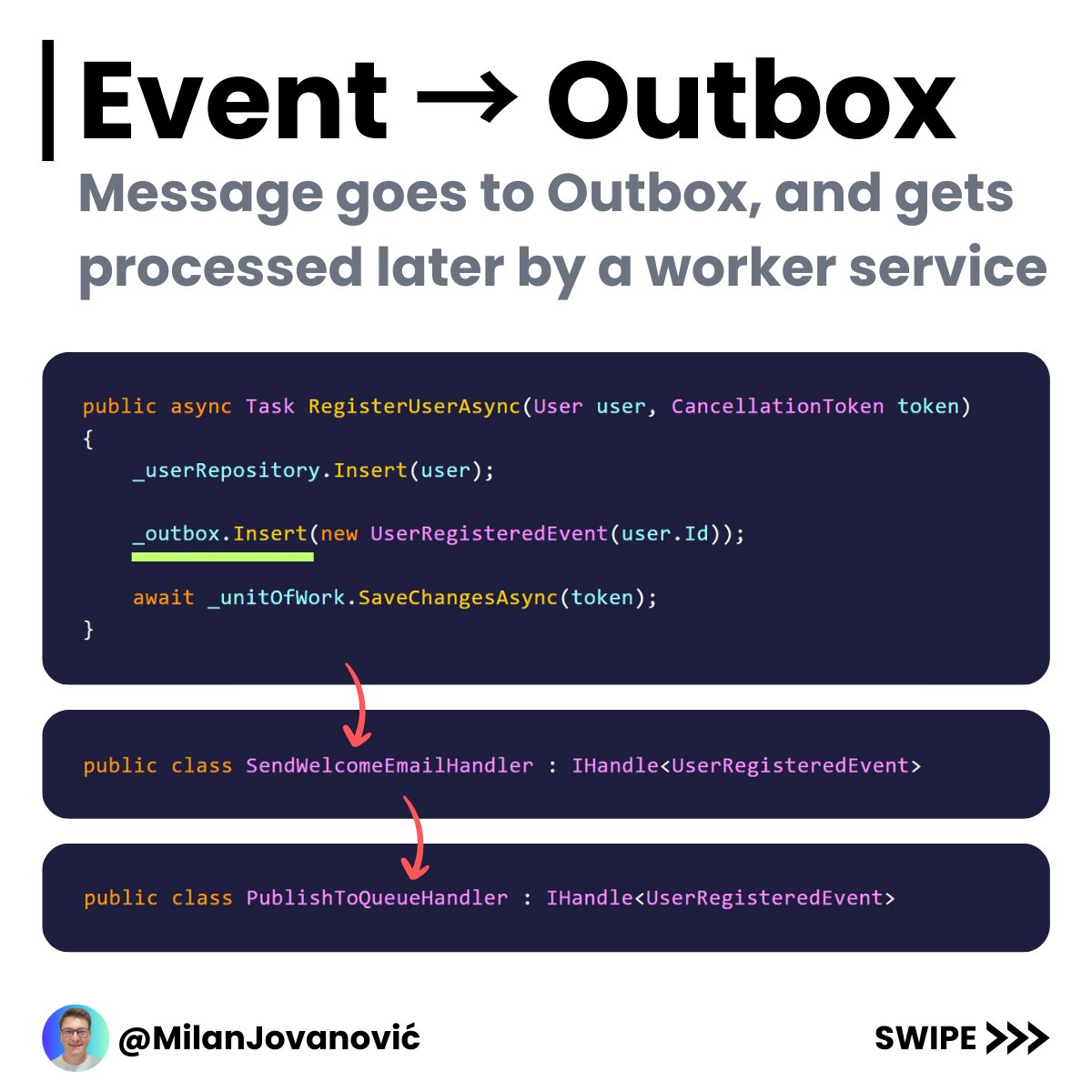
The Outbox pattern is a technique for reliable messaging in a microservices system.
Here's the gist of the Outbox pattern:
- You don't publish events to a queue
- Instead, you store them in the database
- A worker service polls the database for new messages
- The worker service publishes each message asynchronously
Why would you want to do this?
One thing is for sure with microservices - things will break.
A downstream service could be down.
The network isn't available.
If your operations are coupled at runtime, then the whole operation fails.
This also means your operation isn't atomic (transactional).
The Outbox pattern helps you decouple your operation from its side effects.
You know your transaction is atomic if you work with an SQL database.
You can persist the messages to the Outbox table in a single transaction.
And then, a background worker will process the messages later.
Unfortunately, this comes at the cost of eventual consistency.
Processing a message can fail, so you will need to retry it.
On the consumer end, you still need to handle duplicates in case of retries.
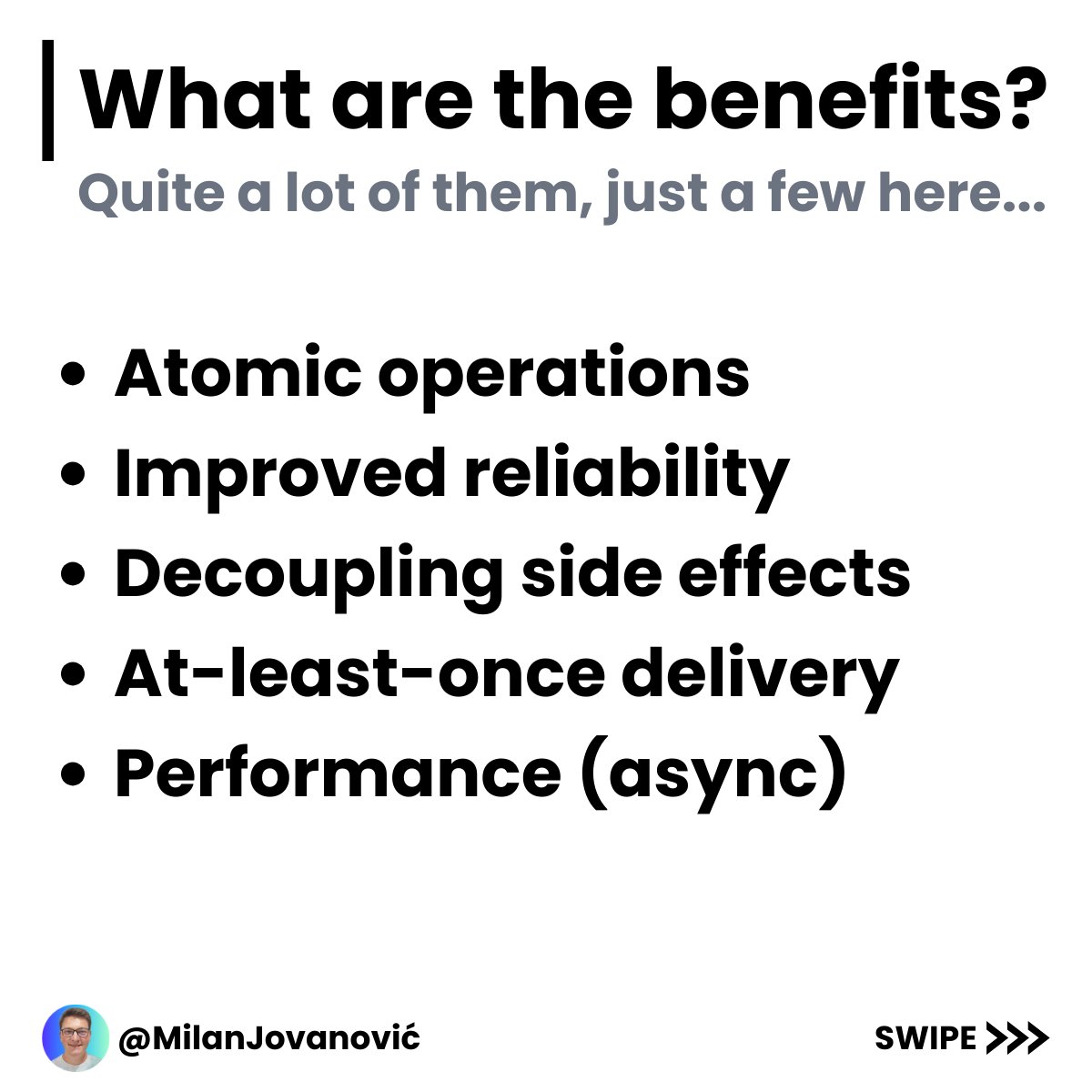
This messaging semantic is called "at-least-once" delivery.
A few more benefits are improved reliability and performance.
P.S. If you liked this, consider joining The .NET Weekly - my newsletter with 28,000+ engineers that teaches you how to improve at .NET and software architecture.
Subscribe here → milanjovanovic.tech
Did you use the Outbox pattern before?


English
@ramki_ @policybazaar Always use fake number and fake email
English

Used @policybazaar to check insurance renewal cost.
Till now I got nearly 150 calls to renew car insurance. You bastards at @policybazaar sold my number to so many spammers! I wish there is a way to take legal action.
English
rajasekhar vanjarapu retweetet


@thorstenball I was looking for something similar in India. Gonna explore this.
English

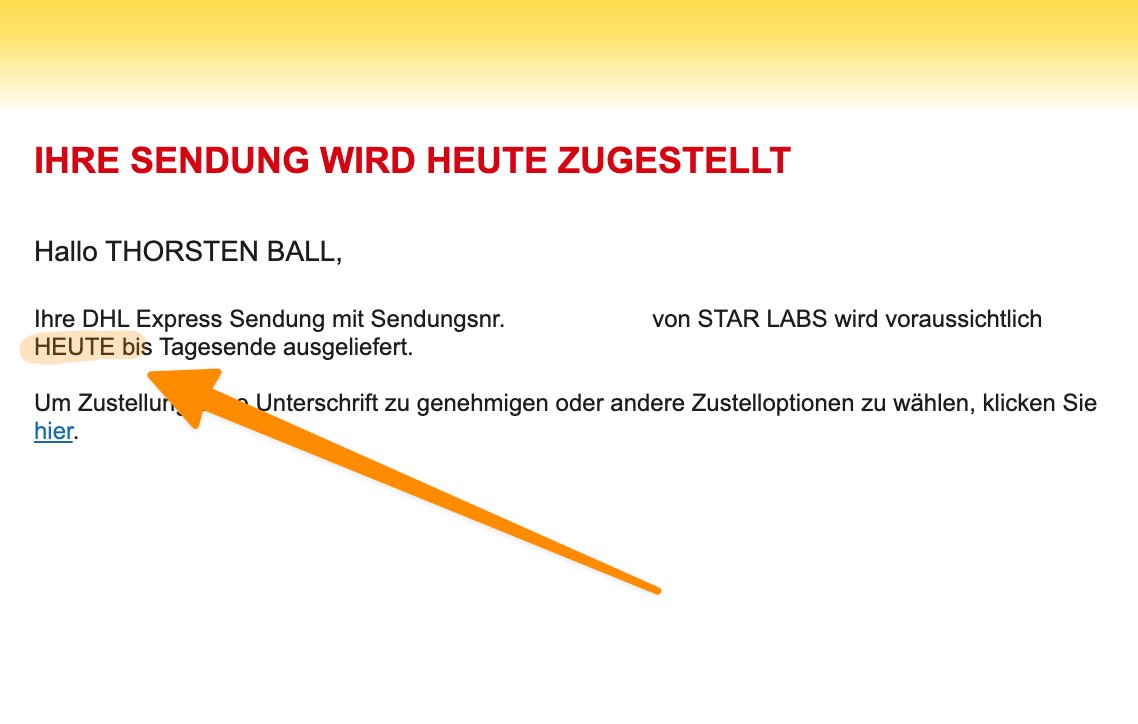
In July I ordered a Star Lab's StarBook
Why? Mostly "just because". "It would be cool to have a Linux laptop" To justify it I told myself it's a Christmas present to myself.
Now it's November and it still hasn't shipped yet, so... I was right?
English

Happy New Year!
Giving out a 1000 free coupons to my Fundamentals of Networking for Effective Backend course.
udemy.com/course/fundame…
p.s. Yeah I really created the coupon as HAPPYNEWYEAR2022 where it should have been 2023 😅 I’m still living in 2021
English

Are you ready to take up the challenge and feature on the Hall of Fame ?
Microsoft India and South Asia@MicrosoftIndia
Join the league of India's finest tech professionals at the #ChampionsOfCode Hall of Fame. Tweet #MicrosoftCertified with your pic & the Microsoft Cloud Certificate, fill in your details msft.it/6017ewKwJ & tag your network. Help India get #FutureReady.
English
@_svs_ Been out of touch with .NET in the last one year. But I can try. LMK if I can be of help.
English

@kaushikb9 @UltrahumanHQ Haven’t used it personally. Waiting for it. I’ve seen people use here in Bangalore. Works quite well
English

@ra0van @UltrahumanHQ do you use one? how does it work in Indian context?
English
Anyone on my timeline preordered the @UltrahumanHQ Ring? Seems to be a gamechanger in the health wearable space
English

To anyone who wants to checkout @UltrahumanHQ , I have a couple of invites to give out. This should get you one complementary sensor at the trial plan. Do reach out if you are interested
English