Raph Keene

607 posts

Raph Keene banner
Raph Keene

Raph Keene

@raphkeene

Building @SovaraAI — agentic AI for global planning 🌍 Redefining how residency, citizenship & tax planning gets done faster & smarter https://t.co/BY8odu7cJB

Switzerland Beigetreten Ekim 2024
996 Folgt177 Follower
Raph Keene retweetet

Aaron Levie
Aaron Levie@levie·
Had meetings and a dinner with 20+ enterprise AI and IT leaders today. Lots of interesting conversations around the state of AI in large enterprises, especially regulated businesses. Here are some of general trends: * Agents are clearly the big thing. Enterprises moving from talking about chatbots to agents, though we’re still very early. Coding is still the dominant agentic use-case being adopted thus far, with other categories of across knowledge work starting to emerge. Lots of agentic work moving from pilots and PoCs into production, and some enterprises had lots of active live use-cases. * Agentic use-cases span every part of a business, from back office operations to client facing experiences from sales to customer onboarding workflows. General feeling is that agentic workflows will hit every part of an organization, often with biggest focus on delivering better for customers, getting better insights and intelligence from data and documents, speeding up high ROI workflows with agents, and so on. Very limited discussion on pure cost cutting. * Data and AI governance still remain core challenges. Getting data and content into a spot that agents can securely and easily operate on remains a huge task for more organizations. Years of data management fragmentation that wasn’t a problem now is an issue for enterprises looking to adopt agents. And governing what agents can do with data in a workflow still a major topic. * Identity emerging as a big topic. Can the agent have access to everything you have? In a world of dozens of agents working on behalf, potentially too much data exposure and scope for the agents. How do we manage agents with partitioned level of access to your information? * Lots of emerging questions on how we will budget for tokens across use-cases and teams. Companies don’t want to constrain use-cases, but equally need to be mindful of ultimate token budgets. This is going to become a bigger part of OpEx over time, and probably won’t make sense to be considered an IT budget anymore. Likely needs to be factored into the rest of operating expenses. * Interoperability is key. Every enterprise is deploying multiple AI systems right now, and it’s unlikely that there’s going to be a single platform to rule them all. Customers are getting savvier on how to handle agent interoperability, and this will be one of the biggest drivers of an AI stack going forward. Lots more takeaways than just this, but needless to say the momentum is building but equally enterprises are acutely aware of the change management and work ahead. Lots of opportunity right now.
English
115
103
880
142.2K
Raph Keene retweetet
Alessandro Palombo
Alessandro Palombo@thealepalombo·
A close friend is moving his family from Germany to Switzerland. We've been talking about it for months. The conversation always lands in the same place: when you have a family, you stop chasing the best deal and start looking for the place where you won't have to move again. $2.4 trillion in offshore wealth sits in Switzerland for one reason: predictability. So I built the "Switzerland Test." Four pillars: neutrality, institutional trust, capital protection, political continuity. I mapped 15+ jurisdictions. Here are the 9 that scored highest: 🧵
Alessandro Palombo tweet mediaAlessandro Palombo tweet media
English
25
25
322
69.6K
Raph Keene retweetet
Ryan Holiday
Ryan Holiday@RyanHoliday·
Give me 4 minutes and I'll give you the only rules to life you need (from the Stoics)
English
16
61
345
33.4K
Raph Keene retweetet
Katyayani Shukla
Katyayani Shukla@aibytekat·
I come back to this video once in a while.
English
4
30
196
26.8K
Raph Keene retweetet
Aaron Levie
Aaron Levie@levie·
There’s a fundamental difference between taking an existing process and applying AI agents to it vs. taking a process from scratch and designing it from the ground up for AI agents. The gap we’re going to see will widen between the teams and companies that are able to do the latter instead of just the former. In theory it would have been ideal for all the gains of AI to have come “for free”, but there are both clear constraints of AI (like getting the context right) and clear upsides (like being able to execute code and run in parallel) that the workflows themselves must be redesigned to take full advantage of this technology. One of the biggest implications that will come into focus is that agents that can write and run code, and interact with any API, will lead to agents effectively being expert engineers applied to your business process. So to some extent one of the biggest ways of reengineering a workflow is to ask yourself: what would you do if you had an infinite number of capable engineers write software for this process. What if those engineers wrote code to connect your disparate data sources, comb thorough any amount of unstructured data, automate your repeated tasks, connect your various systems together specific to your process, and so on. Not every process has that upside, but there tons of tasks that we do every day across marketing, finance, operations, and even sales, where a programmer with infinite code writing and API access would be able to make something go far faster or produce way more output. The teams that start to think this way will start to operate entirely differently.
English
127
63
512
106K
Raph Keene retweetet
IMI Daily
IMI Daily@imidaily·
Congratulations 🎉 Full story below.
IMI Daily tweet media
English
5
3
29
2.8K
Raph Keene retweetet
Machiavelli Bot
Machiavelli Bot@UnmodernmanBot·
The world punishes the man who believes life has only practical meaning. You can win money, status, attention, and still feel hollow if your private behavior violates your own standards. Inner weight comes from moral consequence, from what you do when nobody is watching. A man without that weight becomes rich and still feels poor.
English
13
59
454
10.8K
Raph Keene retweetet
Emotion & Music
Emotion & Music@Emotion78687·
A timeless classic. The moment the saxophone starts, chills run down my spine. ❤️
English
346
2.9K
15.5K
727.7K
Raph Keene retweetet
Men's Aesthetic
Men's Aesthetic@AestheticsMens·
To become LIMITLESS, you must stop living like a commoner -​Have insane delusional optimism. - Obsess over the best case scenario. -​Follow your obsession with intensity. -​Work smart, hard, and fast. -​Eat clean and move daily. -​Master weighted calisthenics. -​Sleep 7 hours and kill distractions. -​Face your fears every single day. -​Live life at the very edge. -​Be a polymath and learn everything. -​Lead your family and have more fun.
Men's Aesthetic tweet mediaMen's Aesthetic tweet media
English
19
232
3.4K
313.5K
Raph Keene retweetet
Symoné B. Beez
Symoné B. Beez@SymoneBeez·
Tech careers are now split into 3 tracks
English
116
841
5.2K
508.3K
Raph Keene retweetet
Top 1% Men
Top 1% Men@dtop1percentmen·
The blueprint for becoming a man:
English
3
129
494
17.5K
Raph Keene retweetet
The Ways of A Gentleman
The Ways of A Gentleman@Gentleman_Ways·
I was not overly familiar with Eric Dane’s work or him as a person, but I can’t help but be moved by his last words to his daughters. We never know what life will throw our way. Choose to be happy, love your family and friends, and trust in God.
English
8
26
191
7.5K
Raph Keene retweetet
Lenny Rachitsky
Lenny Rachitsky@lennysan·
My biggest takeaways from @bcherny: 1. Coding is now “solved” for most use cases. Boris hasn’t written a single line of code by hand since November, with 100% of his work now authored by Claude Code. At the same time, he remains one of the most productive engineers at Anthropic, shipping 10 to 30 pull requests daily while leading the team. 2. Anthropic has seen a 200% increase in engineer productivity since adopting Claude Code. As Boris notes, “Back at Meta, with hundreds of engineers working on productivity, we’d see gains of a few percentage points in a year. Now we’re seeing hundreds of percentage points.” 3. AI is moving beyond writing code to generating ideas. “Claude is starting to come up with ideas. It’s looking through feedback, bug reports, and telemetry, then suggesting features to ship.” 4. The next roles to be transformed are those adjacent to engineering. Product managers, designers, and data scientists will see similar transformations as agentic AI expands beyond coding. “Any kind of job where you use computer tools will be next.” 5. Build for the model six months from now, not today. One of Boris’s key principles is to design products for future AI capabilities, not current ones. “It’s going to be uncomfortable because your product-market fit won’t be very good for the first six months. But when that model comes out, you’ll hit the ground running.” 6. Watch for “latent demand.” Claude Code was built by observing what people were already trying to do, and then making it easier. Cowork emerged when they noticed people using Claude Code for non-coding tasks like analyzing MRIs or recovering wedding photos from corrupted drives. 7. Don’t optimize for token cost. Boris advises companies to give engineers unlimited tokens during experimentation phases. “At small scale, the token cost is still relatively low compared to their salary. If an idea works and scales, that’s when you optimize it.” 8. Underfund headcount on purpose. When Boris puts one engineer on a project, they’re forced to let AI do more of the work. Constraint drives creative use of AI tooling, not just faster typing. 9. The most successful people in the future will be generalists. “Try to be a generalist more than you have in the past. Some of the most effective engineers cross over disciplines. The people who will be rewarded most won’t just be AI-native—they’ll be curious generalists who can think about the broader problem they’re solving.” 10. Always use the most capable model, not the cheapest. A less intelligent model often burns more tokens correcting mistakes than a smarter one spends getting it right the first time. Boris runs maximum effort on Opus 4.6 for everything. Here's the full conversation: youtube.com/watch?v=We7BZV…
YouTube video
YouTube
Lenny Rachitsky@lennysan

Claude Code launched just one year ago. Today it writes 4% of all GitHub commits, and DAU 2x'd last month alone. In my conversation with @bcherny, creator and head of Claude Code, we dig into: 🔸 Why he considers coding "largely solved" 🔸 What tech jobs will be transformed next 🔸 The counterintuitive bet that made Claude Code take off 🔸 Why he left for Cursor and what brought him back 🔸 Practical tips for getting the most out of Claude Code and Cowork 🔸 Much more Listen now👇 youtube.com/watch?v=We7BZV…

English
95
157
1.3K
346.6K
Raph Keene retweetet
Alex Recouso
Alex Recouso@recouso·
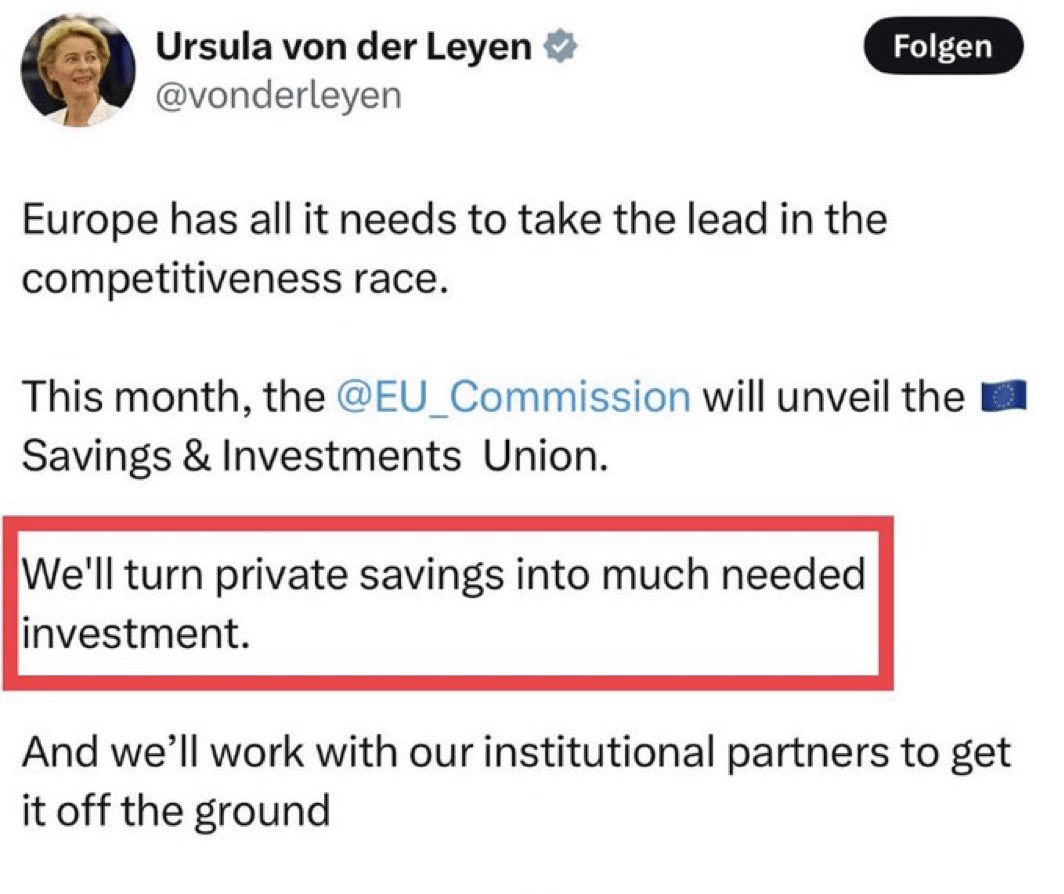
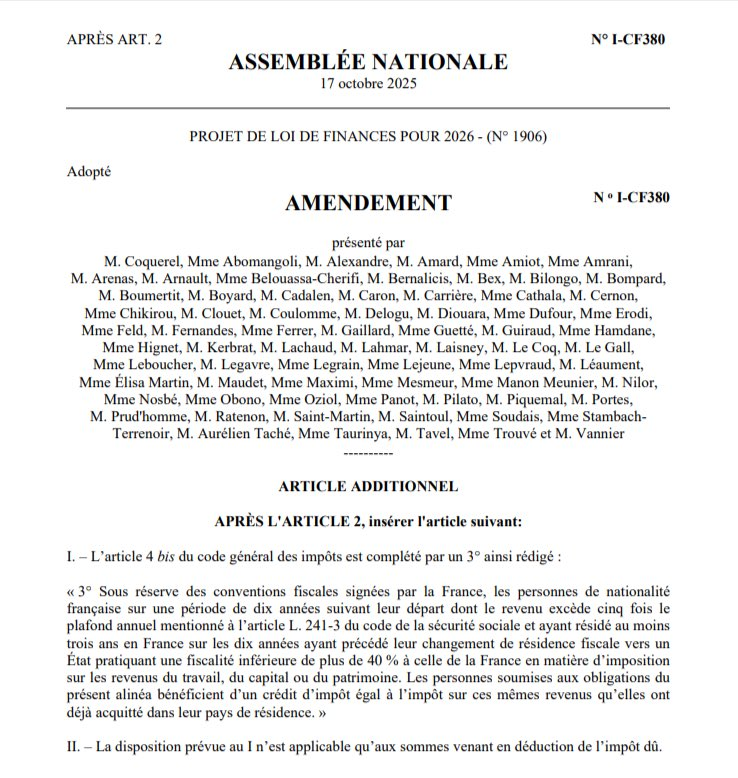
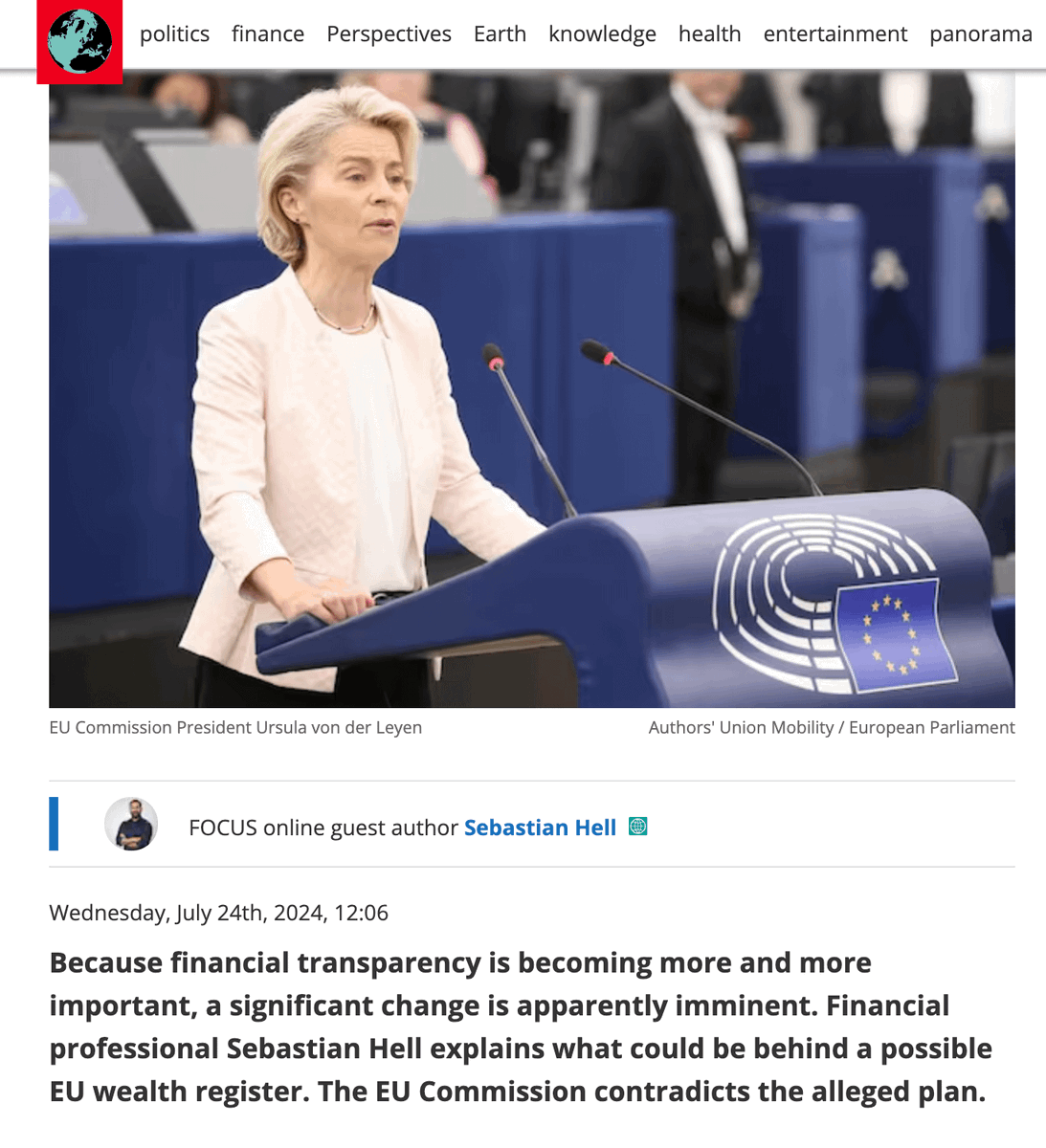
FROM TAXATION TO CONFISCATION The EU is bankrupt and preparing for asset seizure. First, I'm going to tell you about taxation, then confiscation: In 2020, they started printing trillions to fund runaway spending. Now, inflation is roaring. On paper, everyone is “rich.” And once you’re “rich,” you must pay your “fair share.” So EU countries are raising taxes and blocking the exits: 🇳🇱 The Dutch House of Representatives just voted to overhaul annual income tax filings with a new tax of up to 36% for unrealized capital gains, starting in 2028. Assets like Bitcoin, stocks, and bonds will trigger tax liabilities each year based on changes in value, even if nothing has been sold. The Netherlands also recently proposed a new exit tax for citizens who leave the country. Income (and presumably capital gains) will be taxed for five years after leaving the country. 🇪🇸 In 2024, Spain recorded 1,000 fewer high-net-worth taxpayers — the first negative millionaire migration since the country imposed a tax on wealth. 🇳🇴 Norway raised wealth taxes to bring an additional $146M in yearly tax revenue. Instead, individuals worth $54B left the country, leading to a loss of $594M in yearly wealth tax revenue. A net decrease of $448M. 🇬🇧 The recent capital gains tax increase in the UK was expected to bring additional tax revenue. Instead, the UK lost over 15,000 high-net-worth individuals in 2025, leading to a 10% fall in net capital gains tax revenue. The government is now trying to close this £2b hole with a new exit tax. Those who leave the country will have to pay a 20% tax on the value of their assets. You see? It always starts with an unrealized gains tax. Then, an exit tax. Finally, it's global taxation. 🇫🇷 France proposed citizenship-based taxation for the National Budget of 2026. French citizens will pay taxes on their global income if they move to a region with tax 40% lower than France's. That's they are pushing you to register all your assets in a central EU register to "help with financial transparency." Your bank accounts, shares, cars, precious metals, works of art, and Bitcoin... register it all to "fight money laundering". Eventually, they will try to seize your assets. Eventually may be soon. Like the US seized gold with Executive Order 6102. So buy Bitcoin and get it off exchanges. They can't seize Bitcoin you self-custody. That's Bitcoin's fundamental value proposition: seizure resistance. Ray Dalio thinks your location is as important as your allocation. Bitcoin is king, but passport is queen. The same way you want to keep liquidity, you must also maintain mobility. So get a second passport from a Bitcoin-friendly jurisdiction like El Salvador. And get yourself to a safe place that respects your freedom, like Singapore or the UAE. And a mobility freeze—similar to what they did in 2020 with endless lockdowns and exit denials—is comparable to the incoming asset seizure. Both are government crackdowns on freedom. The right to exit is a fundamental human right. Just look at the history: all the worst states have revoked the human right to exit. The Soviets, the Nazis, the East Germans, the Cubans, the North Koreans… they did not let you leave. Because 100% taxation means you’re their slave. And they don’t want the slaves to leave.
Alex Recouso tweet mediaAlex Recouso tweet mediaAlex Recouso tweet mediaAlex Recouso tweet media
English
82
692
1.8K
82.4K
Raph Keene retweetet
Dustin
Dustin@r0ck3t23·
Elon Musk thinks coding dies this year. Not evolves. Dies. By December, AI won’t need programming languages. It generates machine code directly. Binary optimized beyond anything human logic could produce. No translation. No compilation. Just pure execution. Musk: “You don’t even bother doing coding.” Code was never the point. It was friction. A tax we paid because machines didn’t speak human. AI just learned fluent human. The tax is gone. Now plug that into Neuralink. No syntax. No keyboard. No screen. Musk: “Imagination-to-software.” Thought becomes executable. You imagine an outcome, the system architects and compiles it into reality instantly. We’re not automating programming. We’re erasing it from existence. The entire profession collapses into a thought. Decades of training reduced to irrelevance. The gap between idea and instantiation hits zero. You don’t build anymore. You imagine, and it materializes. Not incremental progress. Total phase shift. The way humans have created things for ten thousand years just became obsolete. Welcome to a world where the limiting factor isn’t skill, resources, or time. It’s whether you can picture what you want clearly enough for a machine to birth it into existence.
English
2K
3K
15.9K
4M