rustyspark

421 posts

rustyspark banner
rustyspark

rustyspark

@rustyspark

Beigetreten Mart 2022
154 Folgt15 Follower
rustyspark
rustyspark@rustyspark·
@Ric_RTP So does this mean we won’t want to waste ram on smart dish washers or dryers anymore?
English
0
0
0
188
Ricardo
Ricardo@Ric_RTP·
AI companies just BROKE the global supply chain for every piece of technology you own. And the fallout is way worse than anyone predicted... Sony is delaying the next PlayStation to 2028 or 2029. Nintendo is hiking the Switch 2 price mid-cycle. Apple warned investors that iPhone margins are getting crushed. Cisco just posted its worst share loss in 4 years. Oppo is cutting phone shipments by 20%. Lenovo, Dell, HP, Acer, and ASUS are all raising laptop prices 15-20%. Samsung is now reviewing memory contracts QUARTERLY instead of annually because prices change too fast to plan. And Elon Musk just told investors Tesla has to build its own chip factory from scratch because no supplier on the planet can keep up. His exact words: "We've got two choices: hit the chip wall or make a fab." All of this happened in the last 3 weeks. Same cause. Every single time. AI data centers are buying every memory chip on Earth. And there's nothing left for everyone else. Here's how we got here: 3 years ago, ChatGPT launched and the AI arms race began. Since then, Samsung, SK Hynix, and Micron, the only 3 companies that make memory chips, quietly made a decision that's now reshaping the ENTIRE global economy. They stopped prioritizing consumer memory. Every factory. Every production line. Every wafer. All redirected toward one customer: AI data centers Why? Money. AI memory chips sell for 3-5X the margin of regular RAM. When Google calls offering to buy your entire output at premium pricing, you don't say no. So the 3 companies that control 90% of the world's memory supply chose their highest-paying customers and left everyone else fighting over scraps. The numbers from this week are insane: OpenAI's Stargate project ALONE will consume 40% of the entire world's DRAM output. HBM demand is surging 70% year over year in 2026. HBM now takes 23% of total DRAM wafer production, up from 19% last year. Meanwhile, there's a 4% gap between global DRAM supply and demand. And that doesn't even account for depleted inventories across multiple industries. DRAM prices have surged over 170% since early 2025. DDR5 contract prices are still jumping double digits month over month. And the memory makers? They're printing money. Micron's revenue is expected to more than DOUBLE this fiscal year. SK Hynix sales doubled in 2024 and are on pace to double AGAIN. Samsung just reported quarterly profit nearly tripling. 3 companies. $650 billion in AI spending chasing their products. And they get to name their price. But the collateral damage is everywhere: Every industry that uses memory, which is every industry, is getting squeezed. Smartphone manufacturers are getting destroyed. For a mid-range phone, memory now represents up to 30% of the total build cost. Triple what it was in early 2025. Chinese phone makers like Xiaomi, Oppo, and Transsion are cutting shipment forecasts and raising prices because they literally cannot afford the memory to build their phones. Lenovo's CFO called the cost surge "unprecedented" and admitted they stockpiled 50% more inventory than normal just to survive the next few months. The PC market could shrink by up to 9% this year according to IDC. Not because people don't want computers. But because they can't afford the memory that goes inside them. And the gaming industry? Sony is seriously considering pushing the next PlayStation to 2028 or 2029. Their carefully planned console cycle is getting blown up because they can't secure memory at prices that make a new console viable. Nintendo is looking at raising the Switch 2 price. In the middle of a launch cycle. Something console makers almost never do. Nvidia is cutting RTX GPU production because they can't get enough GDDR7 memory. Even the car industry is getting hit... Analysts are warning about a repeat of the pandemic-era chip shortage that shut down auto factories worldwide. All because AI companies decided their chatbots needed the memory more than your car does. And this doesn't get better for YEARS. Building a new memory fab takes 3-5 years minimum. Micron's new factory in Idaho won't meaningfully increase supply until 2027 at the earliest. By then, AI demand will have grown even more. Memory makers are already selling their 2027 AND 2028 capacity to AI customers today. There is no supply relief coming. That's why Elon is planning to build Tesla's own "TeraFab," a massive semiconductor plant that makes logic chips, memory, AND packaging all under one roof. He said existing suppliers including TSMC, Samsung, and Micron simply cannot supply Tesla at the levels the company needs. Think about that. One of the richest men in the world, running one of the largest companies on Earth, can't buy enough memory chips. So he's building his own factory. If ELON can't get supply, what chance does everyone else have? The AI revolution has a tax. And YOU'RE paying it. Every dollar Big Tech spends on AI infrastructure drives up the cost of the memory inside your phone, your laptop, your car, your TV, and your gaming console. $650 billion in AI spending this year. 3 companies controlling 90% of the memory supply. And every wafer they allocate to an Nvidia GPU is a wafer denied to the device in your pocket. The AI boom isn't free. You're subsidizing it every time you buy a piece of technology. And the bill just went up like crazy.
English
330
1.8K
4.5K
566.6K
rustyspark retweetet
Connor Boyack 📚
Connor Boyack 📚@cboyack·
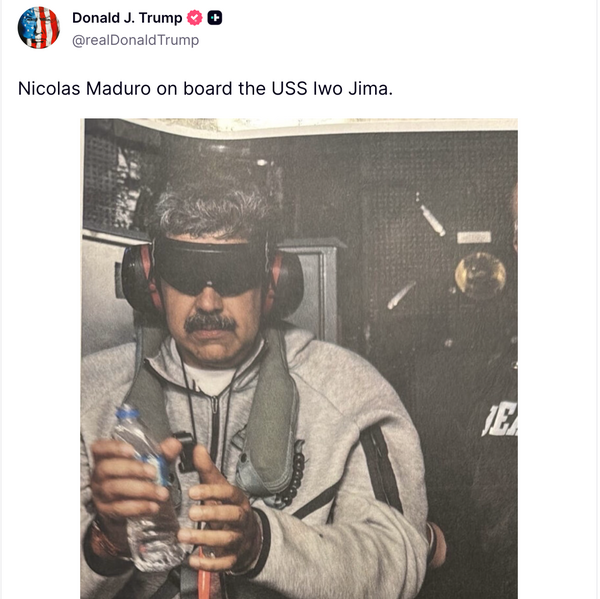
Maduro’s capture illustrates what I believe is one of the biggest problems in politics: people frequently treat principles as costumes—worn when convenient, discarded when costly. Over nearly two decades working in and around politics, I’ve watched the same pattern play out again and again—and today’s events in Venezuela put it on display in neon. The US military carried out strikes in Caracas and captured Venezuelan President Nicolás Maduro and his wife, flying them to New York in what the administration is framing as a kind of “law enforcement” operation.  Look, there are plenty of people who never even pretend to have a core set of principles they cling to. They’re utilitarians and technocrats—ruled by polling, vibes, ambition, and career incentives. Fine. At least they’re honest about being wind vanes. But most people do claim to stand for a consistent set of ideas—constitutional restraint, limited government, “America First,” non-intervention, rule of law, due process, sovereignty, you name it. The problem is that they’re often inconsistent, especially when the outcome is emotionally satisfying. Today proved that again. People who claim to champion the Constitution suddenly ignore its restraints on executive power and, when pressed, point to court precedent, congressional statutes, and past presidential deviations as if those things are the Constitution. “But… the Barbary pirates!” “But George H.W. Bush removed Noriega in Panama!” “But the courts said XYZ!” “But Congress passed some statute in 199-whatever!” So I’ve asked a simple question, repeatedly, across social media threads today: Where, exactly, is the constitutional provision authorizing the president to invade another country and depose its leader? The replies come back empty, no constitutional provision cited. They can't, because it doesn't exist. The Constitution gives Congress the power to declare war. No "targeted strikes" or anything of the like are separately authorized for the president to execute at his whim. That’s the whole point of written limits: the text is supposed to bind you. Instead, we get arguments that past presidents did it, and some lawyers said it was okay. This is tantamount to saying “Billy did it, so I thought it was okay for me to do it.” That’s playground logic, not constitutional rigor. And that’s my point: there is no rigor. There’s only precedent—meaning, prior lawlessness used to justify the next round of lawlessness. The administration itself appears to be leaning on the idea that indictments and “national interests” somehow transform regime change into a lawful “arrest mission.” Trump was elected in part because people were exhausted by foreign meddling. He was praised (by some of these same voices!) for resisting the interventionist itch. And now he’s kicking up dirt in Venezuela. “But Venezuelans are happy!” the commenters have repeatedly said. “They’re in the streets celebrating!” Yes. Sometimes they are. That’s not a serious argument. That’s the-ends-justify-the-means dressed up as compassion—again, playground-level reasoning. Guess what: Iraqis filled the streets when Saddam was deposed. “Baghdad Celebrates Saddam’s Fall,” read a headline in Voice of America, for an article describing dancing and cheering as thousands poured into the streets.  Then Iraq spiraled into insurgency, sectarian civil war, mass death, displacement, and the conditions that helped give rise to ISIS. Libyans filled the streets when Gaddafi fell. So then we got an article titled “Libyans celebrate Gaddafi’s death” in Al Jazeera, describing jubilant crowds and the “end of tyranny.”  Then Libya fractured into militias and rival governments, becoming a prolonged civil conflict and a humanitarian disaster. I could go on. You get the pattern. Here’s the deeper point that people keep refusing to learn: if your principles only apply when they’re easy, you don’t have principles… you have preferences. And preferences make terrible guardrails for state power. Every time you cheer an exception, you’re not just celebrating a moment… you’re authoring a precedent. You're excusing the next guy, in any political party, and for any reason, to do it too. If you’re applauding unilateral regime change today because the target is a villain, you’re also applauding unilateral regime change tomorrow when the target is someone you don’t want touched. Power doesn’t care about your intentions (or your preferences). It cares about the permission slip we seemingly always give it. To be clear: Maduro is no hero. He’s a tyrant who has presided over ruin and repression. But the question isn’t whether Maduro is bad (he obviously is). The question is whether we are governed by law or by appetite. Because “he’s bad” is not a constitutional argument, nor is "Venezuelans are happy and freer." It’s the (fake) argument every president uses when he wants to do something he has already decided to do. And this is why presidents since Washington have gotten away with exceeding constitutional limits: because the public trains them to. They learn that violating restraints can spark national pride, satisfy a thirst for vengeance, and earn adoration from people who swear they oppose unchecked power—right up until it produces an outcome they like. You want a country of laws? Then act like law matters when it’s inconvenient. Stop treating the Constitution as a decoration. Stop citing precedent as if it were permission. Stop excusing today’s overreach because you hate today’s target. Because the bill always comes due, and the payment is usually made by people who never voted for the war, never authorized the mission, and never wanted their country turned into the kind of thing it once claimed to oppose. So yes, we can answer James Madison’s question: “Will it be sufficient… to trust to these parchment barriers (i.e., the Constitution) against the encroaching spirit of power?” Obviously not. Parchment only restrains power when the people treat it as a leash—not a suggestion. When half the country cheers the leash getting snapped because their guy did it to their enemy, the paper might as well not exist. And that's the cycle we've long been in. Yes, Venezuela may be a little freer, for now. But listen to the triumphalism in Trump's announcement. In the same breath as announcing Maduro’s capture, he talked about sending in “our very large United States oil companies,” and about the U.S. “running” Venezuela's government “until such time as we can do a safe, proper, and judicious transition.” This is the raw material of unintended consequences: blowback, corruption, and the kind of protracted entanglement that turns “just this once” into the next twenty years. Count me out. I've seen this story before, and I don't like how it ends.
Connor Boyack 📚 tweet media
English
393
759
2.9K
306.3K
True Vanguard
True Vanguard@TheTrueVanguard·
Prove to me you’re an old gamer in one sentence. I’ll drop a like if I’m convinced.
English
33.6K
248
8.2K
6.1M
ZooL
ZooL@ZooL_Smith·
There's this weird trend where companies are building keyboards with the numpad on the left. What is this about? What's the reasoning behind it and are they actually better or what? Looks so cursed.
ZooL tweet media
English
1.2K
90
7.3K
558.2K
rustyspark retweetet
mike bski
mike bski@BskiMike22802·
I keep hearing Democrats whine "If you don't like the ACA, come up with something better!" Most conservatives would honestly say "nothing" - just torching the whole disaster would drop prices. But you know me, I can't leave well enough alone. So here's my alternative: THE AMERICAN HEALTHCARE FREEDOM ACT. Fair warning though - this is going to make progressive heads explode because it relies on this crazy little thing called the free market. Here's a brain teaser for you. Your car insurance doesn't pay for oil changes. Your home insurance doesn't cover a broken water heater. Why? Because those are PREDICTABLE maintenance costs, not catastrophic events requiring actual insurance. So why on God's green earth does health "insurance" work completely backwards? Oh right, because the government got involved and decided to reinvent basic economics. How's that working out for everyone's premiums? Step one: SUPERCHARGED HEALTH SAVINGS ACCOUNTS. We're talking $10,000/year individual and $20,000/family contribution limits with UNLIMITED carryover. Use YOUR money for gym memberships, nutrition counseling, Direct Primary Care memberships, telehealth, over-the-counter medications - whatever keeps YOU healthy. It's your money. Radical concept, I know. And here's the kicker for employers - since actual catastrophic insurance would cost a fraction of current premiums, businesses could contribute to or match HSA contributions while STILL saving money. Employees get portable benefits they actually OWN instead of golden handcuffs tying them to jobs they hate. Step two: REAL INSURANCE FOR REAL EMERGENCIES. Catastrophic coverage handles what insurance is SUPPOSED to handle - surgeries, hospitalizations, cancer treatment, the stuff that would actually bankrupt you. Not your annual checkup. Not your blood pressure medication you've taken for fifteen years. Actual unexpected disasters. Step three - and this is where the left completely loses their minds - BEHAVIOR-BASED PRICING. Just like auto insurance! Non-smoker? Enjoy 15-25% off. Maintain a healthy BMI? Another 10-15% discount. Here's one that'll really cook their noodles: if you DON'T use your insurance, your premiums go DOWN the following year. You know, exactly like car insurance rewards safe drivers who don't crash into things. Revolutionary stuff, apparently. The whole system rewards good choices instead of forcing responsible people to subsidize everyone else's bad decisions. Now I can already hear the pearl-clutching about pre-existing conditions. Calm down. First off, when pricing is based primarily on BEHAVIORS rather than conditions you were born with, most of that concern evaporates anyway. But for the edge cases? Maintain continuous coverage for 18 months and you cannot be denied or charged more when switching plans. Period. State high-risk pools handle folks who genuinely cannot get coverage in the standard market. And once you HAVE a policy, insurers cannot drop you or jack up your rates because you got sick. Problem solved without destroying the entire concept of insurance. Step four: MANDATORY PRICE TRANSPARENCY. Every single provider posts their prices like a restaurant menu. Bundled pricing for common procedures - knee replacement includes surgery, anesthesia, hospital stay, and physical therapy, all in one number they have to honor. Crazy thought: let people actually SHOP for healthcare. Surgery centers that already do this charge 50-80% LESS than hospitals playing hide-the-ball with pricing. Turns out competition works. Who knew? Step five: BAN DIRECT-TO-CONSUMER DRUG ADVERTISING. Only the United States and New Zealand allow pharmaceutical companies to advertise prescription medications directly to consumers. That's it. Two countries on the entire planet. Redirect that $6+ billion annually from "ask your doctor about..." commercials into R&D or price reductions. Your doctor should be recommending medications based on your health, not because you saw a commercial during Jeopardy. The ACA's fundamental stupidity was thinking the solution to expensive healthcare was having the government pay for expensive healthcare. That's like solving high housing costs by having Uncle Sam buy everyone a house - all you do is drive prices through the roof. Quinn's First Law nails it perfectly: "Liberalism always generates the exact opposite of its stated intent." The "Affordable" Care Act made healthcare 38% MORE EXPENSIVE than pre-ACA trends according to Bureau of Labor Statistics data. Spectacular failure right there. OF course, there is more to this, so feel free if you have questions about the details. But what do I know, I'm only someone who noticed that every industry drowning in government price controls sees skyrocketing costs while every industry with actual competition gets cheaper and better every single year. Weird how that pattern keeps repeating itself. #HealthcareFreedom #HSA #FreeMarketHealthcare #ACAFailed #MAGA #Trump #Democrats #VoteBlue #MedicareForAll #BreakingNews #TrendingNow #Viral #Obamacare #HealthcareReform
English
214
465
1.2K
35.2K
rustyspark retweetet
Wall Street Mav
Wall Street Mav@WallStreetMav·
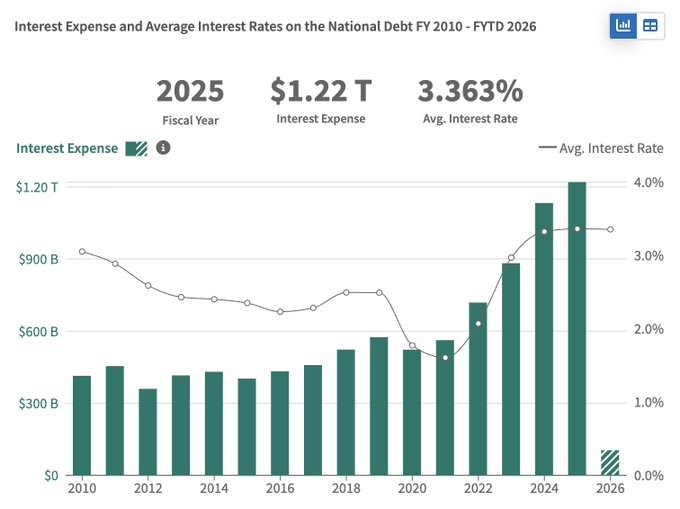
The US national debt is now $38.4 trillion The interest on the debt is $1.22 trillion The US govt brings in about $5 trillion in revenue from taxes, fees, tariffs. So the interest on the debt consumes about 25% of all US govt revenue (and growing). US govt spends $7 trillion per year, so the debt is growing by over $2 trillion per year. Interest expense on the US national debt is likely to become the largest item in the budget within the coming years, crowding out entitlements, defense and everything else the govt spends money on. You likely need to buy a lot more gold and silver. Buy assets that will survive and have value in the next currency.
Wall Street Mav tweet media
English
132
240
933
138K
rustyspark
rustyspark@rustyspark·
@OhHiMarkos @MurrayTheBard @PaulAnleitner I think the question you have to ask yourself is what was the heartwarming scene? What was charming? I don’t recall a very positive part of the experience. It all seems cynical. Pretty much every character top to bottom, even the “likable ones”.
English
0
0
0
40
Markos
Markos@OhHiMarkos·
@MurrayTheBard @PaulAnleitner Right. The premise is awesome which makes the fact that it didn't have an impact at least suspicious. Avatar could be so much better.
English
2
0
6
2.9K
Paul Anleitner
Paul Anleitner@PaulAnleitner·
Despite having the biggest box office numbers of all time, the Avatar franchise has had almost no cultural impact compared to Marvel, Star Wars, etc. It’s very strange. Why is that? Give me your best explanations.
Paul Anleitner tweet media
English
5.3K
250
7.4K
3.5M
rustyspark retweetet
Robert Bortins
Robert Bortins@TheRobertBshow·
A mother who raises four children to productive adulthood contributes more to GDP over 30 years than most corporate executives—we simply don't measure it.
English
117
868
7.4K
146K
rustyspark
rustyspark@rustyspark·
@KLeinenn20130 @JanetG988 @FOX9 Yes, and that payroll tax will need to go up every year to cover the increasing usage of the benefit, which will of course go over their projections
English
0
0
2
84
WoodrowWWPecker15
WoodrowWWPecker15@KLeinenn20130·
@JanetG988 @FOX9 I’m not sure how this will work? But I think this paid leave will be paid by a state fund which is collected thru this 0.88% payroll tax. So the employer won’t be writing the paycheck every week?
English
4
0
0
340
FOX 9
FOX 9@FOX9·
Minnesota's new Paid Family and Medical Leave Law, which allows up to 20 weeks of leave and paid benefits, will take effect starting Jan. 1, 2026. You can take paid leave to care for yourself during serious health conditions, like surgery, injury, a chronic condition, pregnancy, and childbirth, and other health needs certified by your provider. For family leave, it covers bonding with a child through birth, adoption, or foster placement, caring for a family member with a serious health issue, supporting a military family member called for active duty, or responding to a safety issue, including domestic violence, sexual assault, or stalking, for you or a family member. The law will provide up to 20 weeks of paid leave per year for eligible employees, including 12 weeks of personal medical leave and 12 weeks of family leave, both capped at 20 weeks total.
English
2.1K
549
3.4K
2.3M
rustyspark retweetet
Mike Lee
Mike Lee@SenMikeLee·
Raise your hand if you think Congress should pass single bills that your elected representatives have the chance to read and debate in the light of day, instead of passing bills that are thousands of pages long in the middle of the night, that no one has had the time to read. I tried doing it the right way tonight, and the Washington Swamp objected. SAD!
English
3.7K
8.7K
49.1K
502.2K
rustyspark
rustyspark@rustyspark·
@kurtknapp @o_lalonde @beinlibertarian Ok fair. It is a bit late to edit my original post. Can you consider it as a concern about sales tax and federal tracking and apparatus impact on Resale of finished goods from the original end user to another end user. Or person to person sales from non commercial entities?
English
0
0
0
8
rustyspark
rustyspark@rustyspark·
If we’re talking about the resale of the same, finished product multiple times… The only way you’re able track that and ensure payment the N’th time is to flip everything over to digital currency. Do you really want to tax person to person sales of a 15-year-old pair of jeans that someone decided to sell instead of gift to Goodwill?
English
1
0
0
20
rustyspark
rustyspark@rustyspark·
@o_lalonde @beinlibertarian Can we exclude resale of goods? I.e. government does not need to know when you spend $2 at a garage sale or classify the transaction on what you bought.
English
1
0
0
46
Oli
Oli@o_lalonde·
@beinlibertarian If I had to pick only one tax: ✅ Sales tax 🚫 Income tax 🚫 Capital gains tax 🚫 Tariffs Advantages: Simple: No need to declare, paid automatically. Fair: Proportional with consumption.
English
12
1
54
831
rustyspark
rustyspark@rustyspark·
Or perhaps the financial system needed a lever that they can pull to short it at a volume that’s enough to drive down the price and make it bounce like other assets that are unreliable on the market? So that this creates the perception of equal volatility for an asset that’s unlikely to truly depreciate…?!?
English
0
0
1
183
Adam Livingston
Adam Livingston@AdamBLiv·
BREAKING: Bitcoin just got invited into the “you don’t get to complain about liquidity ever again” club. Nasdaq just promoted IBIT into the same derivatives tier as AAPL, NVDA, MSFT, SPY, and QQQ. Read that again. Bitcoin is now in the same liquidity bracket as the assets that literally define the global financial system. They didn’t raise the options cap from 25,000 to 1,000,000 contracts because they “felt like it”. They did it because the market has already decided Bitcoin is a mega-cap asset whether Washington likes it or not. This is the moment every banker secretly feared. This is where Bitcoin stops being “that weird decentralized experiment” and becomes a fully weaponized regulated asset class with institutional-grade derivatives depth. You don’t scale options by 40× unless you know demand is about to detonate. You don’t place Bitcoin beside Apple and Microsoft unless you accept the uncomfortable truth that Bitcoin isn’t going away. You don’t let Wall Street run a million-contract derivatives book on Bitcoin unless you’re preparing for price discovery that will liquify every bear still clinging to 2018 talking points. This is the page where the story flips.
Adam Livingston@AdamBLiv

INCREDIBLY BULLISH NEWS FOR BITCOIN: Nasdaq just moved IBIT (BlackRock’s Bitcoin ETF) into the same regulatory class as the largest, most liquid equities on Earth. They are raising the options limit from 25,000 contracts → 1,000,000 contracts. That is 40× MORE ROOM for institutional derivatives exposure. This is the transition point from “ETF adoption phase” to derivatives market phase. And Bitcoin’s price discovery always goes vertical when derivatives scale. Bitcoin just got promoted to Mega-Cap Status! The rule filing literally says they’re doing this because IBIT has reached the same level of market cap, liquidity, and trading frequency as the biggest stocks. This is the category reserved for: AAPL NVDA MSFT SPY QQQ That’s the club Bitcoin is now in. The market is formally treating Bitcoin as a top-tier global asset class with no liquidity constraints.


English
68
404
2.7K
389K
rustyspark retweetet
AnarchoChristian
AnarchoChristian@AnarchoXP·
In Gaza. In the womb. In Hiroshima. In Nagasaki. In Yemen. In Waco. In Dresden. In Tokyo.
AnarchoChristian tweet media
Indonesia
1
22
100
2K
Liam McCollum
Liam McCollum@MLiamMcCollum·
Tucker says he hates the GOP. Hear me out: join the Libertarian Party, rebrand it ‘America First,’ make it a big tent w/ Tucker, Dave Smith, Bret Weinstein, Massie, MTG, etc., with four issues: the wars, affordability, free speech and immigration
English
786
416
5K
215.3K
rustyspark retweetet
Jeff Charles, Asker of Questions🏴
So, Marjorie Taylor Greene is resigning. I'll admit, I wouldn't have seen this coming. But when I read her announcement, it made sense to me. Here are some thoughts: Greene was an ardent MAGA figure. She was with Trump from the beginning. Yet, when she didn't follow the agenda 100%, she was cast aside. This shows us that, for many, loyalty to Trump is still more important than principles – even if it involves transparency as the world's most notorious sex trafficker. In her announcement, Greene wrote, “My sole ambition has always been to hold the Republican Party accountable for its promises to the American people and to prioritize America First,” but she lamented that “the political industrial complex of both parties is ripping this country apart” and that “not one elected leader like me is able to stop Washington’s machine from gradually destroying our country." She's not wrong. I think many elected officials start out wanting to change how Washington works. They either get forced out, or they resign, or they give in to the temptation to join the machine for power. Greene’s resignation forces a critical question: if loyalty to the MAGA cause isn’t enough to survive in Congress as a Republican, who truly holds power? The uniparty is a thing, despite what some might have us believe. Greene seems to have found this out firsthand. But what does this mean for us? After all, there is a reason most of us don't vote. Several polls have shown that one of the top reasons why is that people don't believe voting changes anything – regardless of which party is in power. For conservatives, especially, they have seen that government continues to grow even when Republicans control the executive and legislative branches. This isn't going to change anytime soon. For years, I've highlighted the importance of focusing on local government and community – as have many others. I think it's time for more of us to start taking this seriously. The federal government, for all intents and purposes, has become irredeemable. At best, it might be possible to slow it down. But at the end of the day, we must have local and state leaders willing to push back. At this point, it's the only chance for bringing about a society that actually values liberty. What do y'all think?
Jeff Charles, Asker of Questions🏴 tweet media
English
188
68
490
23.6K