Sympractical

3.3K posts

Sympractical banner
Sympractical

Sympractical

@sympractical

Become wise as serpents and innocent as doves.
Beigetreten Ağustos 2024
382 Folgt4.1K Follower
Angehefteter Tweet
Sympractical
Sympractical@sympractical·
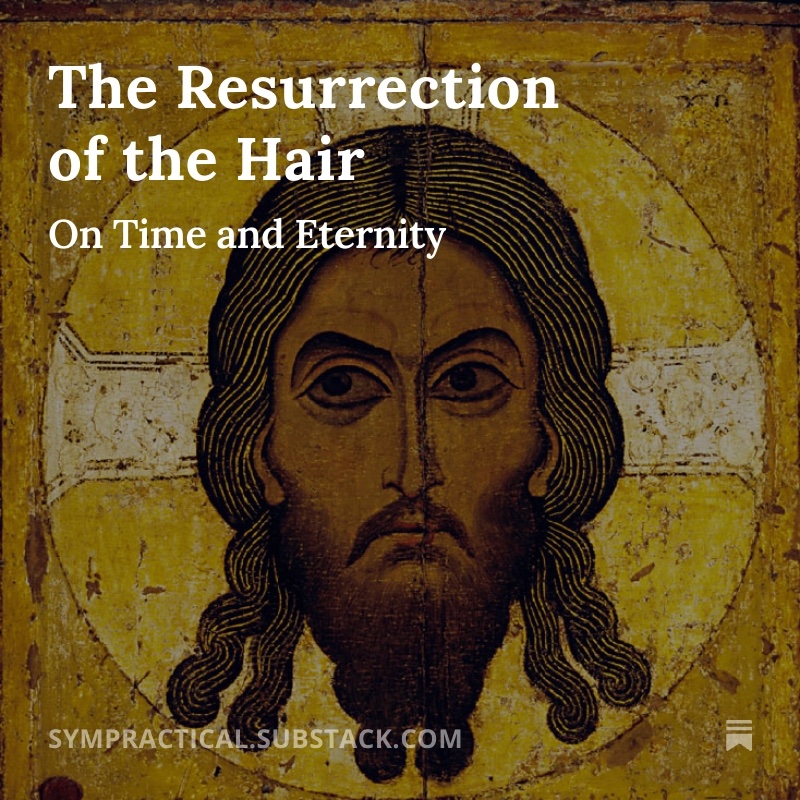
Continuing my meditations on the resurrection:
Sympractical tweet media
English
3
6
60
6.8K
Sympractical
Sympractical@sympractical·
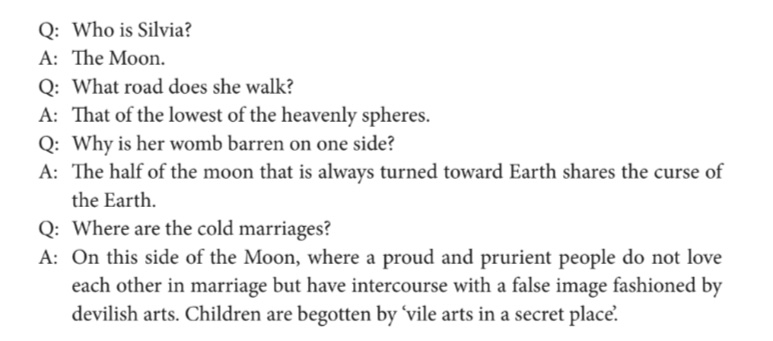
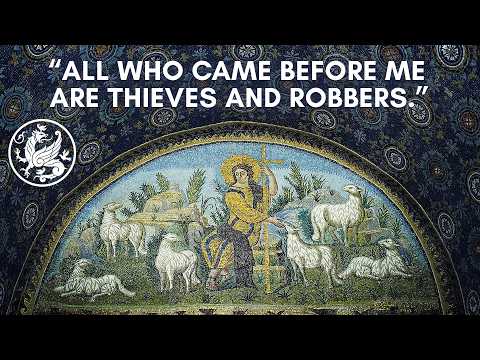
There is potentially another way to be renewed that doesn’t involve taking your clothes off, and it has to do with a certain kind of relationship with woman:
Sympractical tweet media
English
1
0
6
380
Sympractical
Sympractical@sympractical·
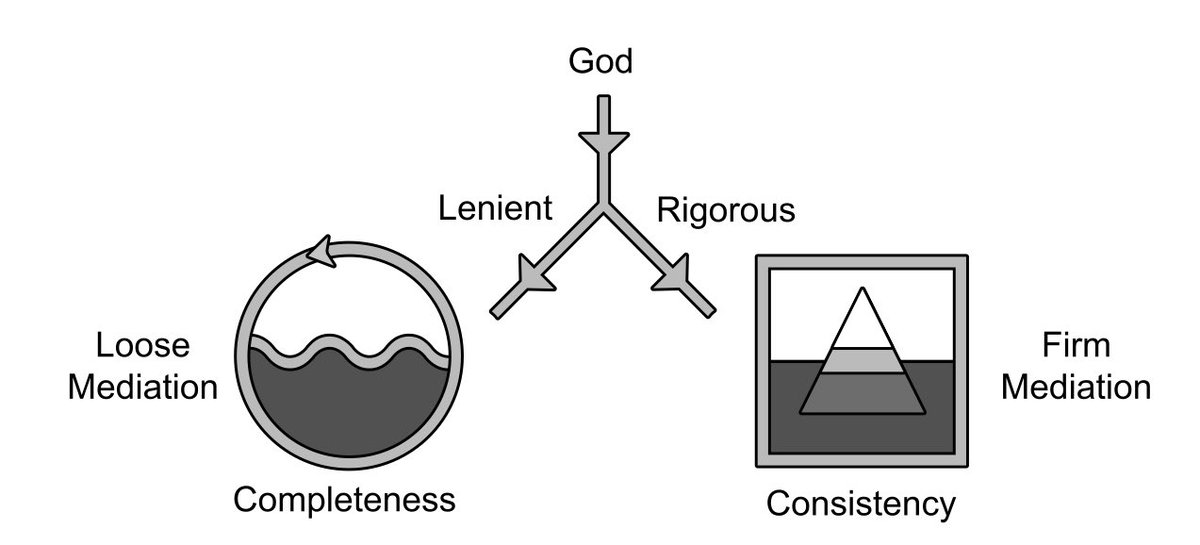
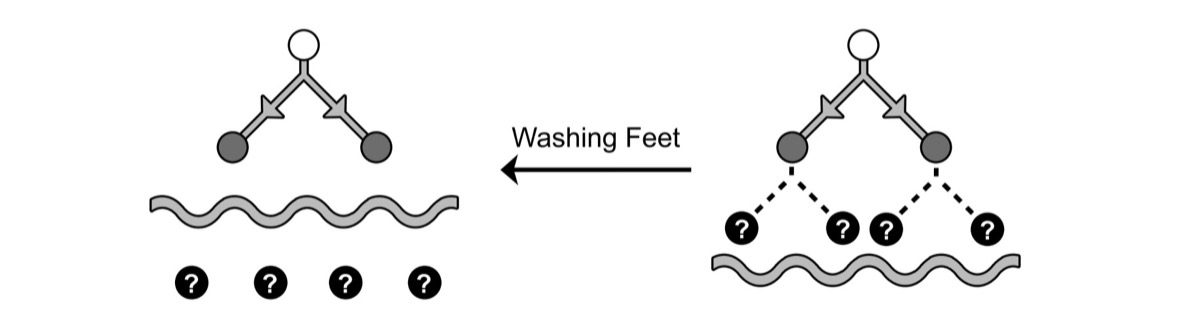
“Anchoring oneself to a narrow encounter with the Real allows a person to use multiple lenses (polytheorism) to trace out a larger, transcendent ‘Gestalt’ that crosses systemic boundaries” … Renewal via ‘rumination’ often requires loose polytheorism. To achieve this perspective, one often has to get “naked” (return to first principles). But the goal of renewal is not to get naked and stay naked. The question is, “what clothes will you put back on?” (How will you apply first principles?) Often the answer is, “the ones I took off.”
Michael Louis Thomas Sartori@MichaelLouisTh1

It’s a wonderful thing when people come into Orthodoxy through an experience of The Real. But whenever they defend their choice in rational or objective terms, they always end up advocating for trading the territory for the map. youtu.be/NOIG_KmgaQo?si… Jonathan’s critique of penal substitution—that it offers a "very narrow vision" lacking a full cosmology or ontology—makes perfect sense if we are evaluating worldviews based on their ability to provide a comprehensive, internally consistent system. Orthodoxy beautifully fills every slot of this framework with complementary practices like the liturgy, fasting, and the calendar, providing a highly coherent and livable worldview [2, 3]. However, according to the epistemological models of O.G. Rose, the danger of a perfectly totalizing system is a psychological defense mechanism called "map-vanishing" [4, 5]. When a theological system becomes so comprehensive and immersive that it lacks any essential contradictions, we risk mistaking the pristine map for the raw, chaotic territory of reality [4, 6]. What this critique overlooks is the phenomenological necessity of the rupture, or what Kurt Gödel's theories might call the "Gödel Point" [7, 8]. Protestantism, particularly in its conversion experience, doesn't always try to provide a totalizing map; instead, it forces the believer to encounter the Real at a singular, narrow point where human logic breaks down and divine grace invades [7-9]. If a believer touches ultimate, experiential reality at this single, shattering point of contact, it is not strictly necessary to backfill every other domain of their life with perfectly complementary philosophies [7, 8]. Leaving the map deliberately "incomplete" ensures the believer remains anchored to the territory rather than retreating into the comfort of a perfectly orchestrated theological cathedral [8, 10, 11]. Finally, what looks like a vulnerability to a "hodge podge" of outside secular or philosophical views might actually be an epistemological strength [12]. Because the whole of reality will always exceed the limits of any single human framework, demanding that every aspect of life fit perfectly into one comprehensive "monotheory" can lead to blindness [13, 14]. Anchoring oneself to a narrow encounter with the Real allows a person to use multiple lenses (polytheorism) to trace out a larger, transcendent "Gestalt" that crosses systemic boundaries [12, 15, 16]. By refusing to force all categories of life into one rigid, pre-packaged ideology, this approach honors the fact that God and the true territory of reality will always overflow the boundaries of human maps [14, 17].

English
1
1
23
1.2K
Michael Louis Thomas Sartori
Michael Louis Thomas Sartori@MichaelLouisTh1·
It’s a wonderful thing when people come into Orthodoxy through an experience of The Real. But whenever they defend their choice in rational or objective terms, they always end up advocating for trading the territory for the map. youtu.be/NOIG_KmgaQo?si… Jonathan’s critique of penal substitution—that it offers a "very narrow vision" lacking a full cosmology or ontology—makes perfect sense if we are evaluating worldviews based on their ability to provide a comprehensive, internally consistent system. Orthodoxy beautifully fills every slot of this framework with complementary practices like the liturgy, fasting, and the calendar, providing a highly coherent and livable worldview [2, 3]. However, according to the epistemological models of O.G. Rose, the danger of a perfectly totalizing system is a psychological defense mechanism called "map-vanishing" [4, 5]. When a theological system becomes so comprehensive and immersive that it lacks any essential contradictions, we risk mistaking the pristine map for the raw, chaotic territory of reality [4, 6]. What this critique overlooks is the phenomenological necessity of the rupture, or what Kurt Gödel's theories might call the "Gödel Point" [7, 8]. Protestantism, particularly in its conversion experience, doesn't always try to provide a totalizing map; instead, it forces the believer to encounter the Real at a singular, narrow point where human logic breaks down and divine grace invades [7-9]. If a believer touches ultimate, experiential reality at this single, shattering point of contact, it is not strictly necessary to backfill every other domain of their life with perfectly complementary philosophies [7, 8]. Leaving the map deliberately "incomplete" ensures the believer remains anchored to the territory rather than retreating into the comfort of a perfectly orchestrated theological cathedral [8, 10, 11]. Finally, what looks like a vulnerability to a "hodge podge" of outside secular or philosophical views might actually be an epistemological strength [12]. Because the whole of reality will always exceed the limits of any single human framework, demanding that every aspect of life fit perfectly into one comprehensive "monotheory" can lead to blindness [13, 14]. Anchoring oneself to a narrow encounter with the Real allows a person to use multiple lenses (polytheorism) to trace out a larger, transcendent "Gestalt" that crosses systemic boundaries [12, 15, 16]. By refusing to force all categories of life into one rigid, pre-packaged ideology, this approach honors the fact that God and the true territory of reality will always overflow the boundaries of human maps [14, 17].
YouTube video
YouTube
English
1
1
7
1.7K
Paul Vander Klay
Paul Vander Klay@PaulVanderKlay·
🧵 "The Orthodox moment" as I call it has been debated. I think it's incontestable that Orthodoxy has seen a surge, especially since the Peterson-Pageau pipeline opened up at the end of the 20-teens. Every movement like this involves a lot of motivational pieces but there are patterns.
English
8
1
50
5.5K
Laeth
Laeth@laethcore·
spelling things out is exactly what it sounds like. to take the spell out of them.
English
1
1
16
395
Sympractical
Sympractical@sympractical·
“A Tale of Two Enoch’s”
English
1
0
14
553
Sympractical retweetet
Owen Clark
Owen Clark@clrk_o·
To mill, to churn and to press, super important symbolically
English
1
1
18
795
Sympractical retweetet
Sympractical
Sympractical@sympractical·
Dreams are oriented towards “completeness.” You are right that dreams don’t resemble our conscious experience of reality. But that is partly because reality is much larger and more complex than we can handle consciously. So dreams (sometimes) simulate the “completeness” of reality to give us a taste.
Sympractical tweet media
English
4
9
54
1.6K
Sympractical
Sympractical@sympractical·
Lewis’ love for the epic is also telling of its place in the Western canon
English
0
0
7
410
Sympractical
Sympractical@sympractical·
Snorri chooses the pattern of the Aeneid as his point of departure for the history of the northlands.
English
2
0
10
537
Sympractical retweetet
NWO
NWO@NEETWorldOrder·
There's this persistent, poor habit in academia of dismissing the Aeneid outright as Homeric fanfiction or Roman propaganda, when it is really the seminal work of a uniquely Western branch of literature (the Greeks and Hebrews being Eastern, though no less influential).

English
2
1
60
4K
Sympractical
Sympractical@sympractical·
“Depends who the technician was, of course”
English
0
0
7
268