Philipp Erfurth

92 posts

Philipp Erfurth banner
Philipp Erfurth

Philipp Erfurth

@theErforce

Inequality, economic history and policy. UU, SAIS, CUNY and UCONN. Also passionate fan of hopeless football/soccer team (no, not ManUtd).

Beigetreten Ağustos 2017
2.5K Folgt2K Follower
Angehefteter Tweet
Philipp Erfurth
Philipp Erfurth@theErforce·
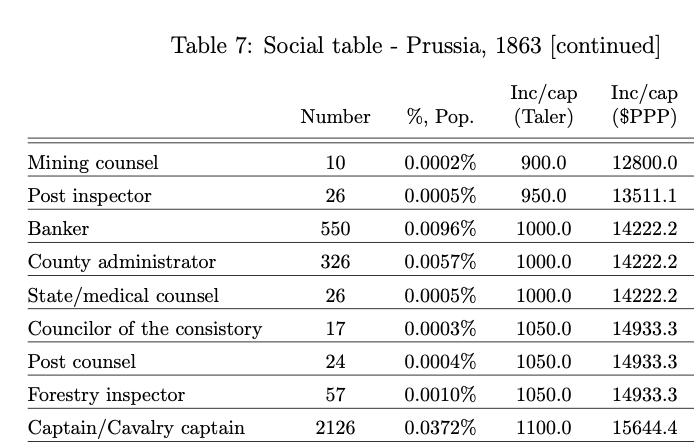
Social tables are a treasure trove of information - easy to fall into a Rabbit Hole. One example: Mean income of a forestry inspector was higher than for a banker in 1863 Prussia. See my new paper featuring German Social Tables: osf.io/preprints/soca…
Philipp Erfurth tweet media
English
2
7
60
0
Philipp Erfurth retweetet
Branko Milanovic
Branko Milanovic@BrankoMilan·
Historical social tables: advantages, methodology, and problems A new papee by Erfurth, Gomez Leon, Gabbuti and Milanovic ehes.org/wp-content/upl…
English
0
4
12
3.1K
Philipp Erfurth retweetet
Stone Center on Socio-Economic Inequality
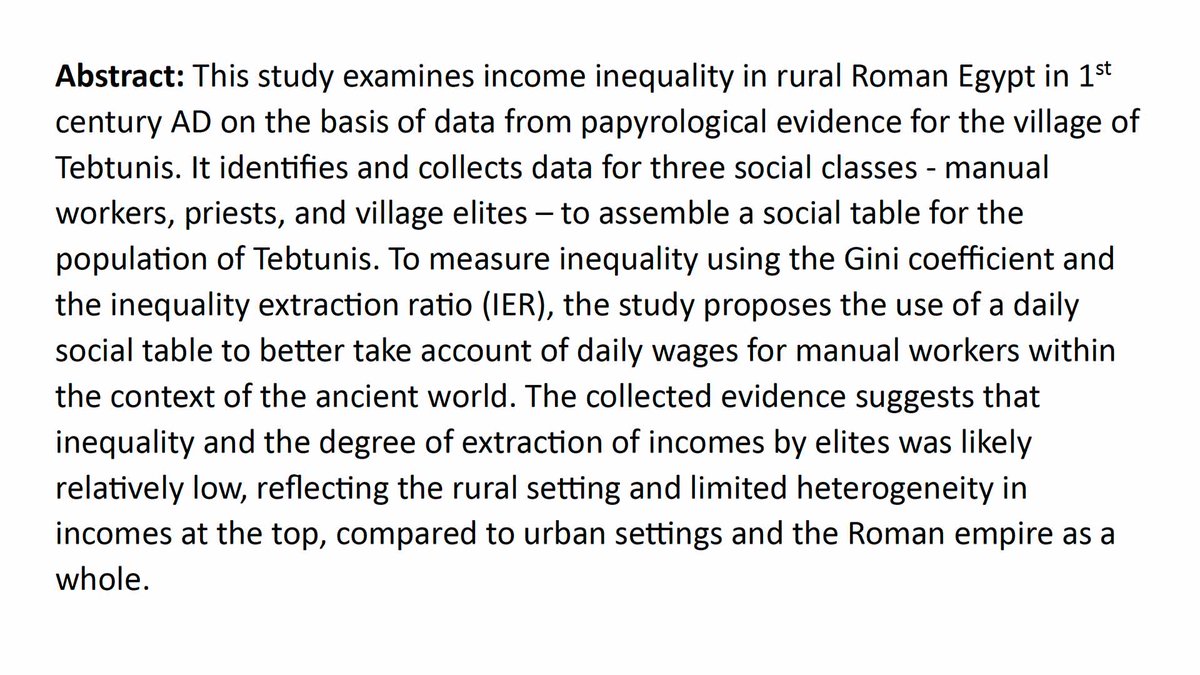
How unequal was a rural society in the Roman Empire? A new WP by Philipp Erfurth @theErforce examines income inequality in rural Roman Egypt in 1st century using daily social tables that build on data from papyri. bit.ly/4aniP7l
Stone Center on Socio-Economic Inequality tweet media
English
3
5
20
5.2K
Philipp Erfurth
Philipp Erfurth@theErforce·
This was previously out as Stone Center Working Paper #46 - so many thanks to @stone_lis as well as all colleagues providing invaluable comments and suggestions!
English
0
0
1
272
Philipp Erfurth
Philipp Erfurth@theErforce·
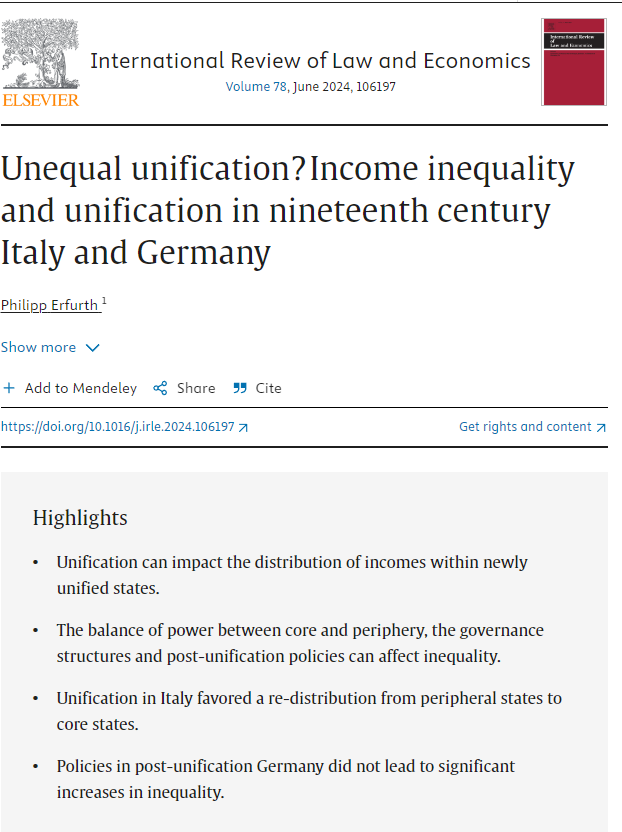
Publication alert🚨 Paper 2/3 of my PhD now out! How did unification in 19th century impact income inequality in DE and IT? Using new social tables for Germany, I study balance of power between core & periphery in newly unified states. Find out more here: doi.org/10.1016/j.irle…
Philipp Erfurth tweet media
English
1
7
42
13.8K
Philipp Erfurth
Philipp Erfurth@theErforce·
@BrankoMilan Excellent insights on who benefitted (or did not) from growth in the past 30 years and how trends in global inequality changed since the financial crisis. If you are interested in global inequality, this is a must read!
English
0
0
2
524
Branko Milanovic
Branko Milanovic@BrankoMilan·
My new paper "The three eras of global income inequality 1820-2020, with the focus on the past 30 years" is just out in World Development. Access is free for 50 days. Here is the link: sciencedirect.com/science/articl…
English
25
263
687
212.9K
Philipp Erfurth retweetet
Branko Milanovic
Branko Milanovic@BrankoMilan·
The 1848 Revolution is possibly one of the most interesting episodes for class/social analysis. It is not surprising that in the Cagé-Piketty book it gets much analyzed, incl. Tocqueville's and Marx's writings on it. See this: globalpolicyjournal.com/blog/11/05/202…
English
3
52
175
38.2K
Philipp Erfurth
Philipp Erfurth@theErforce·
@BrankoMilan Social tables are so useful because they allow us to look at inequality within societies with little or almost no data, esp. tax data. To build a social table, you need incomes of classes and their share in society. See cool use of them in @BrankoMilan ‘s new WP studying the 1%.
English
1
0
2
268
Branko Milanovic
Branko Milanovic@BrankoMilan·
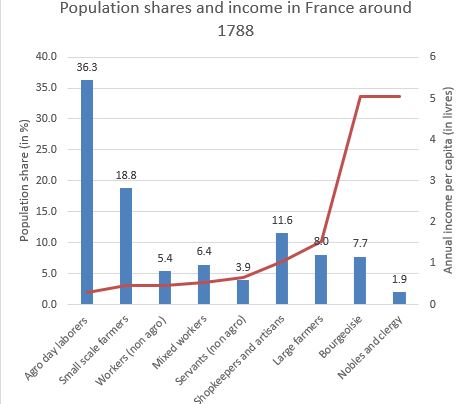
The social table for pre-Revolutionary France: 1.9% of population are nobility & clergy, with an average income ~5 times the mean. (From Morrisson & Snyder)
Branko Milanovic tweet media
English
6
22
88
16.3K
Philipp Erfurth
Philipp Erfurth@theErforce·
@BrankoMilan Absolute must-read working paper by @BrankoMilan. Social tables are endlessly insightful when it comes to illuminating historical inequality. Great use of social tables in this WP to study the top 1%.
English
0
0
2
623
Branko Milanovic
Branko Milanovic@BrankoMilan·
Many interesting results in "How rich were the rich?". Societies w/ the highest income concentration (top 1% share in excess of 30%): Iraq 900, Byzantium 1000, Moscow region 1811, UK 1867, British-ruled Kenya 1927. stonecenter.gc.cuny.edu/research/how-r…
English
7
79
220
98.8K
Philipp Erfurth
Philipp Erfurth@theErforce·
@BrankoMilan Absolutely true. Curious that Tanizaki refers to money like in the below but without actual amounts: „Taeko already knew the value of money in the bank(..)and she displayed her postal-savings book. If you ever need a little spending money - she added - just let me know“(P. 15)
English
1
0
1
214
Branko Milanovic
Branko Milanovic@BrankoMilan·
For example, "The Makioka sisters" which on 600 pages deals almost exclusively with marriage and social class does not provide almost any (or perhaps none at all!) numbers on incomes.
English
1
1
15
10.1K