Charlie M

3.2K posts

Charlie M banner
Charlie M

Charlie M

@traderCharlieM

Setups Over Friends | Study great traders and great stocks, Success Leaves Clues | I Share My Opinions, Nothing is Financial Advice

From Hawaii Beigetreten Ocak 2021
143 Folgt18.8K Follower
Angehefteter Tweet
Charlie M
Charlie M@traderCharlieM·
This trader turned $5k to $100M in 10 years. He live-streamed the last 3 years, going from $3M to $100M. I watched every stream and recorded over 1,000 clips of the most valuable and funny moments. You can watch them all here (for free): youtube.com/playlist?list=…
Charlie M tweet media
English
51
229
1.4K
280.5K
Charlie M retweetet
Charlie M
Charlie M@traderCharlieM·
"Something I don't think a lot of people reflect on but, you're gonna be in a drawdown most of the time. You're not gonna be at all-time highs every day. Your accounts are gonna be at all-time highs maybe, if you're a swing trader, maybe 5-10% of the time, 15 or 20% in a good, good market year. You're gonna have these periods that last from 3 months, 6 months where you're gonna be below all-time highs, that's just a fact, that's just how things work." – @Qullamaggie
English
8
14
159
12.9K
Charlie M
Charlie M@traderCharlieM·
@RealAdamWy Personal notes, not sure if ill release or not yet
English
0
0
0
152
Adam
Adam@RealAdamWy·
@traderCharlieM This is great. Are these personal notes or can I find them online somewhere?
English
1
0
0
138
Charlie M
Charlie M@traderCharlieM·
Setups expanding across Memory, Semis, Precious Metals, and AI Infra. The question is, will they hold? Actually, the real question is, did you execute your process and get on the right stocks, at the right time...regardless of if it works out or not.
Charlie M tweet media
English
2
3
46
4.3K
Charlie M retweetet
Barry Bivingston
Barry Bivingston@lesse_jivermore·
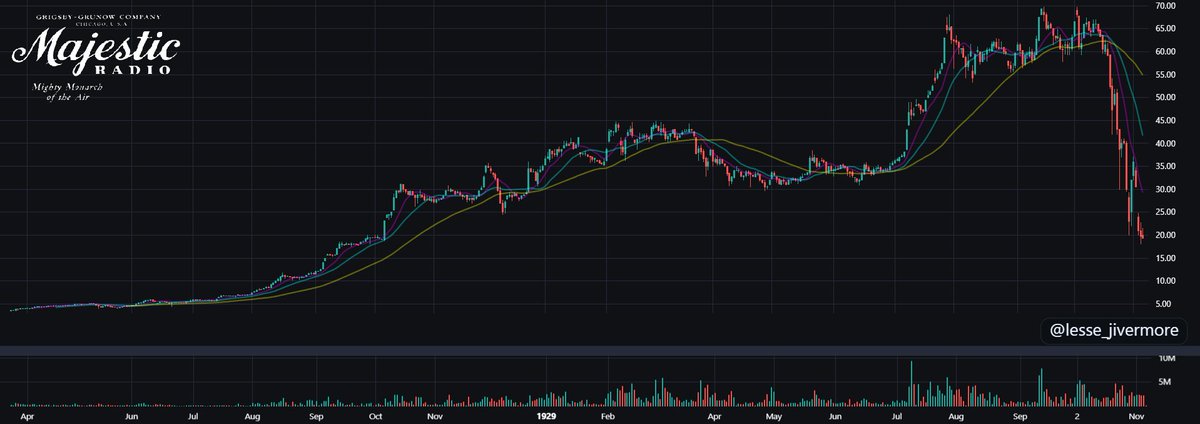
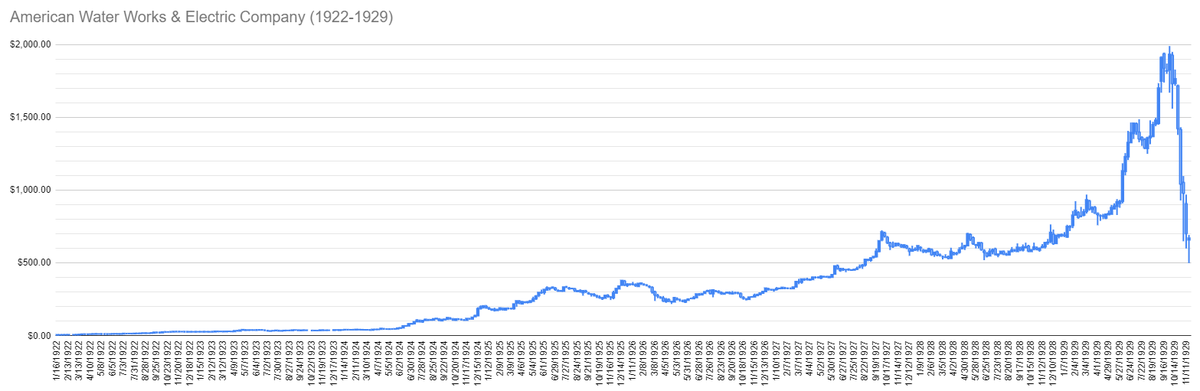
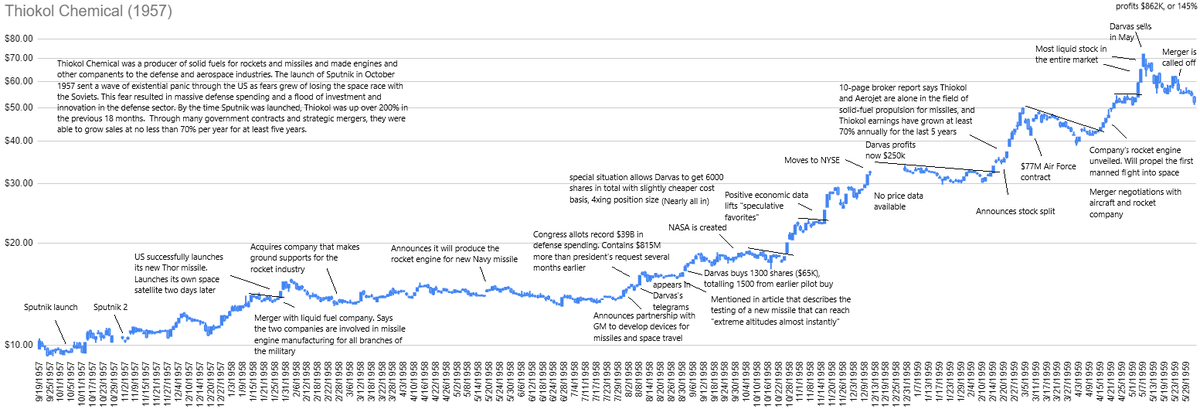
After years of manually reconstructing 1920s stock charts and digging through countless newspaper articles, my deep dive on the Roaring Twenties radio stock mania is live. This isn’t just RCA. It covers: – Penny stocks – Curb Exchange stocks – Regional exchange leaders – “Meme” stocks that collapsed 70% in three days – Liquid leaders that ran 2,000%+ 20+ original charts across 14 stocks with news flow and financials throughout. RCA charted from 1919 through an 8,000%+ run into 1929. Full 30+ page deep dive: open.substack.com/pub/barrybivin…
Barry Bivingston tweet media
English
14
38
179
34.5K
Barry Bivingston
Barry Bivingston@lesse_jivermore·
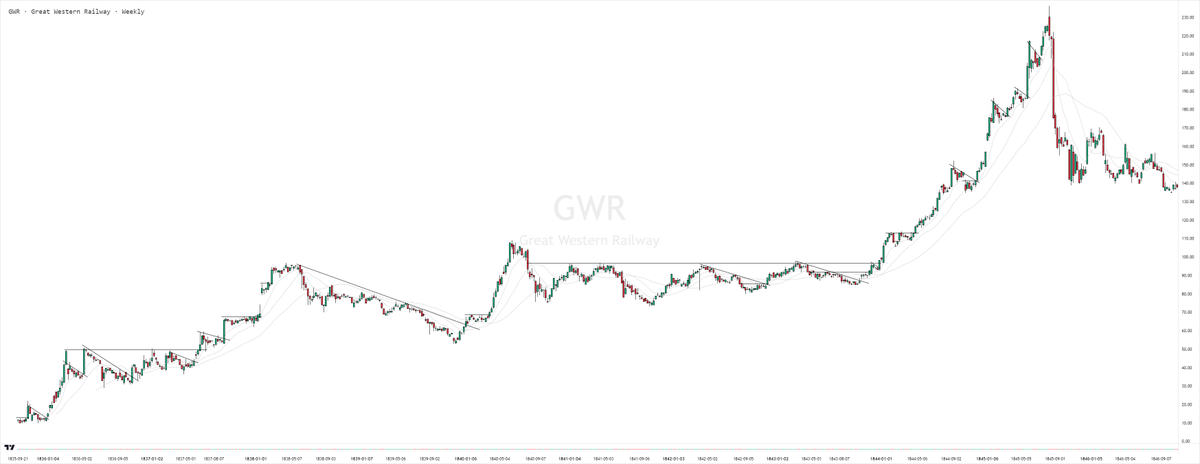
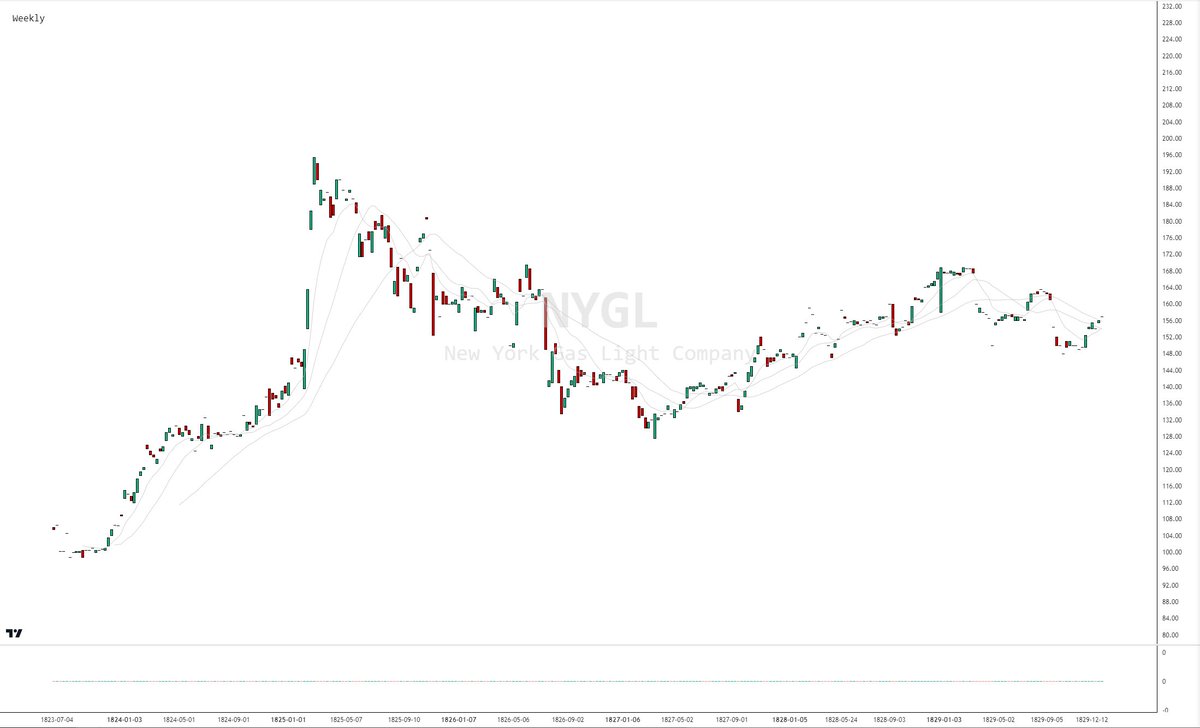
I’m excited to announce that I’ve teamed up with @IntlSpeculator to build one of the most comprehensive historical US stock market databases ever attempted. We’re collecting daily equity data from all major US stock exchanges back to 1815, well before the CRSP era. Most existing datasets before 1926 are weekly or monthly (often without full OHLC). Daily data prior to the mid-20th century is extremely sparse. Our goal is to reconstruct that missing history as rigorously as possible, and to do so with full OHLC candles where possible. We'll be working with professors at leading US universities to ensure our methodology meets a high standard of academic scrutiny and historical accuracy. We’ve already catalogued 1815–1829, with OHLC reconstruction becoming possible from ~1828 onward (earlier years rely primarily on bid/ask quotations). Below is a weekly chart of the New York Gas Light Company from its IPO. NYGL has the distinction of being the longest continuously listed stock on the exchange. Today it's known as Consolidated Edison $ED. It was the first gas company to list on the exchanges and was immediately one of the most popular issues traded at the time of its listing in 1824. As the database develops, I’ll be sharing charts, anomalies, and insights from early US markets here. For deeper historical dives, I write more on my Substack: @barrybivingston1" target="_blank" rel="nofollow noopener">substack.com/@barrybivingst
Barry Bivingston tweet media
English
15
17
256
25.9K
Charlie M retweetet
DojiStar
DojiStar@DojiStar11·
Situational awareness is kind of important. It's been rough for a while now.
DojiStar@DojiStar11

English
1
1
23
3K
Charlie M
Charlie M@traderCharlieM·
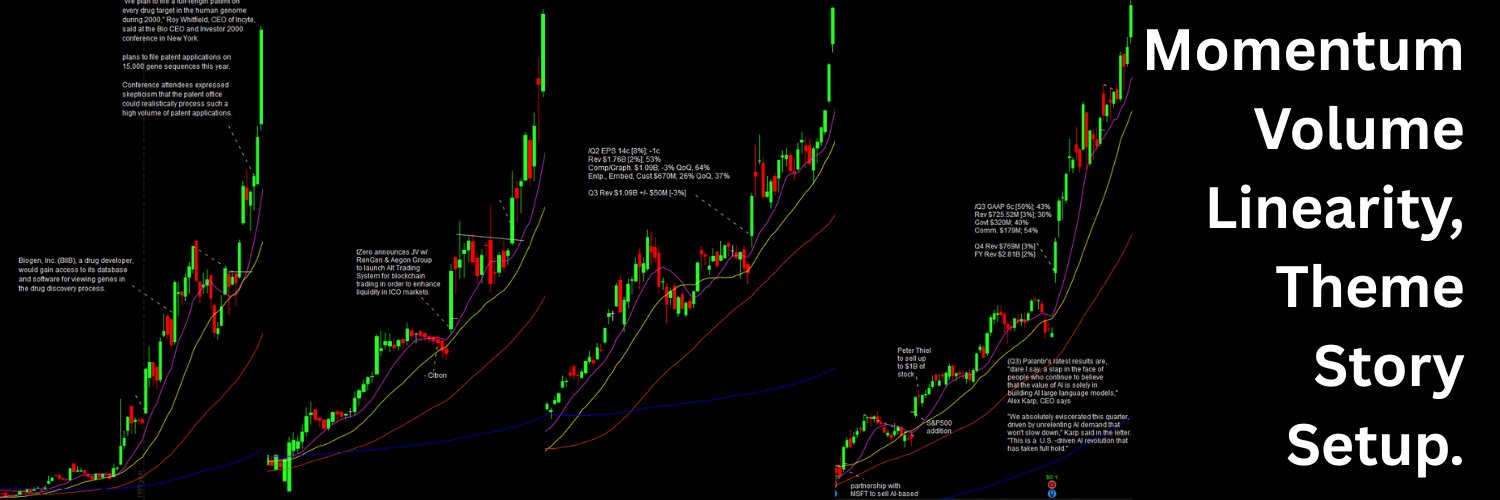
2015 was definitely a hard year. However I think there was a multiple periods that had good moves that could've made your year. The February rally had some nice moves in biotech and cybersecurity, which were the 2 major themes at the time. 2/10: AAPL CYBR PANW GENE NBIX 2/12: MNDT BMRN 2/13: IBB CEMP 2/19: PCYC 2/20: SWKS HZNP 2/24: EYES Then in May, while the indices mask it, there was a few week push in leading names, most notably China, which at that point became the #1 theme. Biotech, Cybersecurity, and now Semi's were some of the other themes that were relevant at the time. 5/7: JMEI HUBS 5/8: NFLX DATA 5/14: AMBA SWKS QRVO YOKU 5/15: ADXS 5/18: PANW 5/19: MOMO SHAK 5/21: MNDT 5/29: SUPN HRTX 6/1: SINA 6/3: OSPN Then the rally from mid-to-end of July had some fantastic moves in large-cap leadership like AMZN NFLX META, along with some biotech ACAD SRNE PGEN (and SCO, oil short). Zanger on July 17th even said "Stocks are soaring like it's 1999 again with moves as large as any seen during the dot com bubble. With gains of $60 to $150 in just under a week, established companies like Google, Netflix, and Amazon are among the strongest movers." I feel like AI LLM's still give far too general answers on summarizing markets, especially with such a specific system like CANSLIM where we aren't really trading the "market" but a very small, specific batch of growth momentum leaders. Now that I'm looking at my notes, I August/September was probably one of the worst months of the year in terms of opportunity. Pre-waterfall decline is filled with setups that led to breakeven/losing trades, and after the parabolic long setup on the indices which was admittedly a decently fat pitch, the setups in the leading liquid leaders for all of September led to breakeven and losing trades. Only winning BO that I found at that time was ATVI. Tier 1 META AMZN GOOG NVDA TCOM ATVI Tech PYPL NFLX EXEL FIT TREE LNKD BKNG TCOM EXPE HUBS ADBE ( check for yourself :D ) From October to EOY, despite what looks like a powerful market rally, it was relatively uneventful when it comes to the actual tradable universe imo (another reason why indices cant be the only proxy for determining mkt conditions). Beside catchable moves in AMZN META, the rest of the moves in the leaders was characterized choppy, sloppy, and sluggish action where most trades ended up in breakeven trades or to stop you out just to grind higher. But instead of taking my opinion, you can just check for yourself, heres my Universe Summary at the time for Q4 2015: Tier 1 META AMZN GOOG NVDA TCOM ATVI Tech PYPL NFLX EXEL FIT TREE LNKD BKNG TCOM EXPE HUBS ADBE Semis CRUS AVGO MXL IPHI China BABA NTES TCOM BIDU QUNR SINA Retailer NKE SKX UAA Randoms - PACB NHTC PLNT XOMA AVXL WW Biotech falls off a cliff; IWM seriously lagging IMO, the Feb and May rally was the easiest money environments, with mid July being decent. Everything after that was...bleh. credits to @traderwillhu for the Model Book tool :)
Charlie M tweet mediaCharlie M tweet mediaCharlie M tweet media
Clement Ang@Clement_Ang17

This was the market in 2015, and 2016 was not exactly smooth sailing too. The big opportunity came Aug/Sept of 2015. From Grok: Sector Rotation: A Core Similarity Current Market (2026 YTD): Early 2026 has been marked by significant sector rotation away from mega-cap technology and growth stocks toward cyclical, value-oriented, and defensive sectors. This aligns with your description of a "challenging" environment with "a lot of rotation." Tech has underperformed (down ~0.4% YTD in January), while energy, materials, industrials, and consumer staples have led gains. This broadening of leadership is seen as a reversal from 2025's AI-driven tech dominance, where large-caps outperformed small-caps by a wide margin (19.78% vs. lower returns for small/mid-caps). Comparison to 2015-2016: 2015 was a flat, volatile year with defensive rotation (e.g., consumer staples and health care outperformed amid global concerns like China's slowdown and oil price crashes). Energy and materials lagged severely. 2016 saw a sharp rotation into cyclicals as the market recovered from an early-year selloff, with energy, financials, materials, and industrials leading. This broadening helped drive overall gains.

English
4
7
61
8.9K
Charlie M
Charlie M@traderCharlieM·
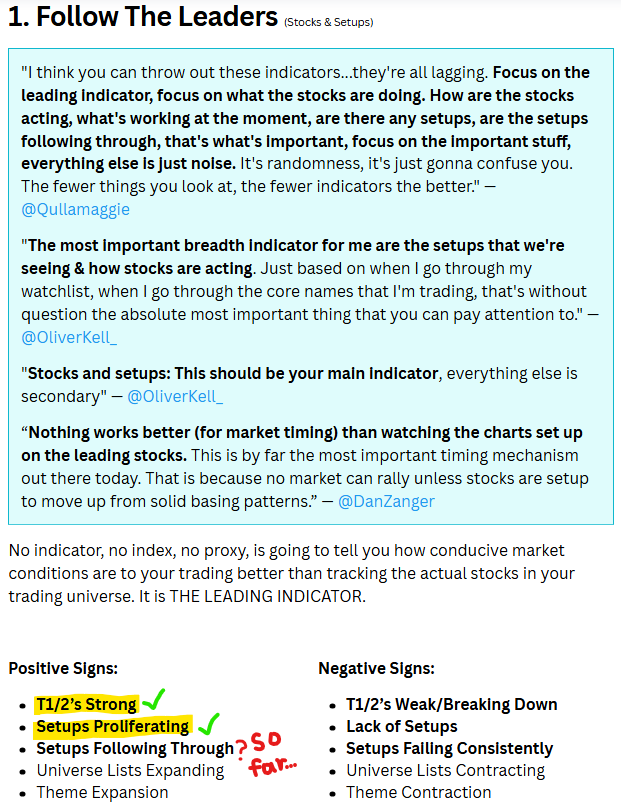
When determining market conditions, it can be so tempting to search for clarity by adding complexity. More indicators, more proxies, more things to track. But mastery more of then not is the removal of complexity. Looking at less, yet seeing more. Not to mention that markets are seldom black and white. Markets reside in a "gray zone" most of the time, where conditions are lukewarm. Where there are both arguments to be made to be bullish/bearish at the same time. Where it isn't "free money", but it isn't exactly "hard penny" either...
Charlie M@traderCharlieM

"I think you can throw out these indicators...they're all lagging. Focus on the leading indicator, focus on what the stocks are doing. How are the stocks acting, what's working at the moment, are there any setups, are the setups following through, that's what's important, focus on the important stuff, everything else is just noise. It's randomness, it's just gonna confuse you. The fewer things you look at, the fewer indicators the better." – @Qullamaggie

English
2
4
49
8.4K
PL
PL@plevchen·
Clarity is a state of radical honesty with self. So it’s a state of being rather than a mental construct. We all lie to ourselves because it is too uncomfortable to face certain aspects of our behaviour or character or what we consider “identity”. In a world dominated by “races to the top” in various “games”, if you let too many outward voices in they can overpower your sense of faith or trust in self. Your trust in yourself IS your main asset. It needs to be protected and carefully nurtured. In order to stop tripping over the same obstacles, you need clarity. In order to have clarity you, must practice radical honesty with self. Radical honesty with self is aligned with radical honesty with others. In order to develop radical honesty with self, you need to practice FACING the discomfort of the realisations about your behaviour. The act of facing is simply a relentless, present awareness. Just be aware and observe. The next step you must take presents itself to you. This next step is THE WORK. You must move through the fear to take the next step to change behaviour, ie get on with THE WORK. You move through the fear/discomfort, not by overcoming but by accepting and embracing that it’s there, and just letting it be. It’s just not so important, re weight your attention abit. Whether you feel like sht or you feel great, THE WORK still needs doing. You are subconsciously making “the fold here”. It’s easier especially if you’re “smart” for your mind to come up with some alternate story so you don’t have to face the discomforting reality. Just don’t let it do that and face it. Don’t make the fold. This is such a subtle spot, and it’s draining massively from personal evolution. Once you stop clinging to the idea that you’re a success or a failure or great or useless, you can get on with the ACTUAL WORK. To me it feels like a state of devotion, like mellow out you identity to the point where you’re not so important, then you can actually focus on the WORK that’s important. Radical honesty + relentless desire to pursue the actual work is your compass to your dreams. The more you do it, the easier it gets. Get these flows/loops in behaviour operational, get them up and running! No trade breakdown, or service, or discord or your favourite trading hero, or trading interview is going fix that. They are there to get you started, to sign post to inspire. Or sometimes, imo the most valuable, to make you believe you can do it. Martin Scorsese talked about the most valuable thing his “great teacher” taught him: which is the belief that he could make great movies! I got the belief that I can crush in trading way beyond what I thought was possible from @Qullamaggie for which I’m forever grateful. But after this push, you inevitably face the biggest obstacle. And it’s not the market or Kenny boy. They’re but a respected evolving adversary in “the ring”/dojo. But the biggest barrier is YOU. So, to sum up - signs you’re on the right path: 1) you get out of bed every day with relentless desire to seek the answers to WHAT IS TRUE in markets. 2) you get out of bed every day with relentless desire to confront your character or behaviour “leakage”. Think of these as “settings” on a control panel, they can be changed. Some knobs turn slowly and are difficult to shift. But they do move over months and years. Your value judgements about your progress don’t matter. FOCUS ON THE WORK. This is as much a note and reminder to self. If you find this post interesting, then this mental template it may help you too.
English
2
2
21
1.1K
Charlie M retweetet
Charlie M retweetet
Barry Bivingston
Barry Bivingston@lesse_jivermore·
The Beginning of The End: The Merger That Marked The Last Roar of the Roaring Twenties ------------------- The exuberant bull market is in its fifth year. Traders are throwing hordes of money at new speculative technology stocks left and right. But today, something feels different. Despite the fact that the market has been gripped by a money-making mania for the last several years, fueled by easy money, new technologies, lower inflation, and unmatched economic growth, the euphoric feeling in the air today is powered by something truly special. Today, the largest legacy media company in the market announced a merger with the biggest speculative football in the hottest new telecommunications industry of the last decade. The announcement sends stocks of other speculative tech stocks soaring and puts the market on its final euphoric high before the inevitable crash sends the Street running in panic. The day I’m describing is December 14, 1928, when the market learned of the impending merger between Radio Corporation of America and the Victor Talking Machine Company. But you’d be forgiven for thinking this was the AOL–Time Warner deal in early 2000, seventy-one years later. The similarities and the role each merger played in supercharging late-cycle speculation are striking. In both of the major US stock market bubbles of the last century they have both ended with a massive merger that sends the rest of the market into overdrive to cap off the last of the speculative rallies as the bull market enters its final days. In the 1990s, the major merger was between the established old media empire, Time Warner, and the hot new internet company, AOL to form the infamous AOL Time Warner. The merger was announced in January of 2000, just a few months before the peak of the bull market. Similarly, the major merger of the 1920s market was that of RCA and Victor Talking Machines to form RCA Victor, also just months before the market peaked before the crash. Today, we are going to take a look at the RCA Victor merger in more detail to learn about how it fit into the market narrative at the time and how it propelled the more speculative parts of the market higher. In the roaring 1920s, the world was changing fast. New processes of mass production were allowing for goods of all sorts to be manufactured in massive quantities at rates that the world had never seen before. New technologies were emerging left and right thanks to the proliferation and mass adoption of electricity. Electric ovens, refrigeration, electric lighting, automobiles, sound and video recording tech were all the rage. The first talking movie, the Jazz Singer, was released in 1927 by Warner Brothers. Western Electric, a subsidiary of AT&T, was making massive improvements in the field of sound recording along with companies like Westinghouse, and General Electric. Amid the hype of sound recording and talking pictures (sound movies), was the radio industry. In 1920 only a few thousand radio sets had been sold. By 1929 millions of radio sets were being sold annually. Radio was at the very center of the most intense speculation in the market and among the general population. They thought radio would be the ultimate futuristic medium that would transform human life forever, much like the internet or AI. There were depictions of radio doctors, exactly like telehealth services today, radio pictures (television), radio phones that would allow you to communicate with people much like face time calls today, radio controlled airplanes, and even methods of prospecting gold through the use of heavy radio equipment. Radio, and sound technology more broadly, was the most speculative of the market themes of the day. Among the radio companies, one name alone stood above all others, the Radio Corporation of America, better known as RCA, or simply, Radio. RCA was quite unique in its organization. It didn’t manufacture a single radio or piece of equipment in its early days, but was instead a patent company. It was formed as a patent partnership between General Electric, Westinghouse, and United Fruit (they wireless communication infrastructure). The patents the company controlled touched essentially every single aspect of the production of radios. It was virtually impossible to make a modern radio in the US without paying some sort of patent fee to RCA. So, RCA was the perfect vehicle to play as a bet on the growth of the US radio market. If any manufacturer in the US wanted to build and sell a radio, it had to pay RCA patent royalties. Although RCA didn’t make radios itself in the early days, it did sell radios like the RCA Radiola, using its brand name. It outsourced the actual manufacturing to Westinghouse and GE, who owned the patents of RCA. Infamously, RCA never distributed a single dividend in the decade. Most established, large and profitable companies gave out extra earnings as dividends, but this was not the case with RCA. Its earnings flowed back to its parent companies, GE, Westinghouse, and United Fruit, through license, patent royalties, and manufacturing and other agreements. RCA itself was not exactly an independent company. Because its IP was controlled by GE and Westinghouse, who also had board and veto control over RCA, it wasn’t able to use all its cash on all the projects they wanted. They needed approval from their parent companies. For most of the decade RCA existed as a cash cow for GE and Westinghouse, the major owners of the company. But that would change later in the decade. ---------------------------- You can read the full free article here: open.substack.com/pub/barrybivin… -The bulk of the information I used in writing about this subject came from the book, RCA, by the incredible Robert Sobel. I can’t recommend reading anything he has written enough. -For more written on the bull market of the 1920s, you can’t beat The Great Bull Market, by Robert Sobel. For books specifically on the crash, check out The Great Crash, 1929, by John Kenneth Galbraith, Once In Golconda, by John Brooks, and 1929, by @andrewrsorkin
Barry Bivingston tweet mediaBarry Bivingston tweet media
English
0
5
53
6.5K
Lone
Lone@lonextrades·
Qullamaggie on Minervini’s Small Account Size “Minervini is up 320%? Yeah but what’s his account size, 500k? He trades these liquid stocks. And that’s not… There’s nothing wrong with that. If you’ve been in the business for a few years… But if you’ve been in business for 30 years, you should be worth a few billion, not sell subscriptions. Just my 5 cents.”
English
30
37
645
78K