Angehefteter Tweet
Jose Guilherme Zago
14.7K posts
Jose Guilherme Zago retweetet


Gilberto Freyre, em 48, lamentando o desaparecimento do charuto dos meios sociais:
"Não é justo que o charuto desapareça com a mesma finalidade com que está desaparecendo a cartola ou a polaina: como se fosse uma simples insígnia de majestade ortodoxamente burguesa. O melhor seria que o charuto, em vez de morrer como o rapé dos fidalgos e dos velhos, se renovasse num tipo novo, acessível a indivíduos de várias idades e situações. Como o cachimbo de cacique ameríndio, que se universalizou em cachimbo de homem de todas as condições sociais, de todas as raças e de quase todas as idades, a ponto de tanto o fumarem hoje o senador respeitável como o adolescente esportivo, o homem rústico como o artista britânico, o operário como o professor de universidade, o negro velho como o policial com pretensões a Sherlock."
— Grandeza e decadência do charuto (O Cruzeiro, 2 de outubro de 1948)

Português

Eu já usei o doctolaria, mas eu acho que tem que ser meio "rede social", ficar respondendo cliente e ou atraindo com algum nome bem forte para ter score alto e aparecer nas primeiras páginas. Mas sinceramente, quem isso deve variar também de especialista pra especialista, talvez algumas especialidades trazem mais gente.
Português
Jose Guilherme Zago retweetet

The cathedral in this video is only standing because of one man.
In 1906, a deep-sea diver in a 200-pound suit climbed down into pitch-black water under the building and started laying bags of cement by hand. Six hours a day. In total darkness. For five years. His name was William Walker.
By the early 1900s, the cathedral was sinking. It was built in 1079 on what used to be a riverbed. The medieval builders knew the ground was soft, so they laid the foundations on wooden logs. That worked for 800 years. Then the wood rotted.
Cracks opened in the walls. Some were big enough for owls to roost in. Stones started falling from the ceiling. The architect's report said the east end was going to collapse.
The fix was supposed to be simple. Dig out the rotted wood. Pour concrete. But every time workers dug a trench, it flooded with groundwater. Even powerful steam pumps couldn't keep up.
So the engineer in charge, Francis Fox, suggested something nobody had tried. Send a diver down there. A man in a sealed suit, breathing through a hose from the surface, could lay sacks of cement at the bottom of the trench. Once the cement set, the water could be pumped out and bricklayers could finish the job.
Walker took the contract. He worked 20 feet under the surface. The water was so muddy that even at noon he couldn't see his own hands. He worked by touch.
By 1911 he had laid 25,800 bags of cement, 114,900 concrete blocks, and 900,000 bricks under the cathedral. All of it by himself, in the dark.
Every weekend he cycled 70 miles home to South London to see his wife and kids. Every Monday he took the train back and got back in the suit.
When the work was done, King George V handed him a silver bowl in front of a packed cathedral. Walker said the whole thing made him uncomfortable. He died six years later in the Spanish flu pandemic.
His gravestone in London reads: 'The diver who with his own hands saved Winchester Cathedral.'
The statues in those alcoves were also carved much later than the building. They went up in the 1880s and 1890s. The medieval originals had been smashed in the 1540s. One of the new statues is Queen Victoria.
So that feeling of 'this is incredible for something 500 years old' is only half right. A lot of what's in that frame is from the 1880s. And the building holding it up is only still standing because of one man and a hose.
World Scholar@WorldScholar_
It's unbelievable how this level of detail is possible today, let alone 500 years ago. How do you even fathom building something like this? Winchester Cathedral, England.
English
Jose Guilherme Zago retweetet

A European-style Social Democracy requires 3 core values:
- Commitment to civic duty (respecting laws, taxes, & public spaces)
- Love of country
- Punishment for bad actors
American leftism defines itself in hostile opposition to these values which is why it will never succeed
sam snow⋆❆₊⊹@sxmswrld
bruh they’re checking fares on the bus @ZohranKMamdani do something?????

English


@rodcasarin Pega a média dos livros da Record, todavia, cia das letras e vê se não dá 100 pila
Português
Jose Guilherme Zago retweetet

@zaago @PiwowarczykJ Pensa que isto aí foi feito na unha.
Português
Jose Guilherme Zago retweetet

Estamos vivendo em uma linha temporal onde o Rei da Inglaterra está discursando no Congresso dos Estados Unidos defendendo os valores da Revolução Americana.
What a magical time to be alive.
GB News@GBNEWS
'They carried with them, and carried forward, the great inheritance of the British Enlightenment.' His Majesty King Charles comments on the 'spirit of liberty and the promise of America’s Founders' as part of his address to Congress.
Português
Jose Guilherme Zago retweetet

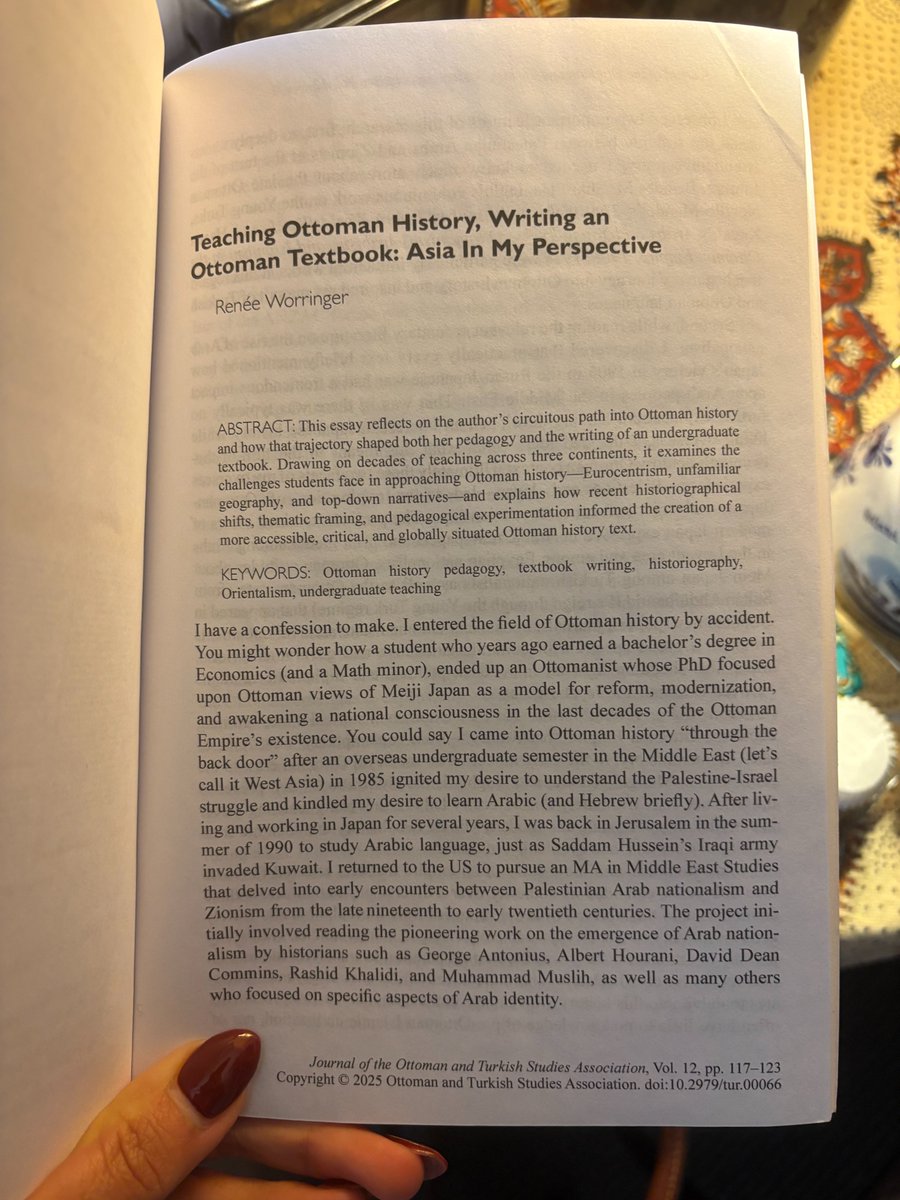
This semester was my second time using Renee Worringer’s book as the core text for my Ottoman Empire and the World Around It class and it works remarkably well. Covering 600+ years in one semester is not easy, but the book’s structure, primary sources, and rich visuals make it much more manageable and engaging. Worringer balances political, social, cultural, economic, and religious history, so every student finds an entry point (even animals make an appearance).
In the latest issue of JOTSA, Worringer also reflected on how and why she wrote it, well worth a read.


English
Jose Guilherme Zago retweetet