Science of Read

853 posts

Science of Read

Science of Read

@ScienceofRead

This is a page dedicated to promoting the science of reading and our understanding of it.

Joined Nisan 2021
250 Following915 Followers
Science of Read retweeted
ABC News
ABC News@ABC·
Sen. Elizabeth Warren is attempting to stop the reported selloff of the $1.6 trillion student loan portfolio to private companies. abcnews.link/FejFIgz
English
30
42
90
54.2K
Science of Read retweeted
The Reading League
The Reading League@reading_league·
🎉 It’s HERE! Registration for #TRLConf2026 is NOW OPEN! 📅 Sept 30–Oct 2, 2026 | Chicago Join educators, researchers & literacy leaders for three days of evidence-aligned learning, inspiration & connection. Secure your spot early & save your seat: bit.ly/4lUzmFC
The Reading League tweet media
English
0
5
10
1.1K
Science of Read retweeted
Ms. Benison-
Ms. Benison-@BenisonMrs·
Orthographic mapping is essential to sight word development. Orthographic mapping is not something we can teach. It is a brain process. What we can do is to teach in a way that facilitates it. The research shows with certainty that proficient readers do not learn words as a whole. To read words as if by “sight”, all readers must orthographically map those words. Consequently, the most effective reading instruction for novices is that which facilitates this process. Understanding this is essential for teachers of novice readers effectively; without it, we risk relying on practices and strategies that are not effective for most students. Reading is not primarily about recognizing the overall shape or pattern of a word. This is particularly dangerous for novice readers, who are the most vulnerable. Decades of research have already established that proficient readers do not become proficient by looking at the shape of words or memorizing them. Our visual memory has a limited capacity. To my knowledge, there is no research supporting the idea that spelling is a visual task where students simply “see” words in their rather than sound them out when reading or spelling. On the contrary, skilled spellers rely heavily on phoneme–grapheme knowledge, semantics as well as morphology, etymology, and statistical knowledge of spelling patterns.
English
1
7
58
2.8K
Science of Read retweeted
Kate Winn
Kate Winn@thismomloves·
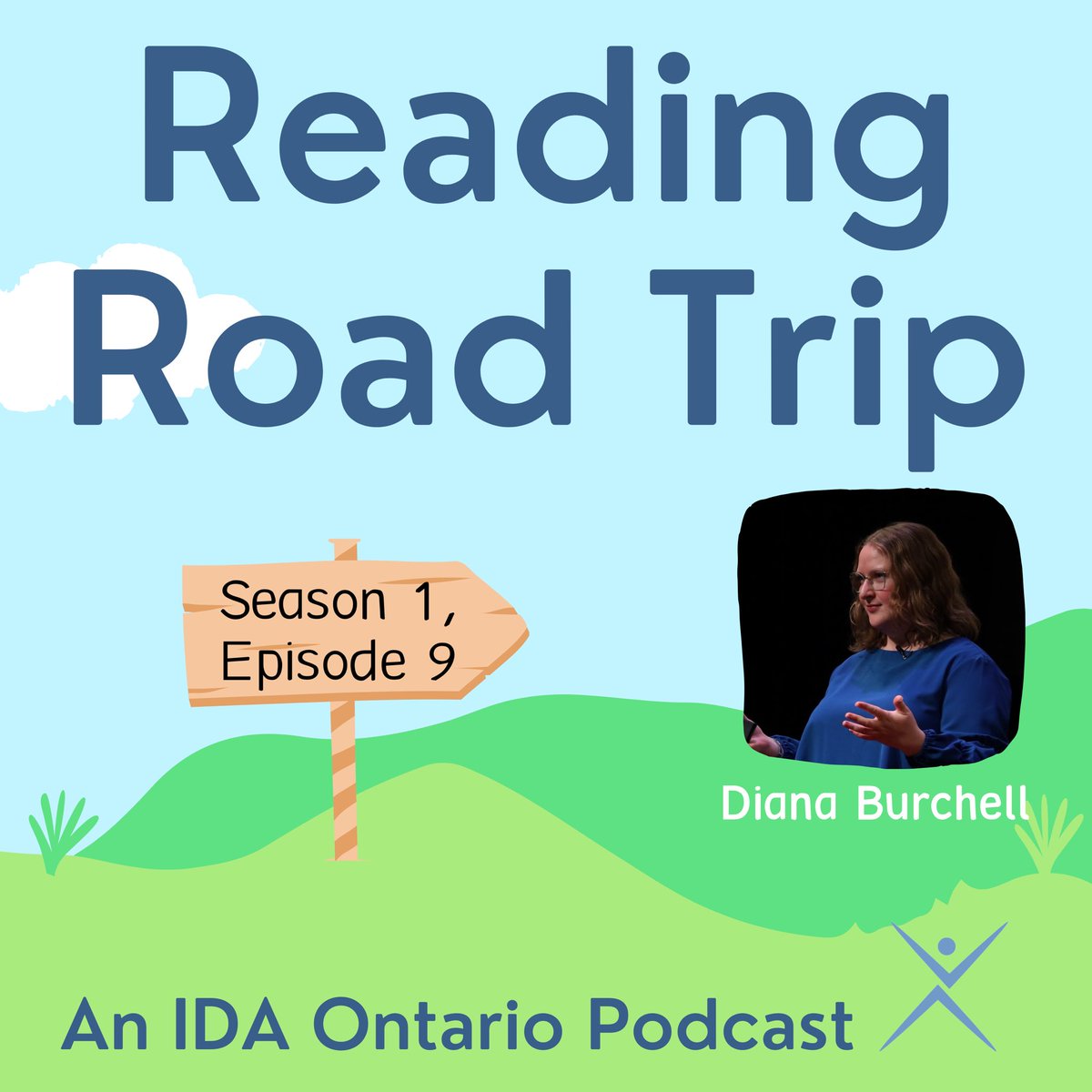
Return Road Trip! 🚗 I’m joined by @mmeburchell to discuss language learners (including Multilingual Learners and French Immersion students) and literacy! Is structured literacy good for them? Should assessment be different? reading-roadtrip.castos.com/episodes/s1-e9…
Kate Winn tweet media
English
0
4
6
560
Science of Read retweeted
Karen Vaites
Karen Vaites@karenvaites·
They pull no punches in the Science of Reading Facebook group.
Karen Vaites tweet media
English
6
8
75
25.4K
Science of Read retweeted
Anjanette McNeely
Anjanette McNeely@AnjanetteMcNee2·
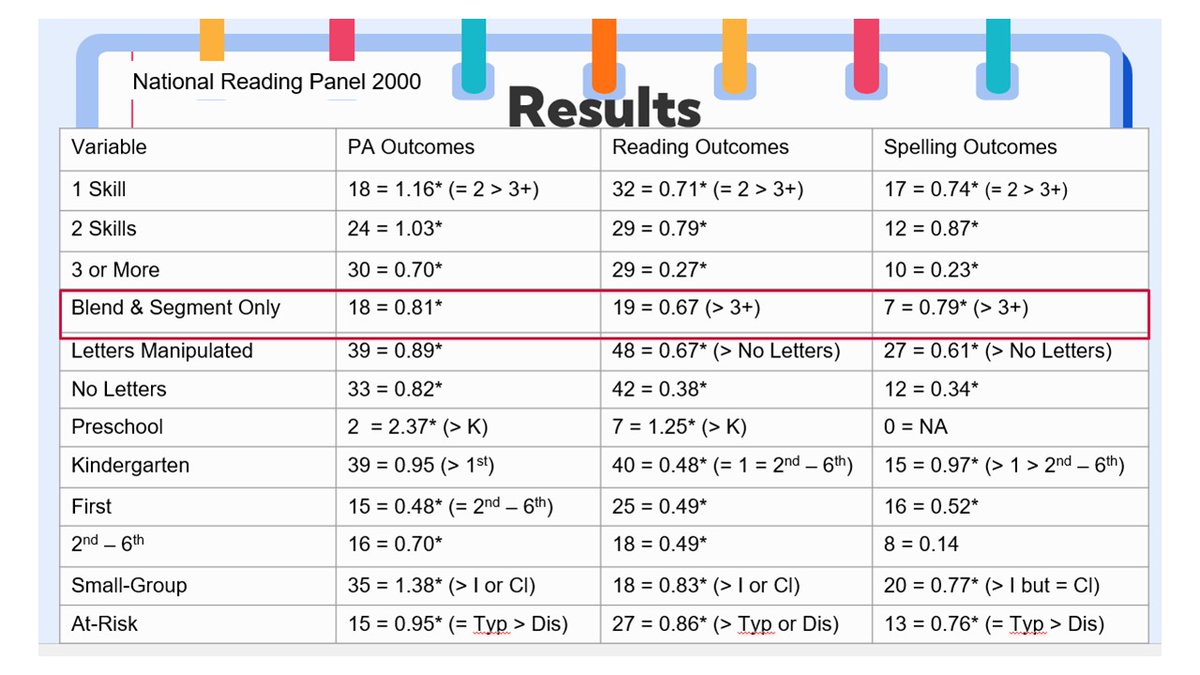
I don't use Heggerty and my kinder class scored 100% proficient on Acadience EOY. They also scored 100% typical or above growth and 67% scored well above typical growth. Teaching PA with letters is powerful!
Matthew Burns@burnsmk1

An @educationweek piece about research that found Heggerty didn't work by @s_e_schwartz. @ILAToday @CECMembership @nasponline @reading_league @leadforliteracy @NCILiteracy edweek.org/teaching-learn…

English
5
8
56
11.7K
Science of Read retweeted
Karen Vaites
Karen Vaites@karenvaites·
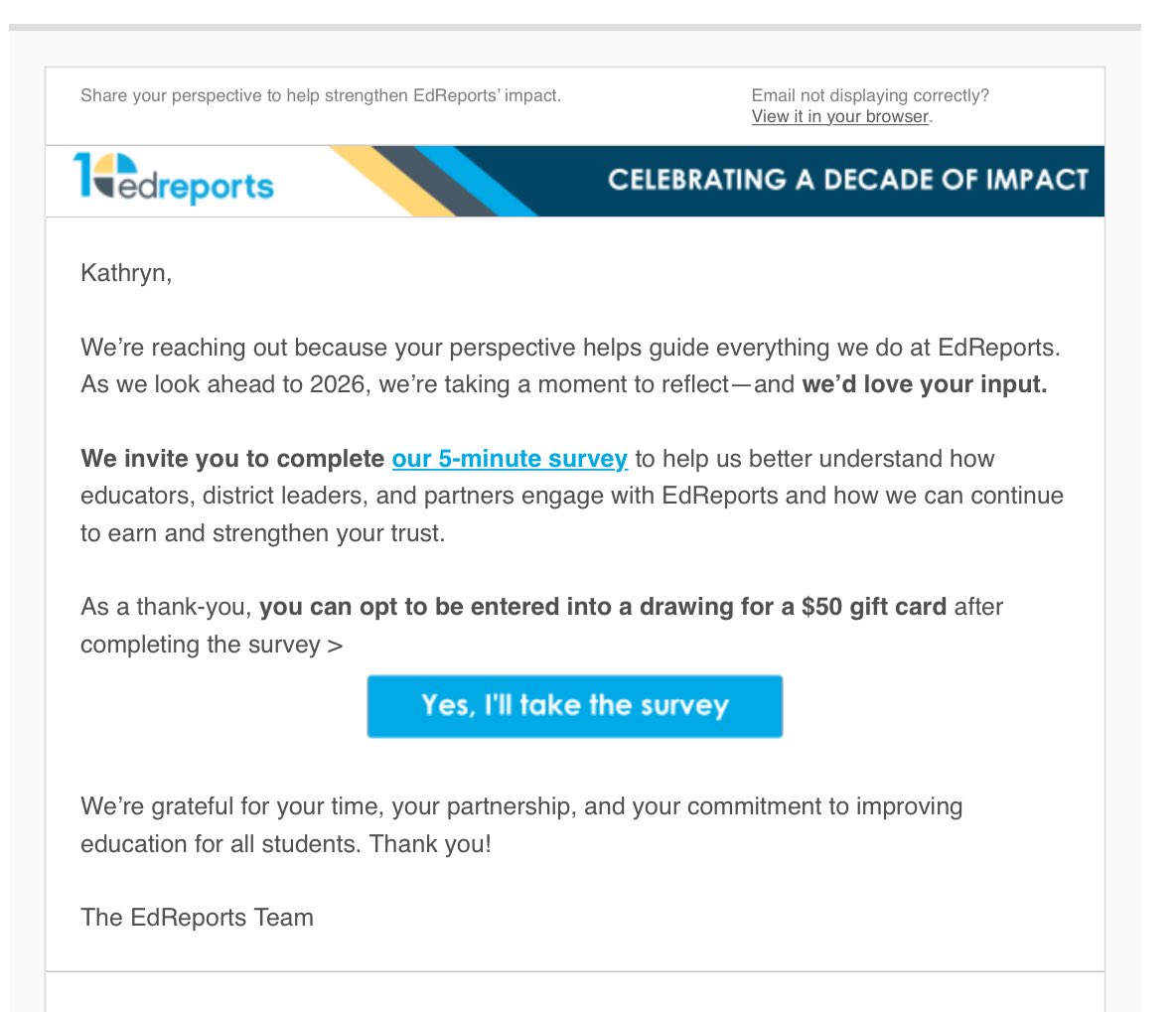
EdReports is looking for feedback on “how we can continue to earn and strengthen your trust.”
Karen Vaites tweet media
English
4
6
17
1.4K