Vedant

941 posts

Vedant banner
Vedant

Vedant

@scriptkitty007

moving on from my YouTube addiction

Joined Kasım 2016
3K Following85 Followers
Vedant retweeted
Incentivising
Incentivising@incentivising·
Advice from game theory: Be around people who share your goals and ambitions. Shared interests create more efficient bonds than emotions. They outlast feelings every time. This moves you from zero-sum to non-zero-sum games. You won't need to waste time convincing anyone, and you will massively reduce the odds of betrayal.
English
11
87
584
10.9K
Vedant retweeted
Dave
Dave@thought_harbor·
Get out of your room. Go to a coffee shop. Rent somewhere for the weekend. Sit in a park. Walk through a part of the city you've never been to. Go anywhere that isn't the same four walls you've been staring at for months. Your environment shapes your thinking more than you realise. Same room, same thoughts. New space, new clarity. The number of ideas that hit when you change location will make you wonder why you stayed stuck in one place for so long.
English
41
391
2.8K
106.8K
Vedant retweeted
Yoshik K
Yoshik K@AskYoshik·
Seeing layoffs like this, especially big names, it makes you think a bit long term instead of just chasing the next job or tool. If you're just starting out, don't build your career assuming stability, build it assuming things will change every few years, because they will, companies hire aggressively when times are good and cut just as fast when priorities shift, nothing personal in that. So instead of asking "what should I learn to get a job", start asking "what skills will still matter even if the market slows down", things like understanding systems, debugging under pressure, improving performance, reducing cost, these don't go out of demand. Also don't wait for a bad phase to prepare, keep yourself ready all the time, small consistent effort is enough, a bit of DSA, a bit of system design, working on real projects, staying curious about how things work underneath, this compounds a lot. And one more thing people ignore early, build some financial buffer as soon as you can, even a few months of savings changes how you make decisions, you don't panic, you don't settle, you think clearly. End of the day, jobs will come and go, but if you focus on becoming useful and adaptable, you won't be stuck depending on one company or one moment.
Yoshik K@AskYoshik

This is scary but honestly this is how companies work, they don't care about you personally, they care about output and cost, if a role stops making sense its gone, simple as that. So don't get attached to company, get attached to your skills, if you can actually solve problems, debug real issues, make systems faster or cheaper, you'll always have options, if all you know is tools and tutorials then you're replaceable very fast. Focus on becoming useful, not impressive, learn things deeply, understand how systems work, be the person people go to when things break, that’s the only real job security.

English
1
3
28
2.2K
Vedant retweeted
Jay Yang
Jay Yang@Jayyanginspires·
Life hack: Let the world tell you no, don’t tell yourself no before you start.
English
48
27
249
6.2K
Vedant retweeted
roobz 🌙 🌸
roobz 🌙 🌸@tishray·
The smartest people I know are just extremely curious. They don’t see a limit to what they can understand. When they hit a wall, they don’t rush to get past it. They stay there longer than most people are willing to. They try to figure out the answer instead of borrowing other people's conclusions. They’re not trying to escape the friction that comes with learning something new, because they know that's how knowledge sticks.
English
22
146
821
23.9K
Vedant retweeted
Sharran Srivatsaa
Sharran Srivatsaa@sharran·
Harvard found the real reason people procrastinate is not knowing where to start. When I read that, I stopped beating myself up and got curious. I wrote down every project I'd been avoiding. There were 11. And I forced myself to answer one question for each: Why am I actually avoiding this? Same answer. Every single time. I didn’t know where to start. So I did nothing. When I realized this, I stopped trying to solve procrastination with discipline and built a system instead. I call it the RN35: Right Next 3 things, 5 minutes each. When you're stuck on something, ask yourself one question: What are the next 3 things I can do, where none of them takes more than 5 minutes? I tested it immediately. I'd been avoiding my taxes for 3 weeks. So I wrote 3 small steps: 1. Open last year’s return folder and skim the first page (3 mins) 2. Text my CPA to ask when he needs everything by (1 min) 3. Create a new folder on my desktop called “2025 Taxes” (1 min) I did all 3 in under 5 minutes… and kept going. A project that had been on my list for 3 weeks took under 15 mins to complete once I had a game plan. 4 rules that make RN35 work: 1. Keep each task under 5 minutes 2. Every task must be physical 3. Write the 3 tasks down 4. Do all 3 in one sitting Procrastination is not a character flaw. It's a planning problem. And planning problems have planning solutions. Next time you feel stuck, ask one question: What's my RN35? — If you like this type of content, follow @sharran for more!
English
10
56
246
13.6K
Vedant retweeted
Akhilesh Mishra
Akhilesh Mishra@livingdevops·
I joined my KPMG as an AWS DevOps Engineer in 2022 But some mishap in project assignment put me in a project that was using GCP, not AWS. Instead of complaining about it, I took the opportunity to learn GCP. I was in a project with a hard deadline. I took that as a challenge. Worked till 2 AM for 2 months. Delivered that project within the time limit. It helped me learn 2 years worth of GCP in just 2 months. And that changed my perspective about learning. I understood that you can learn anything if you’re motivated enough. Deadlines help you overcome your procrastination. Sometimes the “wrong” project is exactly what you need.
English
11
18
379
26.7K
Vedant retweeted
Anna Mitchell
Anna Mitchell@annarmitchell·
If you are applying for a job in a portal, you should send a thoughtful cold LinkedIn DM to anyone who could be the hiring manager. You will DEFINITELY stand out, I'm still always shocked by how little I get this. If they aren't the hiring manager, but you wrote a good message, there's a good chance they'll forward you to the right person.
English
17
12
430
26.2K
Vedant retweeted
B Singh 🐝
B Singh 🐝@bissuusingh·
Corporate lessons from 5 yoe. 1. Document everything, this will be immensely useful for appraisal and will also serve as notes to thyself. 2. Try to maximize salary as much as possible, learning will keep on happening, but earning is most important. 3. Respect your time and boundaries, if you don't, no one else will. 4. Make sure to utilise all leaves, you gain nothing by keeping them unused . 5. Give and seek feedback as much as possible, this will help you grow quickly.
Shravani@shrav_10

Drop some real advice for someone just starting out in corporate life.

English
6
36
533
28.4K
Vedant retweeted
Ojas Sharma
Ojas Sharma@OjasSharma276·
You read a DSA problem How do you easily identify that it is a 2 pointers approach question? Here are few tips: The array or string is: >Already sorted >Or can be sorted without breaking the problem Example: Find pair with sum = X in sorted array You’re asked about pairs/triplets/subarrays: >pairs : 2 pointers >triplets : 2 pointers inside a loop >subarrays : sliding window Keywords that sometimes gives the hint: >closest >pair >sorted >subarray >continuous >longest/shortest window >remove duplicates Sliding Window == Two Pointer: If the problem says: >longest substring >smallest subarray >at most k
English
7
12
121
4.9K
Vedant retweeted
Your Best Version
Your Best Version@YourPrimePath·
I fell in love with this quote: "No matter your age, you'll always wish you started younger, but today is the youngest you'll ever be. So start today."
English
180
16.4K
78.7K
931K
Vedant retweeted
Utkarsh Sharma
Utkarsh Sharma@techxutkarsh·
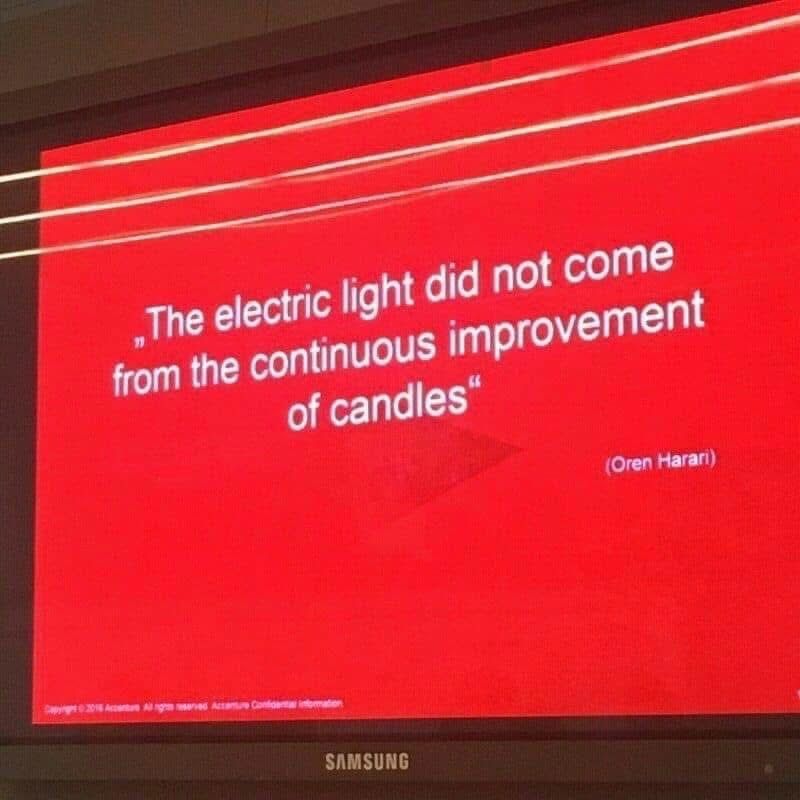
This guy literally dropped the best mindset shift you’ll ever hear
Utkarsh Sharma tweet media
English
16
883
4K
92.8K
Vedant retweeted
Srishti
Srishti@NieceOfAnton·
Solved 2 mediums today and felt like a genius Then remembered I literally froze mid-interview yesterday on the exact same pattern Interviewer asked "what's the time complexity of this" It was a backtracking question I said O(n) He said "are you sure" He said "look at how many branches you're exploring" I said "O(n) but exponential" I don't know what that means I think I invented a new complexity class The thing is I knew it. Solved the exact same problem at 2am the night before. Wrote 2^n in my notes and everything Alone with no one watching I'm fine. The second someone's looking my brain just goes quiet So I stopped practicing problems and started practicing being watched Timed. Explained out loud. Judged. That's the only thing that actually helping me rn.
English
13
9
87
7.9K
Vedant retweeted
Swaraj
Swaraj@SwaDotDev·
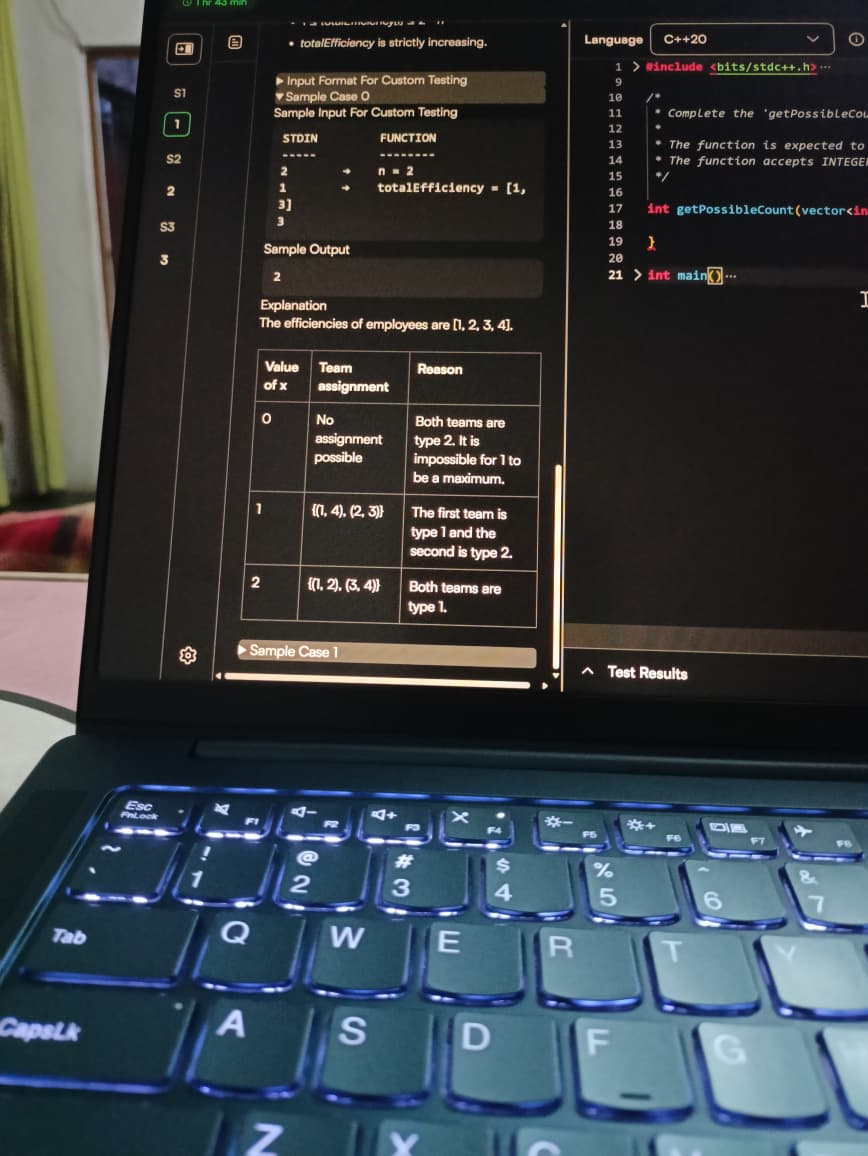
I appeared for Intuit's SWE hiring process 2 months ago. Here is one the OA problem based on DSA. Other 2 problems were basic SQL and Bash scripting. (soon i will also share my entire interview process, stay tuned)
Swaraj tweet mediaSwaraj tweet mediaSwaraj tweet mediaSwaraj tweet media
English
13
14
241
46.5K
Vedant retweeted
Tech with Mak
Tech with Mak@techNmak·
"Do not learn to code" is the worst career advice of the decade. People are telling college students to skip Computer Science because AI will just automate it all. Andrew Ng just killed this myth at Stanford with a brilliant analogy. When he tried to generate images with Midjourney, he typed: "make pretty pictures of robots" and got garbage. His collaborator, however, understood Art History. He knew the exact vocabulary of lighting, genre, and palette. He spoke the "language of art," and generated masterpieces. Andrew Ng is seeing the exact same thing happen in software engineering right now. AI didn't replace the need to understand Computer Science. It made Computer Science the required vocabulary to control the AI. If you don't understand how computers actually work, you are just typing "make a pretty app" into Cursor and shipping fragile, unscalable logic. Here is Andrew Ng's exact hiring hierarchy today: Level 1: 10 years of experience, but codes by hand (He won't hire them). Level 2: Fresh college grad, but highly fluent in AI-assisted coding (He hires them over the 10-year veteran). Level 3 (God Tier): Deeply understands CS fundamentals AND uses AI-assisted coding. When humanity went from punch cards to keyboards, coding got easier, and more people coded. We are at that exact inflection point again. AI doesn't replace fundamentals. It multiplies them.
Tech with Mak tweet media
English
137
397
2.1K
114.3K
Vedant retweeted
Mustafa
Mustafa@oprydai·
i often think about this..
Mustafa tweet media
English
468
13.2K
104.3K
2.7M
Vedant retweeted
Abhishek Singh
Abhishek Singh@0xlelouch_·
One of my friends just proved this to me. Before marriage, he was taking real risks. He would work after office, study on weekends, switch stacks, interview aggressively, and say yes to uncomfortable opportunities. Back then he was making around 9 LPA. Then he pushed it to 16 LPA. Then to 28 LPA. That growth did not happen by accident. It happened because he was building his life on purpose. Now he is married, earns around 36 LPA, and life is more stable. But the risk appetite is gone. He is not lazy by any means. But his responsibilities are real now. EMI. Family planning. Parents. School fees in future. Need for certainty. Now every career move is filtered through safety first. That is why I keep telling software engineers: the best time to take career risk is when your downside is still small. Learn the hard stack. Switch jobs. Move to product. Build in public. Try remote. Take the startup role. Ask for more ownership. Work on that scary distributed systems problem. Do all of it early. Because later, even if your salary is higher, your freedom to experiment can become much lower. The longer you wait to build the life you want, the more likely you are to inherit a life designed by default. And default life is usually: decent salary, low excitement, high regret. Build early. Take risks while your life is still light. A lot of engineers think they have time. Most do. But not as much as they think.
Justin Skycak@justinskycak

The longer you wait to build the life you want, the more likely you are to end up with something else. Build now, or the world will build a cage for you later.

English
14
137
1.8K
205.9K
Vedant retweeted
prnv patil
prnv patil@21prnv·
At my first internship, our CTO told us to learn GraphQL in one day. At that time, GPT had just launched and didn’t have much context, so it wasn’t very helpful. Jumping directly from REST APIs to GraphQL was honestly overwhelming. When I first looked at the docs, it felt hard to understand. So how did I actually learn it? I still remember my approach: 1. I explored open-source repositories that were using GraphQL 2. I read the documentation and then matched it with real implementations in those repos. I did this the entire night and somehow managed to build a small project using GraphQL. The next day, I showed it to my CTO, and he was genuinely impressed with the implementation. Since then, I’ve followed the same approach to learn anything new rather than watching random videos, I focus on real-world code and hands-on implementation.
English
25
30
850
44.3K
Vedant retweeted
Raj Shamani
Raj Shamani@rajshamani·
A person who avoids embarrassment will usually avoid growth too. The same situations that threaten your image are often the ones that expand your life.
English
136
1.4K
8.2K
164.8K