Compute Labs

1.5K posts

Compute Labs banner
Compute Labs

Compute Labs

@Compute_Labs

Financializing AI Powered by @Solana | Incubated by @Nvidia Inception VC Alliance

Learn more 👉 Se unió Mart 2024
225 Siguiendo8.8K Seguidores
Tweet fijado
Compute Labs
Compute Labs@Compute_Labs·
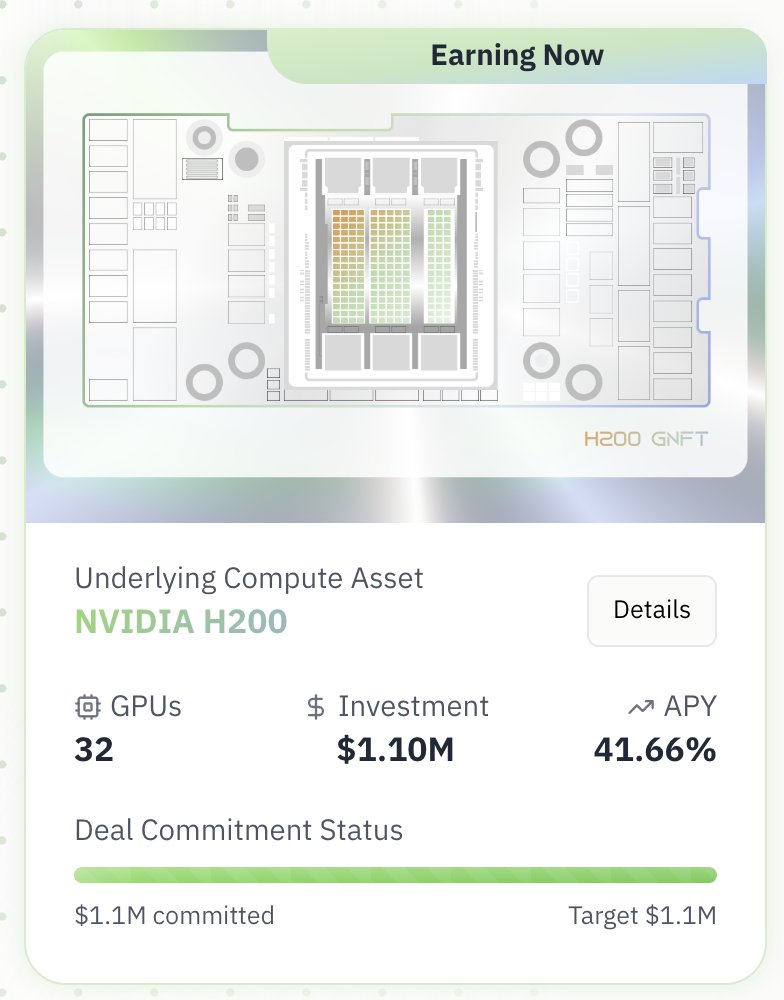
AI is driving demand for one thing above all: compute. Until now, only hyperscalers had direct access to it. H200 GNFTs make up the first public, on-chain GPU vault backed by deployed infrastructure and yielding in $USDC. This is how you invest in the AI boom 🧵↓
Compute Labs tweet media
English
5
5
34
30.9K
Compute Labs
Compute Labs@Compute_Labs·
Institutional capital is actively recalibrating its exposure to legacy software. With major funds adjusting their tech portfolios and analysts noting potential default spikes for AI-threatened SaaS models, allocators across the board are smartly managing their risk. As capital rotates out of software, it requires a secure entry point into the physical infrastructure driving that very disruption. Underwriting a multi-year GPU offtake contract relies entirely on the proven mechanics of project finance. By isolating the transaction into a standalone SPV, capital is secured directly against the physical hardware and the cash flows of the contract. Whether a partner is providing the senior debt facility or funding the equity tranche, the downside is protected by the metal and the yield is driven by a contracted utilization. We build the financial architecture that allows the entire capital stack to deploy into this asset class.
Compute Labs tweet media
English
0
0
1
175
Compute Labs
Compute Labs@Compute_Labs·
Traditional fixed debt is fundamentally misaligned with the physical reality of deploying AI infrastructure. When a neocloud scales, they face inevitable friction: OEM shipping delays, facility energization, and customer onboarding. If a fixed monthly debt schedule begins before the GPUs are generating revenue, the operator's balance sheet is instantly under threat. The more sustainable approach is an operator-owner model built on revenue-share. Capital is raised into a standalone SPV to procure the physical GPUs. The SPV then leases that hardware to the neocloud with returns driven by usage of the actual compute. Neoclouds secure hardware without the crushing fixed-debt burden. Investors secure an asset-backed yield tied strictly to utilization of the most in demand hardware currently. We structure these exact SPVs to make GPUs investable.
Compute Labs tweet media
English
0
0
3
209
Compute Labs
Compute Labs@Compute_Labs·
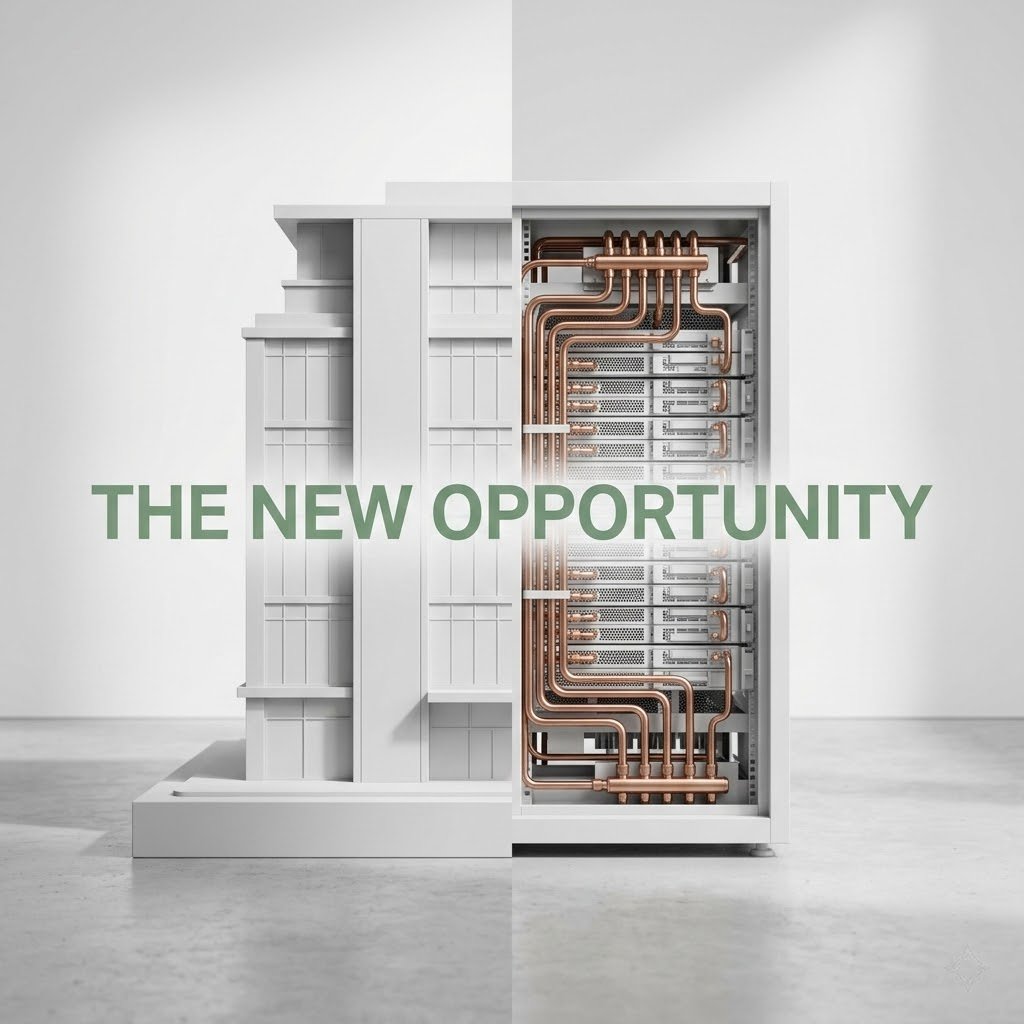
In commercial real estate, you wouldn't expect a property manager to buy the building with their own balance sheet. Yet, the AI market currently forces neoclouds to tie up massive amounts of operating cash as down payments just to secure GPUs. For a fast-growing tech company, locking capital in depreciating silicon stalls their actual growth. This creates a clear opening for institutional capital. By treating the cluster like a real estate development, investors can provide this specific tranche of capital, secured directly by the hardware and the customer contract. We structure the SPVs that align this capital and turn GPUs into yielding infrastructure assets.
Compute Labs tweet media
English
0
0
1
223
Compute Labs
Compute Labs@Compute_Labs·
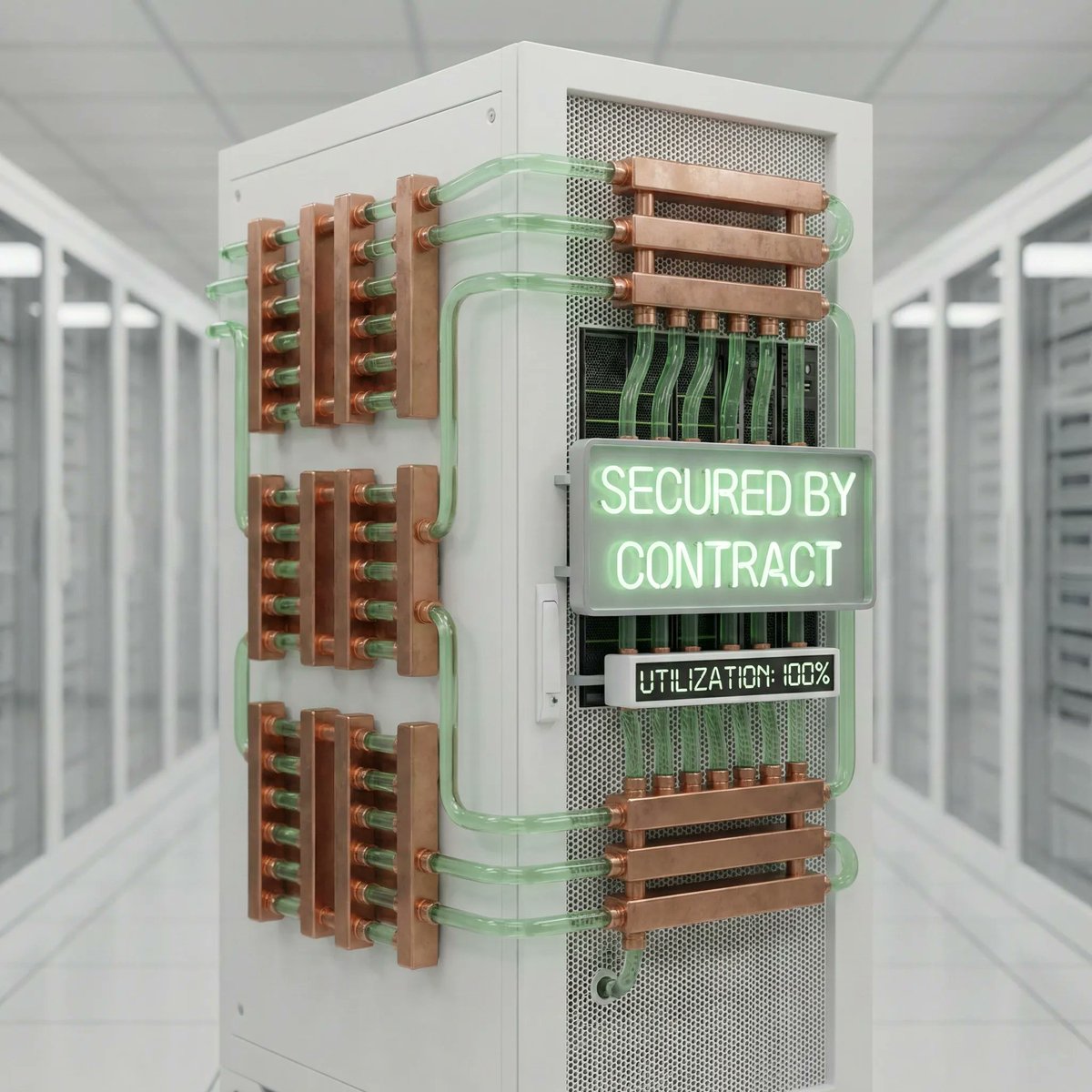
GPUs sitting idle in a data center are depreciating liabilities. Agreements with investment grade customers turn GPUs into an investable product. Too many investors are focused on spot prices while ignoring the strength of the contract. In the traditional infrastructure world, a pipeline without a contracted buyer is un-bankable. The AI compute market is identical. If you finance a cluster without strictly underwriting the neocloud's end-customer agreements, you are taking naked equity risk on a hardware deployment. We structure vehicles that securitize these specific cash flows to ensure institutional capital is backed by creditworthy demand.
Compute Labs tweet media
English
1
0
3
181
Compute Labs
Compute Labs@Compute_Labs·
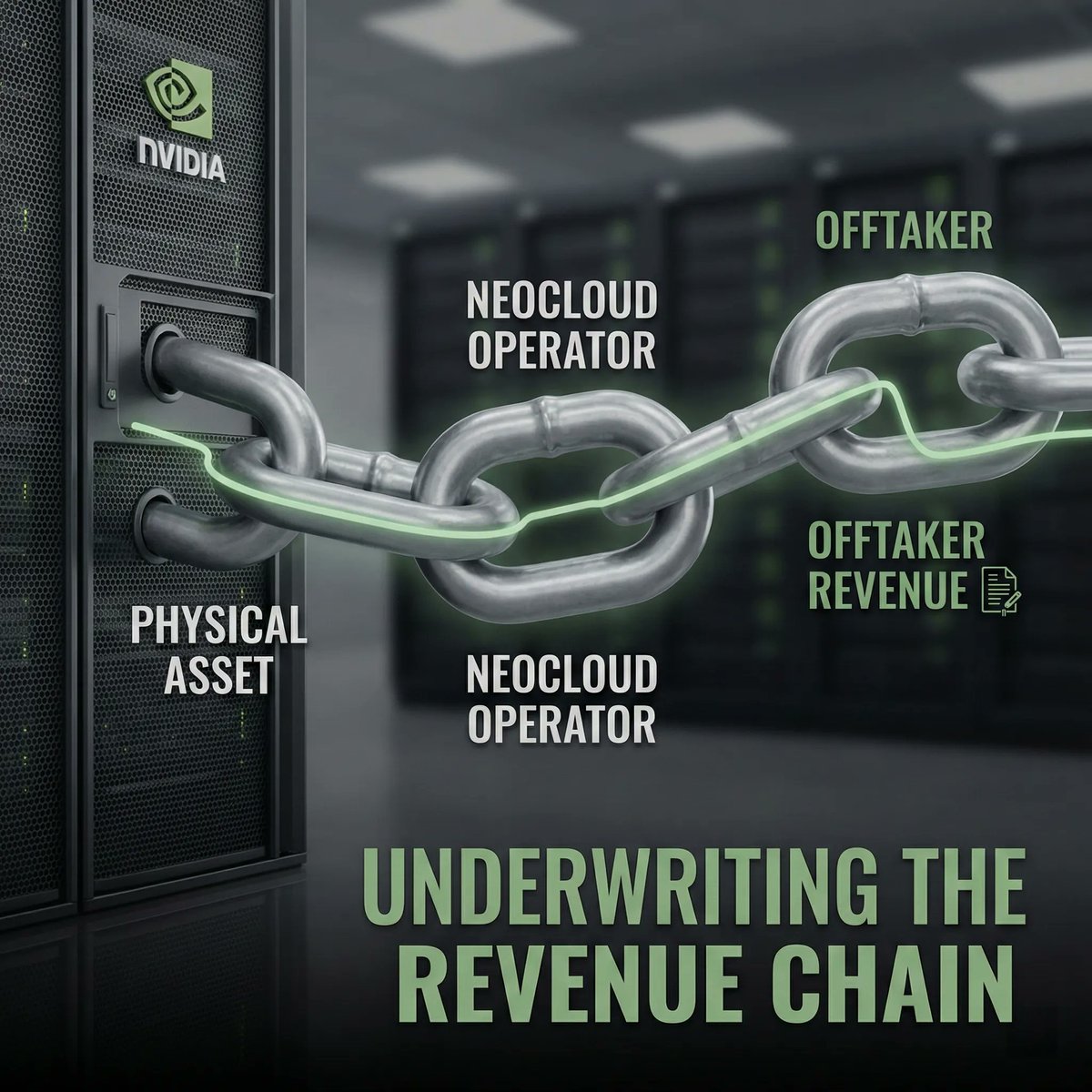
When institutional capital evaluates a GPU financing deal, due diligence cannot stop at the neocloud operator. Actual revenue is generated by the offtakers renting the capacity. If a neocloud’s capacity is leased entirely to startups, the credit risk is exponentially higher than a cluster anchored by a multi-year hyperscaler contract. Our underwriting extends through the operator directly to the offtake. We evaluate the credit quality, concentration risk, and end customer contracts. True downside protection in AI infrastructure requires underwriting the entire revenue chain.
Compute Labs tweet media
English
1
0
2
203
Compute Labs
Compute Labs@Compute_Labs·
The AI infra buildout is currently facing a structural bottleneck: the capital stack. Lenders are providing senior debt for de-risked GPU clusters. But unlocking that debt requires a significant equity down payment. It's a 20-30% gap that most operators cannot fund off their own balance sheets without catastrophic dilution. At Compute Labs, we are building the financial infrastructure to solve this. We structure investment vehicles that fill this equity gap, allowing private capital to participate in the highest-yield tranche of the compute market, backed directly by the hardware. Compute is an industrial infrastructure allocation.
Compute Labs tweet media
English
0
1
3
283
Compute Labs
Compute Labs@Compute_Labs·
Why is it easier to finance a $100M office building than a $10M GPU cluster? Structure. Real estate has mature financial rails: REITs, mortgage-backed securities, and clear depreciation schedules. The GPU market is still operating on handshake deals and opaque data. The packaging of the asset class is the problem. Compute Labs bridges this gap. We take GPUs and wrap them in institutional-grade investment structures. We turn a chaotic hardware transaction into a clean, financial product that looks and feels familiar to any sophisticated investor. It is time to professionalize the asset class.
Compute Labs tweet media
English
0
0
1
236
Compute Labs
Compute Labs@Compute_Labs·
The separation of "Asset Ownership" and "Asset Operation" is the hallmark of a mature industry. • Airlines operate planes, leasing companies own them • Shipping lines operate vessels, maritime funds own them • Neoclouds operate GPUs, ______ owns them The blank is being filled right now. Compute Labs is building the financial architecture to support this separation. We allow investors to own the asset class, while empowering technical founders to focus on utilization and uptime.
Compute Labs tweet media
English
1
0
3
278
Compute Labs
Compute Labs@Compute_Labs·
To understand the AI market, signal must be separated from noise. Most of the "Bubble" conversation focuses on the Application Layer: high valuations, venture capital storytelling, and viral demos. But the Infrastructure Layer operates in physical reality. It is driven by measurable forces: 1. Inference getting heavier 2. Nations stockpiling compute as a sovereign resource 3. Training data for tomorrow's models being manufactured using today's GPUs While sentiment drives the apps, utility drives the infrastructure. CEO @AlbertZ0502 just published an article on this distinction. Read the full analysis: unite.ai/are-we-in-an-a…
Compute Labs tweet media
English
1
2
6
441
Compute Labs
Compute Labs@Compute_Labs·
Traditional banks cannot underwrite what they cannot measure. The reason they've been slow to lend against GPUs is friction. For a traditional lender, financing a GPU cluster requires manual due diligence, complex collateral management, and a technical understanding they simply don't have in-house. They lack the tooling to make the deal work. Compute Labs is allowing capital to interface with compute more efficiently, turning a complex hardware transaction into a investable financial product. Learn more about GPUs as an investment: insights.tfoa.info/gpu-based-infr…
Compute Labs tweet media
English
0
0
2
201
Compute Labs
Compute Labs@Compute_Labs·
Major industries eventually separate "Asset Ownership" from "Asset Operation". Airlines lease planes from financing companies. Hotels don't usually own their buildings, REITS do. Why? Because it's more capital efficient. Right now, the AI market is realizing this same truth. Neoclouds need to focus their capital on software, customer acquisition, and talent, not on depreciating hardware. We enable investors to hold financial interest in GPUs, while operators focus on generating the yield.
Compute Labs tweet media
English
0
0
1
268
Compute Labs
Compute Labs@Compute_Labs·
Real Estate has Zillow. Stocks have the NYSE. AI Compute is still in the Wild West. Institutional investors struggle to enter this space because they lack clarity. In this market, every deal comes with a unique set of variables: different chip architectures, different power configurations, complex regional regulations, etc. Navigating that complexity is a massive barrier to entry. That is where we step in. We apply rigorous, bespoke due diligence to every single opportunity. We vet the neocloud, the data center’s capabilities, and provide the financing structure for deployment. We do the heavy lifting by turning a complex, non-standard project into a structured investment opportunity. We allow you to invest in the infrastructure layer of the AI boom.
Compute Labs tweet media
English
1
1
9
285
Compute Labs
Compute Labs@Compute_Labs·
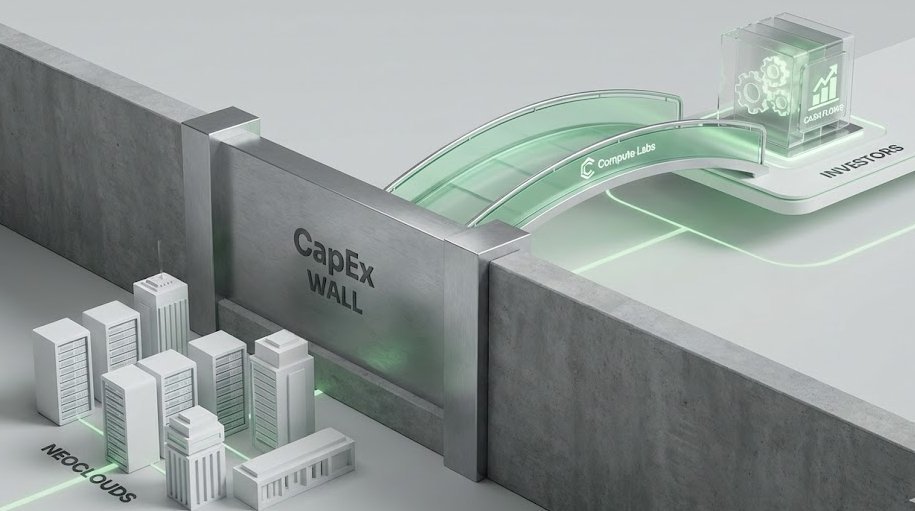
One of the biggest risks to the AI boom is the lack of structured capital. We are heading toward a "CapEx Wall". Hyperscalers have the balance sheets to push through it and early-stage startups can squeeze by on VC funding. But the "Middle Market", the neoclouds building the actual inference layer, is hitting a financing bottleneck. They have the contracts and the expertise, but they cannot finance billion-dollar hardware deployments with equity alone. This is where the market/s inefficient but also where the opportunity lies. We act as the bridge: For Neoclouds: Helping structure the equity and debt stack needed to procure hardware For Investors: Structuring that hardware into an asset-backed financial product, designed to provide access to the cash flows of the machines The future belongs to the builders who can engineer the financing as well as they engineer the clusters.
Compute Labs tweet media
English
1
2
6
380
Compute Labs
Compute Labs@Compute_Labs·
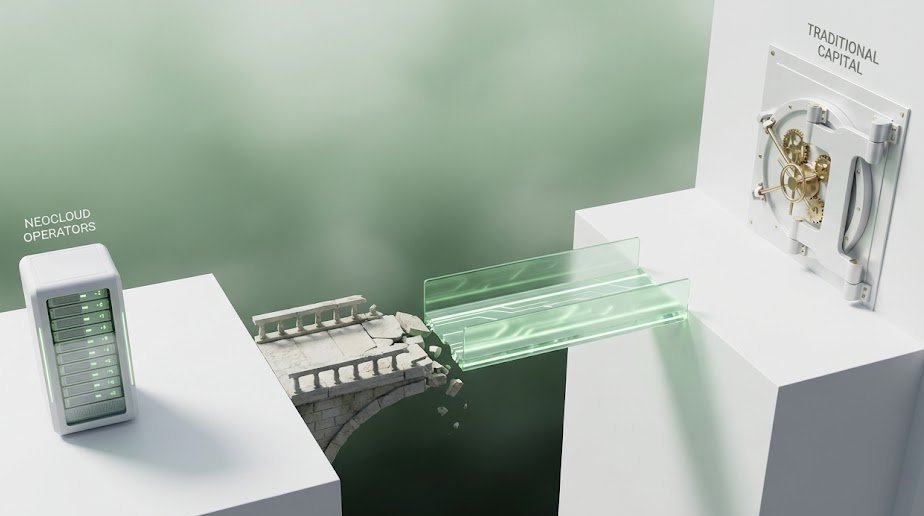
Neoclouds are ready to build, but the capital markets are too inefficient to fund them. Many neocloud operators are stuck in a financial "no man's land". • Too capital-intensive for traditional VC • Don't have the 5-year credit history for traditional lending Compute Labs underwrites the neocloud’s operational capability and the quality of their end-customer contracts. By doing so, we unlock the capital operators need to scale, while giving investors secured exposure to the growth of the network.
Compute Labs tweet media
English
0
0
6
358
Compute Labs
Compute Labs@Compute_Labs·
The most valuable resource in the world right now is compute. The market is witnessing a historic supply-demand imbalance as AI models move from training to inference. Yet, for most investors, there is no direct way to invest in the asset itself. Compute Labs enables investors to secure the cash flows of the hardware directly. Learn about the basics: insights.tfoa.info/gpu-based-infr…
Compute Labs tweet media
English
0
0
2
347
Compute Labs
Compute Labs@Compute_Labs·
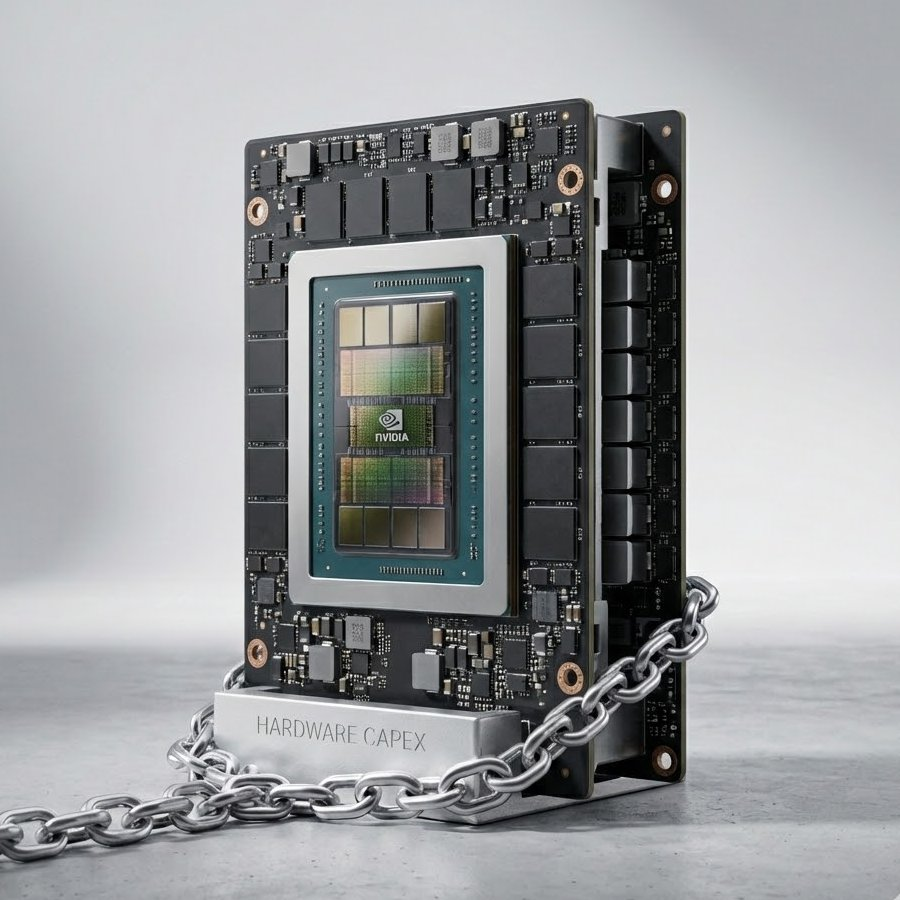
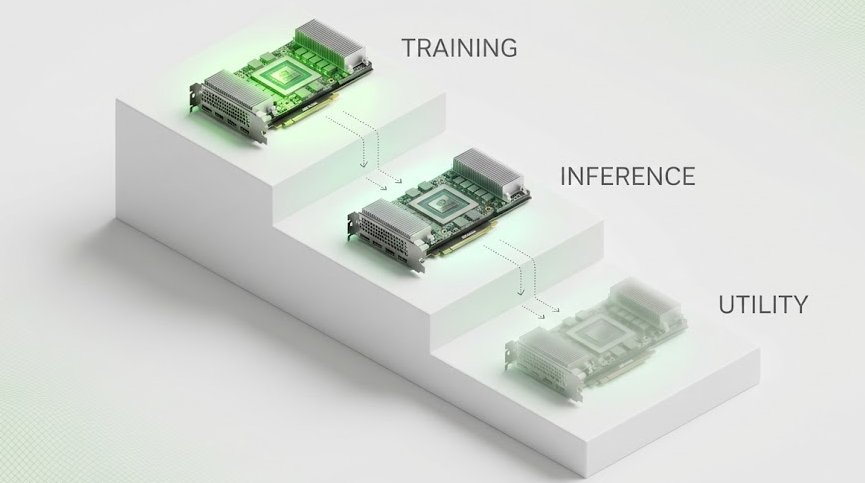
Depreciation is one of the most misunderstood topics in GPU financing. Traditional lenders often view chips as assets that lose value the moment they are put to work. The reality is far more nuanced. While GPUs certainly depreciate, they don't become obsolete after one generation. They transition through a hierarchy of workloads. A chip might start its life training massive frontier models, but as it ages, it still remains highly effective for inference. This creates a residual value profile that is distinct from typical IT hardware. There is a functional secondary market because the utility remains profitable as the technology advances. Financing infrastructure requires underwriting this nuance. At Compute Labs, our investors don't just earn yield, they retain rights to the residual value of the assets. We structure for the full lifecycle of the metal, capturing value where others see obsolescence.
Compute Labs tweet media
English
1
2
7
561
Compute Labs
Compute Labs@Compute_Labs·
AI is shifting from a "Research" phase to a "Utility" phase. In 2023, demand was driven by Training. In 2025, demand is shifting to Inference which is always-on and generating revenue. This shift changes the risk profile of the asset class. Inference creates a structural price floor for compute capacity, similar to base-load demand in energy markets. We build securitized products that capture this transition, converting compute utility into secured yield. Read more in our new whitepaper: insights.tfoa.info/gpu-based-infr…
Compute Labs tweet media
English
2
1
6
340
Compute Labs
Compute Labs@Compute_Labs·
Great list highlighting onchain, AI and compute companies.
Mars_DeFi@Mars_DeFi

The rapid expansion of AI and compute-intensive onchain applications has exposed the need for better access to scalable and affordable GPU infrastructure, a solution only possible through decentralization. Beyond the growing number of decentralized GPU solutions, these projects are providing solutions across multiple layers, including hardware aggregation, orchestration, tokenization, and collateralization, all aimed at making compute more accessible and capital-efficient. Here’s a list of more projects in the decentralized GPU ecosystem. — ● Decentralized GPU Marketplaces & Compute Networks: Platforms that connect GPU owners with users needing compute for AI, ML, or rendering tasks. @ChainGPU - decentralized marketplace for GPU and AI compute resources @AITECHio - decentralized GPU marketplace that bridges high-performance computing hardware and AI @swan_chain - GPU marketplace that connects idle GPU owners with users who need computing resources @plancknetwork - incentivized marketplace offering cost-effective access to enterprise-grade GPU power @KaisarNetwork - building a P2P marketplace to allow individuals and data centers rent out idle GPU for AI/ML tasks @DeepNodeAI - connects GPU owners to clients who need computational power for AI/ML tasks @DeepBrainChain - cloud computing platform where owners of idle GPUs rent out their computational power @gonka_ai - pools unused GPU power to provide access to high-end hardware for AI training and inference @pictor_network - turns idle GPUs into a global network for 3D rendering and AI workloads @edgenetwork - cloud computing provider that pools idle GPU power to provide computing resources for AI, rendering, and other high-performance applications @SaladTech - distributed cloud platform that pools idle consumer GPUs from individual PC owners @JANCTION_Global - acts as a distributed supercomputer by pooling idle GPU resources @NeurochainAI - GPU compute DePIN and L1 that pools distributed GPUs for AI training and inference @FARLabsAI - allows individuals and data centers can contribute their idle GPUs to a shared network @runonflux_edge - decentralized cloud infrastructure provider that aggregates global GPU resources for AI/ML and rendering @InfraX_ - connects providers of idle computing power with users who need it for intensive computational tasks @NodeOpsHQ - aggregates idle GPU and CPU resources from independent providers @GPUAI_Coin - computing protocol that transforms idle GPU resources into a scalable infrastructure layer @ClusterProtocol - decentralized orchestration and coordination layer that connects GPU owners to AI devs @oraichain - provides high-demand computational power for its AI ecosystem through GPU staking @ritualnet - sovereign execution layer for AI that bridges GPU compute resources with blockchain apps @OpenGradient - uses a Heterogeneous Agentic Compute Architecture to connect distributed GPUs, making them available for AI workloads like inference — ● AI Cloud & Infrastructure Providers: Projects offering on-demand GPU infrastructure and scalable AI compute environments. @hyperbolic_labs - provides on-demand GPU infra and AI cloud services, so devs and researchers can run training, inference, and scalable compute at lower cost @Gata_xyz - lets users access distributed GPU resources for AI training, inference, and deployment @oceanprotocol - orchestration layer that connects idle GPU resources with AI devs via its Ocean Nodes framework @ICN_Protocol - integrates storage, CPUs, and GPUs to support high-demand AI/ML workloads — ● Tokenized GPU Assets & DeFi Integration: Platforms bridging physical GPU infrastructure with tokenization, finance, and yield generation. @Compute_Labs - tokenizes physical GPUs, allowing investors to gain exposure to industrial-grade GPUs and share in yields from AI compute workloads @PinLinkAi - RWA-tokenized platform for fractionalized ownership and rental of physical GPU assets @EMCProtocol - GPU resource aggregation platform that also enables the tokenization of physical GPU assets @USDai_Official - DeFi protocol that allows AI companies to borrow funds using their physical GPU hardware as on-chain collateral — ● ZK / Cryptography-Focused GPU Infrastructure: Projects leveraging GPU compute for zero-knowledge proofs and cryptographic computation. @SuccinctLabs - decentralized infrastructure layer that coordinates global GPU resources to generate ZK proofs @brevis_zk - ZK Coprocessor that leverages GPU parallelization to bridge complex off-chain data processing with on-chain smart contracts @thezkcloud - leverages the parallel processing power of GPUs to provide a cloud platform for generating ZKPs @Ingo_zk - semiconductor company that utilizes GPUs for ZKP hardware acceleration — ● Specialized Compute Layers & Protocol Infrastructure: Networks focusing on orchestration, coordination, or protocol-level compute innovation. @chutes_ai - serverless AI compute subnet under the Bittensor ecosystem for lending GPU computing power @CTXCBlockchain - the Cortex Virtual Machine (CVM) leverages GPUs to execute complex AI models on-chain @NetworkMeson - decentralized bandwidth and data transmission layer for Web3 and AI apps that rely on high-performance computing, including GPUs — These projects are turning fragmented GPU capacity into a flexible, on-demand compute layer. Through marketplaces, orchestration layers, and specialized execution environments, they reduce friction in GPU access and enable applications that would otherwise be constrained by centralization.


English
0
2
6
612
Compute Labs
Compute Labs@Compute_Labs·
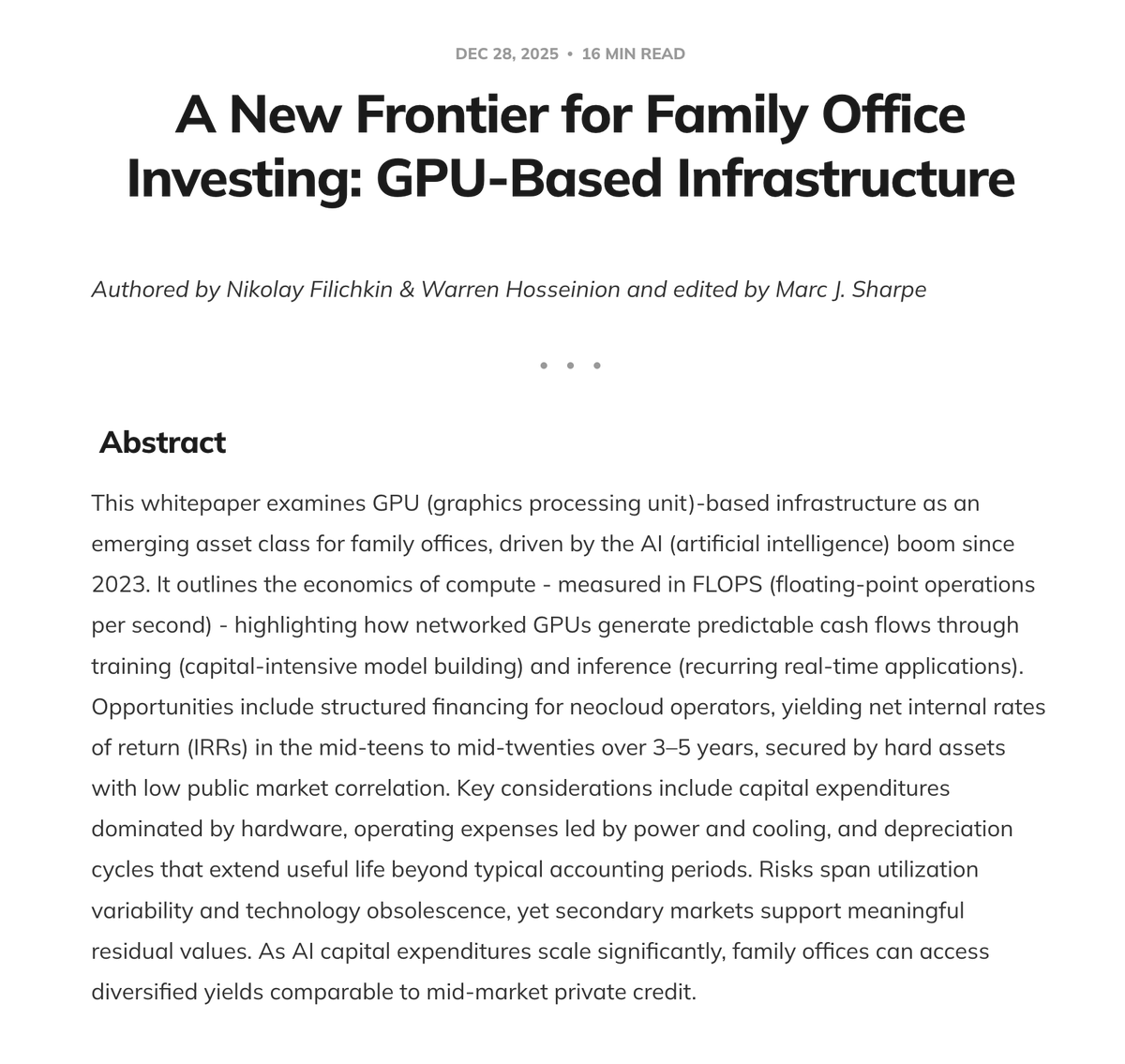
Capital markets are structurally failing to keep up with the physical reality of AI. We just co-published a new whitepaper with @TFOA_SFO titled "A New Frontier for Family Office Investing: GPU-Based Infrastructure". While the world focuses on high company valuations, a massive funding gap has opened up in the infrastructure layer. Inside the report, we break down: • How GPUs generate predictable, contract-backed cash flows • Why recurring AI workloads create stable returns for investors • How to structure financing to target attractive Net IRRs. Treating GPUs as yield-bearing infrastructure is this decade's biggest arbitrage. Thank you to Marc Sharpe at The Family Office Association for collaborating on this. Read the whitepaper now: insights.tfoa.info/gpu-based-infr…
Compute Labs tweet media
English
0
0
2
313
Compute Labs
Compute Labs@Compute_Labs·
Securing a loan is not enough to scale a neocloud's GPU capacity. Even when traditional debt is available, lenders typically cap Loan-to-Value (LTV) ratios at 70–80%. This leaves operators covering the remaining 20–30% in cash. On a $10M deployment, that is a $2M–$3M hole that must be filled with equity or cash reserves. This "down payment drag" slows growth velocity. Revenue-share financing removes this friction by aligning capital deployment directly with the asset's incoming cash flow, eliminating the need for massive upfront liquidity. Learn more: computelabs.ai/contact
Compute Labs tweet media
English
1
1
7
344