HTMLHODL

5.5K posts

HTMLHODL banner
HTMLHODL

HTMLHODL

@HTMLHODL

Follow me on NOSTR: https://t.co/Y1JpdfrQeE

Se unió Nisan 2012
476 Siguiendo582 Seguidores
HTMLHODL
HTMLHODL@HTMLHODL·
@brian_trollz have both, hexclad is not the solution... still stops working after a short while just like teflon...
English
0
0
0
12
Shinobi
Shinobi@brian_trollz·
I'm sorry to let so many Bitcoiners down, to betray Bitcoin so fucking deeply at a core philosophical level, to turn my back on this entire community in the most hurtful way possible... I'm replacing my cast-iron with Hexclad.
English
38
0
77
5.8K
HTMLHODL
HTMLHODL@HTMLHODL·
Happy St. Patrick’s Day! ☘️ Don’t forget to buy #Bitcoin and to get that daily candle to close in matching green!
HTMLHODL tweet media
English
0
0
0
18
Grayscale
Grayscale@Grayscale·
🚨 We’re hiring an Organic Social Media Manager at Grayscale. If you have a passion for crypto, creating culture-driving content, and want to help tell the story of the digital asset economy, let's talk. Bonus points if you: 📈 Follow markets obsessively 🧠 Turn complex topics into clear content 👾 Are tapped in to crypto twitter Note: This role is hybrid three days a week at our office in CT. Apply here: job-boards.greenhouse.io/grayscaleinves…
English
49
34
340
40.7K
Jimmy Song (송재준)
Sunday Survey: How much Bitcoin have you been scammed out of?
English
27
5
29
17.7K
smolting (wassie, verse)
smolting (wassie, verse)@inversebrah·
ethereum is not the world. ethereum is a specific object in the world banger
vitalik.eth@VitalikButerin

This is the new EF Mandate. For many of you, the contents should be no surprise, and a clarification along the lines that we have been going and thinking for the past few months. But the clarification is nevertheless worth making. Ethereum is a unique object and has a unique role in the world. Its role is to be a sanctuary technology, to preserve technological self-sovereignty, to enable cooperation without coercion, domination or rugpulling, and to provide an escape hatch, to ensure that no single person, organization or ideology's victory in cyberspace can be total. The Ethereum Foundation is a steward of Ethereum - the original steward, and today, the steward specifically dedicated to preserving and expanding the above aspects of Ethereum. This means a heavy emphasis on CROPS (censorship and capture resistance, open source, privacy, security), both at the protocol layer, and at the access layer, user-facing applications and tools that we create or contribute to. There are things that we do in Ethereum because we believe that they are valuable for the underlying goals that we have for Ethereum. There are things that we do not do because from the perspective of our values we find them uninteresting (or worse, harmful). But there are also things that we do not do because while they are useful, they are not our role. At the Ethereum protocol layer, we focus on decentralization, verifiability, inclusion guarantees, protocol liveness, security and privacy first and foremost. We also value capabilities (eg. L1 scale, account abstraction, perhaps some forms of in-protocol aggregation), particularly because improvements in these capabilities better enable users to properly benefit from Ethereum's CROPS properties and displace the need for higher-layer intermediaries that might weaken the extent to which Ethereum's properties carry over into the full stack. We also believe that the Ethereum protocol must strive to pass the walkaway test. "We do X to specialize to serve the use cases of today, if more use cases appear later, we will continue to keep adding more EIPs for them later" is logic fit for many other blockchains whose names you hear often on this forum, but we do not believe it is logic fit for a decentralization-first blockchain like Ethereum. At the application layer, we focus on making "the zero option" - user experience that goes hard on ensuring security and privacy, avoiding dependence on intermediaries, and respecting the user's agency - as high quality as possible. We see this as complementary to work in the Ethereum ecosystem that "goes broad", starting from the world that it exists, and brings it onchain and improves its properties over time. Such work has its natural home outside the EF. We intend to be supportive of such efforts. We believe that the two are complementary: tools that are developed within the EF can be adopted by anyone, including partially, and even partial adoption that improves people's security, privacy and agency is a good thing. But the form of user experience that is more heavily insistent on CROPS properties is where we want the EF to develop its center of expertise. This does not mean shrinking from the hard questions. We believe in a vision of self-sovereignty that protects users, and does not leave users in the cold to face environments where they lose their life savings if they make a mistake, and click "yes" on a confirmation screen by accident two seconds after. But such protection must be designed based on a philosophical baseline of empowering the user, not empowering centralized organizations that claim to act in the user's name. This quadrant of design space - caring about users' (including non-experts') well-being and safety, and yet insistent on doing this in a way compatible with their agency and freedom, is underserved (not just in crypto, but in the world). We wish to use Ethereum as a platform to build out and showcase this quadrant, and ideally work with others to expand its reach over time. This is also a new chapter in how we see our position in the world. We must see ourselves not just as the Ethereum community, but also as maintainers of the Ethereum tool within what you might call the CROPS community or the sanctuary tech community, or a dozen of other words that have for a long time been used by people with similar values to us but far outside Ethereum. This means open-mindedness to new conceptions of what things in the world are our natural allies. Ethereum is not the world. Ethereum is a specific object in the world that is here to have specific properties. The Ethereum Foundation is a specific organization within Ethereum - one steward, not the sole one. I encourage all to read the mandate in detail; it includes concrete examples of how we intend to deal with the challenges and nuances of these ideas. We are doubling down on Ethereum and are excited about its next chapter.


English
8
1
49
6.9K
HTMLHODL
HTMLHODL@HTMLHODL·
SaNcTuARy… Buy #Bitcoin
GIF
vitalik.eth@VitalikButerin

This is the new EF Mandate. For many of you, the contents should be no surprise, and a clarification along the lines that we have been going and thinking for the past few months. But the clarification is nevertheless worth making. Ethereum is a unique object and has a unique role in the world. Its role is to be a sanctuary technology, to preserve technological self-sovereignty, to enable cooperation without coercion, domination or rugpulling, and to provide an escape hatch, to ensure that no single person, organization or ideology's victory in cyberspace can be total. The Ethereum Foundation is a steward of Ethereum - the original steward, and today, the steward specifically dedicated to preserving and expanding the above aspects of Ethereum. This means a heavy emphasis on CROPS (censorship and capture resistance, open source, privacy, security), both at the protocol layer, and at the access layer, user-facing applications and tools that we create or contribute to. There are things that we do in Ethereum because we believe that they are valuable for the underlying goals that we have for Ethereum. There are things that we do not do because from the perspective of our values we find them uninteresting (or worse, harmful). But there are also things that we do not do because while they are useful, they are not our role. At the Ethereum protocol layer, we focus on decentralization, verifiability, inclusion guarantees, protocol liveness, security and privacy first and foremost. We also value capabilities (eg. L1 scale, account abstraction, perhaps some forms of in-protocol aggregation), particularly because improvements in these capabilities better enable users to properly benefit from Ethereum's CROPS properties and displace the need for higher-layer intermediaries that might weaken the extent to which Ethereum's properties carry over into the full stack. We also believe that the Ethereum protocol must strive to pass the walkaway test. "We do X to specialize to serve the use cases of today, if more use cases appear later, we will continue to keep adding more EIPs for them later" is logic fit for many other blockchains whose names you hear often on this forum, but we do not believe it is logic fit for a decentralization-first blockchain like Ethereum. At the application layer, we focus on making "the zero option" - user experience that goes hard on ensuring security and privacy, avoiding dependence on intermediaries, and respecting the user's agency - as high quality as possible. We see this as complementary to work in the Ethereum ecosystem that "goes broad", starting from the world that it exists, and brings it onchain and improves its properties over time. Such work has its natural home outside the EF. We intend to be supportive of such efforts. We believe that the two are complementary: tools that are developed within the EF can be adopted by anyone, including partially, and even partial adoption that improves people's security, privacy and agency is a good thing. But the form of user experience that is more heavily insistent on CROPS properties is where we want the EF to develop its center of expertise. This does not mean shrinking from the hard questions. We believe in a vision of self-sovereignty that protects users, and does not leave users in the cold to face environments where they lose their life savings if they make a mistake, and click "yes" on a confirmation screen by accident two seconds after. But such protection must be designed based on a philosophical baseline of empowering the user, not empowering centralized organizations that claim to act in the user's name. This quadrant of design space - caring about users' (including non-experts') well-being and safety, and yet insistent on doing this in a way compatible with their agency and freedom, is underserved (not just in crypto, but in the world). We wish to use Ethereum as a platform to build out and showcase this quadrant, and ideally work with others to expand its reach over time. This is also a new chapter in how we see our position in the world. We must see ourselves not just as the Ethereum community, but also as maintainers of the Ethereum tool within what you might call the CROPS community or the sanctuary tech community, or a dozen of other words that have for a long time been used by people with similar values to us but far outside Ethereum. This means open-mindedness to new conceptions of what things in the world are our natural allies. Ethereum is not the world. Ethereum is a specific object in the world that is here to have specific properties. The Ethereum Foundation is a specific organization within Ethereum - one steward, not the sole one. I encourage all to read the mandate in detail; it includes concrete examples of how we intend to deal with the challenges and nuances of these ideas. We are doubling down on Ethereum and are excited about its next chapter.

English
0
1
0
51
HTMLHODL
HTMLHODL@HTMLHODL·
@BTCsessions Sending and receiving bitcoin should be as easy as texting or emailing someone while avoiding reuse of addresses and any single point of failure. I haven’t seen this yet… or did I miss something? Lightning comes close but not for larger transactions.
English
1
0
1
84
BTC Sessions 😎
BTC Sessions 😎@BTCsessions·
So many killer Bitcoin builders out there right now, energy is insane! But what's STILL missing? What’s the one thing that doesn't exist yet but you think would absolutely explode if someone nailed it? If YOU could direct the top devs, what would you build next? Give me your wildest ideas!🔥
BTC Sessions 😎 tweet media
English
31
9
53
5.9K
Superheat
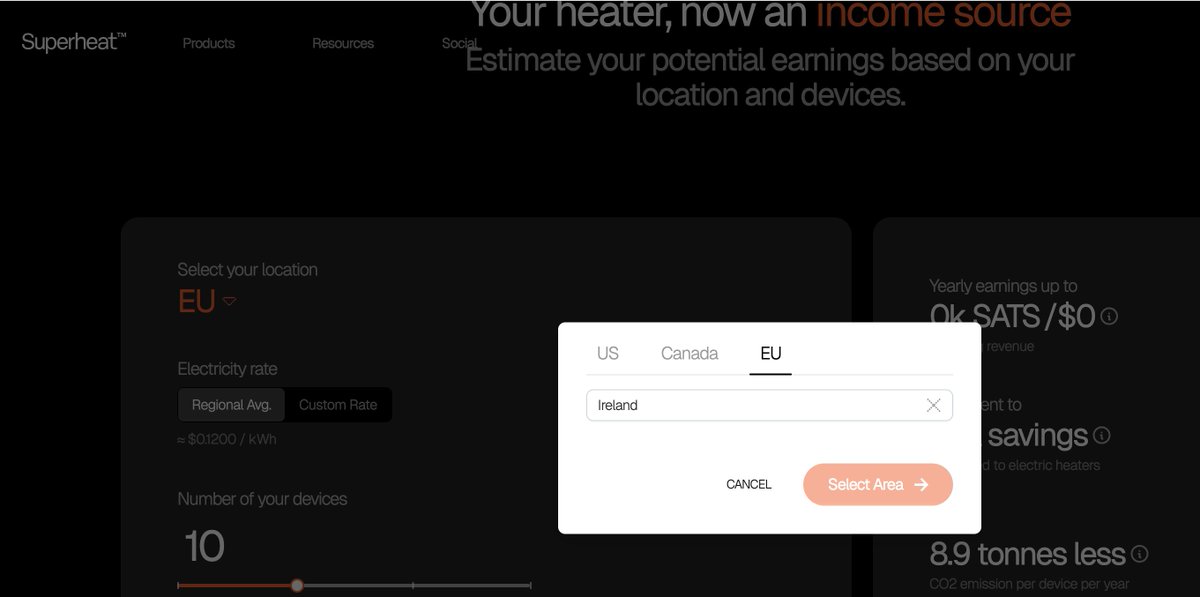
Superheat@Superheat_xyz·
👀
QME
90
87
490
84.2K
HTMLHODL retuiteado
David
David@david_eng_mba·
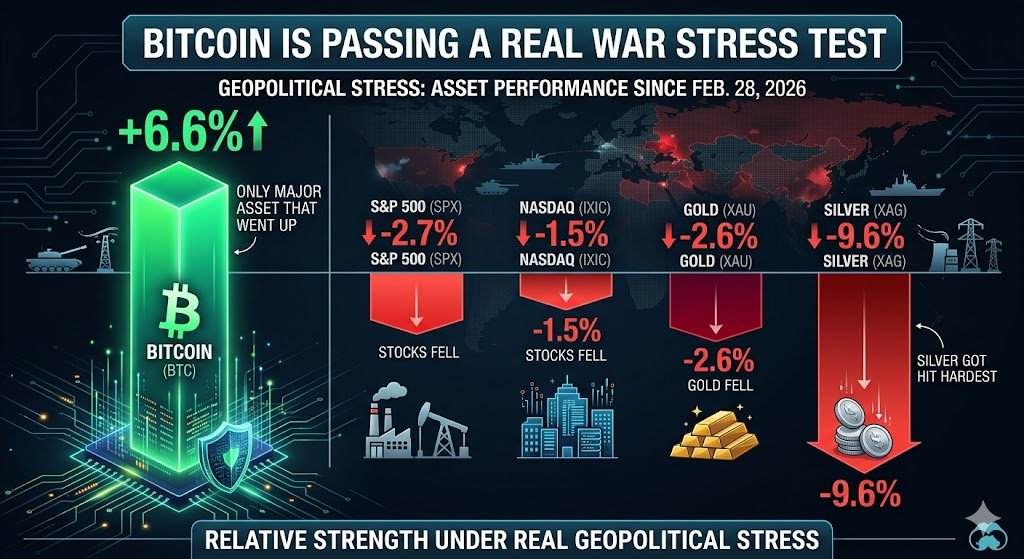
Bitcoin Is Passing a Real War Stress Test Since Feb. 28: BTC +6.6% S&P 500 -2.7% Nasdaq -1.5% Gold -2.6% Silver -9.6% BTC was the only major asset here that went up. Stocks fell. Gold fell. Silver got hit hardest. That is relative strength under real geopolitical stress.
David tweet media
English
12
35
182
5.2K
HTMLHODL
HTMLHODL@HTMLHODL·
Is this true @brian_armstrong ?
TFTC@TFTC21

Coinbase is quietly lobbying to kill Bitcoin's de minimis tax exemption. The company reportedly told legislators that "no one is using Bitcoin as money" and that a Bitcoin de minimis exemption would be "DOA." Meanwhile, they're pushing for the exemption to apply only to stablecoins, specifically regulated, dollar-pegged stablecoins like USDC. Coinbase made $1.35 billion in stablecoin revenue in 2025, up 48% year over year, almost entirely from interest earned on U.S. Treasuries held in USDC reserves. Bloomberg estimates that number could surge 7x under the GENIUS Act. Every person who uses USDC for payments instead of Bitcoin is a person whose dollars are sitting in Coinbase's reserve pool generating risk-free yield for Coinbase. A de minimis exemption for Bitcoin would let people spend it freely for everyday purchases without triggering a taxable event. That makes Bitcoin a direct competitor to USDC as a payment method. Coinbase doesn't want that competition. They want you locked into their centralized stablecoin ecosystem where they clip yield on every dollar you park there. The irony is that a de minimis exemption doesn't even make sense for stablecoins. They're pegged to the dollar. They don't fluctuate in value. There's no capital gain to exempt. The exemption matters for Bitcoin precisely because it does fluctuate, and without it, every coffee purchase becomes a taxable event. Senator Lummis proposed a $300 de minimis exemption that would cover Bitcoin. The House framework only covers stablecoins under $200. The Bitcoin Policy Institute has already warned that Bitcoin is being deliberately excluded from these talks. A de minimis exemption that covers stablecoins but not Bitcoin isn't a tax framework. It's a subsidy for Coinbase's treasury management business disguised as consumer protection.

English
0
0
0
23
HTMLHODL
HTMLHODL@HTMLHODL·
@BowTiedMara Ah yes, going to rewatch this one. Don’t remember much of it. Just bought it for only €4,49 on Apple TV.
English
0
0
0
28
HTMLHODL
HTMLHODL@HTMLHODL·
@btcjvs @paoloardoino Would Saylor be able to make all dividend payments in that case? Ramping up sales of Strc in such a size would require more green dots…?
English
0
0
3
70
James Van Straten
James Van Straten@btcjvs·
What if Tether started buying STRC instead of U.S. Treasuries? Or even a small allocation from their U.S. Treasury holdings? @paoloardoino
English
69
55
988
38.7K
Vasja
Vasja@VasjaBocko·
I want: - 4 seasons - rather cold than hot - mountains (& sea if possible) - reasonable taxes - no unrealized capital gains tax - no woke bullshit - safe - functioning public services - solid healthcare - low corruption Where do I go?
English
41
1
90
53.1K
Bitcoin Teddy
Bitcoin Teddy@Bitcoin_Teddy·
I've never seen a comedy this intelligent
English
5
3
38
3.9K