Ian Ferrin

2.3K posts

Ian Ferrin banner
Ian Ferrin

Ian Ferrin

@IanFerrin

Retired ICU RN, Praying for revival, Anti-Communist, Spacex enthusiast, Musician. Critical Social Justice ideology must be confronted at it's academic roots.

Se unió Aralık 2022
147 Siguiendo377 Seguidores
Tweet fijado
Ian Ferrin
Ian Ferrin@IanFerrin·
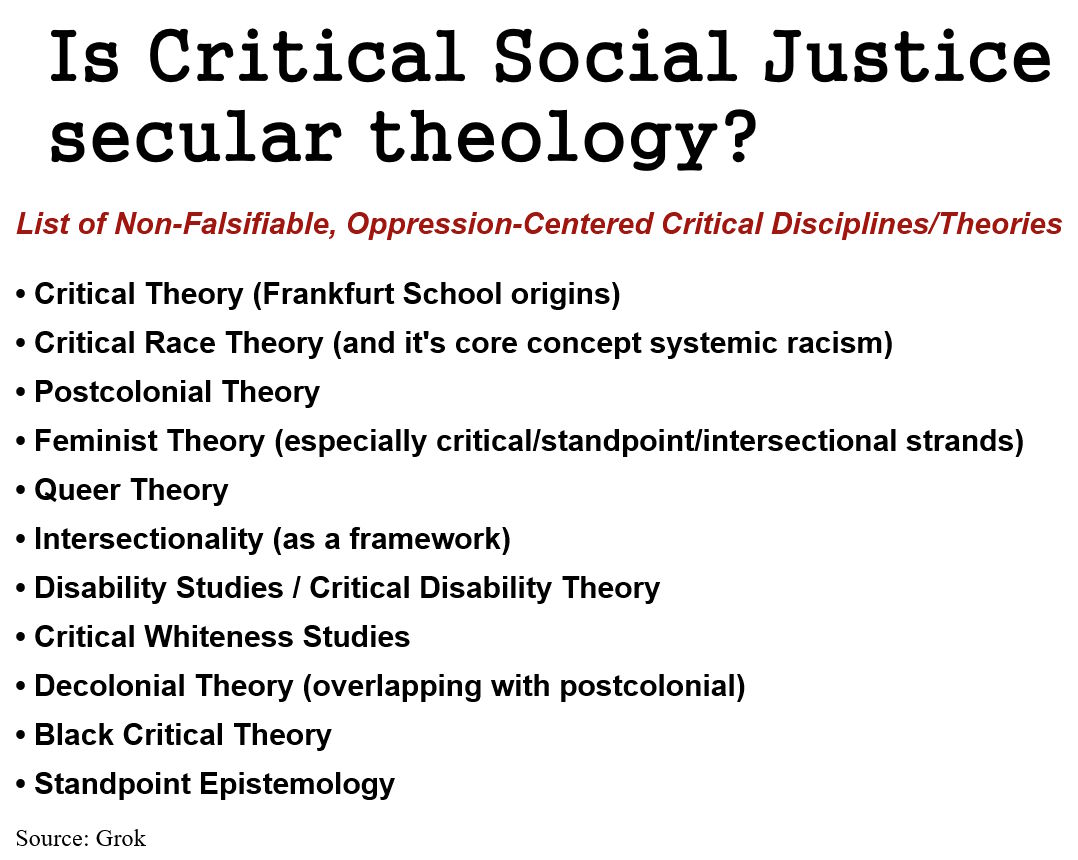
An essay. Is Critical Social Justice secular theology? (How Quasi-Religious Critical Theories Captured Institutions ) In #philosophy, it's common and normal to start with a provisional axiom and argue as if it's true for the sake of exploration—these are often called provisional assumptions, and they're meant to be challenged, revised, or dropped if they don't hold up. But in the oppression-centered critical disciplines (CRT and its many cousins like postcolonial theory, queer theory, critical feminism, etc.), the core axioms are not provisional. They are treated as settled realities or foundational truths. For example, CRT scholars like Richard Delgado and Jean Stefancic describe racism as "ordinary, not aberrational"—the normal, everyday way society does business, embedded in every nook and cranny—and you basically have to accept this "settled reality" of systemic racism (and related premises) to even engage meaningfully in the field. There are plenty of other core assumptions like this, and I call them non-provisional certainties or dogmatic axioms: they're not starting points open to genuine examination; they're treated as structural givens that define the inquiry. Non-provisional certainties show up occasionally in the humanities, but they're absolutely central to theology and religious studies. Theologians openly start from unfalsifiable core axioms—like "God exists" or "Scripture is divinely inspired"—and then build arguments and interpretations within that protected framework. Theology embraces its foundational commitments as matters of faith and revelation. It doesn’t pretend to be neutral empirical science or even neutral philosophy. But the oppression-centered critical disciplines do pretend exactly that. Here’s my main point… CRT, systemic racism theory, decolonialism, whiteness studies, and the rest are strikingly similar in structure to theology. They operate with dogmatic axioms at their cores—almost in a neo-religious sense. When challenged, counter-evidence gets re-framed as proof of even deeper oppression rather than disconfirmation. For example, criticisms or critiques of CRT (or related theories) are often treated as manifestations of latent racism, defensiveness, or complicity in maintaining the status quo. Another example - advocating for colorblind policies or meritocracy or individual equality under the law (i.e., arguing against equity) is re-framed as a tool that perpetuates racism by ignoring structural realities. In both these examples, they literally defend themselves by saying you're racist for asking those questions. These frameworks claim the authority of scholarship and real-world insight, but their non-provisional starting points make them function more like a quasi religion than open scientific inquiry. And they resist any serious examination. Criticisms and critiques are often 'thrown back' on the questioner, like an ad-hominem attack. For most of their histories—from emergence in the late 1970s/80s through the 2000s and early 2010s—these oppression-centered critical disciplines (CRT and its cousins) grew largely unchallenged in academia and steadily permeated society. They expanded into education, sociology, cultural studies, DEI, corporate training, and public policy without much scrutiny or pushback on their non-provisional axioms. This unchallenged ascent let them accumulate massive institutional power: shaping curricula, hiring, funding, policies, and norms around race, equity, and justice. They've become incredibly powerful. These quasi-religious frameworks have embedded deeply in elite institutions, government, and business—yet they're rarely recognized as such, still cloaked as neutral scholarship. They wield real-world influence far beyond what provisional, non-evidence-based critical theory should ever achieve. But unchecked growth doesn't prove validity; it just shows how 'asleep at the wheel' critics and society were. Serious critiques have emerged from voices like James Lindsay, Thomas Sowell, Jordan Peterson, Chris Rufo and the Heritage Foundation, but IMO they haven't broken through widely yet. It's time to expose this dominance further. How do we raise public awareness? IMO this could be the defining issue of our time—these disciplines have shaped the entire social justice movement into a quasi-religious force. Have these disciplines redefined what it means to be American? I think that’s not an overstatement. For most of American history individual liberty, natural rights and personal virtue were our central moral framing. Now the framing has largely shifted to race and power (oppressed vs oppressor) and these disciplines are largely responsible for that shift. They have become incredibly influential. And, in my opinion, they currently hold the upper hand. And so awareness of their theological structure isn't an endpoint; it's the spark that must ignite broader scrutiny and, ultimately, the restoration of genuine inquiry over ideology and dogma. DEI, CRT, systemic racism and all of them come from a literal secular theology! Ultimately, the battle isn't merely over policy or evidence—it's over perception. We must strip away the pretense of neutral, scientific inquiry and reveal these oppression-centered critical disciplines for the quasi-religious frameworks they are: structured around non-provisional certainties, dogmatic axioms, and mechanisms of doctrinal defense that mirror theology far more than social science. These quasi-religious Oppression-Centered Critical Theories have captured institutions and much of America. We must persistently name this reality—through clear explanations, public debates, accessible writings, and everyday conversations. We must fight to equip the average American to see beyond the academic veneer. And we must fight to expose the entrenched and continuing threat these theology-like, quasi religious ideologies pose. -Ian Ferrin Feb. 6, 2026
Ian Ferrin tweet media
English
5
2
26
4.4K
Manny
Manny@ManTru333·
@IanFerrin @dariamcleod @AmritHallan @travelingflying You worded it right but glossed over one massive problem the fact of being illegal. Every nation has borders and immigration laws most let in far less legal immigrants per year than the United States. If you are not aware the flooding of America with illegals was an attack on U.S
English
1
0
2
17
Taya
Taya@travelingflying·
Black woman from South Africa: “Black people have been patient enough for more than 400 years of colonialism. We are coming for you, and we are going to get everything that you own.” White people are facing racism, hatred, and brutal violence in South Africa. This is not acceptable. More people should know about the horrible things happening in South Africa; almost nobody talks about it.
English
7K
14.4K
54.2K
53M
Ian Ferrin
Ian Ferrin@IanFerrin·
@lemondropsicle @STILLTish @SwipeWright The sad truth is that they've only lost the respect of conservatives. And not even all conservatives. Critical Social Justice is still a power core of American lefitsm.
English
0
0
0
17
M
M@lemondropsicle·
@IanFerrin @STILLTish @SwipeWright Academia legitimised all of this nonsense and then wonders why its lost respect in the eyes of the public. You reap what you sow.
English
1
1
3
138
Colin Wright
Colin Wright@SwipeWright·
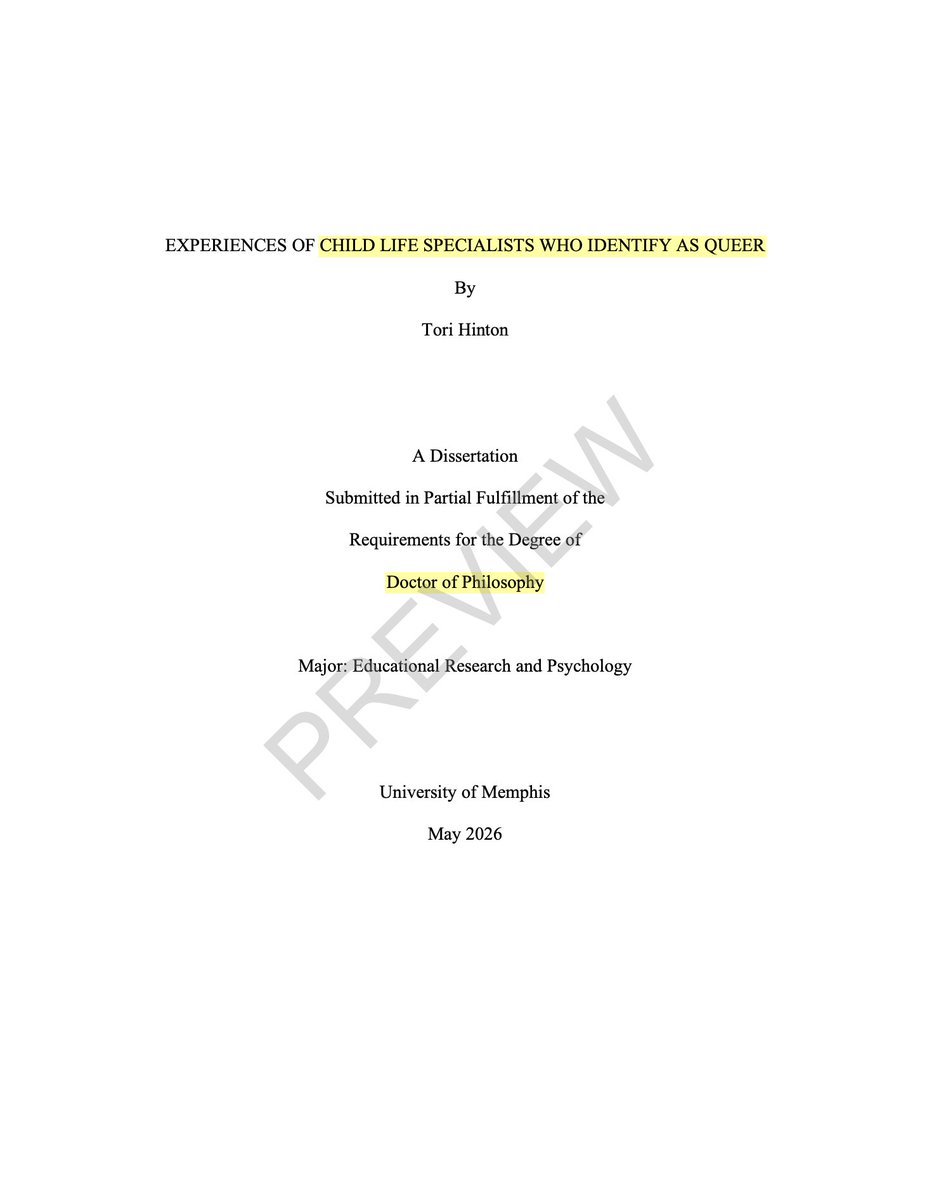
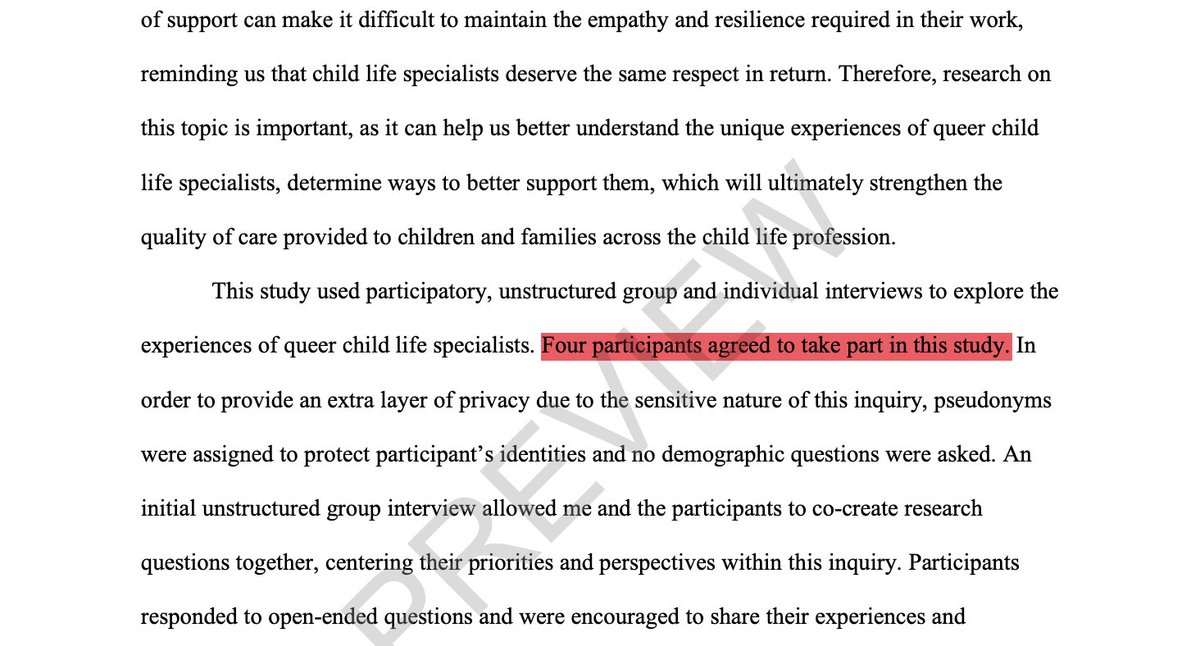
🚨NEW: This person just got a PhD for a dissertation illuminating the “lived experiences” of just FOUR “queer child life specialists” through what it calls a “queer narrative inquiry study.” The student used “an unstructured group interview to co-create research questions with participants,” meaning the subjects of the study helped decide what the study would ask in the first place. It then followed up with “unstructured individual interviews” and analyzed the material using a “creative approach to thematic analysis.” Participants' feelings were sorted into themes like “ongoing navigation of queer identity,” “experiences of discrimination,” and “experiences of allyship.” A final “member-checking group interview validated the findings,” which means the same four people helped confirm the conclusions too. You must refer to this person as “Doctor” now.
Colin Wright tweet mediaColin Wright tweet mediaColin Wright tweet media
English
172
287
1.6K
51.1K
Ian Ferrin
Ian Ferrin@IanFerrin·
@MegadirkI @SwipeWright Absolutely agreed. There just aren't many campuses that don't take the Critical Theories seriously. Even many Christian universities have been duped. IMO the only solution is raising the the level of awareness about the insidiousness of CSJ. #IanCSJcriticism
English
0
0
1
22
MegaDirk III
MegaDirk III@MegadirkI·
Completely, no. What I am saying is that you can try to silo the academic disciplines all you want. If however the freshman introduction is 'we want the campus to be safe and just for all, which is why we need to prioritize the needs and lived experiences of marginalized communities', all is already lost. There is no siloing after that. Such a campus should be avoided: don't send any kids there.
English
1
0
1
24
Ian Ferrin
Ian Ferrin@IanFerrin·
@elonmusk This anti apartheid apartheid is driving S. Africa into the third world. Grievance is a terrible driver of anything. Critical Social Justice grievance is going to drive the US in the same direction if we're not careful. #IansCSJcriticism x.com/IanFerrin/stat…
Ian Ferrin@IanFerrin

An essay. Is Critical Social Justice secular theology? (How Quasi-Religious Critical Theories Captured Institutions ) In #philosophy, it's common and normal to start with a provisional axiom and argue as if it's true for the sake of exploration—these are often called provisional assumptions, and they're meant to be challenged, revised, or dropped if they don't hold up. But in the oppression-centered critical disciplines (CRT and its many cousins like postcolonial theory, queer theory, critical feminism, etc.), the core axioms are not provisional. They are treated as settled realities or foundational truths. For example, CRT scholars like Richard Delgado and Jean Stefancic describe racism as "ordinary, not aberrational"—the normal, everyday way society does business, embedded in every nook and cranny—and you basically have to accept this "settled reality" of systemic racism (and related premises) to even engage meaningfully in the field. There are plenty of other core assumptions like this, and I call them non-provisional certainties or dogmatic axioms: they're not starting points open to genuine examination; they're treated as structural givens that define the inquiry. Non-provisional certainties show up occasionally in the humanities, but they're absolutely central to theology and religious studies. Theologians openly start from unfalsifiable core axioms—like "God exists" or "Scripture is divinely inspired"—and then build arguments and interpretations within that protected framework. Theology embraces its foundational commitments as matters of faith and revelation. It doesn’t pretend to be neutral empirical science or even neutral philosophy. But the oppression-centered critical disciplines do pretend exactly that. Here’s my main point… CRT, systemic racism theory, decolonialism, whiteness studies, and the rest are strikingly similar in structure to theology. They operate with dogmatic axioms at their cores—almost in a neo-religious sense. When challenged, counter-evidence gets re-framed as proof of even deeper oppression rather than disconfirmation. For example, criticisms or critiques of CRT (or related theories) are often treated as manifestations of latent racism, defensiveness, or complicity in maintaining the status quo. Another example - advocating for colorblind policies or meritocracy or individual equality under the law (i.e., arguing against equity) is re-framed as a tool that perpetuates racism by ignoring structural realities. In both these examples, they literally defend themselves by saying you're racist for asking those questions. These frameworks claim the authority of scholarship and real-world insight, but their non-provisional starting points make them function more like a quasi religion than open scientific inquiry. And they resist any serious examination. Criticisms and critiques are often 'thrown back' on the questioner, like an ad-hominem attack. For most of their histories—from emergence in the late 1970s/80s through the 2000s and early 2010s—these oppression-centered critical disciplines (CRT and its cousins) grew largely unchallenged in academia and steadily permeated society. They expanded into education, sociology, cultural studies, DEI, corporate training, and public policy without much scrutiny or pushback on their non-provisional axioms. This unchallenged ascent let them accumulate massive institutional power: shaping curricula, hiring, funding, policies, and norms around race, equity, and justice. They've become incredibly powerful. These quasi-religious frameworks have embedded deeply in elite institutions, government, and business—yet they're rarely recognized as such, still cloaked as neutral scholarship. They wield real-world influence far beyond what provisional, non-evidence-based critical theory should ever achieve. But unchecked growth doesn't prove validity; it just shows how 'asleep at the wheel' critics and society were. Serious critiques have emerged from voices like James Lindsay, Thomas Sowell, Jordan Peterson, Chris Rufo and the Heritage Foundation, but IMO they haven't broken through widely yet. It's time to expose this dominance further. How do we raise public awareness? IMO this could be the defining issue of our time—these disciplines have shaped the entire social justice movement into a quasi-religious force. Have these disciplines redefined what it means to be American? I think that’s not an overstatement. For most of American history individual liberty, natural rights and personal virtue were our central moral framing. Now the framing has largely shifted to race and power (oppressed vs oppressor) and these disciplines are largely responsible for that shift. They have become incredibly influential. And, in my opinion, they currently hold the upper hand. And so awareness of their theological structure isn't an endpoint; it's the spark that must ignite broader scrutiny and, ultimately, the restoration of genuine inquiry over ideology and dogma. DEI, CRT, systemic racism and all of them come from a literal secular theology! Ultimately, the battle isn't merely over policy or evidence—it's over perception. We must strip away the pretense of neutral, scientific inquiry and reveal these oppression-centered critical disciplines for the quasi-religious frameworks they are: structured around non-provisional certainties, dogmatic axioms, and mechanisms of doctrinal defense that mirror theology far more than social science. These quasi-religious Oppression-Centered Critical Theories have captured institutions and much of America. We must persistently name this reality—through clear explanations, public debates, accessible writings, and everyday conversations. We must fight to equip the average American to see beyond the academic veneer. And we must fight to expose the entrenched and continuing threat these theology-like, quasi religious ideologies pose. -Ian Ferrin Feb. 6, 2026

English

2
0
0
1.3K
Ian Ferrin
Ian Ferrin@IanFerrin·
@BlaireWhite Yep, it violates one of the 10 commandments. Like don't covet and don't commit adultery. Christians sure have a lot of tolerance of those?
English
0
0
0
40
BLAIRE WHITE
BLAIRE WHITE@BlaireWhite·
There’s actually no excuse for blaspheming Jesus Christ. No other religion tolerates it, and neither should Christians.
English
1K
339
5.5K
207.9K
Ian Ferrin
Ian Ferrin@IanFerrin·
@MegadirkI @SwipeWright You think the Critical Theories can be eliminated completely? I'd be all for that, but I think even siloing them would be VERY difficult. They're hugely powerful. Siloing them would at least cause people to realize they are different than regular social sciences or humanities.
English
1
0
2
50
MegaDirk III
MegaDirk III@MegadirkI·
@IanFerrin @SwipeWright An improvement, but not sufficient. They do much damage in the freshman/freshwoman orientation period, HR, and equity complaints committees.
English
1
0
1
40
Ian Ferrin
Ian Ferrin@IanFerrin·
@erotique_photo @NASA IMO Starship is the most single most important project on planet earth right now, Elon or not. The benefits, even just the side benefits of going to the Moon and Mars, from solving all the problems and challenges that arise will be countless. IMO.
English
0
0
0
12
NASA
NASA@NASA·
LIVE: They are coming home. Watch as the Artemis II crew returns to Earth, splashing down at around 8:07pm ET (0007 UTC April 11). twitter.com/i/broadcasts/1…
English
4.7K
34.4K
139.2K
9.2M
Ian Ferrin
Ian Ferrin@IanFerrin·
@SwipeWright The Critical theories operate in the Social Sciences and Humanities. IMO they are neither and should be siloed in a separate new 'Critical Studies' dept. (for example) What do you think of that?
English
1
0
2
102
Colin Wright
Colin Wright@SwipeWright·
@IanFerrin They created fake fields filled with morons so there is literally nobody there to push back on this nonsense. The field is totally captured by activist ideologues.
English
1
1
31
860
Ian Ferrin
Ian Ferrin@IanFerrin·
@Ha4328854740726 @NASA Absolutely. My Halleluiah was a true Halleluiah. I just wonder what will happen when Starship becomes operational?
English
0
0
4
28
Ian Ferrin
Ian Ferrin@IanFerrin·
@elonmusk Elon may truly go down as a poet. I truly mean this. Shining Stainless Steel Starships That's a pretty good poem!
English
0
0
4
13
Ian Ferrin
Ian Ferrin@IanFerrin·
@NASA Halleluiah they made it home. Will the world rejoice when Starship becomes operational? #Elon #SpaceX
English
2
0
11
907
NASA
NASA@NASA·
Welcome home Reid, Victor, Christina, and Jeremy! 🫶 The Artemis II astronauts have splashed down at 8:07pm ET (0007 UTC April 11), bringing their historic 10-day mission around the Moon to an end.
English
6.8K
107.7K
389.3K
84.3M
Ian Ferrin
Ian Ferrin@IanFerrin·
@Bellebird73 @SwipeWright You and I don't believe "academia", but most people still do. Critical Social Justice must be EXPOSED at it's academic roots. Colin is maybe their strongest opponent at this point and his aggression against them makes me really happy! #IansCSJcriticism
English
0
0
2
39
Beverley Harborne
Beverley Harborne@Bellebird73·
@SwipeWright Just another example of why we know longer believe "academia" and anyone associated pro trans ideology and queer theory. No doubt will go onto an academic career built on this total fabricated bullshit.
English
2
4
64
1.7K
Ian Ferrin
Ian Ferrin@IanFerrin·
@WatchfulWaiter1 @SwipeWright This is FAR more insidious than vending machine PHDs (which are utterly real). Queer theory and all the Critical Social Justice disciplines are not social science. They are not even philosophy. They are something else. Check out my pinned post. #IansCSJcriticism
English
0
0
1
22
Simon Hankinson
Simon Hankinson@WatchfulWaiter1·
@SwipeWright No, we don’t. That’s merely a polite convention, an antiquated, voluntary courtesy from an era where they didn’t give out degrees at virtual vending machines. This person gets “phd” in air quotes, for irony, at best.
English
1
0
8
514
Ian Ferrin
Ian Ferrin@IanFerrin·
I misspoke. Which RELIGION offers real hope? Critical Social Justice has no vision. It only has criticism. The contrast here is stark. #IansCSJcriticism
English
0
0
0
14
Ian Ferrin
Ian Ferrin@IanFerrin·
#IansCSJcriticism Many people believe “social justice,” “equity,” “inclusion,” and “elevating marginalized voices” are the moral way forward. Do you realize these ideas mostly come from Critical Race Theory, Postcolonialism, Critical Feminism, and Critical Social Justice (CSJ) more broadly? Many critics, including John McWhorter, James Lindsay and Chris Rufo argue CSJ functions as a neo-religion with its own unproven dogmas that must be accepted on faith. Here's a comparison. I think it's utterly valid... Christianity offers hope, forgiveness, personal repentance, and a finished work at the cross (“It is finished”). CSJ offers only perpetual vigilance, confession of privilege, and endless grievance with no final redemption. What am I missing? Which vision offers real hope?
Ian Ferrin tweet media
English
1
0
2
45