Janine Sengstack

16 posts

Janine Sengstack banner
Janine Sengstack

Janine Sengstack

@JanineSengstack

Co-founder & CSO at @Junevity, a biotech developing siRNA therapeutics for longevity based on nearly a decade of my research PhD in Cellular Aging @UCSF

San Francisco, CA Se unió Şubat 2024
63 Siguiendo64 Seguidores
Janine Sengstack retuiteado
Junevity
Junevity@junevity·
Junevity co-founder @robcahill10 will be presenting on February 25 at the @Biocom Global Partnering & Investor Conference at Torrey Pines in San Diego. Join us to learn more about our platform and growing pipeline.
Junevity tweet media
English
0
2
4
101
Janine Sengstack retuiteado
Junevity
Junevity@junevity·
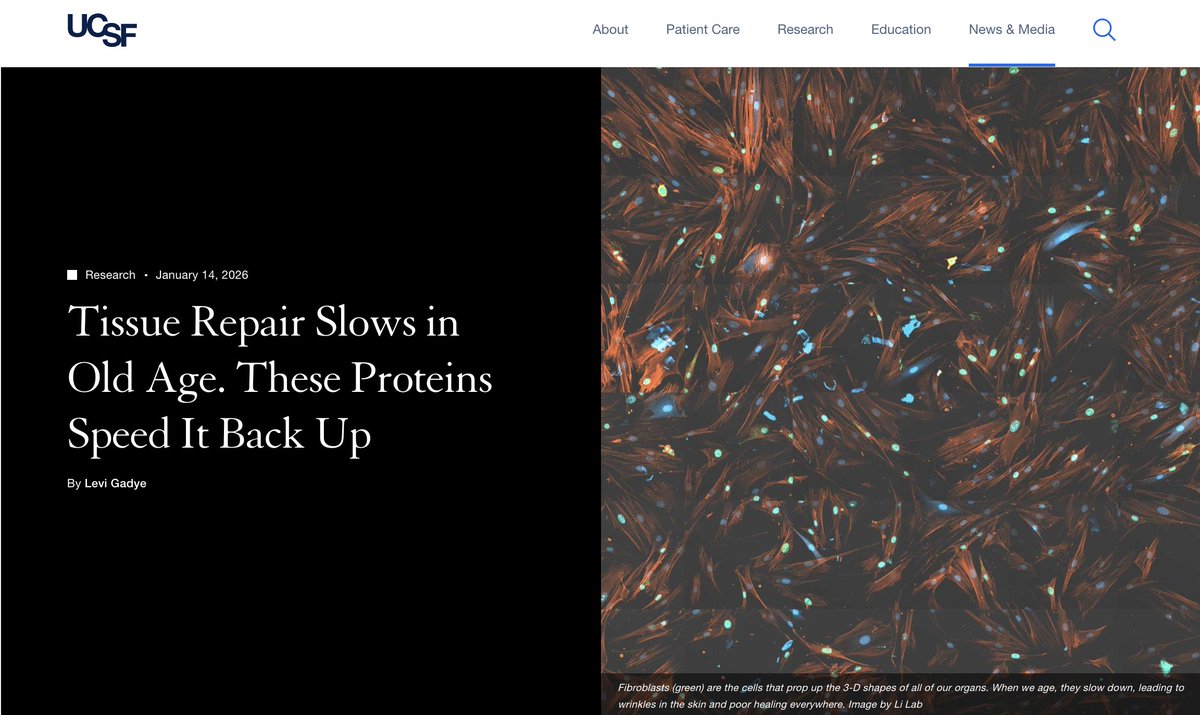
"By altering gene expression using the transcription factors we identified, old fibroblasts behaved as if they were younger and improved the health of old mice." - Hao Li, PhD, UCSF professor of Biochemistry and Biophysics, and co-founder at @junevity
Junevity tweet media
English
1
2
5
165
Janine Sengstack retuiteado
Jamie Gull
Jamie Gull@jamiegull·
Cool that @bryan_johnson is highlighting the longevity research of the company I’m an angel investor in. Go @junevity and @JanineSengstack and @robcahill10 !
Bryan Johnson@bryan_johnson

New study: for years Yamanaka factors have driven longevity optimism. They factory reset cellular age, also erase the cellular identity. The drawback is potential cancer. Transcription Factor Perturbations is a new scalpel approach targeting specific rejuvenation levers while keeping the cell's identity. Example breakthrough EZH2: mouse liver age reversal by 8 human-year equivalent by reducing liver fibrosis and fat by 50% and significantly improving glucose tolerance. Study details Transcriptional factors, particularly the Yamanaka factors (OSKM), are key to understanding and potentially reversing aging. OSKM can perform a cellular "factory reset," erasing epigenetic memory and inducing a stem cell-like state. Partial reprogramming with OSKM offers a path to rejuvenation, but its clinical use requires precise temporal and dosage control to prevent dedifferentiation and tumor formation. A recent study established a Transcriptional Rejuvenation Discovery Platform (TRDP) to identify novel transcription factor perturbations capable of driving cellular rejuvenation and reversing aspects of replicative aging in human fibroblasts. The platform was trained on transcriptional shifts between early- and late-passage human cells in culture to identify gene expression and transcription factor changes associated with aging. These changes were ranked computationally to prioritize transcription factors relevant to rejuvenation. The top 200 candidates were screened by parallel overexpression (CRISPRa) or inhibition (CRISPRi), followed by single-cell RNA sequencing to evaluate transcriptional consequences. Rejuvenating factors were identified by their ability to reverse aging-associated gene expression, quantified by a negative correlation score (R₍rej₎). Four were selected for further study: inhibition of STAT3 and ZFX, and activation of EZH2 and E2F3. Findings in human cells (fibroblasts in cell culture) In high-passage cells, all four perturbations induced rejuvenation-associated phenotypes, including increased proliferation (KI67), improved proteasome activity, reduced lysosomal staining, p21 downregulation, and improved mitochondrial function (strongest with EZH2). These effects mirrored in vitro OSKM reprogramming for the measured hallmarks, but without changing cellular identity. DNA methylation clocks remained stable, consistent with the decoupling of senescence and epigenetic aging. Findings in aging mouse livers For in vivo validation, the aging mouse liver was chosen. EZH2 was selected due to its age-associated decline, favorable safety profile over E2F3, and lack of STAT3-like disease-specific liver involvement. Three weeks of liver-specific EZH2 overexpression via AAV8 delivery reversed aging-associated gene expression and phenotypes by an equivalent of roughly eight months of mouse aging, including reductions in steatosis and fibrosis and improvements in glucose tolerance. EZH2 overexpression produced stronger rejuvenation-associated transcriptional changes in vivo than those observed in vitro, particularly affecting inflammatory pathways and age-related loss of cellular identity, including inappropriate activation of muscle and cardiac gene programs in aged liver tissue. In 20-month-old mice, fibrosis and glucose intolerance improved by approximately 50% relative to young mice. Importantly, cellular identity was preserved, no liver damage or histological abnormalities were observed, and comparisons with multiple mouse liver cancer models showed no overlap with cancer-associated transcriptional signatures over the short treatment window. Significance This work introduces a systematic framework for identifying transcriptional factors as potential levers for longevity and rejuvenation. EZH2 emerges as a promising target for further exploration via gene therapy or targeted modulators, based on rejuvenation-associated signatures observed in human fibroblasts and functional rejuvenation of the aging mouse liver without overt damage or cancer-like signals. While the OSKM reprogramming strategy demonstrate the reversibility of aging through global epigenetic resetting, it carries intrinsic risks related to identity destabilization. In contrast, targeted transcription factor perturbations enable the reversal of multiple aging-associated hallmarks without engaging in full or partial reprogramming, suggesting a more precise and potentially safer route to rejuvenation. These distinct approaches collectively indicate that rejuvenation operates across various biological layers, from broad epigenetic resets to targeted transcriptional network recalibration. Limitations The current screening strategy and computational model are biased towards transcription factors effective in replicative aging models of passaged neonatal human dermal fibroblasts, which differ substantially from organismal aging in vivo. While many hallmarks overlap, this model does not fully capture aging in post-mitotic cells or complex tissue and organ environments. The platform uses cellular proliferation and survival in culture as proxies for rejuvenation, whereas in vivo aging is influenced by additional factors such as differentiation state, immune interactions, and intercellular communication. Reliance on proliferative capacity also carries inherent oncogenic risk. Although cancer-associated transcriptional signatures were not observed in this study, longer-term effects cannot be excluded. Finally, liver rejuvenation was demonstrated in a single organ over a short treatment period in mice. The absence of damage or oncogenic signatures cannot be considered a definitive safety signal, and long-term studies, including large-animal and non-human primate models, will be required to establish safety, durability, and systemic relevance.

English
0
2
5
341
Janine Sengstack retuiteado
Rob Cahill
Rob Cahill@robcahill10·
Tissue-specific cellular reset is one of the most promising paths for longevity therapeutics Thanks @bryan_johnson for highlighting @JanineSengstack ‘s research which we’ve progressed into therapeutic candidates at @junevity
Bryan Johnson@bryan_johnson

New study: for years Yamanaka factors have driven longevity optimism. They factory reset cellular age, also erase the cellular identity. The drawback is potential cancer. Transcription Factor Perturbations is a new scalpel approach targeting specific rejuvenation levers while keeping the cell's identity. Example breakthrough EZH2: mouse liver age reversal by 8 human-year equivalent by reducing liver fibrosis and fat by 50% and significantly improving glucose tolerance. Study details Transcriptional factors, particularly the Yamanaka factors (OSKM), are key to understanding and potentially reversing aging. OSKM can perform a cellular "factory reset," erasing epigenetic memory and inducing a stem cell-like state. Partial reprogramming with OSKM offers a path to rejuvenation, but its clinical use requires precise temporal and dosage control to prevent dedifferentiation and tumor formation. A recent study established a Transcriptional Rejuvenation Discovery Platform (TRDP) to identify novel transcription factor perturbations capable of driving cellular rejuvenation and reversing aspects of replicative aging in human fibroblasts. The platform was trained on transcriptional shifts between early- and late-passage human cells in culture to identify gene expression and transcription factor changes associated with aging. These changes were ranked computationally to prioritize transcription factors relevant to rejuvenation. The top 200 candidates were screened by parallel overexpression (CRISPRa) or inhibition (CRISPRi), followed by single-cell RNA sequencing to evaluate transcriptional consequences. Rejuvenating factors were identified by their ability to reverse aging-associated gene expression, quantified by a negative correlation score (R₍rej₎). Four were selected for further study: inhibition of STAT3 and ZFX, and activation of EZH2 and E2F3. Findings in human cells (fibroblasts in cell culture) In high-passage cells, all four perturbations induced rejuvenation-associated phenotypes, including increased proliferation (KI67), improved proteasome activity, reduced lysosomal staining, p21 downregulation, and improved mitochondrial function (strongest with EZH2). These effects mirrored in vitro OSKM reprogramming for the measured hallmarks, but without changing cellular identity. DNA methylation clocks remained stable, consistent with the decoupling of senescence and epigenetic aging. Findings in aging mouse livers For in vivo validation, the aging mouse liver was chosen. EZH2 was selected due to its age-associated decline, favorable safety profile over E2F3, and lack of STAT3-like disease-specific liver involvement. Three weeks of liver-specific EZH2 overexpression via AAV8 delivery reversed aging-associated gene expression and phenotypes by an equivalent of roughly eight months of mouse aging, including reductions in steatosis and fibrosis and improvements in glucose tolerance. EZH2 overexpression produced stronger rejuvenation-associated transcriptional changes in vivo than those observed in vitro, particularly affecting inflammatory pathways and age-related loss of cellular identity, including inappropriate activation of muscle and cardiac gene programs in aged liver tissue. In 20-month-old mice, fibrosis and glucose intolerance improved by approximately 50% relative to young mice. Importantly, cellular identity was preserved, no liver damage or histological abnormalities were observed, and comparisons with multiple mouse liver cancer models showed no overlap with cancer-associated transcriptional signatures over the short treatment window. Significance This work introduces a systematic framework for identifying transcriptional factors as potential levers for longevity and rejuvenation. EZH2 emerges as a promising target for further exploration via gene therapy or targeted modulators, based on rejuvenation-associated signatures observed in human fibroblasts and functional rejuvenation of the aging mouse liver without overt damage or cancer-like signals. While the OSKM reprogramming strategy demonstrate the reversibility of aging through global epigenetic resetting, it carries intrinsic risks related to identity destabilization. In contrast, targeted transcription factor perturbations enable the reversal of multiple aging-associated hallmarks without engaging in full or partial reprogramming, suggesting a more precise and potentially safer route to rejuvenation. These distinct approaches collectively indicate that rejuvenation operates across various biological layers, from broad epigenetic resets to targeted transcriptional network recalibration. Limitations The current screening strategy and computational model are biased towards transcription factors effective in replicative aging models of passaged neonatal human dermal fibroblasts, which differ substantially from organismal aging in vivo. While many hallmarks overlap, this model does not fully capture aging in post-mitotic cells or complex tissue and organ environments. The platform uses cellular proliferation and survival in culture as proxies for rejuvenation, whereas in vivo aging is influenced by additional factors such as differentiation state, immune interactions, and intercellular communication. Reliance on proliferative capacity also carries inherent oncogenic risk. Although cancer-associated transcriptional signatures were not observed in this study, longer-term effects cannot be excluded. Finally, liver rejuvenation was demonstrated in a single organ over a short treatment period in mice. The absence of damage or oncogenic signatures cannot be considered a definitive safety signal, and long-term studies, including large-animal and non-human primate models, will be required to establish safety, durability, and systemic relevance.

English
0
3
8
1K
Janine Sengstack retuiteado
UCSF Health
UCSF Health@UCSFHospitals·
By altering gene expression in cells that repair tissue, researchers noted improved metabolism & glucose tolerance in aging mice. The findings open up new avenues to understand & potentially reverse aging-related diseases, @UCSF’s @JanineSengstack says. ucsfh.org/4sJaLIG
English
0
6
9
582
Janine Sengstack retuiteado
Daniel Shur
Daniel Shur@teleodaniel·
In today's episode of the Free Radicals podcast, @EricDai_BioE and I hosted Dr. @JanineSengstack & @robcahill10 , co-founders of @junevity . They are on a mission to extend lifespan and healthspan by combining AI and large scale omics data with genetic medicines known as “siRNAs”. Their cellular reset platform promises to create medicines that can reset each of your organs back to a healthy and youthful state. This year, Junevity successfully restored "18-year-old metabolism" in animal models allowing mice on a high-fat diet to lose fat while retaining muscle. This candidate therapy may become the first known drug to rejuvenate metabolism. They just announced that they doubled their seed round funding up to $20M to advance this work into human clinical trials, which means we might see their first rejuvenating medicine in the clinic as soon as the second half of next year. 0:00 Intro 2:29 Junevity’s Cell Reset Platform 3:57 The science behind the platform 8:34 Rob’s transition from exited tech founder to biology student 12:59 What makes for good co-founder relationships 16:12 Why right now is the moment for longevity biotech 18:05 Black box AI vs traditional biology 23:21 Advantages of siRNAs for cell reset 32:32 Junevity’s secret sauce 36:09 The primary challenge in all preclinical work today 40:16 siRNAs for obesity 49:04 Timing for achieving longevity escape velocity 55:26 The Ozempic or ChatGPT moment for longevity 1:02:54 Bottlenecks to accelerating longevity 1:07:31 What’s next for Junevity
English
1
3
5
949
Janine Sengstack retuiteado
Rob Cahill
Rob Cahill@robcahill10·
Fun cell reprogramming discussion with @teleodaniel @EricDai_BioE and @JanineSengstack
Daniel Shur@teleodaniel

In today's episode of the Free Radicals podcast, @EricDai_BioE and I hosted Dr. @JanineSengstack & @robcahill10 , co-founders of @junevity . They are on a mission to extend lifespan and healthspan by combining AI and large scale omics data with genetic medicines known as “siRNAs”. Their cellular reset platform promises to create medicines that can reset each of your organs back to a healthy and youthful state. This year, Junevity successfully restored "18-year-old metabolism" in animal models allowing mice on a high-fat diet to lose fat while retaining muscle. This candidate therapy may become the first known drug to rejuvenate metabolism. They just announced that they doubled their seed round funding up to $20M to advance this work into human clinical trials, which means we might see their first rejuvenating medicine in the clinic as soon as the second half of next year. 0:00 Intro 2:29 Junevity’s Cell Reset Platform 3:57 The science behind the platform 8:34 Rob’s transition from exited tech founder to biology student 12:59 What makes for good co-founder relationships 16:12 Why right now is the moment for longevity biotech 18:05 Black box AI vs traditional biology 23:21 Advantages of siRNAs for cell reset 32:32 Junevity’s secret sauce 36:09 The primary challenge in all preclinical work today 40:16 siRNAs for obesity 49:04 Timing for achieving longevity escape velocity 55:26 The Ozempic or ChatGPT moment for longevity 1:02:54 Bottlenecks to accelerating longevity 1:07:31 What’s next for Junevity

English
0
3
4
411
Janine Sengstack retuiteado
Junevity
Junevity@junevity·
We’re excited to announce expanded Seed funding. This will help us advance JUN_01 through IND-enabling studies and into the clinic for type 2 diabetes and obesity. This could be the first siRNA cell reprogramming candidate brought to human trials. JUN_01 has demonstrated robust weight loss, improved insulin sensitivity, and glucose reduction in preclinical studies, with a twice-yearly dosing potential. We look forwarding to first-in-human trials.
Junevity tweet media
English
1
1
2
186
Janine Sengstack retuiteado
Junevity
Junevity@junevity·
𝗡𝗘𝗪 𝗜𝗡 𝗚𝗘𝗡: Junevity co-founders @JanineSengstack & @robcahill10 share a foundational perspective on why transcription factors, once dismissed as “undruggable” and “too risky,” are now within reach thanks to advances in siRNA, omics, and AI/ML. @GENbio
English
1
3
3
258
Janine Sengstack retuiteado
Rob Cahill
Rob Cahill@robcahill10·
I'm hiring a Bioinformatics Data Scientist at @junevity to develop new therapeutics for longevity-related diseases. Reach out if you like transcription factors, building new ML pipelines for bio, and longer/healthier lives.
English
1
2
16
41K
Janine Sengstack retuiteado
Junevity
Junevity@junevity·
The Junevity RESET platform is the first to identify drug targets to reset cell health using human data, AI/ML and siRNA.
Junevity tweet media
English
0
1
4
15.2K
Janine Sengstack retuiteado
Rob Cahill
Rob Cahill@robcahill10·
This is personal to me. Five years ago, my mom fell and broke her hip. Before that, my godfather and aunt were both diagnosed with Parkinson’s. In 2020 I decided to go all in on finding new treatments for aging. I studied bioinformatics at @JohnsHopkins , did mouse brain research with @Reza_Abbassi 's lab at @UCSF , read every paper and met every longevity professor I could find. In early 2023 I met UCSF professor Hao Li and his intrepid PhD student @JanineSengstack . They built a new platform to find unexplored drug targets for longevity. Recent breakthroughs in genomics, AI and siRNA made this possible. In June 2023, we created a new company @junevity the same week Janine graduated from her PhD, to bring her innovations to patients. We raised a $10M seed round and are full speed ahead towards creating amazing new medicines.
Longevity Technology@LongevityTech

Junevity emerges with $10m to ‘reset’ cells to a healthy state #longevity #investment #healthspan #biotech #reprogramming longevity.technology/news/junevity-…

English
3
4
28
2.7K
Janine Sengstack retuiteado
Rob Cahill
Rob Cahill@robcahill10·
Check out an exclusive look at what we're building @junevity covered by @endpts @RLCscienceboss –– we're creating therapeutics for longer lifespan and healthspan by resetting cell health
Ryan Cross the Science Boss@RLCscienceboss

Exclusive: UCSF spinout @Junevity has raised $10M in seed funding to target renegade transcription factors (TFs) that it has linked to diabetes and obesity. TFs remain a hot target in the longevity space. Read more in my latest for @endpts - endpts.com/exclusive-long…

English
1
5
7
797