
AndreiRadulescu-Banu

506 posts

AndreiRadulescu-Banu banner
AndreiRadulescu-Banu

AndreiRadulescu-Banu

@bitdribble

AI. Robotics. Math.

Lexington, MA Se unió Mayıs 2014
574 Siguiendo119 Seguidores
AndreiRadulescu-Banu retuiteado
Min Choi
Min Choi@minchoi·
This is insane. Meet Blender MCP, Claude AI can now talk directly to Blender. Instantly turn any prompt or 2D image into stunning 3D scenes. Creativity unlocked.👇
English
207
664
5.1K
595.4K
AndreiRadulescu-Banu
AndreiRadulescu-Banu@bitdribble·
@DAcemogluMIT Any movement, progressive, conservative - cannot be self restrained. They can only restrain each other. Daron's #3 can only come from a push outside of liberalism. And #2 is already in place. This can't be solved by planning, but by the 'invisible hand'.
English
0
0
1
111
Daron Acemoglu
Daron Acemoglu@DAcemogluMIT·
Thinkers in the liberal tradition used to have a much more expansive view, emphasizing human fallibility, community and ethical responsibilities – not just radical individualism and an overarching emphasis on autonomy. They were also diverse: Hayek, for example, should be thought of as a liberal (something today’s progressive would vehemently deny). More important perhaps, though less emphasized by Rosenblatt: they were typically in opposition. They were in a position of speaking truth to power in the 18th and 19th centuries. Liberalism was thus, in part, a philosophy of a criticism of how power was exercised by traditional economic and political elites. So my hypothesis is that liberalism failed because it came to power and it did not adjust to this new reality. It became too dominant and not sufficiently self-critical. Let me explain this point using the US case, though I believe the story is similar in many other parts of the world (including Turkey, though in most of the developing world, liberalism never became completely dominant and it often merged with globalism, so creating some similar and some different tensions). For the US, in a 1965 book, M. Stanton Evans wrote: “the chief point about the Liberal Establishment is that it is in control.” He was referring to New Deal liberalism. Republicans accepted many important tenets of liberalism, from Dwight Eisenhower (who described himself as a “moderate Republican” meaning that he accepted the New Deal) to Nixon (who, despite his conservatism, signed many of the iconic regulations of the era). amazon.com/liberal-establ… True, the Goldwater-Reagan revolution rolled back some of the New Deal era regulations, reduced taxes, and favored large corporations, but three tenets of New Deal liberalism survived and gradually became stronger: (1) cultural liberalism, with emphasis on individualism, autonomy and progressive cultural attitudes (which was weaker in the United States when Democrats were the party of the Deep South and became dominant later); (2) the empowerment of educated elites, in the form of both technocracy and meritocracy, but going beyond just technical matters and extending to issues such as moral values; (3) an emphasis on establishing procedures for predictable implementation of laws and regulations. Each one of these three tenets had positives and negatives. The problem was that there was little balance of power. These tenets were not seriously questioned from within the Democratic Party in the United States and many center-left parties in Europe after the 1980s. Any criticism from the outside were not powerful or coherent enough. The hypothesis I am entertaining is that the ascendance of these three tenets – without adequate opposition – is the source of liberalism’s failure. Cultural liberalism: first we have to admit it has paid off in many respects. Civil Rights is one of the most important achievements of 20th-century America, and ethnic, religious and sexual minorities face much less discrimination today than they did before. But the balance here is a delicate one. It is one thing to defend minorities (and this is very consistent with liberalism as an opposition movement); it’s an entirely different thing to impose values on people who do not hold them (for example, telling people what language they can and cannot use). Without the adequate balance of power, cultural liberalism shifted more and more towards the latter. Empowerment of the educated elites: Michael Sandel’s The Tyranny of Merit tells the story brilliantly. amazon.com/Tyranny-Merit-… The last four decades have seen a steady increase in the economic, social and political power of college graduates and more recently of post-graduates and those with degrees from elite universities. College graduates also became the dominant force in center-left parties in Europe and in the Democratic Party and the United States. They justified their ascendance with meritocracy and identified their social power with “rule by expertise”. The rest of society, in part as a reaction, came to view meritocracy as a rigged game and a way of blaming the victim ­– a type of sermon that almost claimed “if you are not acquiring college education and not adjusting to the post-industrial economy, then it is your fault that you are poor”. It also supported a non-responsive, insular technocracy that complemented cultural liberalism, imposing things top-down without consent on the population. Procedures: a big promise of liberal democracy was to deliver widely accessible, high-quality public services. This is what the UK poet laureate John Betjeman pithily summarized when he wrote “Our nation stands for democracy and proper drains.” Yet, democracy came not to stand for proper drains anymore. The 20th century witnessed a proliferation of regulations to deal with safety and risks from new products, ranging from cars to pharmaceuticals. Additional paperwork to deal with federal regulations on the environment and anti-discrimination provisions followed. These procedures have multiplied over time. Worse, special interest groups have been able to use these procedures to push their own agendas (from NIMBYs stopping public housing to progressive groups piling on additional anti-discrimination paperwork on federal contracts). The consequence has been a pronounced decline in the efficiency of public service provision. Recent research Leah Brooks and Zachary Liscow finds that from the 1960s to the 1980s, government spending per mile of highway increased more than threefold. aeaweb.org/articles?id=10… The authors blame this staggering increase on additional regulations and procedures often introduced to ensure that different groups of citizens are not harmed by new highway construction (and in practice policed by activists and special interest groups). Other economists have found similarly mounting inefficiencies in the construction industry. Their explanation is also similar: onerous land-use regulations. nber.org/papers/w33188 In fact, there may be structural reasons why a procedure-based agenda could run into such problems, which go back to ideas articulated by James Scott in Seeing It Like a State. amazon.com/Seeing-like-St… In a nutshell, a procedure-based agenda will have to make society “legible”, by forcing it to conform to its rules and procedures so that it can understand this world, which is a precursor to regulating it. But this agenda often does not work as well as originally planned and creates discontent among the people. These three tenets combined create the impression among many people that liberalism is hectoring them, is arrogantly putting them down, and is not even efficient in what it attempts to do. It is true some of this discontent is manufactured by talk shows and right-wing media and social media. But some of it is real. The title of a recent Pew Research Center report says it all: “More than 80% of Americans believe elected officials don’t care about what people like them think.” pewresearch.org/short-reads/20… I see these tensions in other liberal democracies as well, though the extent of liberal domination varies (and in Europe, “liberal” means something else, so there this would be more “social democratic” or “liberal democratic” domination). If this hypothesis is correct (a big if I admit), then we need a new liberalism, both because the older liberal ideas on freedom and constraints on power are sound and even more necessary today in the age of mega firms and super-powerful governments, and because I believe the center-left (including American Democrats) need liberalism. I think it could start with the following principles: 1. Much greater emphasis on freedom of speech and a repudiation of “thought-policing”. This doesn’t mean that certain types of social media cannot be regulated. But it does mean that liberals themselves should welcome diversity of viewpoints and criticism, and should give up on social pressure on those who deviate from the accepted lines, whichever topic it is. It also means that elite universities should be more welcoming of different ideas, including conservative thinkers. They should also more generally try to diversify their social-economic base. 2. An explicit attempt to have greater social economic diversity among political activists and elites. Part of the problem and a major source of the lack of balance of power is that progressive activists are all from the upper middle classes, with elite education degrees (and no ties to working-class people or manual work). Center-left parties explicitly welcoming and promoting more working-class people, more manual workers and more people without college degrees into their leadership ranks would be an important first step. Such policies can work. Research by economists Timothy Besley, Olle Folke, Torsten Persson and Johanna Rickne shows how gender quotas implemented in the 1990s by the Swedish Social Democrats, requiring local candidates to alternate between men and women, were effective in both raising the representation of women and increasing the quality of the candidates. aeaweb.org/articles?id=10… 3. Reduce paperwork and regulatory roadblocks. The modern state, and especially liberal parties and politicians, have to find a way of implementing necessary regulations with minimal paperwork and procedural roadblocks. One way to do this is to empower politicians more so that they can streamline the regulatory process, and are then made accountable ex post – meaning that rather than restricting what politicians and bureaucrats can do before policies are implemented, the accountability should come after policy implementation and according to the success of the policies. In all of these cases, the devil is of course in the detail. Experimentation is key (which is by the way another liberal idea that has been forgotten). Where can this start? Perhaps among the US Democrats? The Democratic Party may be viewed as the worst offender for all of these problems. But now there is soul-searching among the Democrats, and why not try something new?
English
37
136
590
122.7K
AndreiRadulescu-Banu retuiteado
Liam Fedus
Liam Fedus@LiamFedus·
Happy to release a couple of our reasoning models today (🍓)! At @OpenAI , these new models are becoming a larger contributor to the development of future models. For many of our researchers and engineers, these have replaced a large part of their ChatGPT usage. openai.com/index/learning… Instead of blurting out an answer right away, ChatGPT can now think through it first. The best analog is that ChatGPT is evolving from using only System-1 thinking (fast, automatic, intuitive, error-prone) to System-2 thinking (slow, deliberate, conscious, reliable). The allows it to solve things it couldn’t before. From a user experience in ChatGPT today, this is a small step forward. On easy prompts, a user likely won’t notice much of a difference (but you will if you have some gnarly math or coding problems 🙂). But this is an important sign of what’s to come.
English
55
162
1.7K
218.4K
AndreiRadulescu-Banu retuiteado
OpenAI
OpenAI@OpenAI·
Some favorite posts about OpenAI o1, as selected by researchers who worked on the model 🧵
English
143
712
6.2K
1.2M
AndreiRadulescu-Banu retuiteado
swyx 🇸🇬
swyx 🇸🇬@swyx·
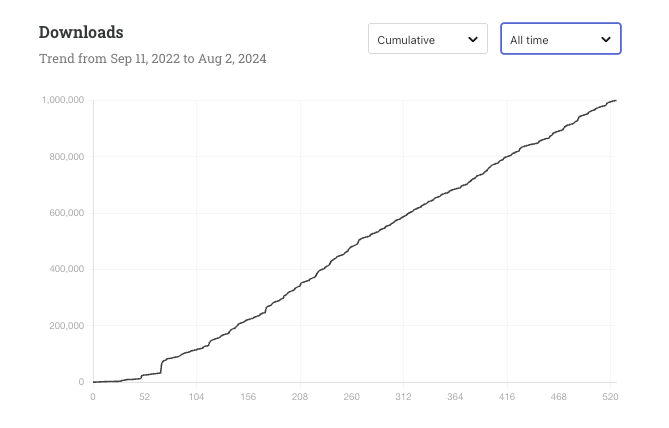
we crossed 1m downloads* of @latentspacepod! celebratory recapisode with @fanahova + special @chatgptapp voice mode demo with @ethansutin! *not even counting spotify which rehosts the file so we dont get stats but estimate 200k
swyx 🇸🇬 tweet media
Latent.Space@latentspacepod

🆕 pod: The Winds of AI Winter! latent.space/p/q2-2024-recap The vibes have shifted... @fanahova and @swyx celebrate 1m downloads and recap the last 3 months in AI! Discussing the Frontier Labs vibe shift between Claude 3.5, Llama 3.1, Apple Intelligence, and the expansion of RAG/Ops into the new war for the LLM OS. Bonus: @ChatGPTapp voice mode demo with @ethansutin!

English
11
4
52
38K
AndreiRadulescu-Banu
AndreiRadulescu-Banu@bitdribble·
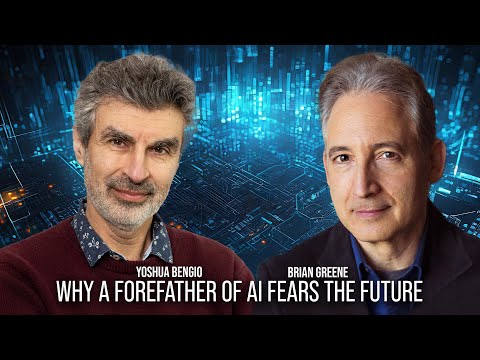
youtu.be/KcbTbTxPMLc?si… Bengio interviewed by string theorist Brian Greene: - Dangers of AI - Mechanisms for safety - Could LLMs do science? Yes, in the future, it could, if it searched an answer space. AlphaGo does that. - Mechanistic theory of consciousness
YouTube video
YouTube
English
0
1
3
57
AndreiRadulescu-Banu
AndreiRadulescu-Banu@bitdribble·
- Not clear (my interpretation) if economics makes sense yet for mass deployment - Sora should be seen (the makers say) as GPT1 for video generation - With expectation of a Sora2,3,4 to follow, if scaling infrastructure can be sorted out
English
0
0
2
21
AndreiRadulescu-Banu
AndreiRadulescu-Banu@bitdribble·
- E.g. when painting brush touches canvas, it leaves paint mark - At current state, Sora does not have 'artistic' optimizations, over just natural training for image generation - Style, in other words, is emergent, not built in - Model still expensive to run
English
1
0
0
19
AndreiRadulescu-Banu
AndreiRadulescu-Banu@bitdribble·
youtu.be/reMnn6bV_fI?si… @NoPriorsPod interview with the makers of Sora, the OpenAI model for video generation. Takeaways: - Scale matters. - No word on how training or inference GPU scale compares to LLMs - But, internally, OpenAI has estimated scaling laws
YouTube video
YouTube
English
1
0
1
77
AndreiRadulescu-Banu retuiteado
Reid Hoffman
Reid Hoffman@reidhoffman·
Why did I deepfake myself? To see if conversing with an AI-generated version of myself can lead to self-reflection, new insights into my thought patterns, and deep truths.
English
210
543
2.6K
634.2K
AndreiRadulescu-Banu retuiteado
Nat Friedman
Nat Friedman@natfriedman·
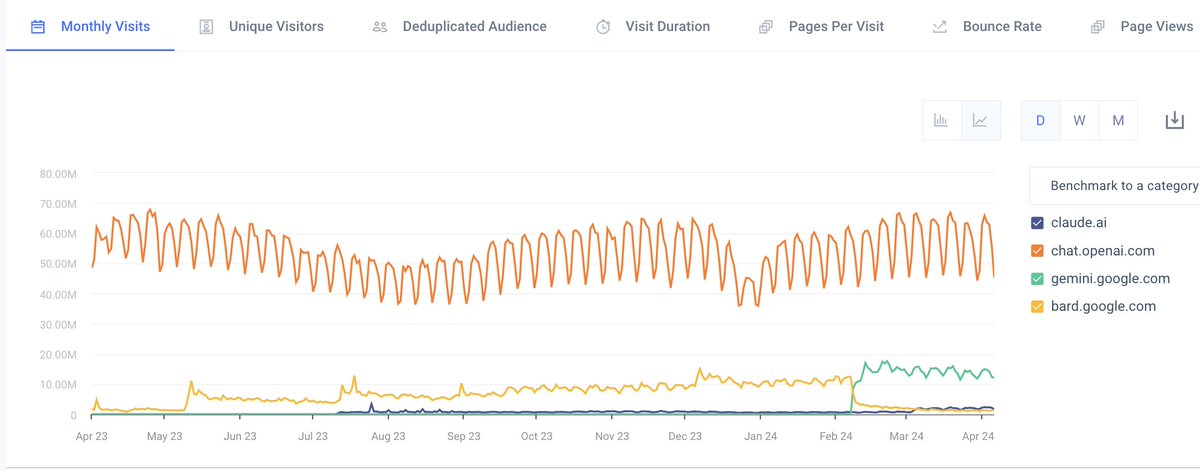
Some observations/questions: - Did you know that Gemini traffic is already ~25% of ChatGPT? And Google isn't pushing it through their massive distribution channels yet (Android, Google, GSuite, etc). - Big on X, but Claude usage is still very low. Should Anthropic advertise? - ChatGPT is still the big brand, but usage relatively flat over the last year. Why isn't it growing? Is OpenAI compute limited or demand-limited?
Nat Friedman tweet media
English
171
110
1.3K
424.1K
AndreiRadulescu-Banu retuiteado
OpenAI Developers
OpenAI Developers@OpenAIDevs·
GPT-4 Turbo with Vision is now generally available in the API. Vision requests can now also use JSON mode and function calling. platform.openai.com/docs/models/gp… Below are some great ways developers are building with vision. Drop yours in a reply 🧵
English
113
421
2.3K
1.8M