Faisal Khan

3.7K posts

Faisal Khan

Faisal Khan

@esepzai

Neo-biologist; Oxford ‘09 ‘13, Proud PI @pmlabpk; #YGL19 @WEF, Living my dream in #Peshawar.

Peshawar, PK Se unió Kasım 2011
2.9K Siguiendo2.6K Seguidores
Faisal Khan retuiteado
Mario Nawfal
Mario Nawfal@MarioNawfal·
🇦🇺An Australian tech founder with zero biology background sequenced his dog’s tumor DNA, then used ChatGPT and AlphaFold to design a custom mRNA cancer vaccine. A month later, the tumors shrank by half. And this is just the start of AI medicine.
English
402
2.8K
20K
1.4M
Faisal Khan retuiteado
Niko McCarty.
Niko McCarty.@NikoMcCarty·
I recently learned that RNase A enzymes can survive autoclaving, or high-pressure heating, at 121°C. This is strange. But then I learned there are entire organisms that not only survive autoclaving, but actually grow and divide at 121°C??? There was a 2003 paper, for example, where these two scientists took a submarine down to a hydrothermal vent in the Pacific ocean, scooped up some dirt, and kept everything in an airtight tube. This tube had an organism in it. The organism had features "typical of Archaea." They put this organism into an autoclave (held at 121°C) for a full 24 hours. When they took it out of the autoclave, the cell population had doubled. Thus, the organism was called "Strain 121." The 2003 paper ends with an enticing statement: "The factors that permit strain 121 to grow at such high temperatures are unknown. It is generally assumed that the upper temperature limit for life is related to the instability of key molecules essential for life, but which molecules are most important in defining the upper temperature limit have not been defined. However, strain 121 offers the possibility to do this work." I read this and got excited. I began searching for follow-up studies on Strain 121. But I was quickly disappointed. This organism has its own Wikipedia page, but every single reference is from 2003 or 2004. Its name was later changed to Geogemma barossii, so I searched for that, too. But all I could find were random news stories about this "heat-loving microbe," all of which linked back to the original 2003 paper. I'm extremely confused by this. Why is nobody studying this microbe? It doesn't even have a published genome sequence. Where is the intellectual center for hyperthermophile research?
Niko McCarty. tweet media
English
24
49
350
22.8K
Faisal Khan retuiteado
Patrick Hsu
Patrick Hsu@pdhsu·
Evo 2, our fully open-source biological foundation model trained on trillions of DNA tokens spanning the entire tree of life, is out in @Nature today We & the scientific community have done a lot with this @arcinstitute @nvidia model in the last year! 🧵👇
English
57
318
2K
244K
Faisal Khan retuiteado
Paul Graham
Paul Graham@paulg·
When you're deciding what to study in college, don't try to predict what will be valuable in the future, because that's so hard that you'll probably get it wrong. Instead focus on what you personally find most exciting. You can't get that wrong.
English
334
598
6.5K
245.4K
Faisal Khan
Faisal Khan@esepzai·
I am told both openers are tandoorwalas from Mardan and Charsadda #AchaJee
English
0
0
3
153
Faisal Khan retuiteado
إبراهيم بن عبدالعزيز اليحيى
مخطوطات وقهوة في مقهى ساجو بالرياض لا تفوتكم الدردشات حول المخطوطات سعود الأسود وفيصل خان الله يقويهم ويوفقنا وإياهم
إبراهيم بن عبدالعزيز اليحيى tweet media
العربية
1
3
9
1.2K
Faisal Khan
Faisal Khan@esepzai·
We are excited about this! Drop by for our informal meet-up on everything manuscripts. 4pm today at Sajo Cafe. #manuscripts
Faisal Khan tweet media
English
1
0
0
62
Faisal Khan retuiteado
Michael Kugelman
Michael Kugelman@MichaelKugelman·
Saw this on the door of a bathroom in a Davos hotel. The Kaptaan’s reach apparently extends high up into the mountains of Switzerland.
Michael Kugelman tweet media
English
402
1.6K
6.1K
281.6K
Faisal Khan
Faisal Khan@esepzai·
‘Jee agha zama plar hum raghali, agha di nast di jee’ - PM
Filipino
0
0
1
83
Faisal Khan retuiteado
Jorge Conde
Jorge Conde@JorgeCondeBio·
Announcing our newest @a16zBioHealth fund: $700M to back the best founders working to make better medicines and to make the practice of medicine better. To cure disease, to care for our sick, to fix what’s broken is deeply ingrained; it is medicine’s highest aim. “At @a16z, we believe that the best thing that a society can do for a person is to give them a chance. Give them a shot at a great life…” - @bhorowitz @vintweeta @julesyoo @BenPortney @Bryan__Faust @zakdoric @JayRughani @daisydwolf @janerheetweets Michael Cialone, Eva Steinman
Jorge Conde tweet media
a16z@a16z

At Andreessen Horowitz, we just raised over $15B. With these new funds including American Dynamism ($1.176B), Apps ($1.7B), Bio + Health ($700M), Infrastructure ($1.7B), Growth ($6.75B), and other venture strategies ($3B), we raised over 18% of all venture capital dollars allocated in the United States in 2025. Why did we raise the money and how do we plan to invest it? Read more from Ben Horowitz: a16z.news/p/we-raised-15…

English
32
42
397
62.8K
Faisal Khan retuiteado
David Sun Kong, Ph.D.
David Sun Kong, Ph.D.@davidsunkong·
I’m excited to announce that the application for the 2026 edition of our @medialab and global synthetic biology course “How to Grow (Almost) Anything” is now open! Application link in thread 👇
David Sun Kong, Ph.D. tweet media
English
13
54
241
33.8K
Faisal Khan retuiteado
Jason Kelly
Jason Kelly@jrkelly·
Autonomous labs will paradoxically increase the number and value of jobs for scientists, not decrease them!! Curious if folks agree - I laid out my thinking here👇
English
32
32
264
59.4K
Faisal Khan
Faisal Khan@esepzai·
@Arshadyousafzay It was reformulared and alcohol and sugar were taken out in the 80s i think.
English
0
0
0
1.4K
Arshad Yousafzai
Arshad Yousafzai@Arshadyousafzay·
This gripe water was basically vodka for infants. One sip and the baby went into silent mode for hours
Arshad Yousafzai tweet media
English
464
2K
21.3K
1.6M
Faisal Khan retuiteado
Oxford Protein Informatics Group (OPIG)
A happy new year from all at OPIG! We start 2026 with an article in Expert Opinion on Drug Discovery by Charlotte Deane and co-founders at DaltonTx; a perspective on integrating computation into drug discovery for maximum added value & efficiency tandfonline.com/doi/full/10.10…
English
0
2
4
258
Faisal Khan retuiteado
Niko McCarty.
Niko McCarty.@NikoMcCarty·
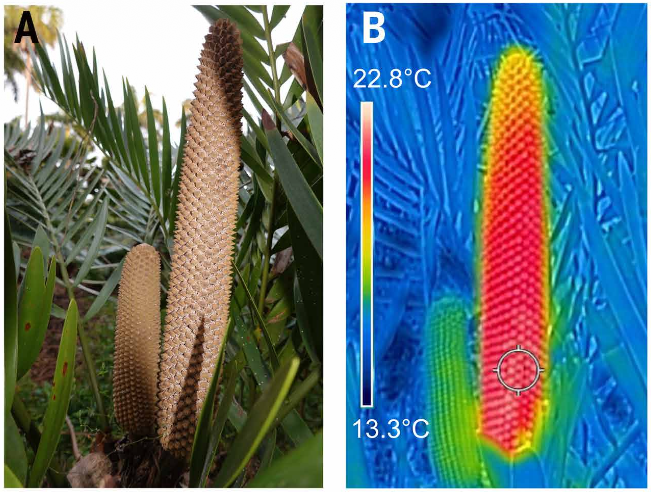
I'm embarrassed to admit that I did not know, until now, that plants can generate heat. They do this to attract pollinators, which see heat in the form of infrared light. “Thermogenic plants can achieve cellular respiration rates comparable to that of a ‘hummingbird in flight’," according to a recent Science paper, "leading to an increase in temperature to more than 35°C above ambient temperature.” Most heat-making plants are Cycads, an ancient type of seed plant that was dominant on Earth in the early Jurassic, ~200 million years ago. These plants were using heat to attract pollinators long before the emergence of even color, fragrances, or petals. There are only about 300 cycad species known today, and a majority are endangered. This recent paper focused on Zamia furfuracea, which is about 4 feet tall, found in Mexico, and pollinated by a “long-snouted brown weevil,” called Rhopalotria furfuracea. The gist is that these weevils carry pollen from the "male" part of the plant to the "female" part. The way this works is that the plants make a bunch of carbohydrates and lipids and store them up during the night. Then, when the pollen is ready, an enzyme called AOX1 (aldehyde oxidase 1) breaks down these carbon chains and, rather than store the energy in ATP molecules, releases heat. This heat is first seen in the male cones, "starting in the afternoon and peaking in the early evening," according to the paper. Then, three hours later, the male cones get colder and the female parts starting heating up. The beetles follow these heat signatures; they move to the male cones, grab the pollen, and then move to the female cones. Scientists have known that plants generate heat for decades (just not me) but I guess they thought this heat was used to "volatilize" chemical signals, similar to how a humidifier machine uses heat to make steam that spreads water over a larger volume. But this new paper shows that -- no! -- heat is itself the signal. Or, actually, well, that's not quite true either. Because in this paper, the authors also write about another experiment they did, where they covered the cones to block their heat, while letting the infrared signals pass through. And the beetles still came, just as before. In other words, the heat is less important as a pollination signal than the infrared light it creates. The beetles have antennae with infrared-activated neurons. And inside of those antennae, there are millions of little ion channels exquisitely tuned to the heat emitted by these plants. An ancient symbiosis.
Niko McCarty. tweet mediaNiko McCarty. tweet media
English
28
322
1.8K
63.2K
Faisal Khan
Faisal Khan@esepzai·
Four knuckle-draggers were on wheel-chairs. But had to come and vote. And be part of the Legion of the (most) Dishonourable Mortals.
English
0
0
0
61